
Age is the strongest risk factor for breast cancer in women in the United States. The older a person is, the higher their risk of developing breast cancer. Most breast cancers are found in women aged 50 and older.
Age is the main risk factor because the older we are, the more likely it is that our cells have gone under abnormal changes that led to mutations. This article will discuss the age connection to breast cancer risk, as well as other risk factors that you can change to lower your risk.
Verywell / Jessica Olah
Being diagnosed with breast cancer before age 40 is rare, and the chance increases with each decade of life.
The National Cancer Institute estimates that 12.9% of women born in the United States will be diagnosed with breast cancer at some point in their lives. This gives the average American woman a 1 in 8 chance of experiencing breast cancer. It’s important to remember that each woman’s chance of not experiencing breast cancer is 7 in 8. Men born in the United States have a 0.13% chance of developing breast cancer. This translates to a chance of 1 out of 800.
The median age of diagnosis of breast cancer in the United States is 63 years. This median age varies by race and ethnicity. Black women tend to be diagnosed younger than white women, and the median age for Black women is 60 years old. While at much lower risk, the median age of diagnosis of breast cancer for men is 68 years.
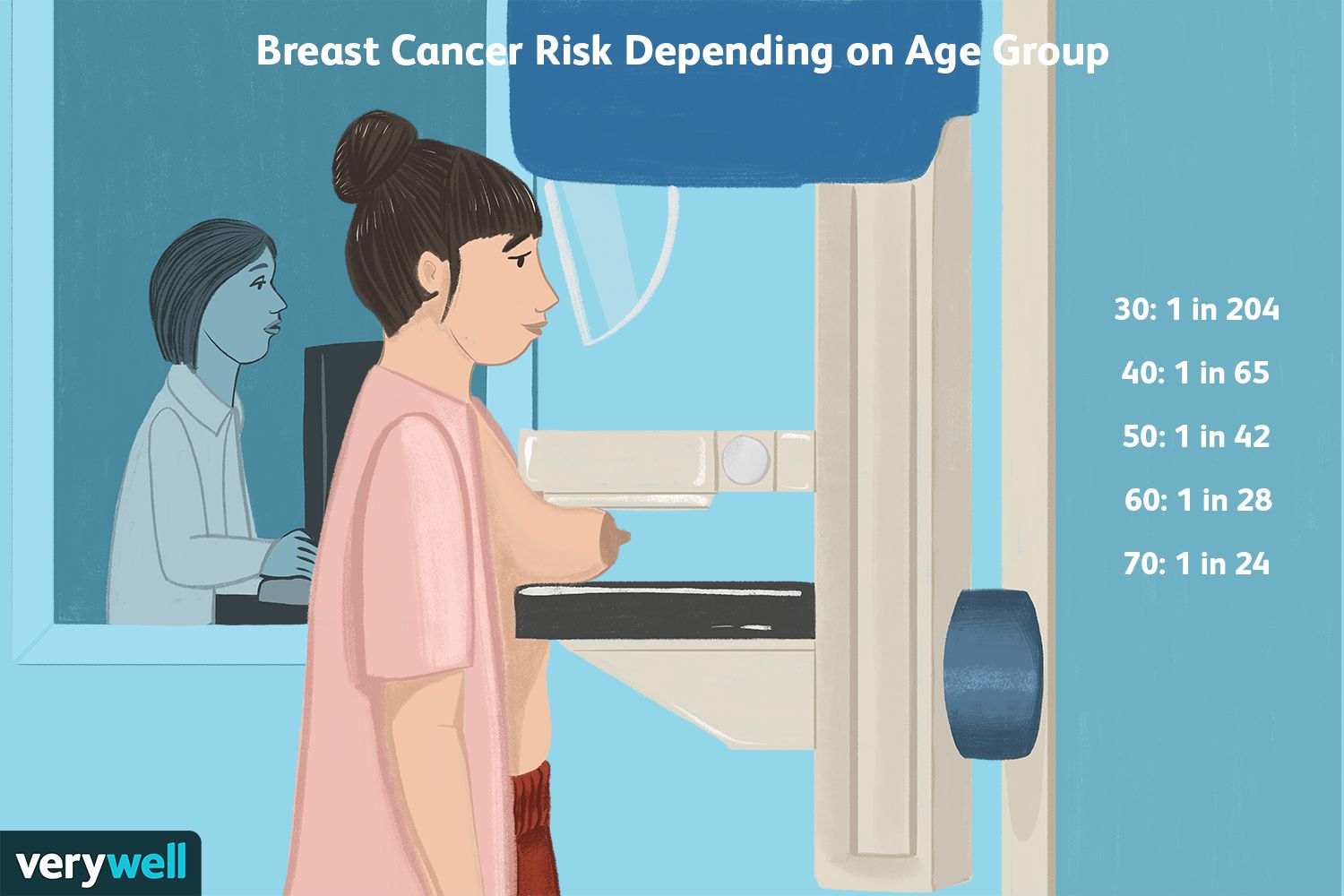
How Is Breast Cancer Different in Young Women?A woman’s risk of developing breast cancer based on her age is as follows:
About 5% of breast cancer cases occur in women under 40 years old. It may be more difficult to diagnose breast cancer in young women because their breast tissue is denser than that of older women. Young women and their doctors may also be more likely to ignore a breast lump because of their low risk.
Breast cancer that occurs in young women tends to be more aggressive and less likely to respond to treatment. Women who are diagnosed with breast cancer before age 40 are more likely to have a genetic mutation that puts them at higher risk. Screening for the BRCA gene mutation may begin at age 25.
Other signs for young women to be aware of include:
Mammogram screening is recommended to begin between ages 40 and 50 based on your individual risk factors.
I Was Diagnosed With Breast Cancer Before Age 40Your personal risk of developing breast cancer is unique to you and made up of several factors.
Fortunately, there are risk factors for breast cancer that are under your control. These factors include:
Women who are overweight or obese have higher levels of estrogen in their bodies. Even though the ovaries stop making estrogen after menopause, the hormone is still stored and produced in fat tissue. Estrogen causes certain types of breast cancer to grow and spread. Work with your doctor to develop a weight loss plan that fits your life, if necessary.
One of the main risk factors is age, and the older we get, the higher the risk. Other risk factors that you cannot control include:
Age is a strong risk factor for breast cancer in women. The average American woman has a 1 in 8 chance of developing breast cancer at some point in her lifetime. Other risk factors that you cannot control include genetic mutations, reproductive history, dense breast tissue, family history, exposure to radiation, and exposure to DES.
Fortunately, there are risk factors that you can change by increasing your activity levels, maintaining a healthy weight, avoiding hormone replacement therapy, and reducing alcohol use.
As we age, we are more at risk of experiencing health problems. This is overwhelming and is often beyond our control. While age does raise the risk of developing breast cancer, there are steps that you can take to lower your risk. Talk with your doctor about your risk factors and how to address them.
Yes, while uncommon, it is possible for a 20-year-old to be diagnosed with breast cancer. The chances of developing breast cancer in your 20s, however, are about 0.06% or 1 in 1,732.
The rate at which breast cancer grows and spreads depends on several factors, including your type of breast cancer, how advanced it already is, your age, your menopausal state, and your medical history. Compared with many other types of cancer, breast cancer has a relatively low growth fraction, which means that the cancer cells do not reproduce rapidly.
Learn More: Breast Cancer Growth RateAnytime you detect a new lump in your breast, regardless of your age, see your doctor to be evaluated. A lump in a teenage girl is not likely related to cancer but should always be checked out.