
There are many different types of breast cancer. Breast cancer can be categorized as either invasive or non-invasive and can be found in different parts of the breast. Each different type of breast cancer impacts different cells in the body, which helps determine how fast the cancer grows and spreads. Understanding the different types of breast cancer can help navigate the care needed. Here, we take a closer look at each type.

Prostock-Studio/Getty Images
In its earliest stages, cancers are referred to as “carcinoma in situ” meaning cancer in the original place. Carcinoma in situ can include:
Invasive ductal carcinoma (IDC) is the most common type of breast cancer, accounting for 70 to 80% of all breast cancer diagnoses. IDC is when cancer begins in the duct of the breast and has spread to other breast tissues. Less common forms of IDC include:
Some inherited genes can mutate and increase the risk of breast cancer. The most important of these genes are BRCA1 and BRCA2. Genetic testing can find mutations in these genes and may be recommended for people with:
Not every woman needs to be tested. A healthcare provider will be able to advise whether genetic testing would be appropriate.
Invasive lobular carcinomas (ILC) account for about one in 10 invasive breast cancers. ILC begins in the lobules—or milk-producing glands of the breast. It can then spread throughout the body. ILC can be categorized into different subtypes based on how cancer cells appear when viewed through a microscope. These subtypes are:
Triple-negative breast cancer (TNBC) is an aggressive cancer and makes up 10% to 15% of all breast cancers. In this cancer, the cancer cells are lacking estrogen and progesterone receptors and don’t make much of a protein known as HER2.
This cancer grows and spreads faster than other forms of invasive breast cancer. It has limited treatment options and a worse prognosis. When compared with HER2 positive cancers, TNBC has the lowest survival rates.
Female breast cancer can be categorized into four molecular subtypes. Theses include:
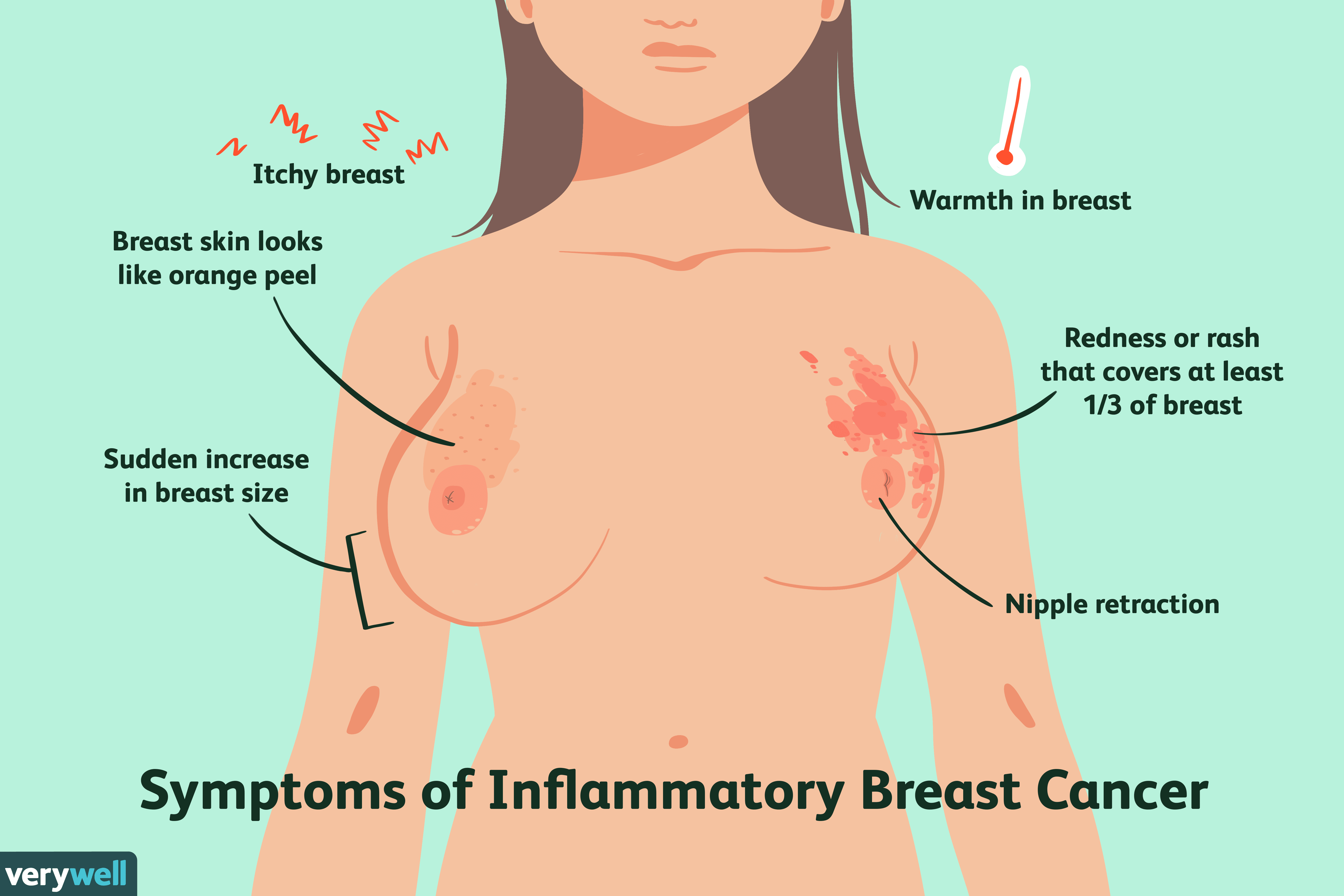
Inflammatory breast cancer is uncommon, accounting for just 1 to 5% of all breast cancers. IBC differs from other cancers in symptoms, outlook, and treatment options. In IBC, cancer cells block the lymph vessels in the skin, the result is the breast looking red, purple, or inflamed. IBC can be challenging to diagnose as it does not look like other cancers and may not have a breast lump that would appear on a mammogram.
All IBC cases begin at stage 3 because by the time it is diagnosed, the cancer cells have already grown into the skin. IBC is the only form of breast cancer that warrants urgent immediate treatment. It is estimated that 20% to 40% of IBC cases are triple-negative.
Verywell / Emily Roberts
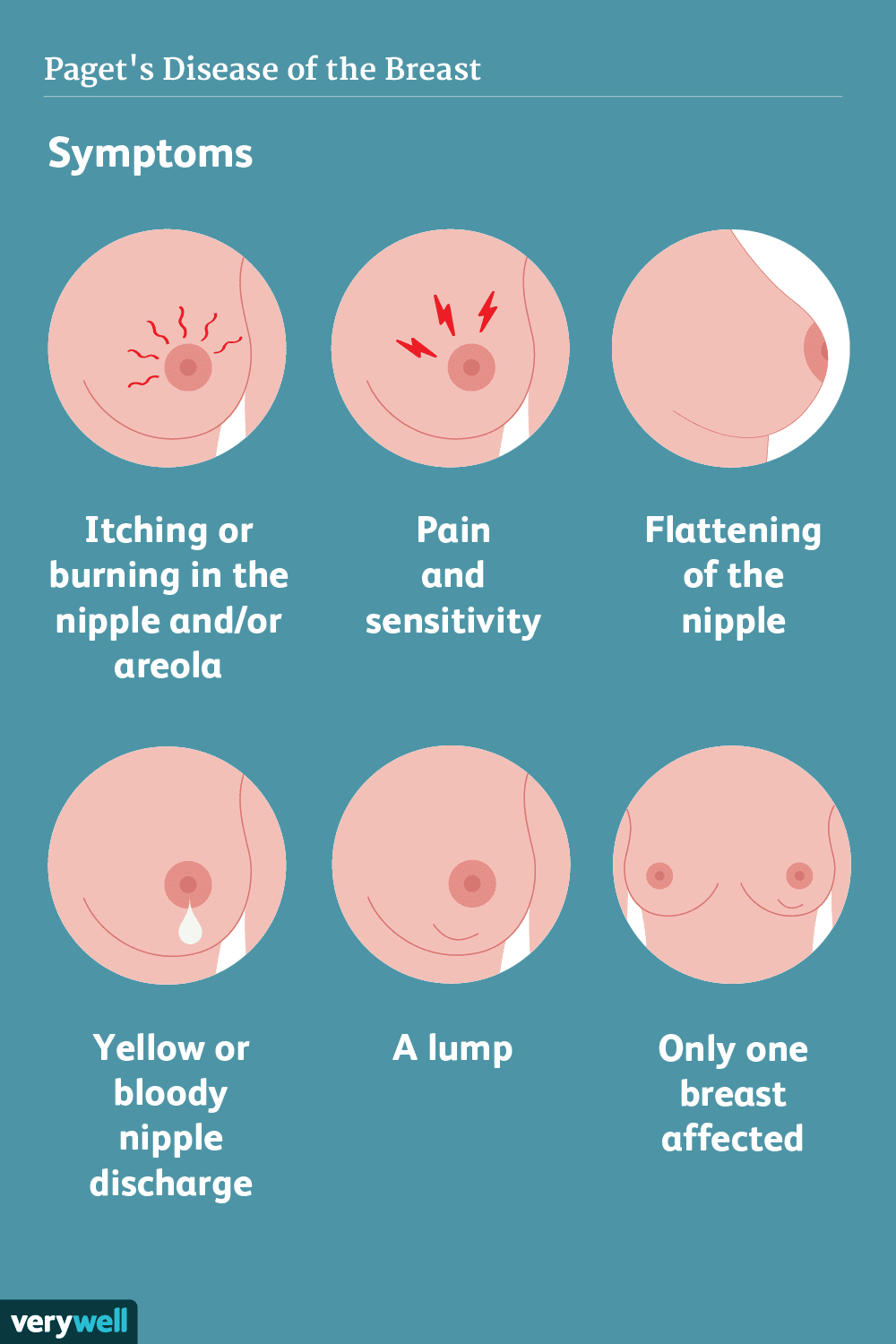
Paget’s disease of the breast accounts for less than 5% of all breast cancers and involves cancer cells gathering in or around the nipple and the skin surrounding it, called the areola. Symptoms can sometimes be mistaken for eczema or dermatitis and can include itchy or tingling feelings in the nipple or areola, flaking or crusting of the skin, and discharge from the nipple. Paget cells are malignant cells found in the surface layer of the skin in the nipple and areola. Under a microscope, they appear large and round and are a sign of Paget's disease of the breast.
Verywell / Gary Ferster
Angiosarcoma is a rare form of cancer that begins in the endothelial cells, that line the blood and lymph vessels. There are two forms of angiosarcoma of the breast:
Primary angiosarcoma: This occurs in women who have never been treated for breast cancer before.
Secondary angiosarcoma: This occurs in women who have already been treated for breast cancer.
In angiosarcoma, there can be necrosis, as well as hemorrhage.
Phyllodes tumors account for less than 1% of all breast cancer tumors. They often grow quickly but don’t typically spread outside the breast. Phyllodes tumors grow in the connective tissue of the breast, called the stroma. The stroma comprises the fatty tissues and ligaments surrounding the ducts, lobules, lymph, and blood vessels in the breast. These tumors are most common in women in their forties. Women with a rare inherited genetic condition called Li-Fraumeni syndrome are at increased risk for these tumors. One in four cases of phyllodes tumors are cancerous, most are benign.
Breast cancer in men is rare, accounting for less than 1% of all breast cancers. Both men and women have breast tissue. Like female cases of breast cancer, the risk of cancer in men increases with age. The average age of diagnosis in men is 68. As in women, symptoms of breast cancer in men can include:
The occurrence of breast cancer in men is less than in women because despite also having breast tissue, male breasts are mainly fat and fibrous tissue with fewer ducts and lobules. In women, most cancers develop in the ducts and lobules.
Screening for breast cancer in men has not been sufficiently studied to determine efficacy. A breast exam could be a useful screening tool for men with BRCA mutations or a strong family history of breast cancer. Men who are at high risk for breast cancer should discuss options with their healthcare provider.
Reading about the many forms of breast cancer can be overwhelming. But there are steps you can take to be proactive. Regular mammograms and recognizing any changes in your breasts can assist with early diagnosis and treatment, if necessary. If you experience lumps, puckering, dimpling, crusting, or redness of the breast or nipple, speak with your healthcare provider.