
Estrogen, a hormone involved in many aspects of female physiology, can be associated with breast cancer. Both women and men can be exposed to other types of estrogen as well. This can include synthetic estrogens, plant-based estrogens, and xenoestrogens.
Each estrogen type may impact breast cancer differently. Research continues to explore the associations between estrogen and breast cancer.
This article will review different kinds of estrogens and any links or associations with breast cancer risk. Knowing more about estrogen and its role in breast cancer risk can help you talk with your doctor about hormone-related decisions.
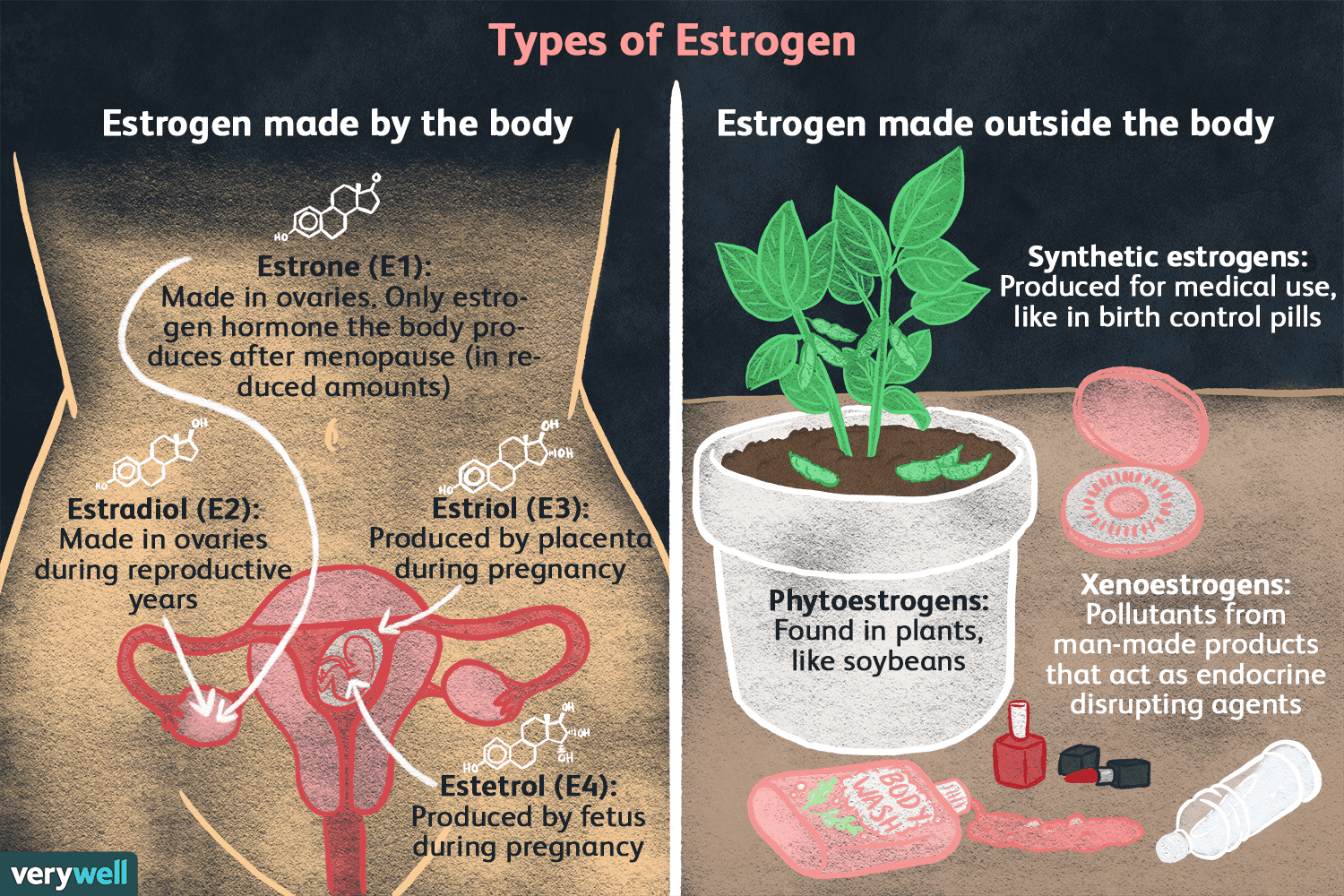
The female body naturally makes a few different estrogen compounds, and the production and release of each type of estrogen fluctuate during phases of puberty, menstruation, pregnancy, and menopause (end of menstrual cycles, when periods have stopped for 12 straight months).
In addition to helping to regulate a woman's menstrual cycle and support pregnancy, these hormones have a variety of other effects on the body, including protecting women's bones from thinning and helping to keep cholesterol at healthy levels.
The levels and types of estrogen hormones differ among the premenopausal and postmenopausal years.
Before a woman reaches menopause, her body produces these four different types of estrogen:
As you approach menopause, the ovaries begin to become physically smaller and begin to slow down their production of hormones, including estrogen and progesterone. After menopause, estrone is the only estrogen hormone that the body continues to produce, albeit in small amounts.
After menopause, androgens (male hormones) produced by the adrenal glands are converted into E1 with the help of an enzyme called aromatase. Additionally, E1 is stored in body fat and muscle cells.
Low levels of E1 contribute to hot flashes, irregular periods, night sweats, mood swings, and other menopausal symptoms. Low estrogen levels also contribute to perimenopausal and menopausal vaginal dryness, which is often treated with estrogen creams.
Healthcare providers may treat the symptoms of low estrogen with oral (by mouth) hormone replacement therapy (HRT) for a short period of time, but prolonged use has been associated with an increased risk of breast cancer.
Should You Take HRT at Menopause?Some estrogens are not produced by the body. There are three main types of these estrogens. Some are created by plants, some are made synthetically for treatment of medical conditions, and others are present in nonmedical products.
Phytoestrogens are found in plants and botanicals such as soybeans, red clover, legumes, cereal brans, and flaxseeds. They can have estrogen-like effects in your body.
While their actions are generally weaker than estrogens produced by your ovaries, they can have clinically significant effects. Phytoestrogens may have either estrogen-like or antiestrogen effects.
Dietary supplements that contain phytoestrogens are used to treat menopausal symptoms and can be obtained without a prescription. It is important to discuss these supplements with your healthcare provider if you are considering their use.
Some herbal treatments should not be used by women who have breast cancer or who are at increased risk of developing the disease.
Natural estrogens may protect against breast cancer—but they can also worsen it.
Soy's Effect on Breast CancerSynthetic estrogens are produced for medical use and include estrogens like ethinyl estradiol. These compounds can be stronger than natural estrogens and are important components of oral contraceptives (birth control pills) and hormone replacement therapy.
Additionally, some drugs have a substantial effect on estrogen, even if they are not estrogen substitutes. In particular, breast cancer drugs may be used to interfere with estrogen production.
Estrogen receptor-positive breast cancer is worsened by estrogen and may be treated with these medications:
Xenoestrogens are estrogen-mimicking compounds not made by your body. They are widely found in food and in the environment. While they can have some good effects on our health and well-being, much of the time the effects are negative.
Xenoestrogens are among the endocrine-disrupting agents, which are chemicals that adversely affect the human body's growth and development, potentially interfering with sexual development and reproduction, and increasing the risk of breast cancer.
Xenoestrogens can be found in some plastics, electronics, medicines, foods, soaps, and pesticides. Experts agree that the environment (water, air, soil, and plants) is being polluted by xenoestrogens from manufacturing runoff and the disposal of products.
Estradiol, and possibly estrone, increase the risk of developing breast cancer. And a lower level of these estrogens throughout a woman's lifetime is associated with a lower risk of developing breast cancer.
Factors such as pregnancy and breastfeeding alter estrogen levels in ways that are believed to have a protective effect. Having a first child before the age of 30, having more children, and breastfeeding are all associated with a lower risk of breast cancer. This is due to the reduced production of estrogens during pregnancy and lactation (milk production).
Because oral contraceptives and hormone replacement therapies contain estrogen, there is a small potential they may increase the risk of breast cancer for some women.
While it is known that estrogen receptor-positive breast cancers are worsened by estrogen, other breast cancer types typically are also more common among women who have had a higher lifetime exposure to estrogen.
There are various kinds of estrogens, and different kinds of estrogen can have different effects on your body. If you are at increased risk of breast cancer, currently have breast cancer, or have had it in the past, it's a good idea to be aware of what to watch for and what to avoid. Talk with your healthcare provider about steps you can take to minimize any excess estrogen that may negatively affect your health.
If you need to avoid hormone replacement therapy or oral contraceptives because of the estrogens, talk with your healthcare provider about alternatives that do not pose additional risks.
If you have an increased risk of breast cancer, speak with your healthcare provider about the pros and cons of oral contraceptives and hormone replacement therapy before taking them. Likewise, mention any supplements you're considering. It may also be a good idea to avoid or reduce your exposure to xenoestrogens.
Many of these chemicals are not labeled and are difficult to avoid, but practicing reasonable caution until more about them is known is probably wise. For example, if you work with chemicals, be sure to follow all recommended safety protocols.
For some people, yes. Some studies have found that being exposed to high levels of estrogen for long periods of time increases the risk of developing breast cancer.
There is no one specific cause. What estrogen receptor-positive breast cancer means is that the breast cancer cells have estrogen receptors on them. When estrogen attaches to the receptors, it encourages growth of the cancer.
Fluctuations in your menstrual cycle cause changes in estrogen levels. Other factors that may cause high estrogen levels include medications, polycystic ovary syndrome (PCOS), obesity, and diets high in processed foods, dairy, and red meat. Endometriosis, fibroids, and insulin resistance can also cause high estrogen levels.
There is no "better." Hormone receptor positive cancers tend to be slower growing than hormone receptor negative cancers, but the main point is that they are treated in different ways. Estrogen receptor-positive cancers can be treated with hormone therapy drugs, whereas hormone receptor-negative cancers cannot be treated with these medications.