
It is common for girls and women to experience itchy breasts once in a while. While itchy breasts are most often due to relatively harmless causes such as dry skin or mastitis, it is important to be aware of the most serious causes, which are inflammatory breast cancer (IBC) and Paget's disease—two uncommon forms of breast cancer.
Symptoms of causes on both ends of this spectrum differ, which is helpful in terms of coming to a diagnosis. Still, remember that even less worrisome conditions deserve attention as preventative approaches or medical treatments may help reduce the itchy sensation and prevent complications.
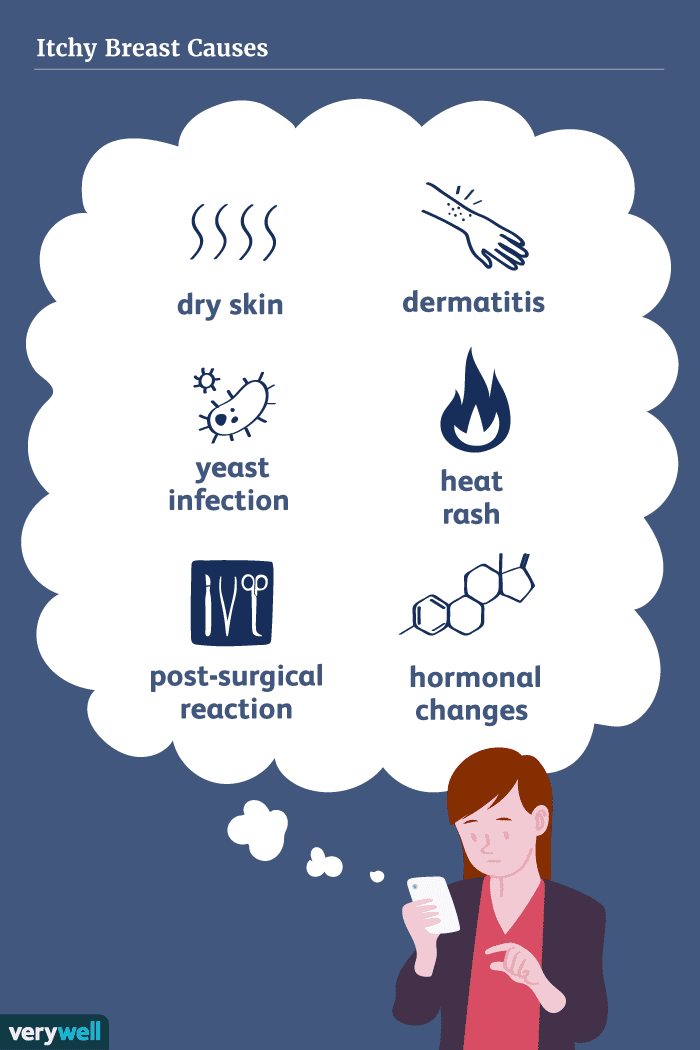
While cancer is a possible cause of itchy breasts, it is not the cause in most cases. There are many possibilities your healthcare provider may consider first. That said, itchy breasts can be a sign of a health problem, can result in persistent discomfort, and can be effectively treated.
Some of the most common causes of itchy breasts include:
Mastitis
Mastitis is a breast infection that most commonly affects women who are breastfeeding, but women who are not nursing can develop it as well. It may cause a fever, breast pain, redness, warmth, and itching. You may also have a generalized feeling of being sick if you have mastitis.
It is treated with antibiotics, and if your symptoms do not begin to improve within a week, further tests may be done to look for a different cause.
Dry Skin
Dry skin is very common and can occur if you are dehydrated, as a result of cold weather, or if you just have a tendency to have dry skin. Usually, when dry skin causes itchy breasts, the skin in several regions of the body is dry or itchy.
Dermatitis
Dermatitis is a rash due to inflammation of the skin. It can be triggered by an allergic reaction to something that your skin has been exposed to or it may occur without a trigger. Common culprits include new clothes, detergents, perfumes, lotions, and shampoos.
You may be able to prevent dermatitis by using products made for sensitive skin, which usually do not contain irritants such as perfume or dye. Although it's not common, the nickel in the underwire of bras can cause an allergic reaction for some women.
Atopic dermatitis, which is also known as eczema, is a type of dermatitis that usually occurs without a trigger. It is often associated with asthma or hay fever.
Types of Dermatitis and TreatmentYeast Infection
The skin underneath and on the sides of the breasts can become moist, allowing an overgrowth of yeast that can cause itching.
You might find relief with over-the-counter antifungal creams, or your healthcare provider can prescribe a prescription-strength antifungal medication.
To prevent yeast growth under the breasts, it helps to wear bras that are made of a breathable fabric, like cotton. Wearing a comfortable and supportive bra, even during sleep, can prevent skin folds from trapping sweat and moisture.
After showering, make sure that the area under your breasts is completely dry before putting on a bra. If you work out, be sure to select an athletic bra that's made of fabric that keeps sweat and moisture away from the skin, and change promptly after your session.
Psoriasis
Psoriasis is a skin condition that causes flaking scales on the skin. It can occur anywhere on the body, including the breasts, although the breasts are not the most common location of the skin lesions. Psoriasis can be treated with phototherapy or topical medications.
An Overview of PsoriasisHeat Rash
A heat rash can occur as the result of extreme heat exposure, very heavy or tight clothes, and sweating. Some people can develop a heat rash that affects the whole body, and it may resolve on its own, or it can be treated with drying powders.
Hormonal Changes
Hormonal changes that cause breasts to become larger, such as puberty, pregnancy, breastfeeding, and weaning, can all cause painful or itchy breasts. Generally, this problem lasts for several days or several weeks, and should not be associated with a rash or discoloration of the breasts.
Post-Surgical Reaction
If you have had recent breast surgery, itching can be a normal part of your recovery. Breast augmentation surgery, especially, can cause itchiness. The skin of the breast stretches to accommodate the implant, resulting in this symptom.
Most women find that the itching goes away within a few months after surgery. If itchiness is persistent and intolerable, you should consult your surgeon or your primary care provider.
Lumps aren't the only potential symptoms of breast cancer. Itchiness, as well as other skin changes, can signal two specific types of breast cancer—inflammatory breast cancer (IBC) and Paget's disease.
IBC accounts for 1 percent to 5 percent of cases of breast cancer in the United States; it can spread rapidly and often isn't recognized until it reaches an advanced stage. The symptoms of Paget's disease, which is responsible for 1 percent to 4 percent of breast cancer cases, are easily confused with eczema or skin irritation.
If you develop breast itching that lasts for longer than a few weeks and is accompanied by any of the symptoms of IBC or Paget's symptoms that follow, make an appointment to see your healthcare provider as soon as possible.
Symptoms of IBCReddening of skin
Dimpling or pitting of skin
Breast pain
Swelling, thickening, or sudden growth not related to puberty or weight gain
Breast warmth
One breast feels harder than the other
Swelling in armpit (may indicate metastases to lymph nodes)
Red, thick, or crusted lesion on the nipple that resembles eczema
Pain and/or tingling in the nipple or areola
Nipple changes or deformities, such as retraction or inversion
Yellow or bloody discharge from nipples
Pregnancy-induced eczema is the most common reason for itchiness of the breasts and other body parts during pregnancy. Up to 80% of women who experience eczema while expecting had no symptoms before becoming pregnant. You should be able to treat the itching with emollient-rich moisturizers.
Itching or pain often occurs in the first weeks of nursing as your body gets used to the baby’s sucking and the milk leakage. If these symptoms return later, it may be a sign of thrush, a yeast infection that occurs on your nipples. Your baby may also show signs of thrush, which can appear as white patches inside the mouth. You and your baby would need to be treated to ensure the infection doesn’t recur.
Having itchy breasts, even if due to a harmless cause, is a good reminder to see if you are up-to-date on early detection strategies such mammograms, and to practice lifestyle measures that may reduce your risk of developing breast cancer in the future, such as quitting smoking.
While itchy breasts certainly do not mean that you have breast cancer, it is important to see your healthcare provider for a proper evaluation. Uncommon types of breast cancer such as inflammatory breast cancer and Paget's disease may have itching as a symptom, though oftentimes there are additional symptoms present as well.
Controlling Breast Cancer Risk Factors