
So, you’ve been meaning to make up a batch of fire cider, but laundry happened. And dishes. And that thing you committed to when it seemed like a good idea but wasn’t. Now someone in the house is feeling achy and awful, and even if you started today the fire cider wouldn’t be ready for weeks.
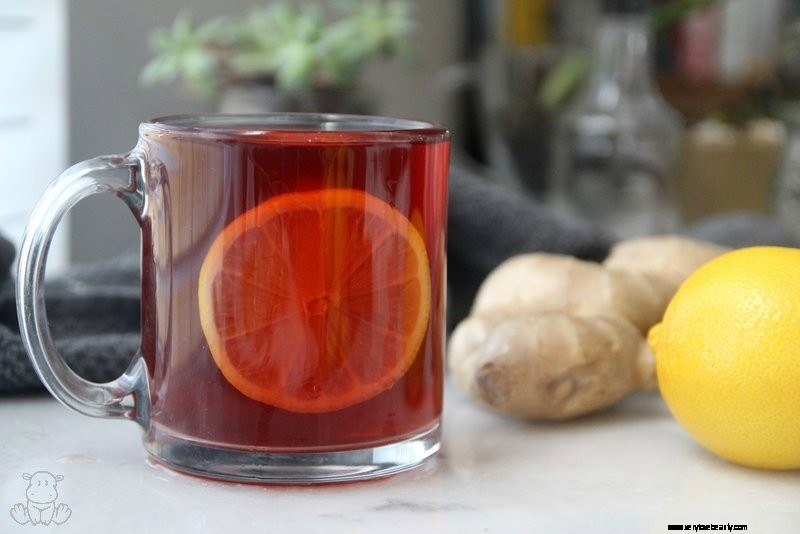
Maybe that person is you, and there isn’t another herbalist in the house to whip up remedies for you. No worries! This lemon ginger tea recipe – which my family calls cold and flu brew – can be made quickly with ingredients you can find locally. (No special order ingredients needed!)
The beauty of this recipe is that it can be adapted to whatever you have on hand (or can pick up nearby). In addition to the three essentials – lemon, ginger, and honey – you can choose 1-5 of the ingredients below for your brew. Here’s an overview of the benefits of each:
Historically ginger was very expensive – one pound cost as much as a whole sheep in the Middle Ages. (source) Fortunately, these days it’s widely cultivated so that we can all benefit from it’s immune supporting, healing properties. According to Penn State Medical Center, it has also history of use in helping to “treat the common cold, flu-like symptoms, headaches, and painful menstrual periods.” (source)
Lemons are rich in vitamin C, which supports immune function.
Honey is used as the medium in this recipe, but it also has healing properties. As I mentioned in my homemade cough syrup post, a study published in the medical journal Archives of Pediatrics & Adolescent Medicine concluded that buckwheat honey worked better than dextromethorphan, the active ingredient in store-bought cough syrup.
This warming herb is legendary for its ability to support immune function and assist the body as it clears congestion.
Cayenne contains capsaicin, which is a warming and circulation enhancing pain reliever. It reduces the amount of Substance P – a chemical pain transmitter in the body – making it helpful for sore throats. (source 1, source 2)
Cinnamon has long been used in traditional medicine to help with cold and flu recovery. According to Fundamentals of Microbiology, there is evidence to support its use as an antimicrobial herb.
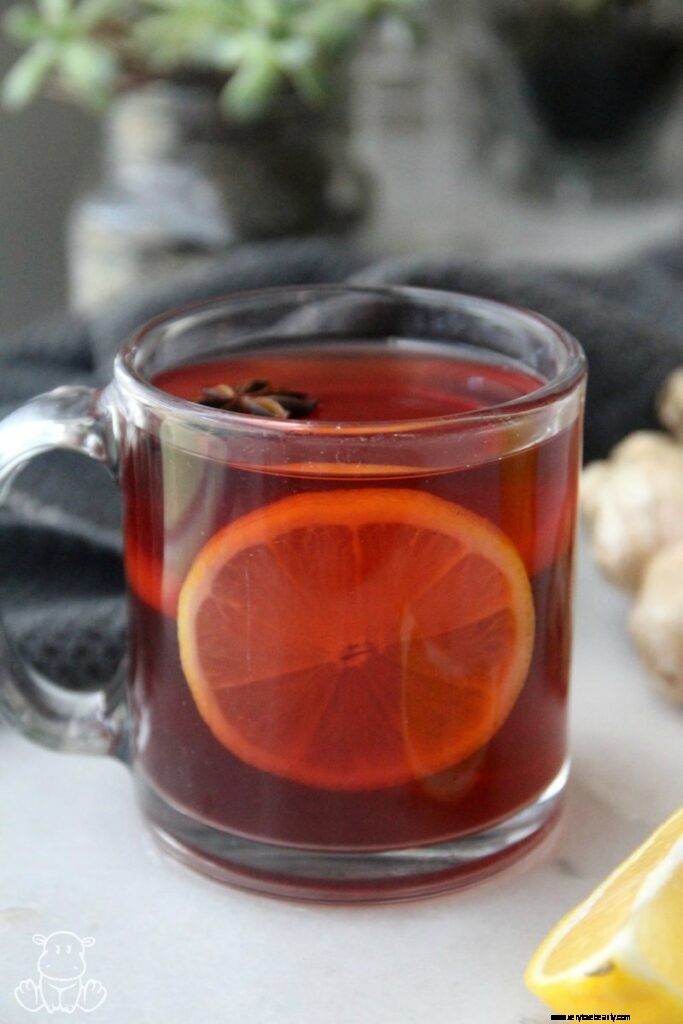
This licorice-flavored spice contains shikimic acid, which is a potent antioxidant. Although it’s much different after manufacturing (and may have side effects not associated with the natural form), shikimic acid is used in the production of Tamiflu.
I brew a cup of herbal tea (either one tea bag or 2 teaspoons loose tea) to use as a base for the brew. I like to use herbs that are immune supportive and/or relaxing to the nervous system: chamomile, peppermint, yarrow, rosehip, elderberry, hibiscus, echinacea or catnip are all good options, but you can use just about anything you have on hand. Caffeine-free is best so your body stays in rest and recover mode. Water works, too!
To make this tea, choose four or more of the ingredients below and then follow the brewing instructions.