
Sometimes called “The Elixir of Life,” holy basil has been revered as one of India’s most powerful and sacred plants for over 3,000 years. (1) Its Sanskrit name, Tulsi, literally means “the incomparable one,” which gives you a sense of how venerated it is.
In addition to being an adaptogen – aka an herb that helps us adapt to stress – it has a wide range of therapeutic properties and traditional uses ranging from supporting skin elasticity to helping balance blood sugar levels.
And because this potent herb has an excellent safety rating, it’s one I always keep on hand.
As always, I want to mention that none of these statements have been evaluated by the FDA, this article is not medical advice, and it is not meant to diagnose or treat any condition. Please talk with your healthcare provider about any herbs or supplements you are considering.
Now that we’ve got that out of the way, let’s dive in!
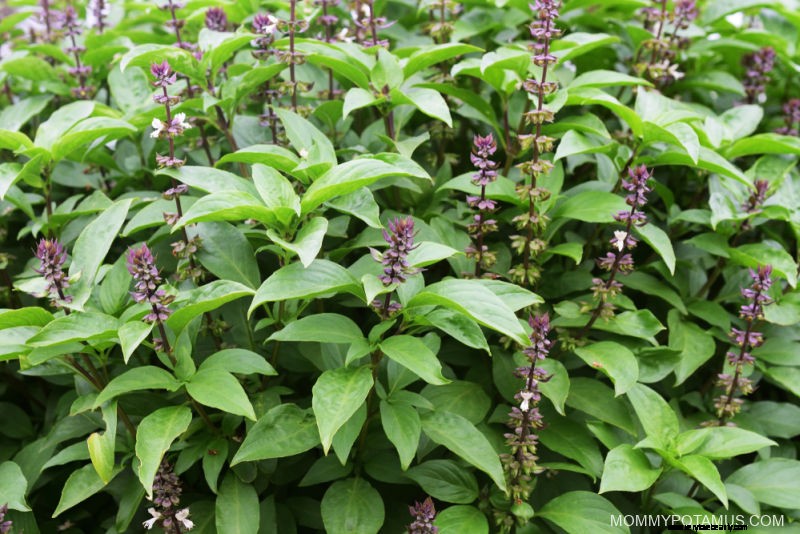
Not to be confused with sweet basil – the common culinary herb you and I would recognize in a yummy pesto – holy basil is considered the “Queen of Herbs” in India, where it grows abundantly.
In Ayurvedic medicine it is classified as a “rayasana, an herb that nourishes a person’s growth to perfect health and promotes long life.” (2)
If you head to your local health food store right now and ask for holy basil, it’s likely that you’ll find the labels a bit confusing. Some will say that they’re holy basil and use the latin name Ocimum sanctum, while others will also claim to be holy basil while using another latin name, Ocimum tenuiflorum.
On top of that, some may claim to be Krishna or Rama holy basil yet use the exact same latin description. Confusing, right? Here’s you need to know:
Though the flowers are sometimes infused into honey or vinegar, it’s the leaves that are prized for their therapeutic benefits.
Holy basil is one of those “duct tape” herbs that’s so versatile it’s almost easier to list what it doesn’t do.
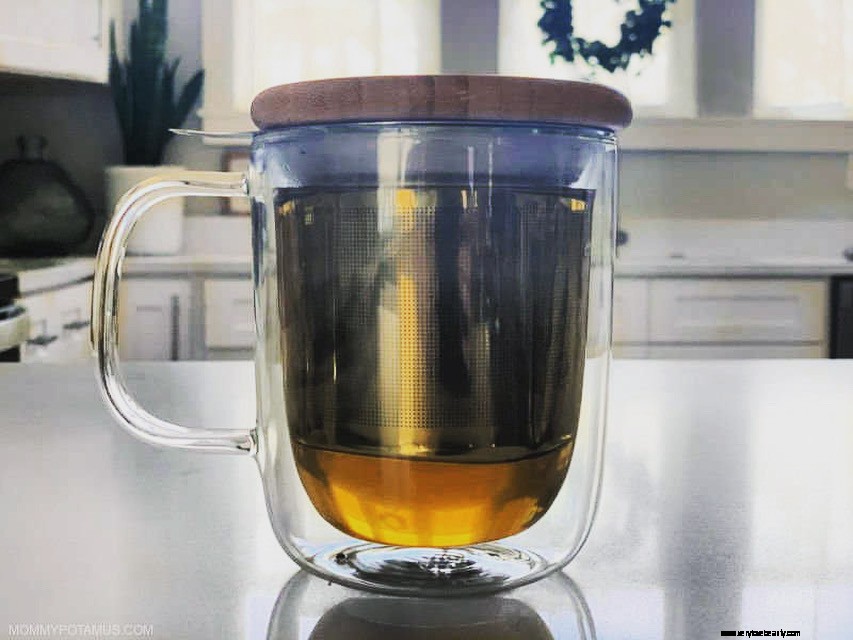
It contains a wide range of beneficial flavonoids and antioxidants including carnosol, ursolic acid, rosmarinic acid, apigenin, eugenol, cirsilineol, and cirsimaritin, plus eugenol which can evaporate if boiled. For that reason holy basil tea has to be brewed with care – I’ll share my recipe later in this post.
Traditional medicine and/or current research have found it to be helpful for:
Let’s take a deeper dive into some of those benefits:
As an adaptogen, holy basil helps us become more emotionally and physically resilient in the face of life’s challenges, including – as this study put it – “the psychological, physiological, immunological, and metabolic stresses of modern living.”
Two compounds in particular – Ocimumoside A and B – appear to play a significant role in the anti-stress effects of holy basil. (3)
Here are some ways holy basil is thought to help:
According to the Journal of Ayurveda and Integrative Medicine, holy basil has mood lifting properties. (4)
Another study found that people who took holy basil extract daily each day felt less anxious and stressed. (5)
When we get stuck in stress mode, our bodies “steal” a hormone called pregnenolone to make extra cortisol. Consistently over-producing cortisol leaves little pregnenolone left to produce other essential hormones, thus leading to hormone imbalance.
Some signs of hormone imbalance include:
Research suggests that holy basil calms cortisol production, which is thought to free up our bodies to make other essential hormones needed for optimal function. (4)
Traditionally, holy basil has been used to optimize resilience in physically demanding situations, both at a macro (muscular) and cellular (immune system) level. Like other adaptogens such as schisandra berry, it is thought to reduce feelings of fatigue when used regularly during a stressful period.
Both human and animal studies seem to support this use. (6) (7) (8)
According to this study, “While the reality of daily chemical exposure cannot be denied, regular consumption of tulsi not only helps protect and detoxify the body’s cells and organs, it can also help reduce toxic stress by relaxing and calming the mind and offering many psychological benefits including . . . positive effects on memory and cognitive function.”
Another study found that participants who received a water-based extract of fresh holy basil leaves “demonstrated an improvement in cognitive flexibility, short-term memory and attention.” (9)
Holy basil is what herbalists call a nervine, which means it has a calming effect on the central nervous system (CNS). It’s revered for its ability to create a sense of peace and calm overstimulation. (1)
According to Rosalee de la Foret, author of Alchemy of Herbs, “Holy basil helps strengthen and modulate [aka balance] the immune system.” She adds that:
Herbalists Thomas Easley and Steven Horne, who co-authored The Modern Herbal Dispensatory, recommend tulsi for immune support during hay fever season. (10)
Excessive amounts of free radicals – which our bodies produce as byproducts of metabolism – cause oxidative stress that can lead to accelerated aging and several disease processes throughout the body. Fortunately, as this Live Science article puts it,
Holy basil is rich in a variety of compounds, including polyphenols such as carnosol, ursolic acid, rosmarinic acid and eugenol plus flavonoids such as orientin, vicenin, cirsilineol, apigenin and cirsimaritin – all which have demonstrated powerful antioxidant properties. (11)
Research suggests that holy basil may ease discomfort and optimize our inflammatory response by positively impacting the expression of COX-2, which is one of the enzymes responsible for inflammation and pain. (12)
“Holy basil has many beneficial actions on the heart,” writes Rosalee de la Foret, adding that it promotes good circulation can help optimize cholesterol levels when taken daily. (1)
In one animal study, albino rats given fresh holy basil leaves showed a significant increase in “good” cholesterol (HDL-cholesterol) and a reduction in “bad” cholesterol (LDL-cholesterol). (13)
Other research suggests that holy basil may help balance blood pressure. (14) (15)
Research suggests that holy basil helps balance blood sugar levels via “dual cellular mechanisms that optimize insulin sensitivity. (6) (16) (17) (18)
For this reason, diabetics who are taking blood sugar lowering medication need to talk with their doctor before taking holy basil, as it may amplify the effect of medication.
Holy basil is classified as an expectorant by herbalists, which meant that it supports the body in loosening mucus so that it can be cleared out.
Have you ever heard of inflamm-ageing? It’s basically accelerated skin aging that happens due to chronic inflammation.
Since chronic inflammation is often triggered by emotional and environmental stressors, holy basil is thought to help with inflamm-ageing by making us more resilient to stress in general.
Several of the compounds in holy basil – particularly ursolic acid, rosmarinic acid, and eugenol – are potent antioxidants that help counteract free radicals directly.
Research suggests that they may also help the body maintain healthy hyaluronic acid levels, which is the “gel” part of our skin matrix that gives skin its suppleness. It can absorb up to 1,000 times its weight in water, which helps our skin hold in moisture.
It also contains compounds that help protect collagen (which gives our skin structure) and elastin (which gives it elasticity), which is probably why it’s being used in an increasing number of skincare formulations. (19)
Research has shown that holy basil optimizes the breaking-strength of a wound, which is the amount of force it can withstand before breaking. It’s thought that holy basil’s positive impact on skin integrity and elasticity plays a role in how it supports wound healing. (4)
Holy basil tea is also traditionally used as a mouthwash. Though more research is needed, current studies suggest that it does have a positive impact on the oral microbiome. (20) (21)