
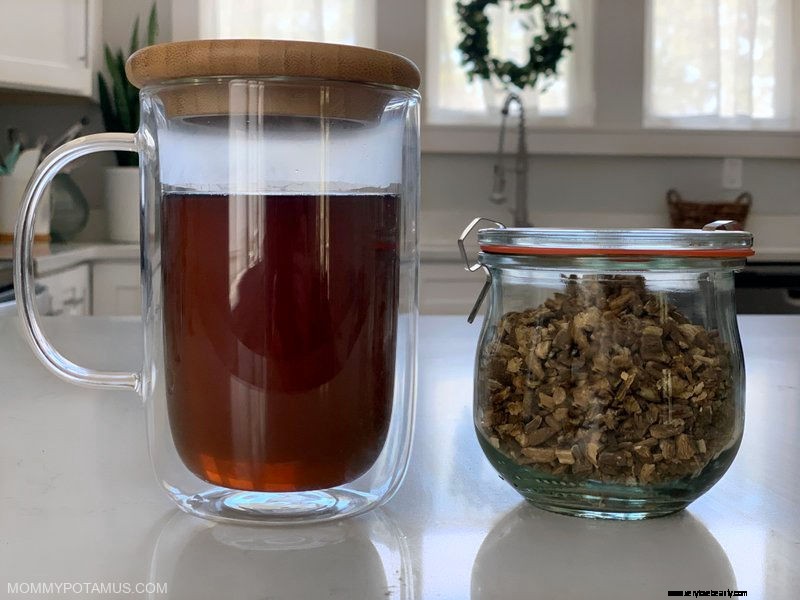
Which herb inspired velcro and just so happens to be “one of the safest, tastiest, and most effective detoxifying and cleansing herbs in Western and Traditional Chinese Medicine”? (1) Burdock root, of course!
For thousands of years this relative of daisies and sunflowers has been used to support lymph flow, liver and blood detoxification, skin clarity, and more.
In this article we’ll dive into its benefits, plus how to make a delicious burdock root tea.
As always, I want to mention that none of these statements have been evaluated by the FDA, this article is not medical advice, and it is not meant to diagnose or treat any condition. Please talk with your healthcare provider about any herbs or supplements you are considering. Now that we’ve got that out of the way, let’s dive in.
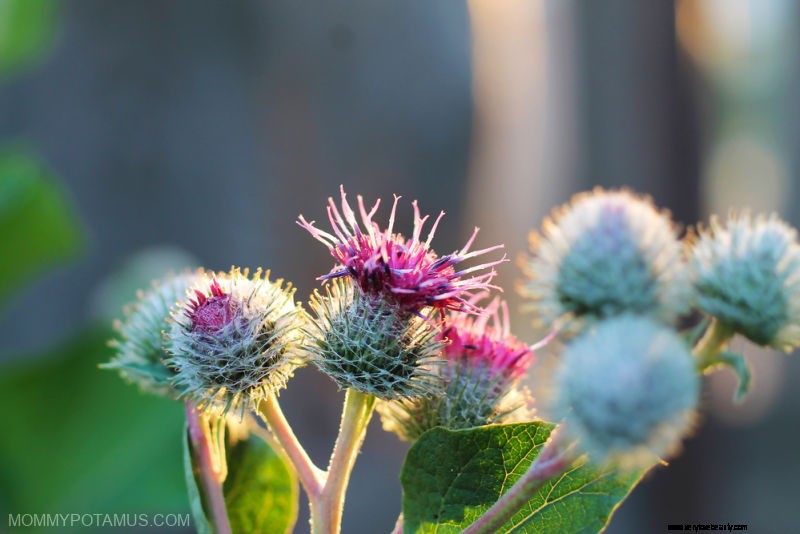
Also called Beggar’s buttons, gobō, happy major, thorny burr, and lappa, the burdock plant (Arctium lappa) belongs to the Asteraceae family. It blooms with vibrant red or purple flowers that look like spiky purple cotton balls.
Almost all parts of the plant are used in traditional herbal medicine – fruit, roots, seeds, flowers, and leaves – but it’s the roots that are most prized for their therapeutic value. (2)(3)(4)(5)(6)
Burdock is native to Europe and Asia and is now easily found in North America, where it spreads cockle-burs (seeds covered in stiff spines) that inspired the invention of velcro.
Here’s the story: In 1941, a Swiss engineer named George de Mestral was hunting with his dog in the Jura mountains when both of them became covered in small burrs from the burdock plant.
As he removed them, De Mestral became curious about how they worked and put them under a microscope. Eight years later, he debuted his invention that mimicked their tiny interlocking hooks and named it velcro.
Traditionally used for a variety of purposes – even as an aphrodisiac – burdock root contains a wide range phytochemicals that are currently being researched for their therapeutic value.
It also contains constituents that nourish beneficial bacteria, and because its taproot reaches deep into the earth (up to 2 feet) it’s also rich in minerals including calcium, copper, iron, magnesium, manganese, potassium, and zinc.
In Medical Herbalism, David Hoffman writes that it helps to move the body toward “a state of integration and health, improving indicators of systemic imbalance, such as skin problems and dandruff.” (7)
Here are some of the ways it’s thought to do that:

When you hear the phrase “circulatory system,” do you think of your heart, veins, and arteries? I definitely do . . . but we all have a second circulatory system that deserves our attention.
Our lymphatic system is a passive circulatory system that functions as a vital part of both our immune system and our internal drainage (detoxification) system.
Unlike the cardiovascular system which is powered by the heart, it relies on muscle contractions to “pump” immune cells throughout the body while removing pathogens, toxins, and abnormal cells (detoxification).
Traditionally we moved a lot throughout the day – walking long distances, performing manual labor, etc. – which allowed for good flow of lymph throughout our bodies.
These days, though, we move less while being exposed to far more toxins than our ancestors, making it easy for lymph flow to become sluggish.
Fortunately, in addition to daily movement, there are things we can do to keep our immune cells circulating and our drainage pathways taking out the trash: dry brushing, drinking lots of water, whole body vibration therapy, and of course burdock root tea.
Aviva Romm, M.D., midwife and herbalist lists it as a lymphagogue, which is “an agent that promotes lymph production or lymph flow,” and traditional use supports this therapeutic application. (8)
Personally, supporting lymphatic health is something I have to stay on top of as part of my healing journey. I have found burdock root to be a wonderful “mover and shaker” that helps keep things flowing.
One of the amazing things about burdock is that its detox support properties don’t stop with the lymphatic system – it also supports the organs we need to drain the gunk-filled lymph fluid. Here’s how it works:
Step 1: Lymph fluid carries waste products (toxins, hormone byproducts, etc.) and destroyed pathogens into the bloodstream.
Burdock root contains lignans, triterpenoids, polyacetylenes and other compounds that promote blood circulation, which is needed to keep the waste products moving toward the exit. (2)
Step 2: Next, the liver or kidneys remove the waste and pathogens from the blood. Burdock is known as a “tried-and-true liver and skin tonic,” so it helps immensely with this part of the detox process. (9)
Specifically, certain antioxidants in burdock root help protect the liver as it breaks down toxins into water-soluble byproducts that can be flushed out (Phase I Detoxification). The break-down process creates a lot of damaging free radicals that the antioxidants counteract, which helps to “maintain the oxidative/antioxidative balance in the liver.” (10)
Burdock root also contains bitter compounds – sometimes referred to as herbal bitters – that encourage the production of bile. In Phase II of liver detoxification, it binds with the toxins and then flows into the bowels for elimination.
Step 3: The body passes the byproducts/pathogens through bowel movements or urine.
Burdock root is known as a mild diuretic (meaning that it supports urine flow), so it helps with this aspect too! It also contains prebiotics that support gut health and therefore healthy bowel elimination.
For detox support, burdock root is often blended with (or used alongside) complementary herbs like dandelion root or stinging nettle leaf.
We’ve already touched on how antioxidants help the liver, but of course that’s not all they do.
We know that excessive amounts of free radicals – which our bodies produce as byproducts of metabolism – cause oxidative stress that can lead to accelerated aging and several disease processes throughout the body. Fortunately, as this Live Science article puts it,
Burdock root is high in antioxidant capacity, which basically means that it contains lots of antioxidants that help counteract free radicals. (11)
Specifically, it’s rich in flavonoids like quercetin and luteolin, phenolic acids, caffeic acid (also found in coffee), tannins (also found in red wine), and lignans such as arctigenin and arctiin. (11)(2)
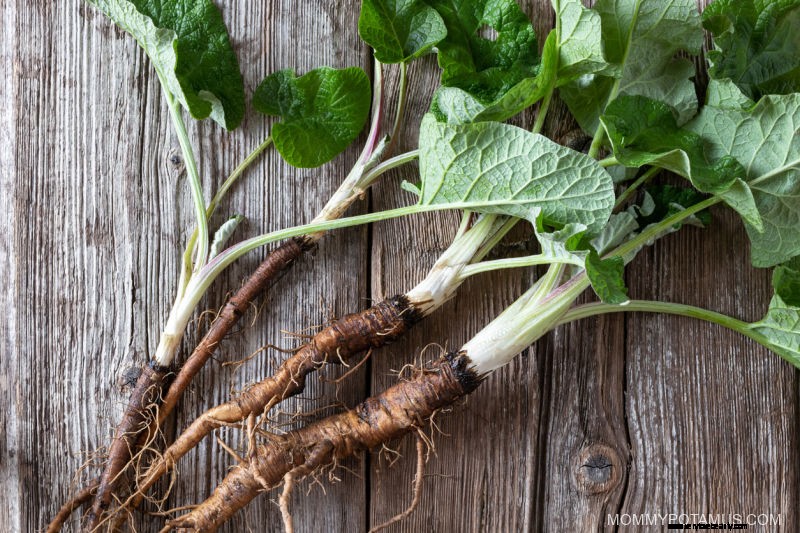
Burdock root is a digestive bitter and prebiotic, which means it contains:
Taken both internally and externally, burdock root is thought to help with:
Improving skin clarity, especially in teens or anyone with hormone-related blemishes. Because the liver is responsible for clearing away excess hormones and their byproducts, optimizing its function is essential for balancing hormones.
“It is my favorite herb for teenagers who have problem skin, acne, boils and other ‘hot conditions’ due to the shifting hormones of the teen years, and sometimes due to too rich a diet (too much sugar and fast food),” writes Rosemary Gladstar. (1)
For skin issues, it’s often sipped as a tea daily, either by itself or blended with yellow dock, red clover or cleavers. (12)
It also contains polyacetylenes which are thought to be helpful when the tea is applied topically.
Soothing itchy or irritated skin. When applied topically, burdock root tea is thought to be helpful for soothing eczema, itchiness and more. Here’s what Rosemary Gladstar has to say:
Like stinging nettle, burdock root is rich in quercetin – a flavonoid that studies suggest may support the stabilization of mast cells (the immune cells that release histamine). (13)
Click here to read more about natural strategies for seasonal allergies.
Research suggests that burdock root supports the production of insulin, which is the hormone that reduces blood sugar. (14)(7)
It also seems to have a balancing effect on the hormone leptin, which is the hormone that tells us when we’re hungry. When leptin is not functioning properly, it can cause us to feel hungry even when we have adequate nutritional stores. (14)
Burdock root contains a compound called arctigenin, which is thought to help maintain healthy blood pressure by supporting the production of nitric oxide. (15)
Nitric oxide is a vasodilator, which means it relaxes the inner muscles of blood vessels, causing them to widen. This vasorelaxation effect increases blood flow and eases tension within blood vessel walls.
Though no human studies have been conducted – unless, uh, you count your own personal research – one animal study did find that burdock root had an aphrodisiac effect. (16) More research is needed, but the findings so far align with its traditional use as an aphrodisiac.
Dried and fresh burdock root are used both as food and medicine in many parts of the world. If you’re lucky enough to come across fresh roots at your local health food store or farmer’s market – it’s sometimes listed under the name gobō root – I recommend shredding it and then adding it to stir fry.
Important note: Make sure to buy from a reputable retailer who knows herbs well, because burdock can be confused with toxic belladonna plants.
For tinctures and teas, dried burdock root works beautifully and can be easily and safely sourced online. You’ll find instructions for making both below, along with general safety information and tips for growing burdock at home.
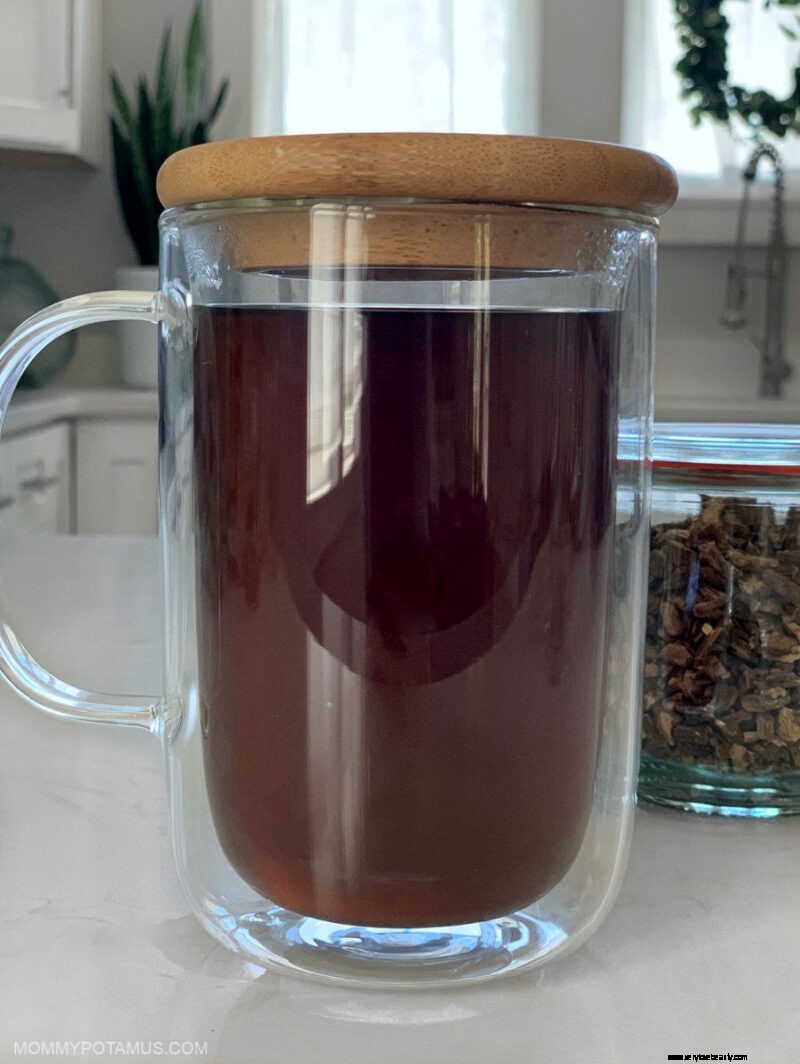
Scroll to the bottom of this article for a printable version of this recipe.
With its nutty, sweet, and bitter flavor profile, burdock root is perfect for brewing into tea. Like dandelion root, it can be roasted to increase its antioxidant concentration and nutty flavor. (17)
It can also be brewed without roasting to maximize the amount of inulin (prebiotics) present in the final cup. You’ll find instructions for both methods below.
Also, The Herbal Apothecary and other herbal sources recommend drinking burdock root tea 1-3 times per day, so I make one batch in the morning that I sip on throughout the day. Below is my recipe for a triple batch, aka three servings for use throughout the day. If you just want to make one serving use the amounts found in parenthesis.
The Modern Herbal Dispensatory recommends a 1:5 tincture (this is a ratio of herb to alcohol) with the alcohol being at least 100 proof (50% alcohol). Here’s how to make it:
Ingredients
To Make
To Use
The Modern Herbal Dispensatory suggests 1-5 ml (0.2 – 1 tsp) 3 times daily.
Rosemary Gladstar calls it “one of the safest, tastiest, and most effective detoxifying and cleansing herbs in Western and Traditional Chinese Medicine,” and the Botanical Safety Handbook lists it as a Safety Class 1A herb (the safest rating possible).
It is described as:
With that said, burdock may cause allergic reactions in people who are sensitive to plants in the Asteraceae family – for example, ragweed, daisies, marigolds, and chrysanthemums.
Always buy from knowledgeable, reputable sellers and don’t collect burdock root in the wild. It looks similar to a toxic nightshade plant called belladonna and the two often grow together.
Here are some tips for growing it: