
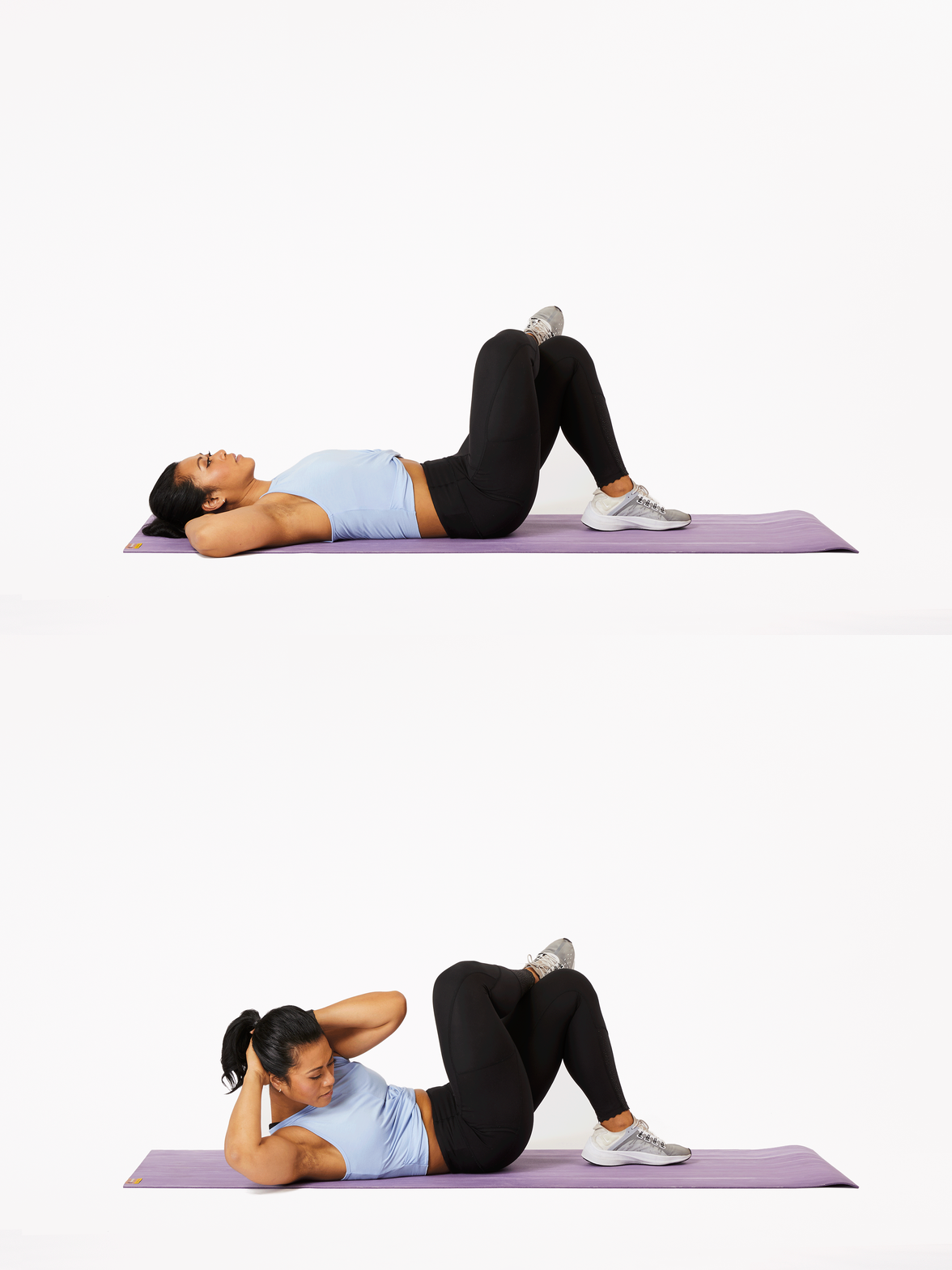
Also Known As: Cross-body crunch
Targets: Abdominal muscles, internal and external obliques
Equipment: A mat is helpful, but not required
Level: Beginner
The crossover crunch is a fantastic beginner ab exercise that works more than your abdominal muscles—it also targets your external obliques and internal obliques, helping you feel more "pulled in" at the waist.
While the crossover crunch is considered a beginner core move, you can add it to an intense workout or use variations to make the exercise more challenging.
The ab-toning benefits of a full-core workout may have enticed you to add them to your workout routine, but having a strong core can do more than enhance your physique—it also benefits your overall physical health and strength.
The muscles of your core provide key support for your spine. Strong abdominal muscles can improve posture and even help manage, reduce, or prevent back pain.
While it's not required, you'll probably want to use a mat for this exercise. Start by taking a nice deep breath and focusing on your abs.
When you've completed your desired number of reps for the first side, switch and perform the same exercise on the other side (placing your right ankle on your left knee and twisting your torso to the right).
To get the maximum benefits of this exercise and prevent injury, you'll want to make sure your form when performing crunches is correct. Check in with yourself as you work out to ensure you aren't making these common mistakes when doing crunches.
Even experienced crunchers are prone to this mistake. When lifting your upper body up from the mat or floor, make sure you aren't yanking your neck up. You may be overshooting your crunch or crunching higher than you need to.
Try picturing a tennis ball under your chin—that's about how much space you want to maintain between your chin and chest as you crunch. Check in with your hips, too, making sure you aren't lifting your pelvis off the floor.
If all your focus is on the first, upward movement of the crunch and you just let your body fall back down to the mat, you're not following through on the move. To get the full benefit of the exercise, you have to do it fully—that means engaging your muscles as you crunch up and keeping them engaged as you come back down.
Try aligning your breath with each direction of the move. This will also help you avoid another common pitfall: forgetting to breathe.
Another common mistake with crunches of any kind, but especially those that tend to speed up as you go, is breezing through the movement as you build momentum. Slow down and make each movement deliberate. Not only does this help you avoid injury or strain it also makes the move more effective. Crunches don't need to be big and fast. Think smaller, slower, targeted movement.
With abdominal exercises, more isn't always necessarily better. You don't need to do 100 crunches a day to see results—especially if you're varying your technique to target different muscle groups.
Doing fewer crunches with excellent form is more beneficial than doing more crunches where your form isn't great or lapses as you get tired.
If you need to change your arm or hand positions, or just want to change things up, try these variations on the classic hand-and-arm position for crunches:
You can also perform the crossover crunch without crossing your leg to your knee. The exercise is essentially the same, except that as you cross over you'll bring your opposite knee up to meet your elbow.
When your core becomes stronger and the exercise starts to get easier, you'll want to change things up to keep your core working hard. Try this variation using a BOSU ball to take the beginner cross-body crunch to the next level.
BOSU Ball Exercise
Place the BOSU ball under you along the natural curve of the middle of your back. Then, perform whichever variation of the crossover crunch you prefer, making sure to do the same number of reps on each side.
By introducing an unstable surface to the exercise, you force your core muscles to adjust and maintain balance while also strengthening your stabilizer muscles.
Basic crunches or variations like the crossover crunch are a beginner exercises that most people can perform as long as they use proper form. However, if you've had an injury involving your neck or back, you may want to avoid any crunch-based exercises. If you've had surgery for these conditions, be sure to ask your doctor or physical therapist about when you can resume exercise. They may also provide recommendations for workouts for regaining strength without risking further injury.
If you've recently been pregnant or given birth, ask your doctor before starting a postpartum ab workout. If you have a condition called diastasis recti (the muscles of your abdomen have separated), you may need to avoid exercises that work your core until you're healed.
As you're performing crossover crunches, if you feel any pain or discomfort in your neck, especially while your arm is extended or with your fingertips behind the ears, you may need to try a different position to support your neck.
Basic crunches are part of many core workouts. Whether you're a beginner or at a more advanced level, adding the crossbody variation into your routine keeps things interesting and ensures you aren't giving your abs all the attention while leaving out other key muscle groups.
Try pairing crossover crunches with these moves for a complete ab workout:
If you're more advanced or looking for a challenge, try one of these workouts that puts a new spin on traditional core exercises: