
Breast cancer is defined as Stage 1 when it's evident but confined solely to the area where abnormal cell division began—in other words, it's growing but hasn't spread. Stage 1 cancer is subdivided into Stages 1A and 1B. When detected at this early stage, treatment is usually very effective and the prognosis is good.
Understanding what a stage 1 tumor is, what treatment options you have, and your prognosis can help empower you and calm your fears.
Stage 1 breast cancer is the earliest stage of what's considered invasive breast cancer. "Invasive" does not mean that the cancer has invaded other areas of your body. Rather, it simply means that the cells in your tumor have infiltrated the area past what's called the basement membrane.
When a tumor first begins, it has not yet grown past this membrane and isn't considered cancer, but rather carcinoma in situ. These tumors are referred to as stage 0 tumors. Carcinoma in situ is 100% curable with surgery since the cells are completely contained.
Stage 1 tumors are the earliest stage of true breast cancer. These tumors are small, and if they have spread at all to lymph nodes, the spread is only microscopic.
To understand how your healthcare provider determines the stage of your cancer, and if you have a stage 1A or stage 1B tumor, it's helpful to know a little about something called the TNM system of classification.
Thus, using the TNM system, stage 1 cancers are defined as follows:
It can be confusing (and very frightening) if you read your pathology report and note that it says that cancer has "metastasized to lymph nodes." This does not mean that you have metastatic breast cancer (stage 4 breast cancer). You can have lymph node metastases even with early-stage disease.
Overall, stage 1 tumors are those which are smaller than an inch in diameter and either do not have lymph node involvement or have spread to nearby lymph nodes only on a microscopic level. Once you know the stage of your breast cancer, there are several more things you will need to know before selecting the best treatment options.
Tumor grade is a number that describes the aggressiveness of a tumor. Pathologists look at the cancer cells from a biopsy and/or surgery under a microscope to determine things such as how actively cells are dividing. Tumors are then given a grade of 1, 2, or 3, with 1 being the least aggressive and 3 being the most aggressive.
Your tumor grade doesn't necessarily tell you what your prognosis will be, but it does help you and your healthcare provider choose the best treatments.
You'll also need to know your tumor's receptor status. Receptors are proteins found on the surface of cancer cells that can tell what fuels the cell's growth and division. The three types you'll hear about are:
Once your tumor cells are tested, you'll be told whether it's:
Treatment options for stage 1 breast cancer fall into two main categories:
If a tumor is very small, local treatments are usually all that's required. If the tumor is larger, more aggressive (has a higher tumor grade), has spread to lymph nodes, or has a molecular profile that indicates it's more likely to spread, systemic treatments are usually recommended.
With stage 1 breast cancers, the use of systemic therapy is considered adjuvant (add-on) therapy. The goal is to eliminate any cancer cells that may have spread beyond the breast but are too small to be detected.
In consultation with your healthcare provider, weigh the pros and cons of each option in relation to your case.
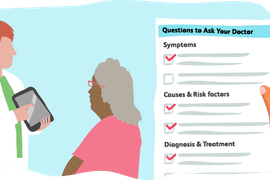
Get our printable guide for your next doctor's appointment to help you ask the right questions.
Surgery is recommended for the majority of stage 1 cancers. Options include either a lumpectomy or a mastectomy. People choose one over the other for a number of reasons, and it can be a very personal choice.
If you choose a lumpectomy, following up with radiation therapy is usually recommended.
If you opt for a mastectomy, your healthcare provider will talk to you about the option of breast reconstruction. Skin-sparing surgery is becoming more common, and with this procedure, an implant or at least an expander is often placed at the same time as your mastectomy. In addition, depending on your risk factors, you may need to weigh the risks and benefits of having a single vs. double mastectomy.
In addition to discussing the efficacy of these options with your healthcare provider, be sure to also talk about what you can expect cosmetically with each procedure.
A sentinel node biopsy may be done before your surgery. In the past, several lymph nodes were usually removed and then examined under the microscope, but it's now possible to determine which lymph nodes cancer will first spread to and sample only those nodes. If your lymph nodes are positive, it means the tumor has a higher chance of spreading to other organs or distant parts of the body. Often, chemotherapy is recommended to get rid of any cells that have spread.
An Overview of Lymph Node-Positive Breast CancerIf you have a lumpectomy, radiation therapy is usually used to treat your remaining breast tissue. With stage 1 breast cancer, radiation therapy is not usually needed after a mastectomy.
Chemotherapy is sometimes used as an adjuvant treatment for stage 1 breast cancer.
The purpose of chemotherapy is to treat any cancer cells that may have strayed from your breast before they can grow into metastases. It's often recommended for those with micrometastases in the lymph nodes.
The use of chemotherapy is also very dependent on the receptor status of the tumor. In a patient who is HER-2 positive or triple negative, chemotherapy is often used even if the lymph nodes are completely negative.
However, it's traditionally been difficult to determine who will benefit from chemotherapy, and it's especially difficult with node-negative stage 1 breast tumors that are positive for hormone receptors and negative for HER-2.
The Oncotype Dx Recurrence Score or MammaPrint are genomic tests that can be helpful in determining who should undergo chemotherapy. Those who score higher on the test are at higher risk for recurrence and chemotherapy can increase their survival rates. Those with low scores, meanwhile, are not likely to benefit from chemotherapy. However, these tests are only used in patients with estrogen and/or progesterone positive tumors that are also HER-2 negative. They are not used in patients with triple negative or HER-2 positive breast cancer.
Since some of the rare but potential side effects of chemotherapy can be severe—such heart failure and secondary leukemia—it's important to weigh the possible risks and benefits.
If your tumor is estrogen receptor positive, hormonal therapy is usually recommended following primary treatment with surgery and chemotherapy/radiation. The purpose is to reduce the risk that cancer will come back.
Estrogen receptor-positive tumors are more likely to have a late recurrence (more than five years after diagnosis). The drug tamoxifen is often used for premenopausal women. For postmenopausal women, treatment is usually an aromatase inhibitor such as Aromasin (exemestane), Arimidex (anastrozole), or Femara (letrozole). In some high risk premenopausal women, an aromatase inhibitor is sometimes used in conjunction with drugs to suppress ovarian function.
If your tumor is HER2 positive, a HER2 targeted medication such as Herceptin (trastuzumab) is usually started after primary treatment.
The only way progress is made in the treatment of breast cancer is through studying new drugs and procedures in clinical trials. Many myths about clinical trials abound, but the truth is that every treatment being used today was once studied in a clinical trial. If other treatments have failed, this may be an avenue to explore.
It is important to choose the treatments which are best for you, no matter what someone else may choose. It's also very important to be your own advocate for your cancer care. Patients and healthcare providers are working together much more closely than in the past and you are a vital member of your cancer team.
For those who receive treatment with surgery and chemotherapy or radiation therapy, if recommended, the five-year survival rate is close to 100%.
Even so, going through treatment for stage 1 breast cancer is not easy. Side effects are common, especially with chemotherapy, and fatigue is almost universal.
After your initial breast cancer treatment is over, expect follow-up care to last another five years or possibly more. Ongoing treatments depend on multiple factors and may include:
It's important for you to know the signs and symptoms of a recurrence so you can alert your healthcare provider right away if you suspect cancer is coming back.
When you have stage 1 breast cancer, your emotions may span the spectrum from fear to worry to confusion to panic, sometimes in a manner of minutes. It's important to have an outlet for your negative emotions and to remember that it's OK (and understandable) to have a bad day.
You may encounter some people who say things like, "it's only stage 1," which can feel diminishing. While some may say this because they are unaware of the diagnosis's significance and the treatment involved, others may say this in an attempt to make you feel better (i.e., "at least it's not stage 4"). You are entitled to your feelings about your diagnosis, no matter what others say, but it may help to know where these comments often stem from.
One of the best things you can do for yourself is to gather a support network. Consider the people in your life you can lean on, both emotionally and practically. Even if you are feeling good through your treatment, it can be exhausting. Ask for help and allow people to give it to you.
Getting involved in a support group or online support community can be priceless. There is something very special about talking to others who are facing the same challenges you are. These communities also offer a chance to learn about the latest research on breast cancer, as there is nobody as motivated as those living with the disease.
There is a strong chance that stage 1 breast cancer may not metastasize if it is fully treated while at that stage. It can metastasize if it is not treated while it is still in stage 1.
It is not possible to determine exactly how long it will take for newly diagnosed breast cancer to progress from stage 1 to stage 2. It can happen within months if it is an aggressive high-grade tumor, or it can take longer. It's important to know that stage 1 breast cancer could have already been present for a while before being detected, so it may progress quickly.
The chemotherapy used for treating stage 1 cancer is determined on a case-by-case basis, guided by factors like hormone receptors and genetic mutations identified in the cancer cells.
If stage 1 cancer is treated comprehensively, it rarely comes back. A new, unrelated breast cancer is more likely to emerge after stage 1 breast cancer is treated than a recurrence. Your healthcare provider will recommend a surveillance schedule for you so that new breast cancer or a recurrence can be identified and treated as quickly as possible.
Even though the survival rates for stage 1 breast cancer are very good, it can be challenging to think about all the steps you need to take to get there. Lean on others and allow them to help you. Many cancer centers have support groups or mentors for those newly diagnosed. Taking the time to visit with people who have gone through the treatments and come out not just surviving but thriving can be encouraging.