
Stage 3 breast cancer is more advanced than stage 2 but is not considered metastatic. With stage 3, cancer has not spread from the breast to organs or other distant sites in the body. Instead, cancer cells are constrained to nearby axillary (underarm) lymph nodes or those beneath your sternum (breastbone) or clavicle (collarbone).
A stage 3 breast tumor can range in size from less than 2 centimeters to over 5 centimeters, but there are cases in which no tumor is found in breast tissue. This stage of cancer is not strictly defined by the presence of a tumor but rather the degree of its invasiveness.
At stage 3, cancer may have spread to the chest wall or the skin of the breast, but it has not reached other organs of the body other than nearby lymph nodes.
Stage 3 is further classified by three scenarios—3A, 3B, and 3C—each of which describes, among other things, the number of axillary lymph nodes affected and whether those of the breastbone or collarbone are involved.
These substages can be further broken down by tumor size and other characteristics outlined in the TNM Classification of Malignant Tumors (also known as the TNM system).
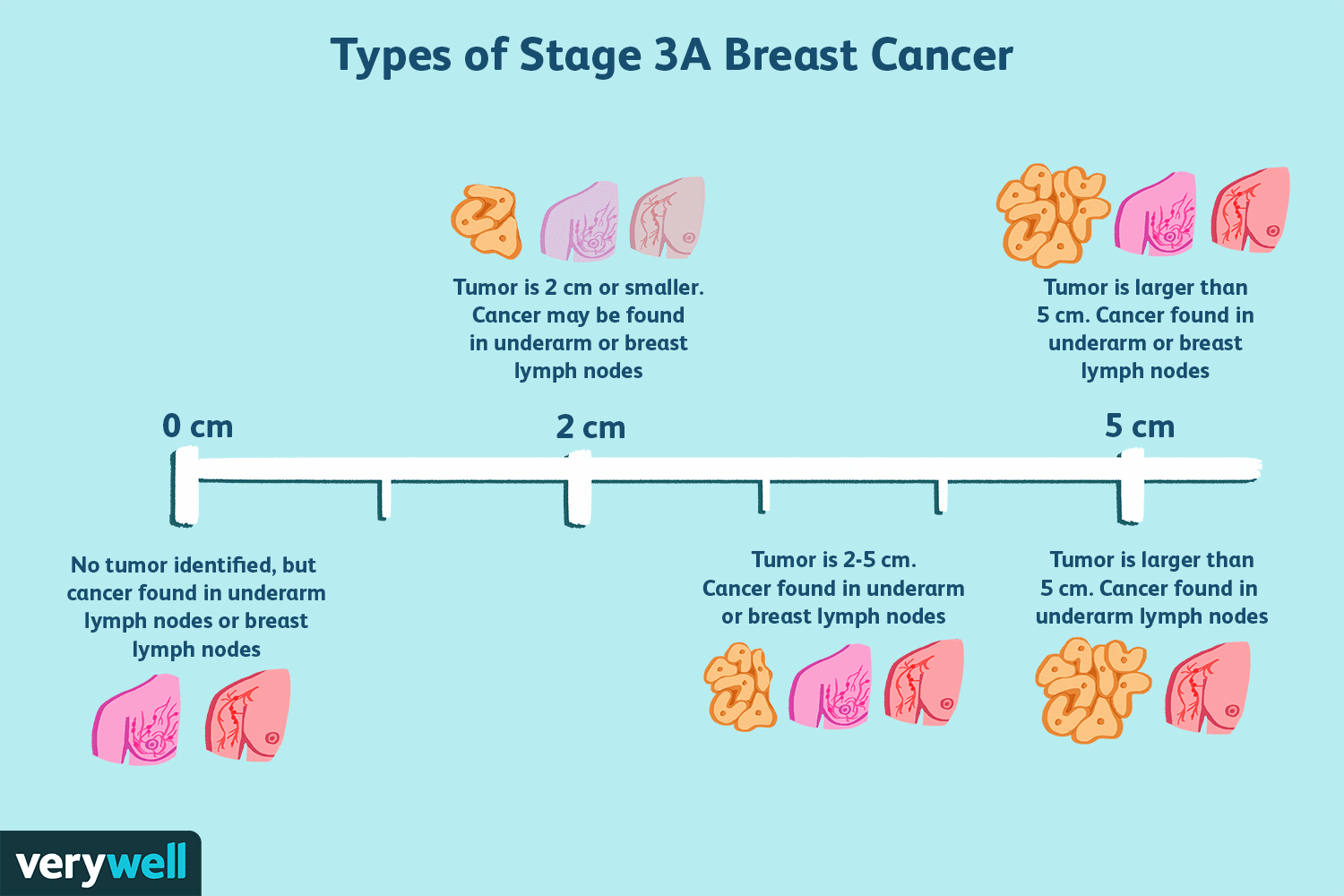
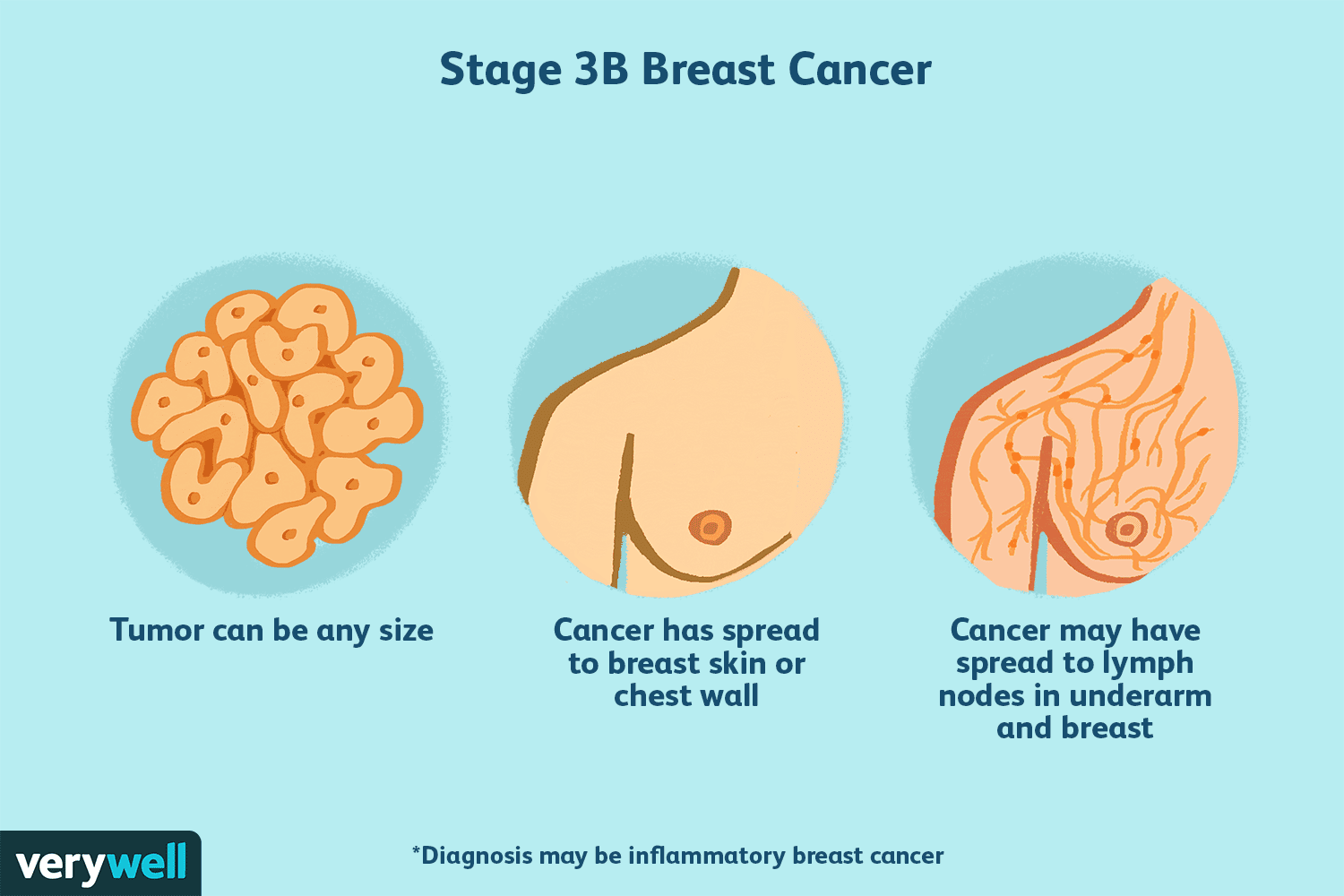
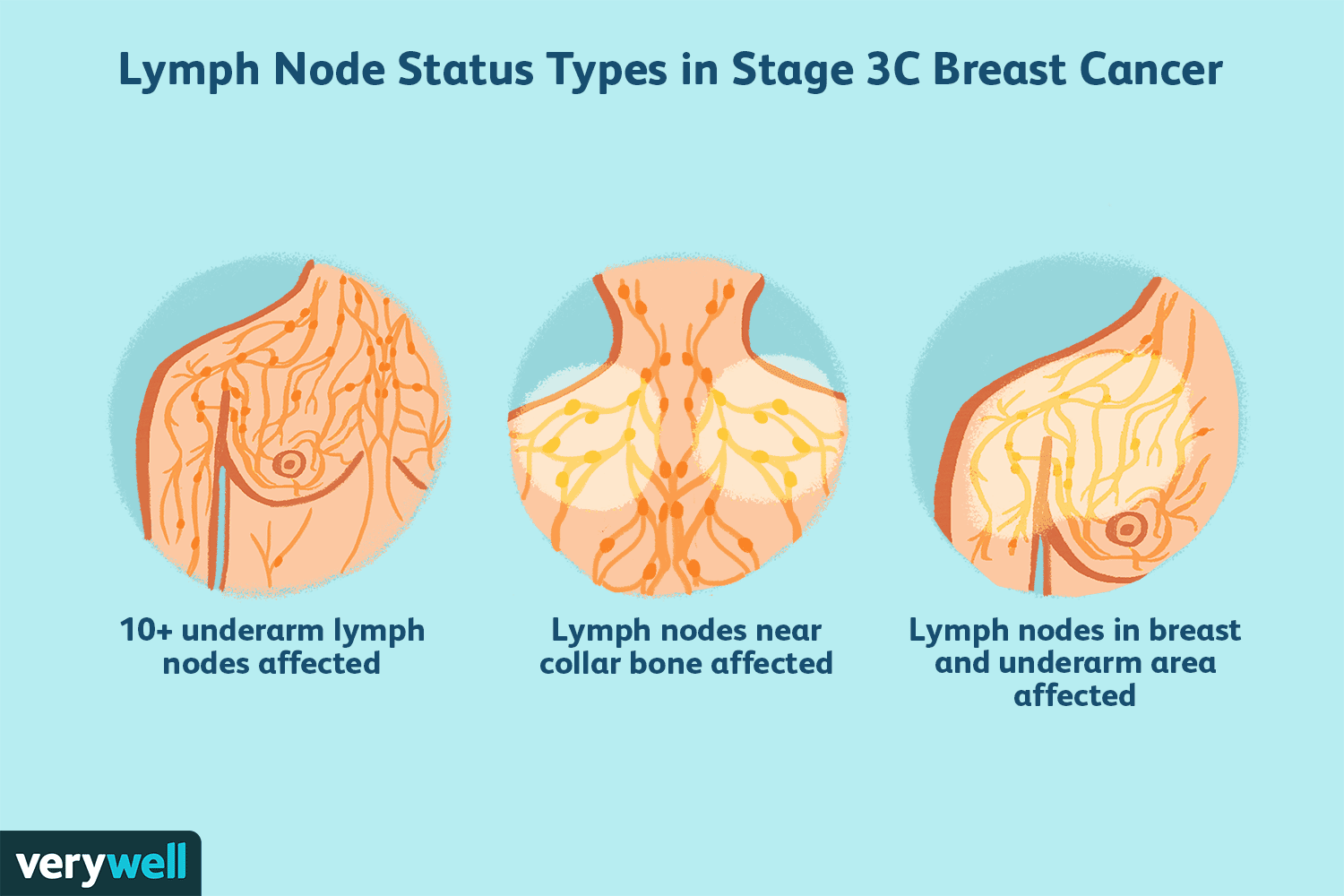
Stage 3 breast cancer is broken down into substages 3A, 3B, and 3C. Since both your treatment and prognosis can be impacted by these classifications, careful staging is needed.
Although the TNM system may seem confusing at first, the rationale is pretty straightforward. The TNM system stages cancer based on three characteristics represented by its acronym:
The letters are followed by numbers that further describe the size and extent of the malignancy. Further nuance, then, can be added to the diagnosis of a stage 3 breast cancer by reviewing its specific TNM score.
TNM Staging Letters and NumbersThe actual outcome can vary based on the substage and other factors, including a woman's age and HER2 status.
Your doctor will talk with you about your individual outlook based on, among other things, your general health, age, and your cancer's hormone status. It is important to remember that the statistics used to estimate survival are derived from a large population of people, which may not apply to you individually.
Get our printable guide for your next doctor's appointment to help you ask the right questions.
Furthermore, as newer and more effective therapies are being released each year, the five-year survival rate today may be very different than those issued five years from now.
A five-year survival rate of 73 percent means that 73 percent of women will live for at least five years. It does not mean you will only live for five years. Many women with stage 3 breast cancer will live for years and even decades more.
If diagnosed with stage 3 breast cancer, your treatment plan would likely include surgery, chemotherapy, and, in most cases, radiation.
The selection of drugs will depend on your cancer type. If your tumor is HER2-positive, for example, you will also be given Herceptin (trastuzumab). If it is hormone-sensitive (meaning that estrogen and/or progesterone can influence a tumor's growth), you can expect to take hormonal therapies for at least five years after primary treatment ends.
Hormone Therapy for Breast Cancer 3:01Smaller tumors that have not infiltrated skin or muscle may be removed with a lumpectomy. A sentinel node biopsy will be needed to find out if cancer cells have traveled beyond your breast.
Larger tumors, including those that have invaded the chest wall, will require a mastectomy along with a lymph node biopsy. Breast reconstruction may be offered, but it is sometimes delayed due to radiation therapy.
Chemotherapy is typically used in stage 3 to chase down any stray cancer cells following surgery, reducing the likelihood of recurrence. Chemo can also be given in advance of surgery to shrink a tumor.
Chemotherapy is given after surgery is referred to as adjuvant chemotherapy. When delivered before surgery, it is called neoadjuvant chemotherapy.
If breast cancer involves the skin, it may be inflammatory breast cancer (so-named because the breast will often look swollen and red). Neoadjuvant chemotherapy is usually the first course of treatment for this rare and aggressive type of malignancy. Not only can it help shrink the tumor, but it will also kill cancer cells around the margins, making it easier to remove and reducing the need for repeat surgery.
Inflammatory breast cancer almost always requires a mastectomy and axillary lymph node removal (dissection).
How Cancer Spreads and RecursFollow-up care will depend largely on your hormone and HER2 status. Once primary treatments are complete, you will have a five-year period where you will have regular checkups with your oncologist.
During this time, you will continue to have annual mammograms and perform regular self-exams if breast tissue is still remaining.
Women often assume that all of their breast tissue has been removed following a mastectomy. This is not necessarily the case. Speak with your oncologist to understand the extent of the surgery and your need for regular breast examination.
Your healthcare provider may also recommend periodic magnet resonance imaging (MRI) of your other breast if it was not removed. An MRI offers 10 and 100 times greater resolution than a conventional mammogram and may be more appropriate for high-risk cases.
You would also be advised to maintain a healthy diet and embark on regular exercise to rebuild your stamina, strength, and well-being.
Stage 3 is the most advanced early stage of breast cancer, but it is still very treatable. And cancer treatments are improving every day. By way of example, bisphosphonates were added to the treatment regimens for estrogen-positive breast cancer in 2017 after evidence showed they could prevent bone metastasis.
Keep in mind that the survival statistics do not take into account many of these newer and more targeted therapies.
Reaching out to others has also been shown to improve survival rates. Join a support group or find an online cancer community. Most of all, be an advocate in your own care, not only with regard to breast cancer but your overall health after treatment.
There are many different types of breast cancer, but these represent some of the main types.
There are five main stages of breast cancer that start from stage zero (non-invasive breast cancer) and end at stage four (invasive cancer that has spread to other areas of the body). However, each breast cancer stage above zero also has subcategories. For example, stage three breast cancer has three subcategories, which are referred to as IIIA, IIIB, and IIIC.