
Stage 2 breast cancer is a fairly common stage of breast cancer diagnosis. Stage 2 tumors are at least 1 centimeter (cm) in size and have spread to lymph nodes. Treatment usually includes surgery (either a lumpectomy or mastectomy), and adjuvant chemotherapy is often recommended. Radiation therapy is needed after a lumpectomy, but may or may not be needed after a mastectomy.
If the tumor is estrogen receptor-positive, hormone therapy is usually prescribed for five to 10 years, and for those who are postmenopausal, bisphosphonate therapy may be recommended as well to reduce the risk of recurrence. If the cancer is HER2-positive, targeted therapy is often used prior to surgery.
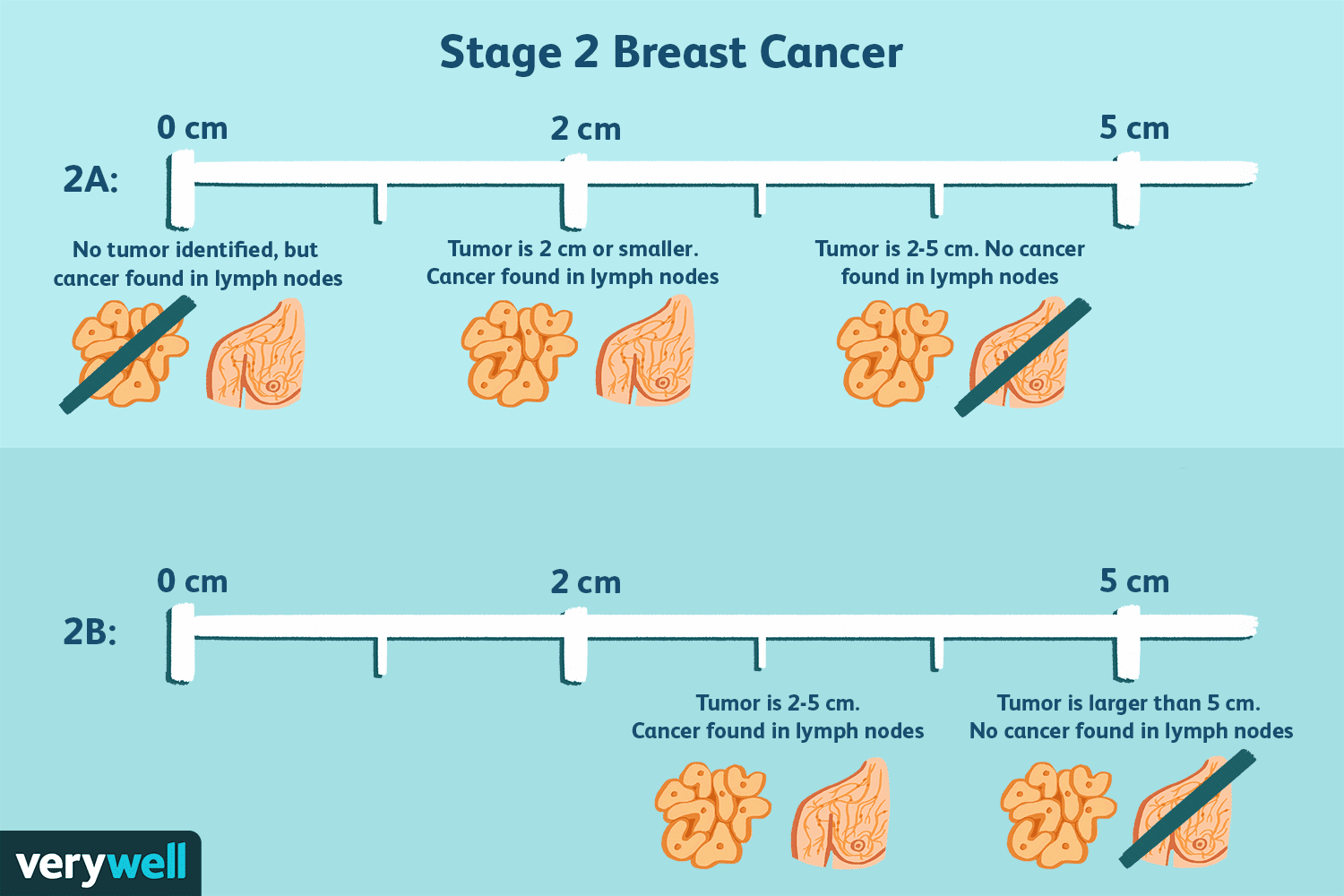
Stage 2 breast cancer is considered invasive, meaning that cancer cells have broken out of the ducts or lobules of the breast. This is not the same as metastatic (stage 4) breast cancer. It means that abnormal cells have passed through a thin layer of tissue called the basement membrane and have the potential to spread.
3:01Cancers are scored and divided into stages by the TNM system. Stage 2 cancer can be either 2A or 2B.
In this system:
Your treatment can include a combination of approaches.
Treatment options include:
You may spend three to 18 months or longer in the active treatment of stage 2 breast cancer. It may range from surgery and six weeks of radiation to a full array of chemo, radiation, and biologic therapies.
At the onset, it is important to understand that survival rates are not a direct indication of how long you will live following the diagnosis and treatment of breast cancer. Rather, rates reflect how many people on average will be expected to survive for a given period of time.
According to the American Cancer Society, the five-year survival rate for stage 2 breast cancer is 93% for women who have completed treatment. Women with stage 3 cancer have a five-year survival rate of 72%.
Treatments have improved greatly over that time, so you may have a longer-term estimated survival if you are newly diagnosed.
After your treatment is completed, you will have a five-year minimum follow-up period with your oncologist; check-ups will take place every three then every six months.
During this time, you may need to take hormone therapy if your tumor was hormone-sensitive. Sometimes hormone therapy is recommended beyond five years for those with estrogen receptor-positive tumors.
If your tumor is estrogen-receptor positive, your oncologist may also recommend that you use bisphosphonate therapy if you are postmenopausal. Bisphosphonates are medications that are used for the treatment of osteoporosis, and they also may help reduce the chance that breast cancer will spread to bones (the most common site of metastases).
Unlike some cancers, routine scans are not usually done after primary treatment for stage 2 breast cancer has been completed. The reason for this, even though recurrence is a possibility, is that finding a recurrence early (before symptoms appear) does not improve survival. For those who have finished treatment, it's important to be familiar with the potential signs and symptoms of a recurrence and to contact your healthcare provider with any concerns.
After five years, you may only need to see your oncologist annually, but these visits most often continue throughout your life. Check-ups are important to make sure that recovery is going smoothly and that treatment for recurrence won't be needed.
Get our printable guide for your next healthcare provider's appointment to help you ask the right questions.
If you've been recently diagnosed with stage 2 breast cancer you may feel overwhelmed with all there is to learn.
You have a multitude of resources for receiving support and learning more about your diagnosis. Ask for help and reach out to your loved ones. Consider becoming involved in one of the active breast cancer support groups or support communities available.
Most importantly, learn how to be your own advocate in your cancer care. Cancer treatments are changing rapidly, and it's important to understand the options available so you can be an active member of your cancer treatment team.
While it may seem frightening to be diagnosed with stage 2 breast cancer, remember that it is still considered early-stage cancer. Most women diagnosed at this stage do well with treatment and go on to live normal lifespans.
According to the American Cancer Society, radiation therapy may be used after lumpectomy (breast-conserving surgery) to mitigate the risk of cancer cells recurring in the same breast or nearby lymph nodes. After a mastectomy, an oncologist may determine that radiation is necessary if the tumor was larger than 5 cm, if there was lymph node involvement, or if cancer was found outside of surgical margins.
Cancer cells divide and multiply quickly in such a way that as a tumor gets bigger, it divides and grows even faster. The average doubling time for breast cancer tumors is between 50 and 200 days. Breast cancer tumor growth rate is impacted by hormonal factors, such as hormone receptor status and HER2 status.
In women who have breast-conserving treatment, the chance of recurrence is about 3-15% in 10 years, depending on tumor characteristics and margins. Distant recurrence in those who had mastectomy is most influenced by axillary lymph node involvement. When axillary lymph nodes are not cancerous, the recurrence rate is 6% in 5 years. When axillary lymph nodes are cancerous, the recurrence rate is 23% in 5 years with mastectomy but no radiation.
If you've been diagnosed with stage 2 breast cancer, the outlook is very good. You are more likely to have chemotherapy and/or radiation therapy than if your tumor was stage 1, but these tumors are still very treatable.. Make sure you understand your treatment plan and remember that you are the most important person on your cancer care team.
Understanding Stage 3 Breast Cancer