
Left breast pain is a symptom with many possible causes. Some are due to breast issues and others aren't.
The first priority when you have pain in the left breast is to make sure it isn't your heart. If not, it's time to figure out what it could be.
This article will walk you through the causes of left breast pain, the other symptoms to watch for, and when to see your healthcare provider.
Verywell / Emily Roberts
Your left breast pain is most likely due to something not heart-related. Still, the first question to ask is whether it's a heart attack.
The symptoms of heart disease in those assigned female at birth are often different from those in people assigned male at birth. Pain may be mild, burning, or simply like an achy breast.
The often vague and subtle symptoms lead women to overlook the signs. Too often, that's a fatal mistake.
Everyone should be familiar with the symptoms of a heart attack. They may include:
If you're not sure where your pain is coming from, get immediate medical attention.
Having a Heart Attack? How to Tell, What to DoLeft-sided breast pain can originate in the breast itself or in other nearby structures. It can be hard to pinpoint the source.
The location of pain isn't always the same location as the problem. Some nerves are very specific. For example, if you feel a sensation on your fingertip, it's likely caused by something at that site.
Other nerves aren't as specific. They alert you to the general area of a problem, not the precise location.
It's common not to know whether your pain is in your breast or in something close to it.
When you have left-sided breast pain, first make sure it's not a heart attack. Then try to determine whether it's your breast or another nearby structure that hurts.
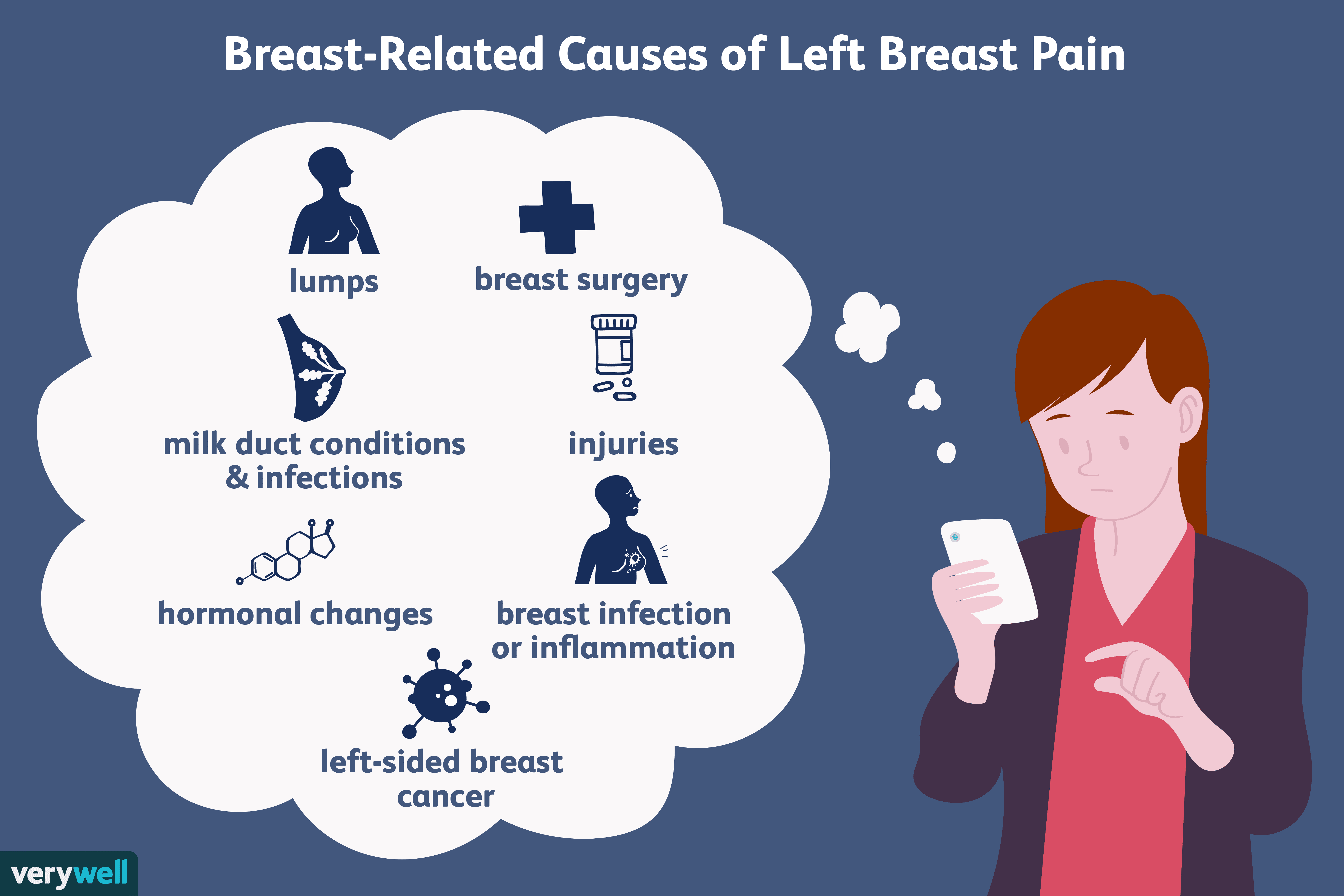
Several breast conditions may cause left-sided breast pain. They include:
Your breasts are covered with sensitive, elastic skin that protects:
If you've had a breast injury, bruising and aches may last until the injury heals.
Sometimes an injury to the breast causes scar tissue. Scar tissue can cause pain and fat necrosis, a breakdown of fatty tissue. It may appear as a hard lump. These lumps are hard to distinguish from breast cancer, even on a mammogram.
After any type of breast surgery—augmentation, reduction, or reconstruction—your breasts will hurt as the incisions heal and scar tissue develops.
As with scar tissue from an injury, pain can come and go long after your surgery. Depending on the type of surgery, you may experience:
Several benign but painful conditions can develop inside your breast milk ducts.
If you suspect a breast infection or inflammation, see your regular healthcare provider or gynecologist. You may need to antibiotics or other prescription medications.
Hormone changes may cause breast tenderness. That's especially true during the fluctuations of your menstrual cycle.
Other causes include taking hormones for:
You may feel pain in one or both breasts. It may be worse on one side. You might also feel it in your armpit.
Some thyroid diseases can lead to benign (noncancerous) breast changes that cause pain. These include:
The nature of the pain depends on the specific breast changes.
Breast lumps can show up at certain stages of your menstrual cycle. If you find lumps at other times, see your healthcare provider right away. It's even a good idea to get lumps that are related to your cycle checked out.
Your provider can take the steps necessary to see whether a lump is benign or malignant (cancerous). They'll likely use imaging tests and possibly a biopsy.
Breast-related causes of left breast pain include injuries, surgery, problems with milk ducts, hormonal fluctuations, and benign lumps.
Breast cancer is usually—but not always—painless in the early stages. A notable exception is inflammatory breast cancer.
That's an aggressive breast cancer that usually begins with:
This cancer often resembles an infection. Most of the time, you can't feel a lump. The only early symptom may be the pain in one breast.
Breast cancer in female breast tissue occurs slightly more often on the left side than the right. (It occurs equally on both sides in male breast tissue.)
Breast pain is likely due to something other than cancer. Roughly one in six women with breast cancer have breast pain in the three months before diagnosis.
Early breast cancer is usually painless unless it's inflammatory breast cancer. Pain on one side may be the first symptom. Redness and swelling may follow. In female breasts, the left side is more prone to cancer.
Verywell / Emily Roberts
It can sometimes be hard to tell where pain is centered. You may feel it in your left breast while it actually comes from beneath it.
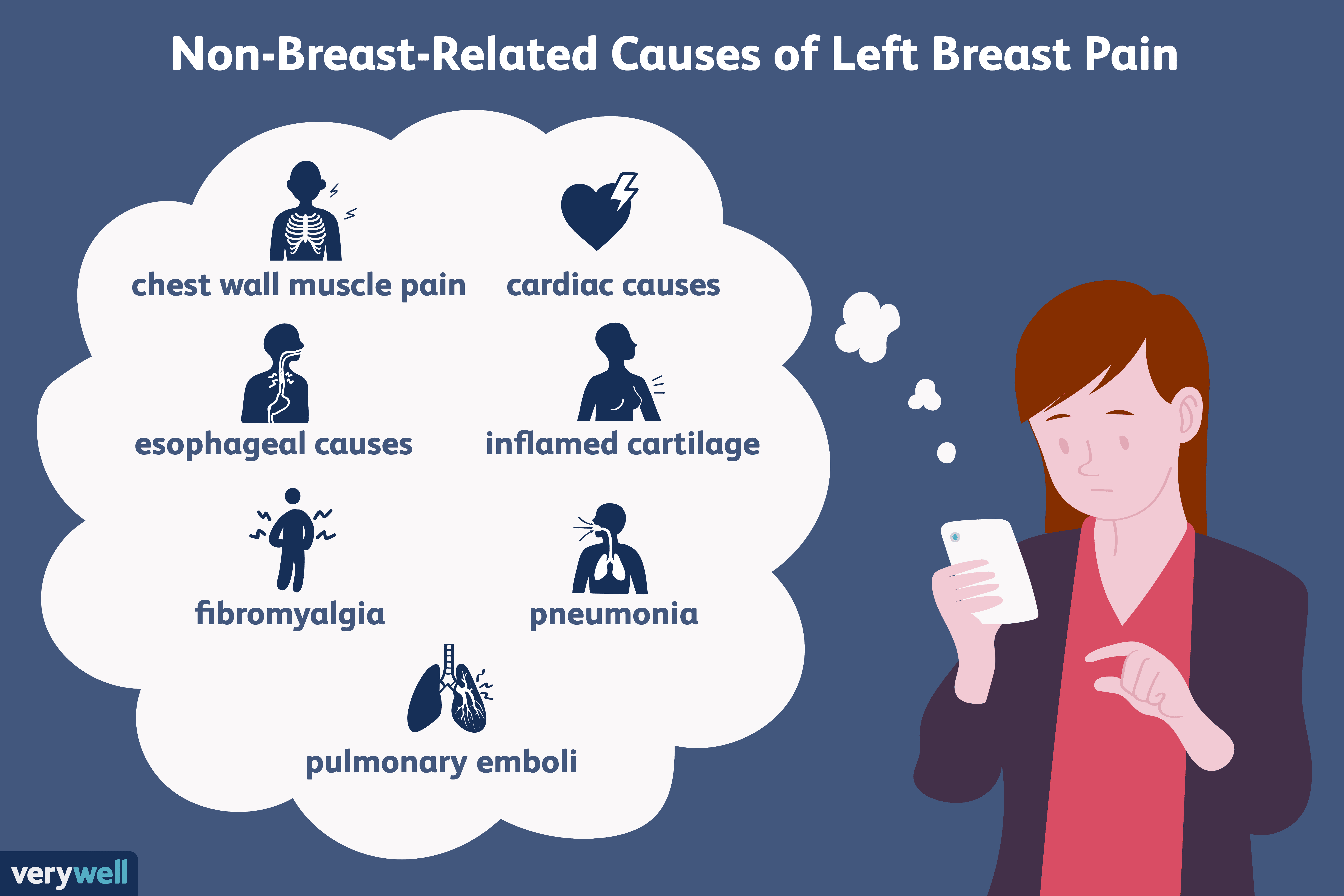
Some non-breast conditions you may feel in your breast include:
Below your breast are chest wall muscles. They may spasm when you're anxious or stressed. That can cause pain that lasts for a few seconds or several days.
Chest wall pain from inflammation of the cartilage between the breastbone and ribs is called costochondritis.
Chest wall problems can cause a sharp, stabbing pain. It can appear on either side. (It's less common on the right, though).
Chest wall pain ranges from mild to severe. It's usually painful to the touch. The pain may radiate to your back or stomach.
It may get worse when you take a deep breath. Pains may even shoot down your arms.
You can also have pain from pulling a chest muscle.
Your esophagus is the tube that connects your mouth and stomach. It runs below your left breast.
So gastroesophageal reflux disease (GERD) can sometimes feel like left breast pain. A related condition called hiatal hernia may cause similar symptoms.
Pain from the esophagus may be a burning pain, like heartburn. You may have other symptoms like an acidic taste in your mouth.
Other digestive system conditions, such as liver disease, may at times cause pain that feels like it's in your breast.
Fibromyalgia is a chronic pain condition. It can cause pain anywhere in your body. Chest pain, including costochondritis, is fairly common.
Fibromyalgia pain comes from a disordered nervous system. It affects not only nerves, but muscles, joints, and connective tissues. The pain it creates can be generalized and diffuse or sharply focused.
The nature of the pain can be dull and achy, sharp, stabbing, burning, or tingling. Fibromyalgia pain is notably not tied to inflammation, redness, or warmth.
Very often, fibromyalgia pain is made worse with gentle pressure. This is called tactile allodynia.
The 7 Types of Fibromyalgia PainYour lungs sit behind your breasts. A couple of lung-related conditions can cause pain that's mistaken for breast pain. They include:
Other symptoms of a pulmonary embolism include sudden shortness of breath and coughing.
Pulmonary emboli are medical emergencies that require immediate treatment.
Sometimes pain feels like it's either in the skin or on the outer surface of the breast. This may be shingles.
That's a condition caused by reactivation of the virus that causes chickenpox (the varicella-zoster virus). It can come on years or decades after you have chickenpox.
The initial tenderness is generally followed by a painful rash. Because the rash is the more recognizable symptom, shingles can be hard to recognize early on.
Shingles and How to Recognize ItPain from other areas that's felt in the left breast include chest wall pain, problems with the esophagus or lungs, fibromyalgia, or shingles.
Breast/chest pain plus sudden shortness of breath and coughing may be a pulmonary embolism. Get emergency medical treatment for these symptoms.
Left-sided breast pain has many causes. Some are more serious than others. The only way to know for sure what's causing your pain is to get medical attention.
Pain is your body's way of alerting you to a problem. Don't ignore it or assume it's harmless.
If your healthcare provider doesn't find an explanation for your pain, keep pushing for one. If pain persists, consider getting a second opinion.
It's not unheard of to have more than one cause of left breast pain. For example, you may have a breast cyst along with costochondritis.
Call a healthcare provider for your breast pain if:
The first thing to do when you have left breast pain is get checked for a heart attack.
Left breast pain can come from injuries or conditions that affect the breast tissue and milk ducts. Breast cancer isn't usually painful early on. An exception is inflammatory breast cancer, which also causes redness and swelling.
Pain from other areas that's felt in the left breast can come from nearby structures like chest muscles, the lungs, or the esophagus. Nerve pain in the area can be from fibromyalgia or shingles.
See your healthcare provider about left breast pain so you can have it diagnosed and treated.
Left breast pain may lead your mind straight to breast cancer. Rest assured most breast pain isn't cancer related.
Even so, be sure to get pain or suspicious lumps checked out right away. An early diagnosis and treatment are best when the cause is serious.
Even if your left breast pain isn't a symptom of a serious condition, you'll feel better once it's gone. See your doctor, get a diagnosis, and follow treatment recommendations.
Yes. Make sure you wear the appropriate-size bra with proper support for your chest size. Incorrect fit can cause sagging and pulling, which causes breast discomfort.
The organs under and slightly below the left breast include the:
The sternum and rib cage cover and protect these organs. They're also beneath the breasts.