
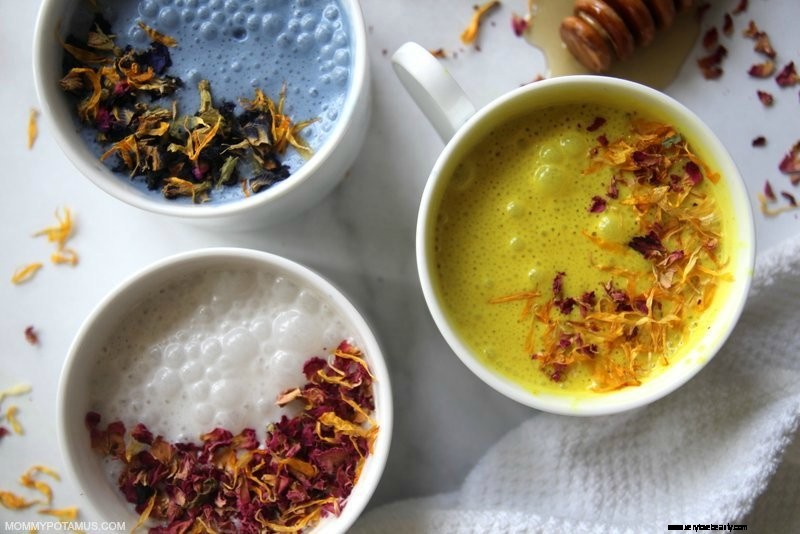
If you’ve never replied “I. AM. ALCHEMIST.” to a text question about the grocery ingredients you requested, get ready. These relaxing moon milk recipes are full of familiar, comforting flavors blended together with a few out-of-the-ordinary twists.
You might have noticed from my library that I’m very much a research nerd, with titles like Adaptogens In Medical Herbalism and The Modern Herbal Dispensatory: A Medicine-Making Guide.
That wisdom is contained in these recipes, but in addition there’s also something that just feels so beautiful and therapeutic – even enchanting – about whipping up a nighttime cup of moon milk.
Infused with ashwagandha root – which supports resilience during times of chronic stress and can help rebuild when we’ve already overdone things – these recipes are perfect for unwinding after a long day. I like to sip mine while curled up with my weighted blanket, or out on my patio underneath the stars. But I’m getting ahead of myself, because you’re probably wondering . . . .
In Ayurveda – which translates from Sanskrit as “The Science of Life” and is one of the oldest systems of healing in the world – warm milk has long been used to ease occasional sleeplessness. Moon milk, which has a few basic components we’ll cover below, is based on this traditional use.
Interestingly, when cows are milked at night, their milk contains higher levels of two compounds that help with rest and relaxation: tryptophan and melatonin. (1)
If you’re dairy-free, this recipe is for you, too! Some nut milks contain naturally occurring tryptophan and melatonin, too, which I’ll cover in more detail below.
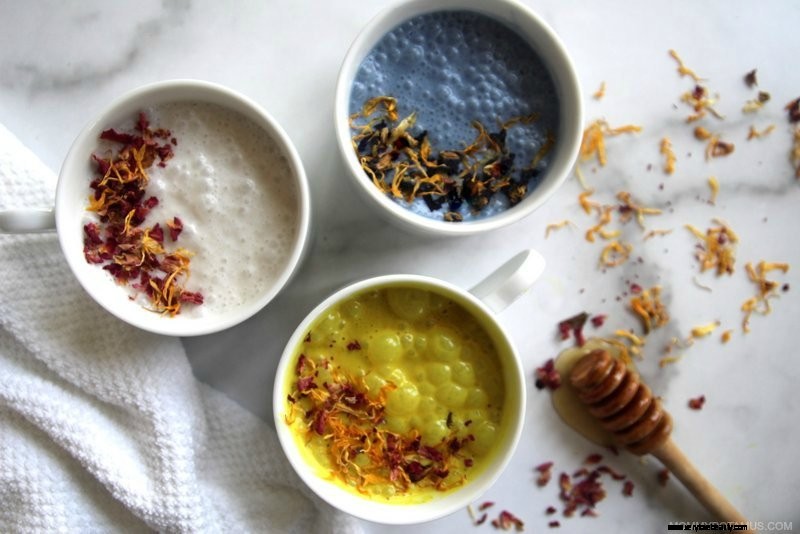
Moon milk can be a simple preparation of milk and honey, or a rich infusion of calming herbs and warming spices with a touch of sweetener. I prefer to add herb and spices to add flavor while also calming the nervous system and helping the body to prepare for sleep. Here’s an overview of the most common ingredients.
This is of course the creamy base – without it I suppose this drink would be moon juice which doesn’t have quite the same ring. As mentioned above, cow’s milk contains naturally occurring compounds like tryptophan and melatonin which have a relaxing effect. Some nut milks do, too. For example:
Speaking of texture, if the milk you’re using is on the thinner side, you can add a little unrefined coconut oil or ghee to add a touch of creaminess. I’ve included suggestions for amounts below.
Although there are a lot of herbs that support restful sleep, many have a distinctive flavor that doesn’t necessarily work well in a creamy dreamland drink (I’m looking at you, valerian.)
Fortunately, there are a lot that work beautifully, including:
Ashwagandha is one of the most popular herbs to use in moon milk due to its optimization of the GABA neurotransmitter pathway. GABA is one of the main sedative neurotransmitters. Its associated with improved mood, a sense of calm and tranquility, deep sleep, help with PMS, and calm focus. (4)
Maybe that’s why its Latin species name, somnifera, literally translates as “sleep inducing.”
Ashwagandha is also considered an adaptogen – or herb that helps the body adapt to stress – and has long been used to help fortify resilience during times of chronic stress.
But ashwagandha doesn’t just help us stay strong for longer . . . it can help rebuild when we’ve already overdone things. That’s why Ayurveda classifies ashwagandha as a rasayana, or “herb that deeply rejuvenates and promotes longevity.” (4) If you want to dive deeper into the benefits of ashwagandha, which is best used over a period of time for maximum effect, hop over to this article.
As you’ll see in the recipes, I call for steeping herbal leaves and flowers for 5-10 minutes in hot water, but add herbal roots in powdered form. That’s because roots have to be simmered for longer to draw out their therapeutic properties, so in order to keep the process short I add them whole.
Spices like turmeric, cinnamon, nutmeg, ginger, and cardamom do double duty in the Golden Milk and Caffeine-Free Chai recipes below. They have a warming quality that helps to relax the nervous system and many have other therapeutic properties that make them well-suited for bedtime.
Ginger and turmeric, for example, also have adaptogenic properties that support our bodies management of stress. The main bioactive compound in turmeric, curcumin, is best absorbed by the body when taken with black pepper and some kind of fat. Black pepper contains piperine, which can increase the absorption of curcumin by up to 2,000%. (7)
Wholesome sweeteners such as maple syrup, raw honey, or pure monk fruit extract all work well in the recipes below.
Although the ingredients will vary based on the flavor you choose, here’s the basic technique:
1. Add milk, herbs and spices to a small saucepan.
2. Heat to a low simmer, then remove the pan from heat. Cover with a lid and allow to steep for 5-10 minutes.
3. Once the moon milk is done steeping, remove the tea bag or strain the liquid into a mug.
4. Add sweetener to taste. Sip and – if desired – stir in a teaspoon or two of ghee or coconut oil for additional creaminess.
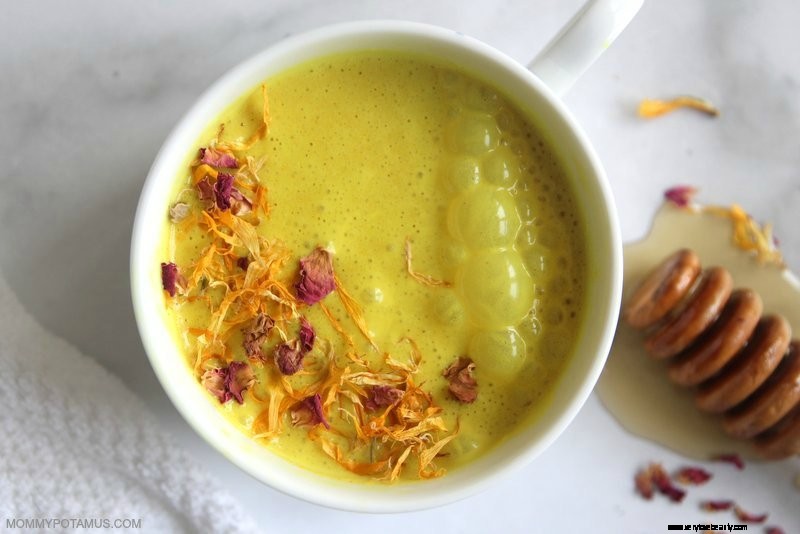
This is basically golden milk with a few additional relaxing herbs added. It’s deeply nourishing and warming.
Ingredients
Instructions
1. Add milk to a small saucepan. Sprinkle turmeric, ashwagandha powder, ginger, cinnamon and black pepper somewhat evenly over the surface. It doesn’t have to be perfect, it just helps prevent clumping when you whisk. Add loose chamomile tea (if using) and whisk until well combined. If you’re using a chamomile tea bag, add it to the pot after you’ve whisked everything else together.
2. Heat pan to a simmer. As soon as it starts simmering, remove it from heat and cover the pan with a lid. Allow to steep for 5-10 minutes.
3. Once the moon milk is done steeping, remove the tea bag or strain the liquid into a mug. I love this type of stainless steel tea strainer that allows you to pour everything into your cup and then just lift out the loose herbs.
4. Add sweetener to taste. Sip and – if desired – stir in a teaspoon or two of ghee or coconut oil for additional creaminess.
Optional step: Froth with a milk frother and/or garnish with organic, food-grade calendula or rose petals if desired.
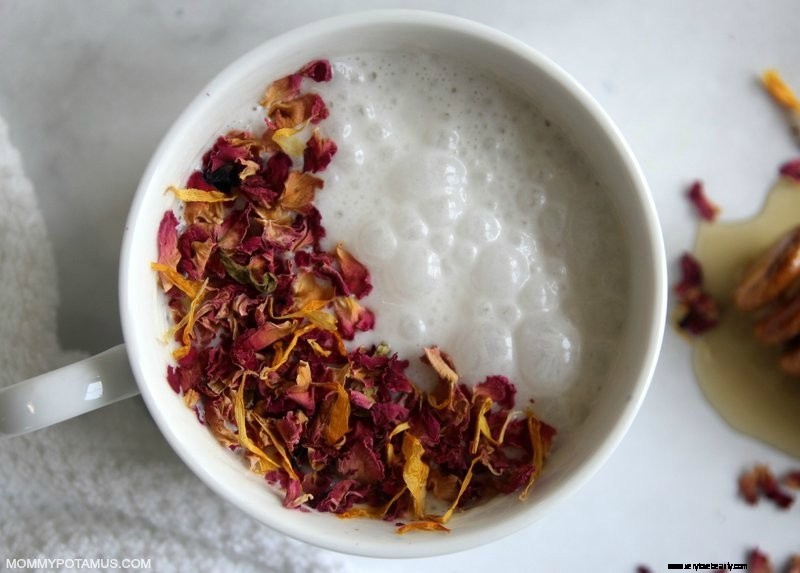
This is my basic moon milk recipe. It’s simple, creamy, delicious, and can easily be adapted to your favorite flavors. I sometimes use almond extract instead of vanilla and it’s delicious.
Ingredients
Instructions
1. Add milk to a small saucepan. Sprinkle ashwagandha powder somewhat evenly over the surface (this helps prevent clumping when you whisk). Add vanilla and loose herbs (if using) and whisk until well combined. If you’re using a tea bag, add it to the pot after you’ve whisked everything else together.
2. Heat pan to a simmer. As soon as it starts simmering, remove it from heat and cover the pan with a lid. Allow to steep for 5-10 minutes.
3. Once the moon milk is done steeping, remove the tea bag or strain the liquid into a mug. I love this type of stainless steel tea strainer that allows you to pour everything into your cup and then just lift out the loose herbs.
4. Add sweetener to taste. Sip and – if desired – stir in a teaspoon or two of ghee or coconut oil for additional creaminess.
Optional step: Froth with a milk frother and/or garnish with organic, food-grade calendula or rose petals if desired.
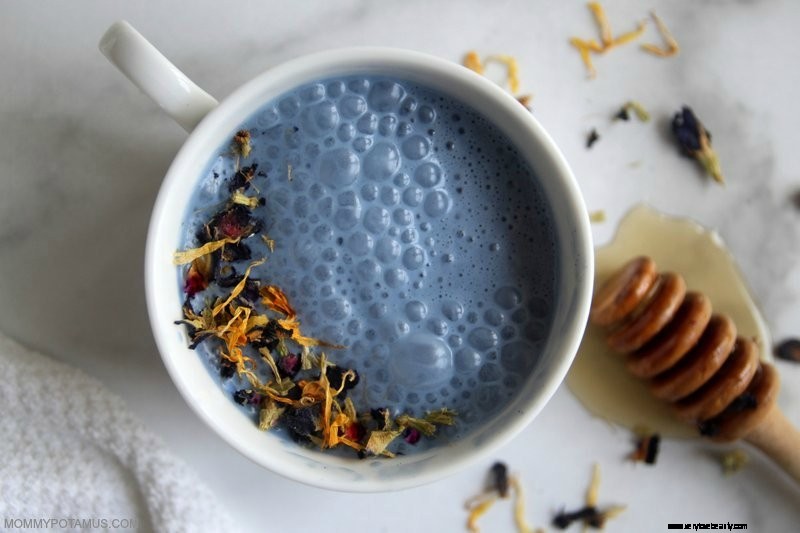
Ingredients
Instructions
1. Add milk to a small saucepan. Sprinkle ashwagandha powder somewhat evenly over the surface – it doesn’t need to be perfect, it just helps prevent clumping when you whisk. Whisk until well combined, then add vanilla and butterfly pea flower and stir again.
2. Heat pan to a simmer. As soon as it starts simmering, remove it from heat and cover the pan with a lid. Allow to steep for 5-10 minutes.
3. Once the moon milk is done steeping, strain out the butterfly pea petals. I love this type of stainless steel tea strainer that allows you to pour everything into your cup and then just lift out the loose herbs.
4. Add sweetener to taste. Sip and – if desired – stir in a teaspoon or two of ghee or coconut oil for additional creaminess.
Optional step: Froth with a milk frother and/or garnish with butterfly pea petals, calendula flower, or edible rose petals if desired.
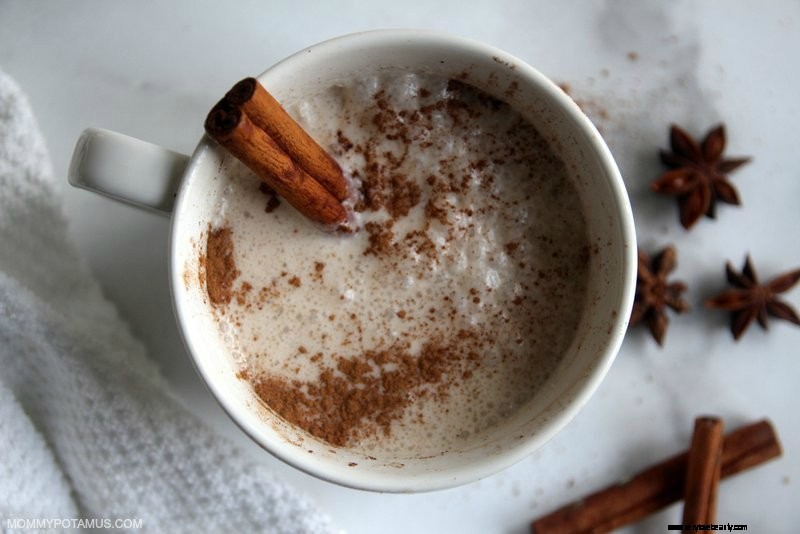
If you have it on hand, you can use 1 3/4 teaspoons homemade chai mix instead of the individual spices below.
Ingredients
Instructions
1. Add milk to a small saucepan. Sprinkle ground ginger, ashwagandha powder, cinnamon, cardamom, allspice, nutmeg, and ground cloves somewhat evenly over the surface. It doesn’t have to be perfect, it just helps prevent clumping when you whisk.
2. Add vanilla extract and loose chamomile tea (if using) and whisk until well combined. If you’re using a chamomile tea bag, add it to the pot after you’ve whisked everything else together.
3. Heat pan to a simmer. As soon as it starts simmering, remove it from heat and cover the pan with a lid. Allow to steep for 5-10 minutes.
4. Once the moon milk is done steeping, remove the tea bag or strain the liquid into a mug. I love this type of stainless steel tea strainer that allows you to pour everything into your cup and then just lift out the loose herbs.
5. Add sweetener to taste. Sip and – if desired – stir in a teaspoon or two of ghee or coconut oil for additional creaminess.
Optional Step: Optional step: Froth with a milk frother and/or garnish with a cinnamon stick or star anise if desired.
When should I drink moon milk?
I usually sip mine a couple of hours before I plan to go to bed because I intermittent fast. It helps me unwind and get to bed early. However, there are nights when I stay up later and have a snack while watching a movie with my husband – on those nights I sip it about 30-60 minutes before bed.
Can I use ashwagandha in the day or is it just a nighttime herb?
It can be used during the day. Unlike some herbs, which have exclusively stimulating or sedative properties, ashwagandha works as a rayasana, or “herb that deeply rejuvenates and promotes longevity,” through a variety of therapeutic actions. I often use it to make a daytime ashwagandha latte.