
I eat pansies for breakfast.
Like, the actual flowers. Not very often, but enough to want a t-shirt that says so.
Edible flowers are more than just a fun conversation starter, though. The soothing properties of calendula (Calendula officinalis), for example, have a long history of use in both folk medicine and culinary traditions.
Gentle enough for babies and yet potent enough to draw the attention of researchers, calendula is often used as first aid for cuts, scrapes and bug bites, to soothe a sunburn, as a rinse for pinkeye, relief for sore throats, and as a salve for diaper rash.
PubMed is full of fascinating studies that are exploring its many benefits . . . some of which we’ll dive into later in this article.
On the culinary side, calendula petals have traditionally been added to butter, cheese and custards to enhance their golden color. Because its flavor is similar to saffron – which tends to be pretty pricey – it’s sometimes used as a substitute. Unlike rare herbs that tend to be expensive and difficult to find, calendula is easy to grow or buy for an affordable price.
As always, none of these statements have been evaluated by the FDA and is not meant to diagnose, cure, or treat any condition. Okay, let’s dive in!
Calendula flowers contain a wide variety of beneficial compounds – particularly triterpenoids and flavonoids – that have both external and internal therapeutic effects. They’re often brewed into a tea, prepared as a tincture, or extracted into oil. Let’s take a look at these preparations and how they’re used:
Tea Extractions – Water based extracts (aka tea) are usually consumed internally, but occasionally some (like calendula and chamomile) are used externally for issues like skin or eye irritation.
In general they have a very short shelf life, however some very concentrated teas are mixed with honey to make long-lasting herbal syrups such as elderberry syrup.
Tinctures – This type of herbal preparation uses alcohol or glycerin to extract beneficial compounds, which gives them an extremely long shelf life. They’re taken internally and used occasionally for external wound care or other skin applications. Some examples of tinctures are this one for restful sleep and this one for adrenal support.
Oil Extractions – The calendula oil recipe below and this plantain oil recipe are both oil extractions, which have a much longer shelf life than tea. They’re most often used externally, however calendula oil also makes a delicious, gut-soothing addition to homemade salad dressing. (Use it like you would regular olive oil.)
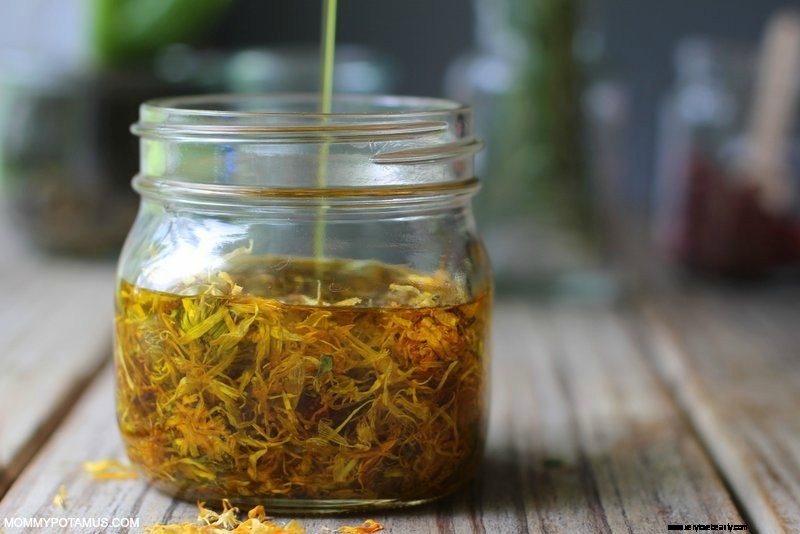
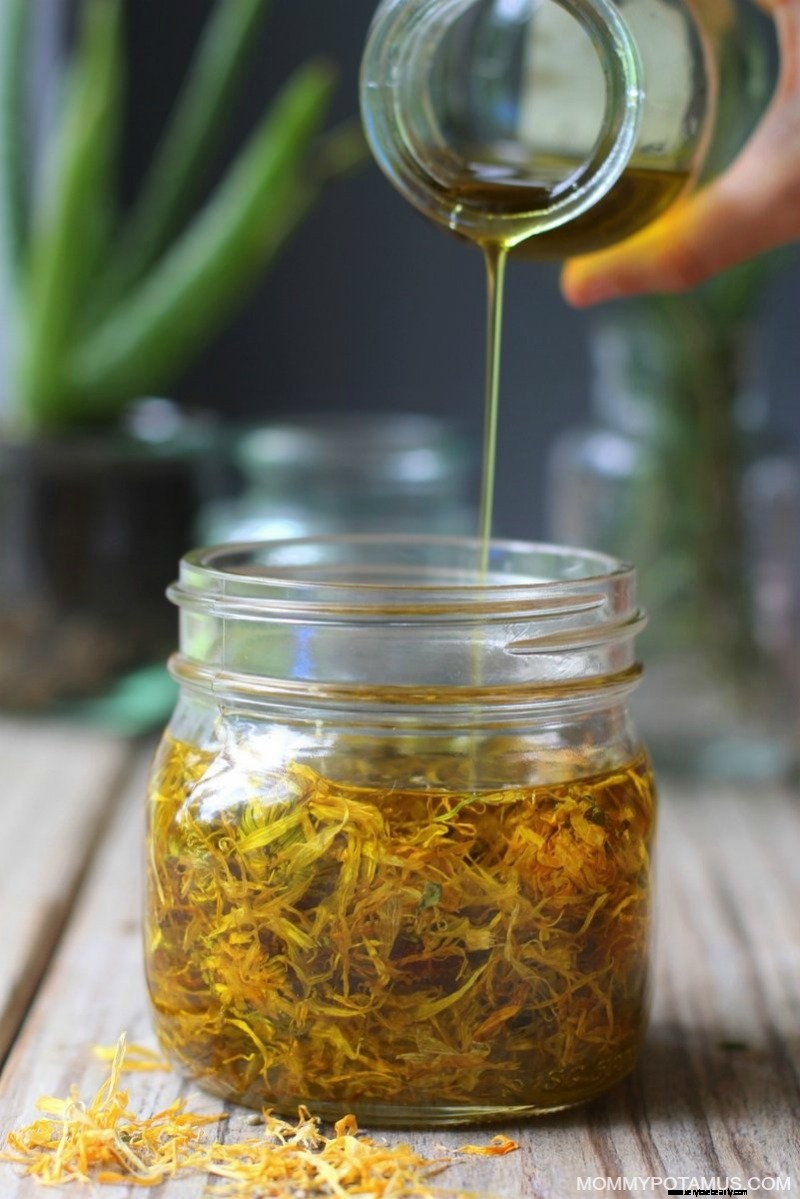
Also known as infused oils, herbs extracted using oil can be made in a number of ways. In the tutorial below I’ll share two methods with you. With both methods the goal is the same – mix herbs and oil so that the oil can draw out the helpful properties of the herbs.
One of the most common questions I get when I post a recipe is “Hey, do you sell this?”
I get it, no one has time to make #allthethings all the time! Although I don’t have a shop to sell the recipes I share here, I can recommend this organic calendula oil if you’re looking for a pre-made option.
Calendula’s soothing properties make it a favorite for supporting wound healing, nourishing skin and promoting gut health. It’s often used as:
Calendula’s soothing properties make it a favorite for supporting wound healing, nourishing skin and even promoting gut health. Here are two super easy methods for making it into an infused oil.
This is the traditionally preferred method because it’s thought to best preserve the delicate constituents found in calendula. However, sometimes it’s just not practical to wait 4-6 weeks for a batch. For those times, I’ve included a faster method below.
According to the Botanical Safety Handbook, calendula is a Safety Class 1A herb – the safest rating possible. However, older studies report that the internal use of calendula may stimulate menstruation, so it is not recommended for internal use during pregnancy. Topical use is considered fine.
Also, individuals who are allergic to ragweed may find that they are also sensitive to calendula.
As always, please check with your healthcare provider before using any herbal remedy.
Important Note: Infused oils are very different from essential oils, which I do not recommend taking internally unless under the care of a qualified healthcare provider. Infused oils use a carrier oil to extract components of the whole plant, while essential oils only extract the light aromatic compounds found in the plant.
Is calendula the same plant as marigold?
Sometimes called pot marigold, calendula (Calendula officinalis) is different from the common marigold (Tagetes spp.) you’ll find in most garden centers. They’re part of the same family, though – Asteracea – along with daisies and chrysanthemums.
Why use whole flowers instead of just the petals?
I prefer them because dried whole flower with the green base tend to be more potent.
Can I use fresh calendula flowers?
If you use freshly-harvested flowers you’ll want to dry them before you infuse them in order to prevent mold or spoilage. I outline the method for using fresh flowers in my dandelion oil recipe.
What is the shelf life of this herbal oil?
The shelf life of herbal oils is primarily determined by the shelf life of the carrier oil and the conditions it is stored in. Olive oil tends to have a shelf life of 1-2 years provided it is stored in a cool, dry place out of direct sunlight.
An antioxidant such as vitamin E can be added to protect oils from early oxidation. I use 1/2 teaspoon of vitamin E tocotrienols per 1 cup of oil.
Arnica Oil & Cream – Arnica has been traditionally used by Swiss mountaineers to prevent muscle soreness, and according to The New York Times, “scientists have found good evidence that it works.” When I injured my shoulder awhile ago, I made up a batch of arnica cream to use along with physical therapy. It was so helpful and it’s very simple to make, too!
Plantain Salve – Can you really make a first aid ointment out of a backyard weed and items in your pantry? Yes you can, and chances are your kids will love helping you gather “medicine.”