
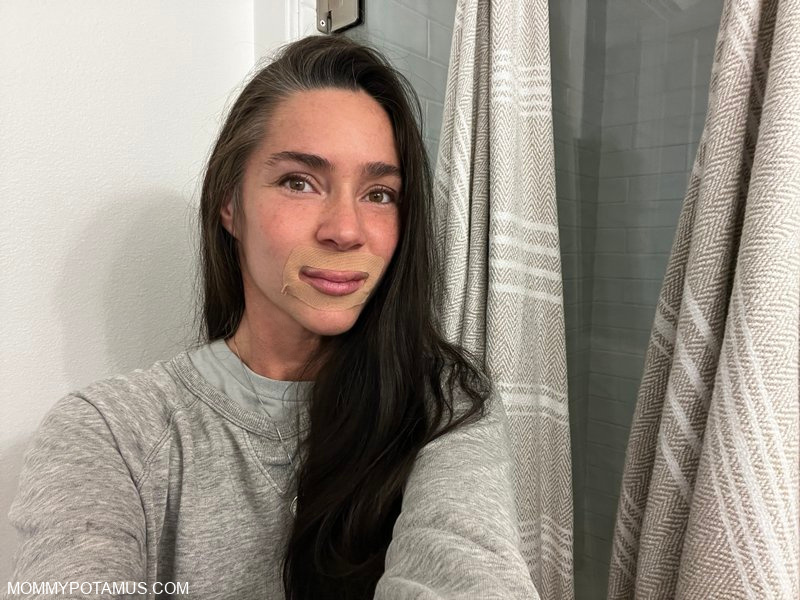
I’m always up for a good sleep experiment, so one night last spring, I taped my mouth shut, slapped on a nasal strip, noted my average sleep efficiency . . . . and sent a selfie to the family group chat, because why keep the weirdness to myself?
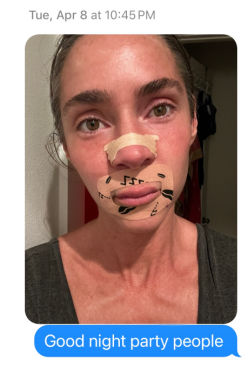
Their response landed somewhere between amusement and curiosity – which, honestly, is fair. Mouth taping looks strange, but it can also be one of the easiest ways to support deeper, more restorative sleep.
Here’s the backstory: After a certain number of candles on the birthday cake, we’re way more likely to start breathing through our mouths at night – and that can affect everything from sleep quality to cognitive function. One study found that people over 40 are about six times more likely to spend more than half the night mouth breathing compared to folks in their 20s and 30s. (1)
That statistic, and a conversation with an airway-focused dentist, is one of the reasons I decided to give mouth taping a try – and why it’s now a regular part of my nighttime routine.
So how does a little strip of tape make such a big difference? We’ll dive into the research below, but first a quick reminder: None of these statements have been evaluated by the FDA. This article is not medical advice and is not intended to diagnose or treat any condition. Always check with your healthcare provider before trying anything new – especially if you have sleep apnea or any respiratory concerns.
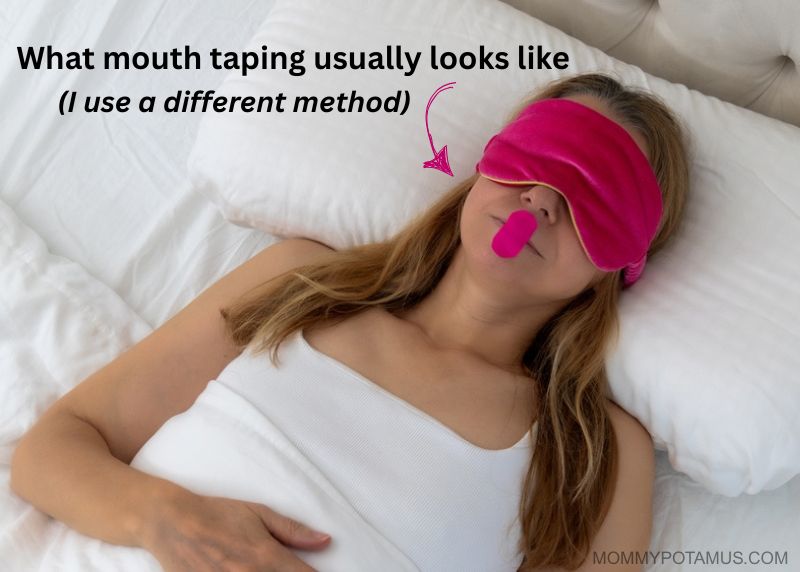
Mouth taping is exactly what it sounds like: You place a piece of tape over your lips at night to encourage nasal breathing during sleep. While it might sound strange (or like a wellness trend gone too far), there’s actually some solid science behind it.
There’s also a method that doesn’t actually tape your lips closed, and in this article I’ll explain why I think it’s the best approach.

Your nose isn’t just for smelling cookies baking or essential oils diffusing – it’s an active part of your respiratory system that conditions and filters the air you breathe. When you breathe through your nose instead of your mouth, several good things happen:
Is it a perfect filtration system? No. Nasal breathing won’t catch everything – but it is your body’s first line of defense, helping to reduce the number of irritants and pathogens that reach your lungs.
When we default to mouth breathing – especially during sleep – we bypass all those protective, regulating mechanisms. And over time, that can lead to a cascade of not-so-great consequences, including:
That’s where mouth taping comes in. By gently encouraging nasal breathing during sleep, it can support several key processes that we’ll discuss below. Many people report feeling more rested and clear-headed after making it part of their routine.
Mouth taping may look strange, but the benefits are anything but. From improved sleep to better oral health, here’s what the research says this simple habit can support:
This one might seem obvious – but it’s worth stating clearly. The primary benefit of mouth taping is that it gently trains your body to breathe through your nose while you sleep.
And as we’ve covered, nasal breathing helps humidify and filter the air you breathe and supports the production of nitric oxide (which improves oxygen delivery and has antimicrobial properties). (4) It also activates the diaphragm to support deeper, more efficient breathing. (10)
Over time, this small shift can ripple into big improvements in energy, focus, and overall well-being.
According to this article from Myotape, which was founded by breathing expert Patrick McKeown:
Snoring is your body’s way of signaling that your airway is facing resistance. When air struggles to pass through a narrowed or partially blocked passage, whether in your nose, mouth, or throat, it creates turbulence. This turbulence makes the soft tissues vibrate, producing the sound we recognize as snoring.”
The article goes on to list several contributing factors, including:
It also explains that not all snoring sounds the same – or comes from the same place:
Nasal snoring usually sounds higher and more like a whistle, while mouth snoring is deeper, throatier, and often louder.”
This distinction is key when it comes to deciding whether mouth taping might help.
Mouth taping can be particularly helpful for mouth-based snoring, as it gently encourages lip closure and supports a return to nasal breathing overnight. For people whose snoring is driven primarily by sleeping with their mouths open, this simple shift may lead to quieter nights and better sleep quality.
That said, not all snoring originates in the mouth. If your snoring is caused by nasal congestion or comes from deeper in the airway, mouth taping likely won’t resolve it – and could even be uncomfortable if nasal breathing is difficult. Results vary depending on the root cause of the snoring.
There is some early research that supports its use in certain cases. In a 2022 study, people with mild sleep apnea who used mouth tape experienced reduced snoring and fewer apnea episodes. (6)
While mouth taping is not a replacement for medical interventions like CPAP, it may be a helpful complementary strategy for those with mild sleep-disordered breathing.
Important: If you have or suspect sleep apnea, always talk to your doctor before trying mouth tape.
Tip: Many people love using MyoTape, which wraps gently around the mouth rather than sealing the lips. It allows for natural mouth movement (like puffing or speaking) while still encouraging nasal breathing.
In The Breathing Cure, Patrick McKeown writes that breathing through the nose activates the lower lungs and encourages the body to better absorb oxygen. (8) Although very small, a study of 20 individuals with mild obstructive sleep apnea offers encouraging support of this claim. When mouth tape was used for one week, researchers noted an average 47% reduction in snoring and also an improvement in oxygen saturation levels. (6)
The Oxygen Desaturation Index (ODI) measures how often per hour a person’s blood oxygen levels drop by a certain amount during sleep. In the study, participants experienced an average of 8.7 drops per hour before using mouth tape, which decreased to 5.8 drops per hour after using it. Their lowest recorded blood oxygen level during sleep also improved, rising from 82.5% to 87%. (6) (9)
Although not nighttime related, one study showed that athletes who trained exclusively with nasal breathing used 22% less effort to achieve the same performance levels as when mouth breathing. (10) That’s a pretty compelling reason to retrain your nighttime breathing habits!
Your nose doesn’t just warm and humidify the air – it also helps trap pathogens and debris, thanks to nasal hairs, mucus, and a sweeping network of tiny cilia designed to catch and remove foreign particles before they reach your lungs. (11)
It also produces nitric oxide, a gas that has been shown to inhibit viruses and bacteria. (4)
Nighttime mouth breathing tends to dry out the mouth, reducing saliva’s natural cleansing effect. Research shows this leads to significantly higher dental plaque levels in mouth-breathers compared to nasal-breathers . (12)
Another study found that in addition to higher plaque scores, individuals with dry mouths also had significantly elevated levels of Streptococcus mutans, the bacteria most closely linked to cavities. (13)
If you research the safety of mouth tape, you’ll find expert opinions on both sides. Personally, I’ve used several types over the years, but never stuck with it consistently for a few reasons:
Fortunately, this year I came across a new kind of mouth tape that I feel fully comfortable using and recommending: Myotape (Use code MPSAVE for 5% off)
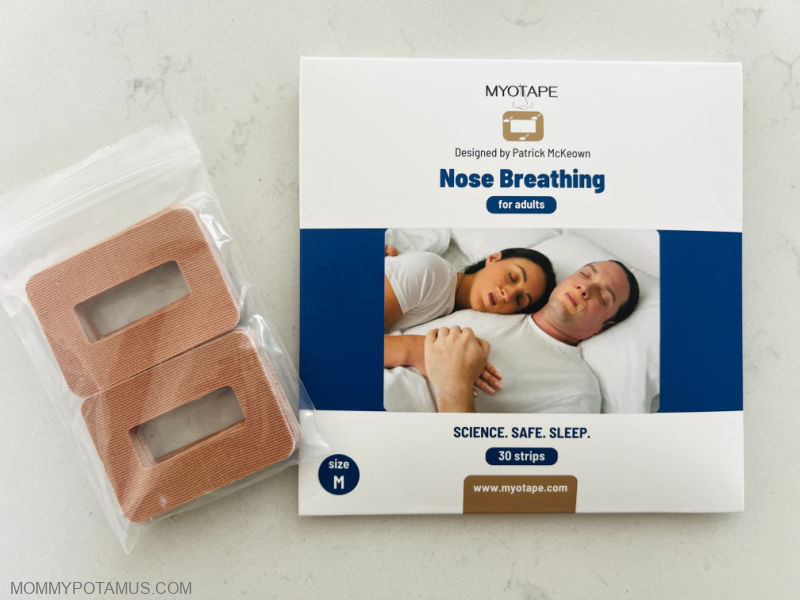
Unlike regular mouth tapes that seals your lips shut, MyoTape wraps gently around your mouth to encourage lip closure – without blocking your airflow. It’s made with cotton and hypoallergenic, skin-friendly glue. (Japanese-made, latex-free acrylic glue, gluten-free)
I love it because I can talk, sip water, and breathe through my mouth if needed while wearing it. They also make versions for men with beards, and kids over the age of four (kids younger than that should not use mouth tape).
With that said, here are some safety tips from Myotape:
Special Considerations for Sleep Apnea
Snoring is a common sign of sleep apnea, so if you have sleep apnea, especially obstructive sleep apnea, mouth taping can be risky. Sealing the mouth may increase airway obstruction and make breathing harder during sleep.
Some tapes, like MyoTape, are made to be less restrictive, allow for mouth puffing, and can be used with CPAP for better compliance. Always talk to your doctor or sleep specialist before trying mouth taping if you have or suspect sleep apnea.”
Click here and use code MPSAVE for 5% off
I started using Myotape after a sleep study showed that I didn’t have sleep apnea, but I was starting to head in that direction. At the time, I’d begun waking up more and more often with my heart pounding at night, which as you can guess did not help my daytime energy levels.
According to what I remember about the conversation, it was explained that my body was still able to maintain normal oxygen levels, but my breathing pattern was not optimal and was requiring a lot of effort from my body. (Hence the wake ups and racing heart sensation.)
Apparently our airway – just like all of our other muscles – can become more “flabby” as we get older, so we have to work to regain and/or maintain function.
Based on this info, I started taping my mouth at night to support nasal breathing, and using this MyoNozzle straw during the day to tone and strengthen my airway muscles.
As of right now, my sleep efficiency (as tracked by my Oura ring) is way up and I’m no longer waking with my heart racing at night.
Mouth taping might sound like just another quirky wellness trend, but it has helped many people (myself included) sleep better, breathe easier, and wake up feeling more refreshed.