Vitamin E supplements have been touted as the secret to youthful skin, a healthy heart, and more, but many organizations including The American Heart Association say they “may do more harm than good.” (1)
In this post we’ll dive into why, starting with this article from Harvard Medical School:
WebMD takes a less ambiguous stance, stating that it “harms more than it helps.” (2) In this article we’ll talk about potential problems with most vitamin E supplements, why getting vitamin E tocopherols from food is ideal, and one vitamin E supplement form that I’m personally using right now.
As always, I want to mention that none of these statements have been evaluated by the FDA, this article is not medical advice, and it is not meant to diagnose or treat any condition. As always, please talk with your healthcare provider about any supplements you are considering. Now that we’ve got that out of the way, let’s dive in.
A lot of the time when people say “vitamin E,” they really mean just one form: alpha-tocopherol.
“Vitamin” comes from the Latin word, “vita,” meaning “life”. In 1922, when scientists discovered that rats couldn’t reproduce without alpha-tocopherol, it was elevated to vitamin status.
On a related note, alpha-tocopherol is a combination of two Greek words: tókos for “birth” and phérein which mean “to bear or carry to.” In essence, the combined meaning is “to successfully carry to birth.”
Although alpha-tocopherol was the main focus at first, there are actually seven other forms of vitamin E, each with potentially unique effects.
We’ll circle back to why the different forms are important later, but for now the important thing is just to know that they exist.
Although initial studies on vitamin E – specifically the alpha-tocopherol form – showed promise, later studies found negligible benefits or even potential harm.
According to Anne Trias, MS:
High doses are 400 IU or above according to this meta-analysis of 19 clinical trials. That’s significant because many standard vitamin E supplements contain 400-1000 IIU – over twice the limit considered safe.
So what’s going on? Although researchers are still working to fully answer that question, here are some possibilities.
Because alpha-tocopherol is essential for certain functions, our bodies have a dedicated transport protein that helps us use it efficiently. That works beautifully when we’re getting normal amounts via a whole-food based diet.
Unfortunately, because our bodies are so good at absorbing and using it, it may be easier to get “too much of a good thing” when supplementing in high doses (400 IU or above).
When that happens, it appears that alpha-tocopherol may stop acting as an antioxidant (counteracting DNA damage) and start acting as a pro-oxidant (accelerating DNA damage). (4)
There may be other effects as well. In an interview with Ben Greenfield, scientist and vitamin E expert Dr. Barrie Tan says that high-dose vitamin E oxidizes LDL (the so-called bad cholesterol) in the body.
Many supplement companies use a synthetic form of vitamin E, which is different than the form found in nature. As I wrote about in this post, synthetic supplements often have low bioavailability.
This is true of alpha-tocopherol according to Harvard Medical School, which writes that it’s “only half as active in the body as the natural form.”
Poor bioavailability may explain in part why some supplement companies use dosages of up to 1000 IU in their formulas – maybe they’re hoping to overcome the low utilization rate by flooding the body with massive amounts.
Unfortunately, some experts believe that the part we can’t use may build up and potentially cause issues. For example, research suggests that because our bodies don’t metabolize folic acid (which is a synthetic form of natural folate) efficiently, it may build up in the body and increase the risk of cancer. (5) (6)
In case you want to check your supplement labels, the natural form of alpha-tocopherol is d-alpha-tocopherol, and the synthetic form is dl-alpha-tocopherol.
One last thing to consider is that gamma-tocopherol is the most abundant form found in the American diet. (7) Alpha is the next most common form, followed by beta and delta. (8)
In other words, our bodies are used to consuming mostly gamma-tocopherol, but almost all supplements contain just alpha-tocopherol.
Supplementing with alpha-tocopherol has been found to reduce serum levels of gamma and delta tocopherols. (9) Research has found that low gamma-tocopherol levels may be associated with an increased risk of certain diseases. (10) (11)
That’s why some experts recommend supplementing with natural mixed tocopherols if opting for a supplement.
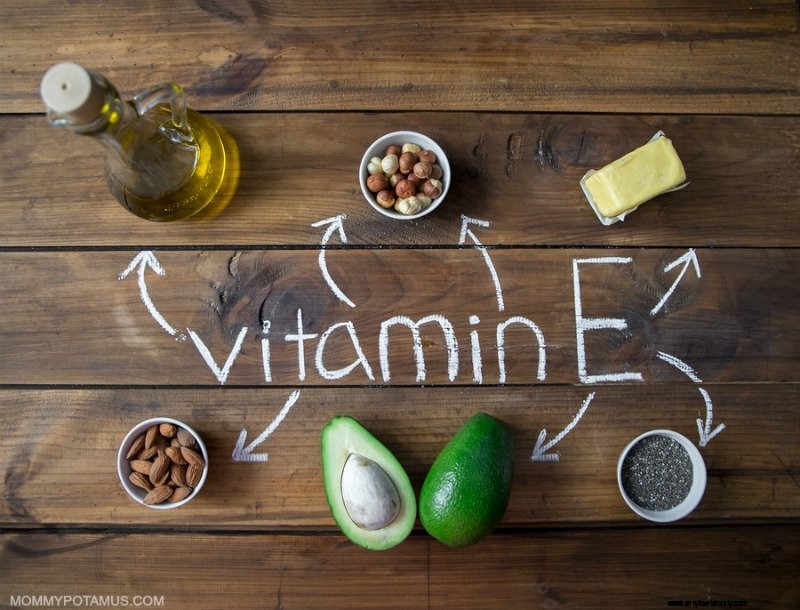
Yes. The vitamin E found in nuts and seeds, avocados and other whole foods:
Because vitamin E helps with cardiovascular health, reproduction, eye health, cognitive function and more, I definitely make sure to include a lot of it in my family’s diet.
Personally, I prefer to go this route instead of supplementing with tocopherols. However, I am actually supplementing with another form right now – tocotrienols. You can read more about tocotrienols here.