
Did you know that approximately 700 species of microbes live in your mouth – on your teeth, tongue, lips, gums and everywhere in between? (1) If you’re like me, there’s probably a point in your life when hearing that fact would have made you want to dive in an entire vat of mouthwash. Health isn’t about eradicating all microbes, though . . . it’s about making sure we nurture the good ones.
After over a decade of focusing on gut health through probiotics, fermented foods and and staples like bone broth, I thought I had a pretty good handle on how to support a diverse microbiome. Then a few years ago, a dentist put a sample of my saliva under a microscope for me to look at, and I realized I had more work to do.

Known as our oral microbiome, the community of bacteria, yeasts, and other microbes that live in our mouths have a profound effect on both dental and overall health. It can also affect whether your breath feels fresh or has the sulphuric odor associated with bad breath. (More on that later.)
Like other ecosystems, diversity is a key biomarker of resilience and vibrancy, but unfortunately modern life has not been kind to our oral microbiome. (2) Sugary foods, antibacterial mouthwashes, traditional toothpastes and more can cause oral dysbiosis – or an imbalance of the microbes in the mouth.
Fortunately, though, there are groups of people that continue to experience excellent dental health, and that’s given researchers an opportunity to see what microbial strains they share in common. Their findings have led to the creation of dental probiotics, which allows those of us who don’t naturally have the same beneficial strains to incorporate them into our oral microbiome.
Before we dive into the details, I want to mention that none of these statements have been evaluated by the FDA, this article is not medical advice, and it is not meant to diagnose or treat any condition. As always, please talk with your healthcare provider about any supplements you are considering. Now that we’ve got that out of the way, let’s take a look at the research.
Dental probiotics are usually consumed as lozenges (or “candies” as my kids call them) that are sucked on or chewed rather than swallowed. This method of delivery allows them to have the most contact time with the area they’re intended for.
Most lozenges contain between 1-3 bacterial strains that are native to the mouth area and have been shown in clinical research to support oral health.
Research suggests that the good bacteria found in dental probiotics can compete with specific strains of bacteria known to cause tooth decay, improve oral pH, reduce bad breath and more. Let’s take a closer look at some of the potential benefits.
You’ve definitely heard of plaque before – it’s the soft, sticky film that builds up on teeth – but you might be wondering what exactly it is and why dentists are so insistent about getting you to reduce your levels. Plaque is a biofilm that is made by oral bacteria as a sort of “house” for them to live in. A little plaque is normal, but excessive plaque buildup can lead to problems including gum inflammation, bad breath and tooth decay.
One strain of bacteria that generates a lot of plaque is Streptococcus mutans – it’s considered to be one of the primary causes of tooth decay and cavities. It tends to form large biofilm colonies that convert dietary sugar into enamel-eroding lactic acid.
Fortunately, S. mutans has a few natural competitors. Streptococcus salivarius M18, for example, is a rare beneficial strain that competes with it and another plaque-producing strain, Streptococcus sobrinus. (3)
Only about 2% of the population have naturally high levels of Streptococcus salivarius, which is a bummer because it does more than just compete for space. It also releases several compounds (Salivaricin A, Salivaricin 9, and Salivaricin M.) that attack S. mutans, plus one enzyme (dextranase) that breaks down plaque and another (urease) that helps neutralize acid and balance oral pH. (4)(5)
In addition to Streptococcus salivarius M18, other strains of beneficial bacteria that naturally compete with Streptococcus mutans include:
Important note: While certain probiotics may help balance the oral microbiome, they do not completely eliminate the bacteria that contributes to decay. The FDA has not approved an dental probiotic to prevent any oral issue like cavities, and I don’t rely on them alone to support my oral health. However, I do consider them to be a valuable part of my oral care routine along with brushing, flossing, avoiding excessive amounts of sugar, and going to the dentist for regular cleanings.
Most products that are sold to freshen breath focus on one of two approaches:
Bad breath is most commonly caused by a group of bacteria that produce smelly volatile sulfur compounds (VSCs) as they break down foods.
The rotten eggs odor some people associate with unpleasant breath usually comes from a VSC called hydrogen sulfide, while others such as methyl mercaptan smell like rotten cabbage. (9)
Because bacteria repopulate quickly, methods that mask odor or kill the bacteria tend to have pretty short-term effects.
Dental probiotics take a different approach. Instead of trying to kill the strains of bacteria that cause halitosis, dental probiotics introduce beneficial strains that compete with them. (9)
In this study, 85% of the participants who took an oral probiotic containing two strains of Streptococcus salivarius – K12 and M18 – experienced a significant reduction in VSC-producing bacteria in just one week. Even better, they maintained these lowered levels for two weeks after the last lozenge.
Some of the strains that have been specifically found to be helpful for freshening breath are:
Excess plaque near or beneath the gum line can cause irritation, bleeding, and other issues. Several studies have found that dental probiotics can support oral health by reducing plaque formation near and/or beneath the gums.
Some of the strains that have been specifically studied for gum health are:
Quick Story: Once upon a time, there was remarkable a boy growing up in Dunedin, New Zealand. While others struggled with throat and respiratory concerns, he stayed well through the harsh winters year after year. When curious researchers decided to try to find out why, they discovered that he carried the rare strain of bacteria I mentioned above – Streptococcus salivarius K12.
Research indicates that S. salivarius K12 competes with certain species of pathogenic bacteria, including some that are linked to sore throats, earaches, and respiratory issues. (13)
Other beneficial strains may support the ear, nose and throat areas as well. In this study, kids who took a probiotic containing Streptococcus salivarius K12, Streptococcus salivarius M18, Lactobacillus reuteri, Lactobacillus sakei, and Lactobacillus paracasei enjoyed better overall respiratory function than those who did not. (14)
A good oral care routine may also support overall health, including gut health and cardiovascular health. According to ethnopharmacologist Dr. Nelson-Dooley notes that, “In people with coronary artery disease, simply beginning an oral hygiene program reduced their cardiac events.” (15)
On the flipside, “One study showed that using mouthwash eliminated the beneficial effects of healthy oral bacteria and raised blood pressure.”
Also, we swallow about 1 trillion microbes per day – a process that profoundly impacts our gut microbiome.
To recap, the strains that have been studied for ENT and overall benefits include:
A few years ago, my dentist popped a sample of saliva under a microscope for me to look at before he did my routine cleaning,. Despite many years of focusing on gut health, I was surprised to see a lot of yeast, a higher concentration of overall bacteria than is considered optimal and lot of white blood cells (which may suggest infection or stress).
He sent me home with instructions to use a water pick and an oral probiotic every night before bed, and by my next cleaning things had improved significantly. I haven’t done a follow-up sample in awhile (time to schedule that!), but I expect it will be even better. My breath feels more fresh than it used to when I wake up and I have less plaque buildup overall.
My husband and kids had similar improvements with their samples (my husband’s was pretty impressive, actually), so based on those experiences I consider probiotics to be a worthwhile part of our oral care routine.
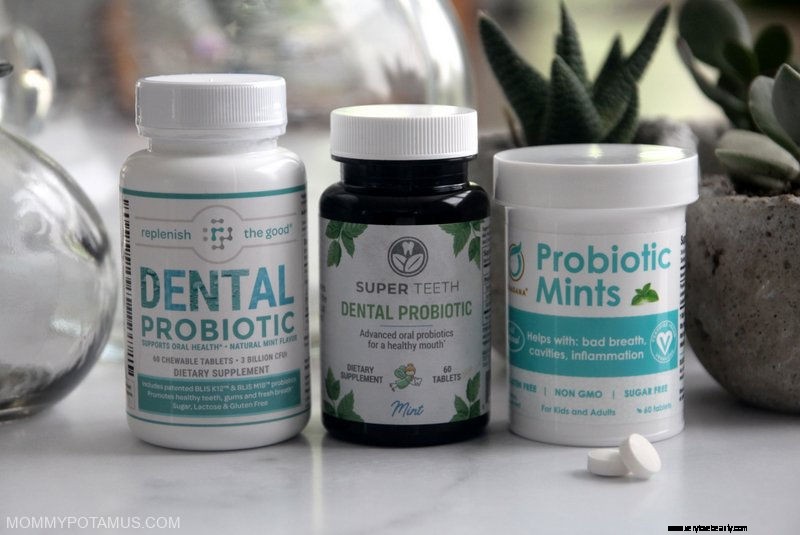
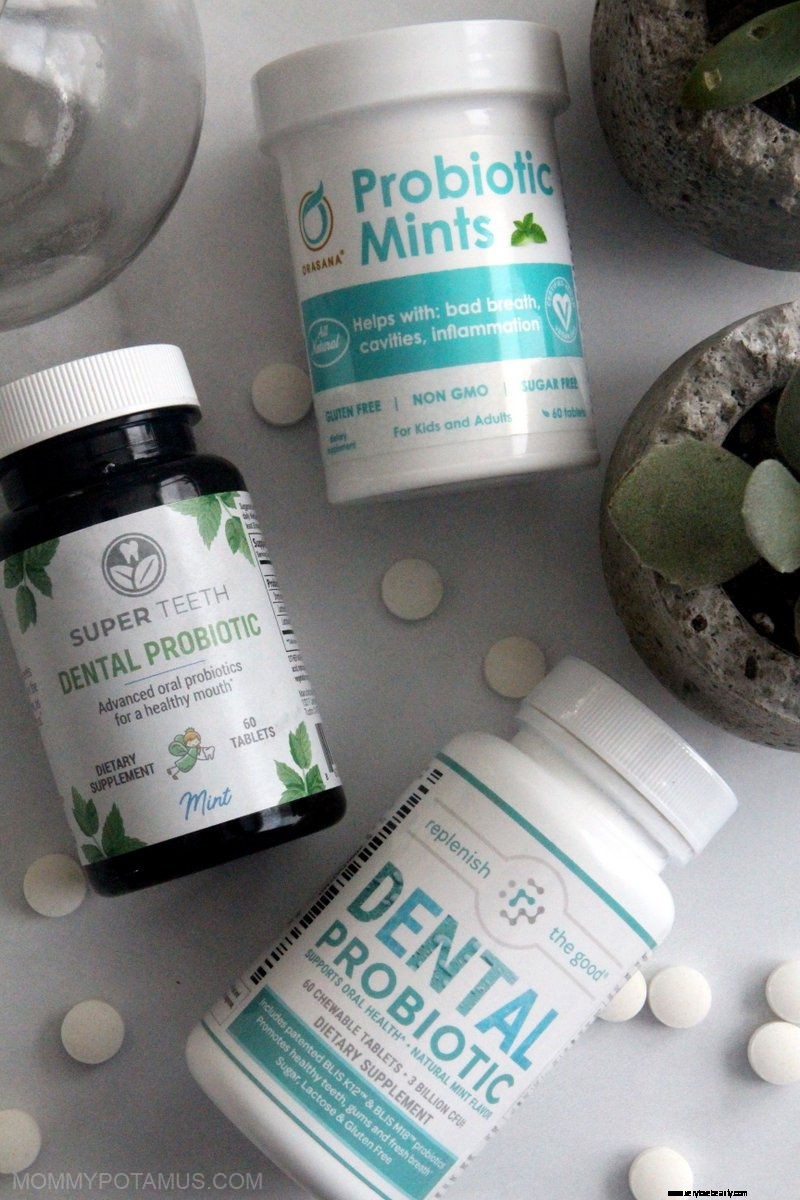
Although more research is needed to determine what potency, frequency and specific strains are best to achieve different goals, the three brands below use several of the dual-benefit strains mentioned above and have the cleanest ingredients. They are:
SUPER TEETH Dental Probiotic (Save 10% with code MP10 and get free shipping on orders over $50) – Uses three strains (Streptococcus salivarius M18, Lactobacillus reuteri, and Lactobacillus paracasei) that connect with all the benefits above. This brand uses twice the concentration of Streptococcus salivarius M18 than other brands I’ve seen, making it a good option for people who really want to focus on healthy teeth and gums. Their formula is also designed to stimulate the salivary glands, which can help balance oral pH. Also, they’re a family-owned business and I love supporting them.
Replenish The Good Dental Probiotic – Contains four strains ( L. paracasei, L. reuteri, Streptococcus salivarius K12 and Streptococcus salivarius M18). Although it contains less M18 than some other brands, it does incorporate K12 which supports ear, nose and throat health.
Orasana Probiotic Mints– Most dental probiotics are lactose-free, but may have trace amounts of casein since they are fermented with dairy. Although I’m dairy-free right now as part of my healing journey, I don’t react to the trace amounts of dairy found in most dental probiotics. For those that do, though, Orasana makes a dental probiotic that is completely dairy-free. It doesn’t include the two most clinically studied strains – Streptococcus salivarius M18 and K12 – because they’re derived from dairy, but it does have several good ones. This is the brand I’d choose if I needed to avoid trace amounts of dairy.
Can kids take dental probiotics?
All the brands recommended above are considered safe for kids as long as usage guidelines are followed:
Should dental probiotics be taken in the morning or at night?
They’re best taken and night after finishing your regular oral hygiene routine.
This article was medically reviewed by Dr. Anna Cabeca, a gynecologist and obstetrician and a menopause and sexual health expert. As always, this is not personal medical advice and we recommend that you talk with your doctor.
Sources
1. NIH News In Health (2019) Mouth Microbes: The Helpful and the Harmful
2. Lozupone, Catherine et. al. (2012) Diversity, stability and resilience of the human gut microbiota
3. Di Pierro F et. al. (2015) Cariogram outcome after 90 days of oral treatment with Streptococcus salivarius M18 in children at high risk for dental caries: results of a randomized, controlled study
4. Di Pierro, Francesco et. al. (2015) Cariogram outcome after 90 days of oral treatment with Streptococcus salivarius M18 in children at high risk for dental caries: results of a randomized, controlled study
5. Stratum Nutrition (2020) Research & Patent Portfolio for BLIS Oral-cavity Probiotics: BLIS K12™ & BLIS M18™
6. Huang, Xuelian et. al. (2016) A Highly Arginolytic Streptococcus Species That Potently Antagonizes Streptococcus mutans
7. Teanpaisan, Rawee et. al. (2015) Effect of Long-Term Consumption of Lactobacillus paracasei SD1 on Reducing Mutans streptococci and Caries Risk: A Randomized Placebo-Controlled Trial
8. Alforaidi, Sahal et. al. (2020) Oral Colonisation after the Administration of Drops Containing Lactobacillus reuteri
9. Scientific American (2013) To Beat Bad Breath, Keep the Bacteria in Your Mouth Happy
10. Laleman, I. (2015) Probiotics in the dental practice: a review
11. Schlagenhauf, Ulrich (2020) Consumption of Lactobacillus reuteri-containing lozenges improves periodontal health in navy sailors at sea: A randomized controlled trial
12. Tomoki Maekawa and George Hajishengallis (2014) Topical treatment with probiotic Lactobacillus brevis CD2 inhibits experimental periodontal inflammation and bone loss
13. Gasta, Margaret G. et. al. (2017) Probiotics and Disease: A Comprehensive Summary—Part 5, Respiratory Conditions of the Ears, Nose, and Throat
14. Campanella, Vincenzo (2018) Oral probiotics influence oral and respiratory tract infections in pediatric population: A randomized double-blinded placebo-controlled pilot study
15. Burhenne, Mark (2020) The Oral Microbiome & Its Impact on Every Other System in the Body
This article was medically reviewed by Dr. Anna Cabeca, a gynecologist and obstetrician and a menopause and sexual health expert. As always, this is not personal medical advice and we recommend that you talk with your doctor.