
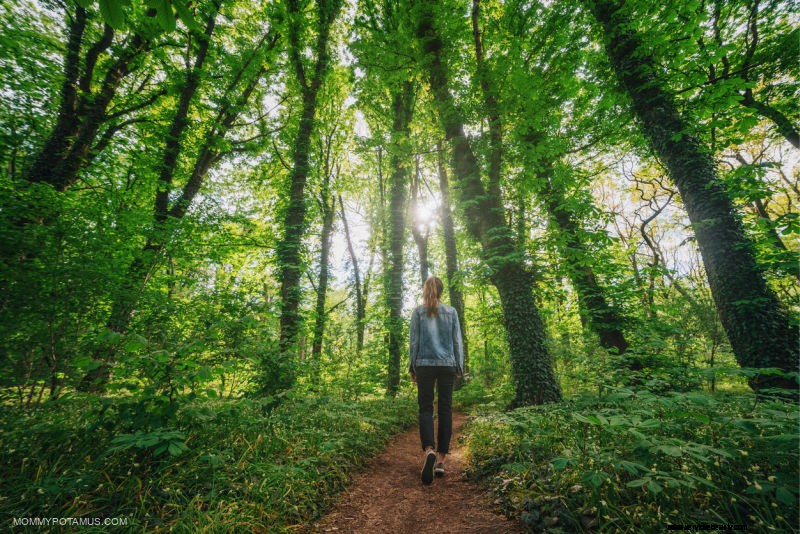
Did you know that the discovery of aspirin can be traced back to a compound found in willow bark – salacin – which has been used for thousands of years to relieve pain? (1) Have you heard about the bark of the cinchona tree, which contains the same form of quinine that is used to treat malaria? (2)
It’s no secret that many trees have beneficial – sometimes even medicinal – properties, but what if the forests themselves are actually therapeutic, too? That’s the idea behind the practice of forest bathing, and research indicates that it’s true.
In Japanese, shinrin means forest and yoku means bath, so shinkrin-yoku is the practice of bathing in the forest atmosphere. In essence, it describes the Japanese practice of letting nature wash over all five senses: smell, touch, sound, sight and even taste.
If that sounds a little “woo” to you, you’re not alone. When I first heard that shinrin-yoku is associated with profound health benefits, I was skeptical. Sure, taking a walk in the woods could probably improve sleep, lower blood pressure and more, but I figured it probably had to to more with the exercise than the trees.
It turns out, though, that taking a walk in a forest has unique biological impacts that are not found when the same exercise is performed in other environments, probably due to unique biological compounds such as photoncides and the “happy microbe,” Mycobacterium vaccae. (3)
We’ll dive into the details in just a moment, but as always that none of these statements have been evaluated by the FDA, this article is not medical advice, and it is not meant to diagnose or treat any condition. Now that we’ve got that out of the way, let’s dive in.
According to the Environmental Protection Agency, the average American spends 90% of their time indoors. (4) Not only is it possible to go long periods without really noticing the changing of seasons, bird songs, and the sweet scent of blossoms in the air, it’s a pretty typical experience for many.
Sure, we have apps that play us video and soundscapes from forests, streams, or beaches, but we spend much less time in those places than at any other point in history. And while I am a huge fan of those apps (I have one that plays on my T.V. often), not all of the beneficial components of nature are available to us via a screen.
While there are many more mechanisms what we’re still exploring, here are two things you’ll find in forests that profoundly impact well-being.
If you’ve ever inhaled the warm, woodsy scent of cedar or the fresh, clean scent of pine, you’ve experienced the natural aromatherapy of phytoncides. This distinctive category of woodland-based essential oils are released by trees and plants as part of their defence system.
According to Dr. Qing Li, a physician, professor at Nippon Medical School in Tokyo, and president of the Japanese Society of Forest Medicine:
In this study, inhaling tree-derived phytoncides reduced stress hormone levels in both men and women and increased natural killer (NK) cell activity (a vital part of our immune system).
Other research suggests that a particular phytoncide – d-limonene- may have mood lifting effects. (6)
Fortunately, while getting outside is still important, we can bring some of the benefits of forest bathing indoors by diffusing essential oils that are rich in phytoncides, particularly d-limonene (lemony), alpha-pinene (pine-scented), beta-pinene (fresh herb scented) and camphene (deep, woodsy scent).
Evergreens like cedars, pine trees, and spruces are the largest producers of phytoncides, so look for essential oils such as:
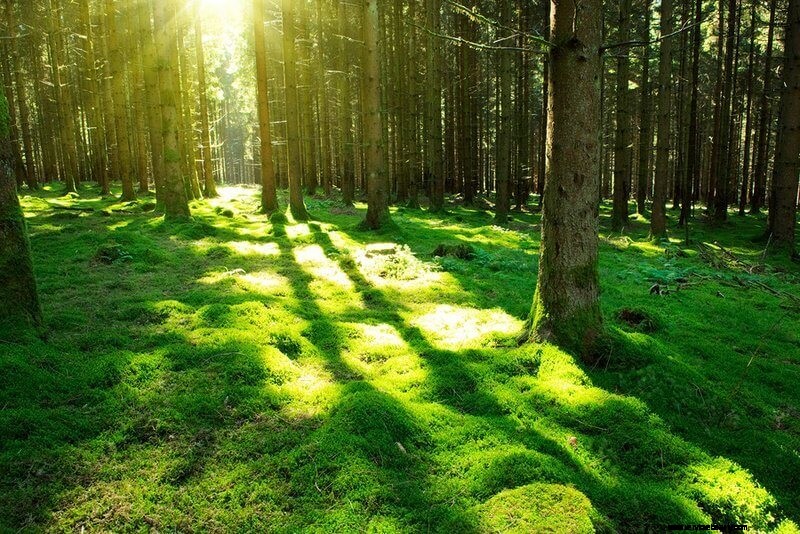
Dr. Li goes on to explain that a few years later, researchers at Bristol University made a fascinating discovery. When they injected M. vaccae into mice, “they found that the mice behaved as though they were on antidepressants. This was very interesting in itself, but the scientists also discovered something else. The neurons that were activated were those associated with the immune system, which suggested that there is a close connection between the immune system and our emotions.” (3)
Further research has found that it seems to activate a pathway related to serotonin, which alongside oxytocin is considered one the body’s “happy hormones.”
Now, I am not saying that bacteria found in soil should be considered a treatment for any diagnosis, but these studies do suggest that M. vaccae may lift mood in certain circumstances. More research is needed to determine exactly what those circumstances are and aren’t. And as Dr Li writes, “Forest-bathing is a preventative measure against disease; if you come down with an illness, I recommend that you see a doctor.”
Several human studies are underway to examine the role M. vaccae may play in mental health, so hopefully we’ll have more actionable data soon. For now, I think of my porch container garden as a place to grow veggies and get regular exposure to healthy soil.
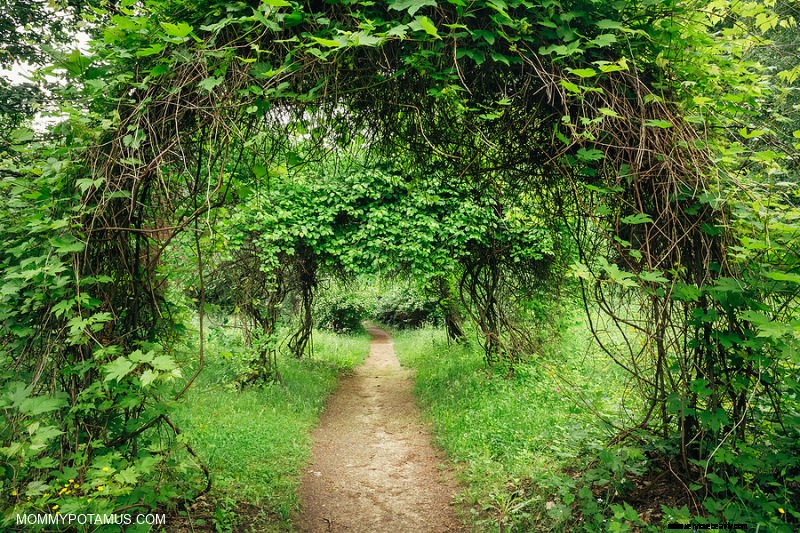
According to Dr. Li, “The good news is that even a small amount of time in nature can have an impact on our health. A two-hour forest bath will help you unplug from technology and slow down. It will bring you into the present moment and de-stress and relax you.” (3)
Here are some of the benefits his research has confirmed:
Let’s take a closer look at some of those:
Studies show that getting good quality sleep makes us smarter, happier, more productive, more creative, keeps us looking younger, helps our immune system function properly, and plays a vital role in balancing hormones. (3) (6) (7) (8) (9) (10) (11)
On the other hand, “Sleep deficiency is linked to numerous health problems, including increased risk of heart disease, kidney disease, high blood pressure, diabetes and stroke.” (3)
In one of Dr. Li’s studies, a group of men walked in a forest for about 1.5 miles – which is about the same distance they usually traveled – either in in the morning or afternoon. Before the trip, the men slept an average of 383 minutes per night. After forest bathing the average sleep time increased to 452 minutes, and even on the day after practicing shinrin-yoku it was still elevated (410 minutes).
Dr. Li concluded that forest bathing improves sleep even when the amount of daily physical activity stays about the same as usual. He also found that afternoon walks had a more profound effect than morning walks.
In one study, participants were asked to assess their emotional state before and after forest bathing. After two hours, they reported a reduction in:
. . . and an increase in vigor, which is defined as “healthy physical or mental energy.” (12)
According to Dr. Lli, spending time in nature can also boost creativity and problem solving ability by 50%. (3)
In one study conducted by Dr. Li, individuals who forest bathed for two nights and three days experienced a 53.2% increase in natural killer cell activity. Curious about how long it would last, he continued to measure levels after the trip and found that the effect lasted up to thirty days. (3)
When an exotic invasive beetle from eastern Russia (the emerald ash borer) found its way to U.S. shores and began wiping out over 100 million ash trees, the hardest hit areas experienced a decline in cardiovascular and respiratory health.
According to the United States Department of Agriculture Forest Service, “the spread of the emerald ash borer across 15 states—first recorded in 2002—was associated with an additional 15,000 deaths from cardiovascular disease and an additional 6,000 deaths from lower respiratory disease.” (13)
On the flipside, trees seem to have a beneficial impact not just in forests, but in neighborhood environments, too.
While there isn’t one “right” way to practice forest bathing, here are some tips for getting the most out of your sessions:
Choose one (or more) of these activities that are most enjoyable to you:
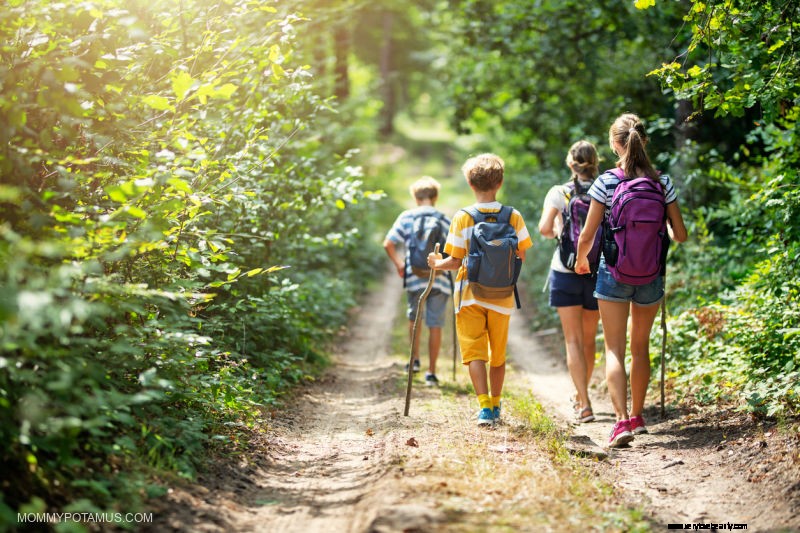
My kids are 0% interested in the fact that forest bathing reduces stress levels, elevates mood and increases natural killer cell activity.
But . . . they really like treasure hunts. Since the goal of forest bathing is to let nature wash over all five senses – smell, touch, sound, sight and taste – I sometimes create a treasure hunt for them that engages each one. It’s a lot of fun and I sometimes hunt a little, too. :)
Here’s a list to start with in case you want to try it:
⭐ Something prickly
🌱 3 kinds of leaves
⭐ Something that smells good
🌻 Something yellow
🌰 A seed
⭐ Something smooth
🍁 Something crunchy
⭐ Something rough
🌿 Something you think of as a treasure
⭐ An interesting rock
It doesn’t take a long time, and we all leave feeling more relaxed.
Have you ever tried forest bathing? Did you enjoy it?
1. Michael J. R. Desborough and David M. Keeling (2017) The aspirin story – from willow to wonder drug
2. Achan, Jane et. al. (2011) Quinine, an old anti-malarial drug in a modern world: role in the treatment of malaria
3. Li, Qing (2018) Forest Bathing: How Trees Can Help You Find Health and Happiness
4. https://www.epa.gov/report-environment/indoor-air-quality#note1
5. Komori, T et. al. (1995) Effects of citrus fragrance on immune function and depressive states
6. Scientific American (2008) Sleep On It: How Snoozing Makes You Smarter
7. PBS (2012) Can Sleep Make You Smarter?
8. BBC (2013) How Sleep Makes Your Mind More Creative
9. American Psychological Association (2014) Sleep Deprivation: More Sleep Would Make Most Americans Happier, Healthier and Safer.
10. Stump, Scott (2013) “Nap Rooms” Encourage Sleeping On The Job To Boost Productivity
11. Harris, Shelby (2013) Sleep and Longevity: 5 Ways Sleep Keeps You Young
12. Dictionary.com. Vigor
13. United States Department of Agriculture Forest Service (2014) Exploring Connections Between Trees and Human Health