
Parents are experts in sleep deprivation – we’ve guzzled the coffee, wiped the daytime drool off the back of our hands, and accidentally fallen asleep while trying to help our kids drift off to dreamland. You’d think, then, that we’d also be experts in recognizing the signs of sleep deprivation in our children. And once recognized, we’d apply some intuitive sleep aids for children that work like a charm.
When kids are struggling, though, it can look different than we might expect. And that’s a problem, because blue light exposure from screens (which have a stronger biological impact on young developing eyes) and other factors are seriously affecting children’s sleep, resulting in problems like:
Rather than walking around like zombies – or mombies, in our case – sleep deprived children often become hyperactive. In fact, according to this New York Times article:
According to this study, inadequate sleep increases inflammation markers in our bodies and lowers immune function.
Newer research also suggests that it may interfere with a process we are just learning about, which is that the brain appears to flush out toxins while we sleep.
Lack of sleep directly affects children’s ability to regulate their emotions, which can lead to moodiness, irritability, impulsivity, meltdowns, and increased overall stress. (1)
According to a study published in the journal Pediatrics, “Children who get less sleep in infancy and early childhood may be at greater risk of being overweight or obese during mid-childhood.” This is likely due to the way poor sleep disrupts the production of two appetite regulating hormones – ghrelin and leptin. (2)
Meanwhile, the Journal of Sleep & Sleep Disorders Research states that “Abnormalities in sleep quantity, sleep quality, circadian alignment, and melatonin regulation increase the risk of type 2 diabetes.”
Kids who get deep, uninterrupted sleep tend to be more creative, focused, agreeable, able to solve problems, and more, so making it a priority has huge benefits.
If you’ve read my 23 Science-Backed Sleep Tips, you’re already well on your way to helping your entire family get deeper sleep, but here are some suggestions that are tailored just for kids.
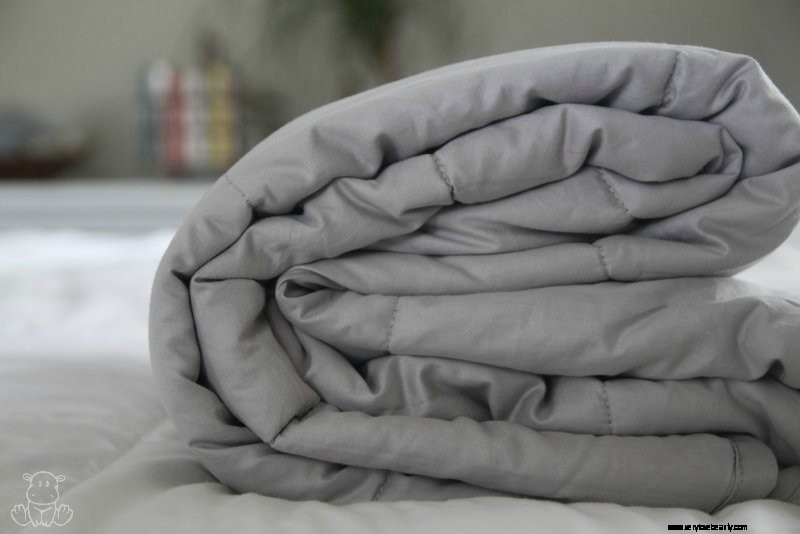
Research shows that weighted blankets improve sleep quality, reduce stress, improve daytime focus and mood, and ease symptoms associated with sensory processing disorder.
Here’s how they work, plus my favorite options for kids.

Computer screens, T.V.’s, and phones emit blue light, which the body perceives like sunlight. Exposure to blue light after sundown can suppress the release of melatonin, which is the hormone that tells our body it’s almost time for bed.
But that’s not all it does – melatonin is vital for health, and low levels can cause more problems than just a rough night’s sleep. (We’re talking an increased risk of cancer, impaired immune function, obesity and heart disease.)
Blocking the blue is especially important for kids because their eyes are more vulnerable to the negative effects of blue light on sleep:
The reason kids are so impacted by blue light is that crystalline lens of the eye – aka the part the helps us focus – is more transparent in children. It doesn’t fully develop until around age 14-15, and children’s eyes have larger pupils, too. (4)
In other words, they absorb more blue light than adults do when exposed to light emitting devices, so it’s important to protect against excessive exposure. (5)
One way to do that is to reduce screen time. Personally, my kids do use screens for video chats with faraway friends, an online book club, educational games, and the occasional movie, so I look for other ways to block the blue. Here are my two favorite options:

Magnesium is often called the “magic mineral” due to its ability to relax muscles, help with stress, and support restful sleep for both adults and kids. (It’s really helpful for easing growing pains!)
Unfortunately for some people, magnesium oil can cause an itchy or uncomfortable sensation when applied in undiluted form. This extra-gentle children’s magnesium lotion solves that by blending skin-calming ingredients like organic shea butter, argan seed oil, prickly pear seed oil with high potency transdermal magnesium. They have a grown-up version, too!
If you’d rather DIY, you can find my magnesium body butter recipe here.
Catnip, chamomile, passionflower, and lavender are all gentle, kid-safe herbs that support relaxation and sleep. In addition to their popularity among herbalists and even children’s books (remember how Peter Rabbits mom used to put him to bed with chamomile tea?), these herbs are now making their way into research.
According to this PubMed review, the relaxing effects of chamomile may be due to a flavonoid called apigenin, while this study found that passionflower improved sleep quality when taken as a tea before bed.
In addition, one study showed that lavender’s aroma improved sleep in individuals suffering from insomnia. When brewed as a tea, lavender buds release their aroma while adding flavor.
Here are some tea recipes to try for kids over age one:
If your kids don’t love tea or you need to simplify your bedtime routine, this sleep tincture can be made in advance with just a few minutes of active prep time, then given before bed without the need to boil water and wait for the tea to cool.
Though white noise machines help to drown out the sound of barking dogs, loud neighbors, or other disruptive sounds that can get in the way of sleep, some research indicates that they can also increase stress levels and may temporarily affect brain development in young babies. (6)
Though more research is needed, this study found that exposing baby rats to “continuous white noise sabotages the development of the auditory region of the brain, which may ultimately impair hearing and language acquisition.” (7)
Now obviously rats aren’t people, but researchers think it conveys valuable information regarding general auditory development in mammals from this study. The good news is that although brain development was significantly delayed, the rats compensated by extending the “critical period” in which the brain wires its neural networks – a feature called neuroplasticity. As soon as the white noise was removed, they completely caught up.
One of the researchers, Edward Chang, summarized the findings by saying “it’s like the brain is waiting for some clearly patterned sounds in order to continue its development. And when it finally gets them, it is heavily by influenced them, even when the animal is physically older.”
That’s where pink and brown noise comes in. Though it’s often embedded in a sound clip of crashing waves or rain, white noise is actually machine-generated static that combines all the frequencies we can hear – about 20,000 tones – into one sound. Nature tends to favor pink or brown noise, which emphasizes lower frequencies while softening the intensity of higher-pitched frequencies.
In contrast, pink or brown noise emphasizes lower frequencies soften the high-pitched frequencies. I’ve written more about the benefits of pink and brown noise here, which includes what to look for in a sound machine. Here are my top three choices:
Here are a few calming essential oils that are generally considered safe for use with children:
If you prefer pre-made blends, here are a few of my family’s favorites:
I love this Jasmine essential oil diffuser because it can be set to interval mode, where it diffuses for 10 minutes and then turns off for 20 minutes. This allows essential oils to be consistently diffused without becoming overwhelming. Also, it can run in interval mode for 21 hours, so it’s basically set-and-forget. This one is also beautiful and has an intermittent mode, too.
According to the National Wildlife Federation, American children spend an average of 7 hours and 38 minutes in front of a screen every day. For every hour spent participating in sedentary activities, this study found that children took and average of three additional minutes to fall asleep.
“Outdoor time improves a child’s sleep in three critical ways. Natural light from the sun regulates the body’s internal ‘sleep clock’, which makes children more alert during the day, and tired at night.”
It also has a calming effect that helps children release built up tension from stressful or scary events. Research also suggests that children play harder and release more endorphins when allowed to play in an outdoor setting vs. an indoor setting. (8)
‘While there is no single solution to childhood sleep deprivation, part of having a well-rested child involves trading some ‘screen time’ for ‘green time’, says Kevin Coyle, NWF Vice President of Education and Training, and author of the NWF guide. More play time in natural settings can help kids get a high-quality night’s sleep.’ (9)
We know that excessive screen time can disrupt our circadian rhythm – aka our internal clock that lets us know when it’s time to start making melatonin and wind down for sleep – but what’s not often considered is how some night lights increase blue light exposure.
Here are some good options for children who are more comfortable falling asleep with a night light on.
When my babies were restless, I found that taking them in for a chiropractic adjustment usually had two effects:
Both usually happened before I even got them home from their appointment! Fortunately now that they’re older there are no explosions, just happier children during the day and night.
Though there are only a few small studies that have found a positive relationship between chiropractic care and sleep, it is thought to have a calming effect on the Central Nervous System (CNS).
I recommend going with a pediatric chiropractor – you can find a list of them here.
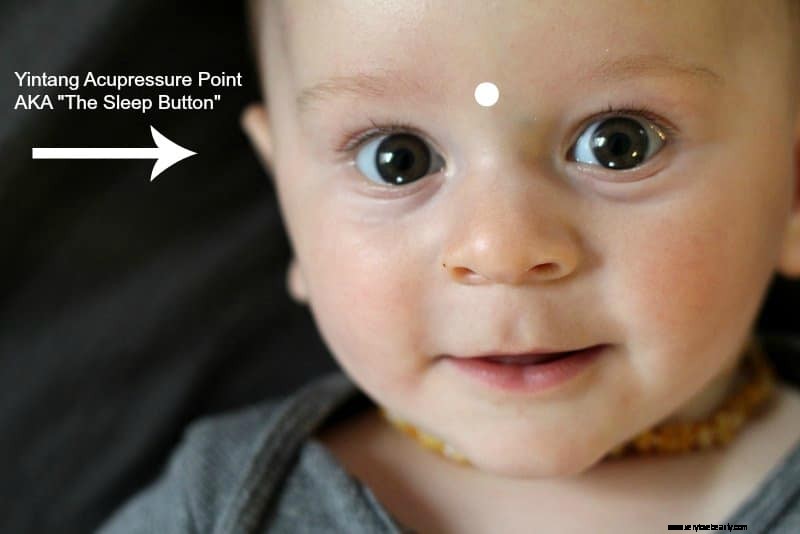
I’ve found this technique to be helpful with my older kids as well, particularly on days when they are overtired and/or emotions are running high. I just stroke the acupressure point and let them share whatever is on their mind while I listen.
For several more intensive protocols that may work better for some children, check out Jennifer Taveras, L.Ac.’s 12 complete guide: Acupressure Points For Pediatric Sleep Improvement And Wellness Support.

Children who follow a consistent bedtime routine fall asleep more quickly, wake less often during the night, and sleep for an extra hour on average, concluded this study.
Below are some options to consider for your family routine. Some – like oral care – are essential, while others can be selected based on what works best for you:
Our tendency is to want to wear kids out during the day, but overscheduling can actually cause sleep problems.
How many hours of sleep do kids need?
The amount of sleep varies by age. According to the American Academy of Sleep Medicine (AASM), here’s a general outline:
What about melatonin?
Due to the concerns I’ve mentioned here, I’ve opted not to use melatonin. Fortunately, the strategies mentioned above have worked well for my family.
What other factors can impact sleep quality?
Snoring may suggest sleep apnea, which should be evaluated by a sleep specialist. If your family is practicing healthy sleep habits and one or more of you is still not waking up feeling refreshed, make sure to bring it up with your trusted healthcare provider.
What’s helped your little ones? Please let me know in the comments below!
Sources
1. Mauss, Iris et. al. (2012) Poorer sleep quality is associated with lower emotion-regulation ability in a laboratory paradigm
2. Miller, Alison et. al. (2015) Sleep patterns and obesity in childhood
3. University of Colorado Boulder (2017) Kids uniquely vulnerable to sleep disruption from electronics
4. Turner, PL and Mainster, M.A. (2008) Circadian photoreception: ageing and the eye’s important role in systemic health
5. Behar-Cohen, F et. al. (2011) Light-emitting diodes (LED) for domestic lighting: any risks for the eye?
6. Scientific American (2010) How does background noise affect our concentration?
7. Howard Hughes Medical Institute (2003) White Noise Delays Auditory Organization in the Brain
8. National Wildlife Federation (2011) Green Time for Sleep Time
9. KSAT News. Outdoor play time can enhance children’s sleep
10. Martin, Benjamin (2013) Chiropractic Improves Brain Wave Patterns, Brain Function
11. WebMD. Sleep Tips for Kids of All Ages