
“Can you grab the giant flower from the veggie aisle?” << You’ve probably never said this to anyone, but if you’ve ever asked anyone to pick up an artichoke it’s technically true.
The plant we commonly know as an artichoke is actually the flower bud of the globe artichoke plant (Cynara scolymus). If allowed to fully bloom, it turns into a glorious purple blossom.
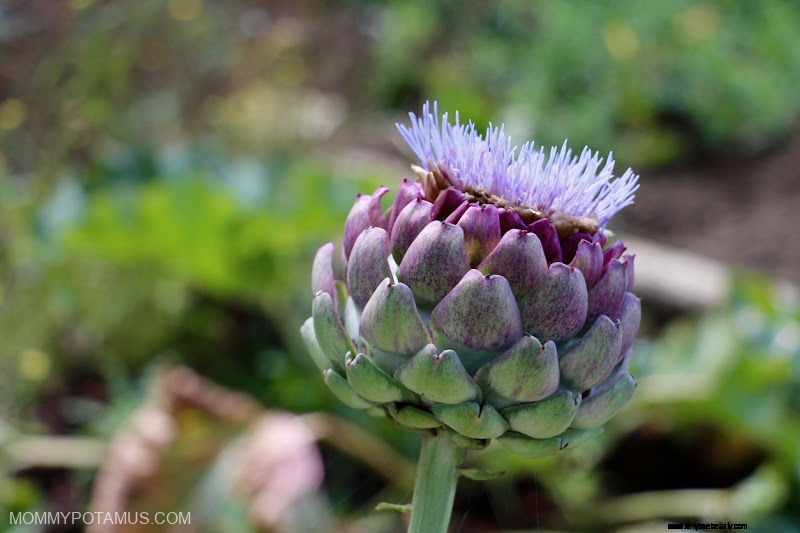
And when harvested early, it becomes a glorious addition to dips, stews, salads and more.
But this article is not about the flower – it’s about the spiky leaves that grow beneath the flower. Artichoke leaves are revered for their ability to support healthy blood lipids, digestion and detoxification, especially liver detoxification.
But while the benefits of artichoke flowers are widely discussed – their prebiotic and antioxidant content, for example – the therapeutic properties of the leaves are less well-known.
We’ll dive into the benefits below, but first I want to mention that none of these statements have been evaluated by the FDA, this article is not medical advice, and it is not meant to diagnose or treat any condition. Please talk with your healthcare provider about any herbal remedy or dietary supplement you are considering.
For thousands of years this relative of milk thistle, dandelion and burdock root – yep, they’re all related – has been prized for its ability to support liver function and resilience. (2)
It contains the antioxidant compound known as silymarin, which is also the active constituent in milk thistle. Silymarin is a group of flavonoids that activate the Nrf2 detox pathway.
When Nrf2 is activated, it encourages the body to make the body’s master antioxidant: glutathione. (3) (4) Glutathione has more than one job, though – it also functions as a vital detoxification molecule during phase 2 of liver detoxification.
It’s also rich in another compound called cynarin – which supports liver health – plus polyphenols that provide help counteract oxidative stress. (4)
Artichoke leaves are “a very different creature than the tame, buttery hearts used in cuisine.” (5)
They’re bitter, which is not usually the favorite of the five flavors our taste buds can detect (the others being sweet, sour, salt and umami).
The bitter flavor does have valuable benefits, though, especially when it comes to easing digestive discomfort and/or promoting strong digestion overall. (6)
As Rosalee de la Foret, author of Alchemy of Herbs, wrote:
One of the digestive juices she’s referring to is bile, which helps digest fats and carry out toxins that have been processed by the liver. (7)
Research suggests artichoke leaf may help optimize cholesterol levels. In one double-blind, placebo controlled clinical trial, volunteers receiving artichoke leaf extract for 8 weeks. experienced an increase in “good” cholesterol (HDL-cholesterol) and a reduction in “bad” cholesterol (LDL-cholesterol). (8)
According to de la Foret, “While the exact mechanisms aren’t known, it’s probably that when liver health is supported, the body is better able to metabolize cholesterol.” (1)
Research also suggests that two flavonoids in artichoke leaf extract – luteolin and cynaroside – may have a positive impact on blood pressure. They increase the activity of a special enzyme called eNOS, which is involved in the production of nitric oxide. (9)
Nitric oxide is a vasodilator, which means it relaxes the inner muscles of blood vessels, causing them to widen. This vasorelaxation effect increases blood flow and eases tension within blood vessel walls.
Our bodies break down toxins and metabolic byproducts via oxidation – a process that transforms them into water-soluble compounds that can be flushed out of the body.
Oxidation generates free radicals, which can damage tissues and accelerate aging unless they are neutralized by antioxidants.
Artichoke leaf provides antioxidant support in two ways by:
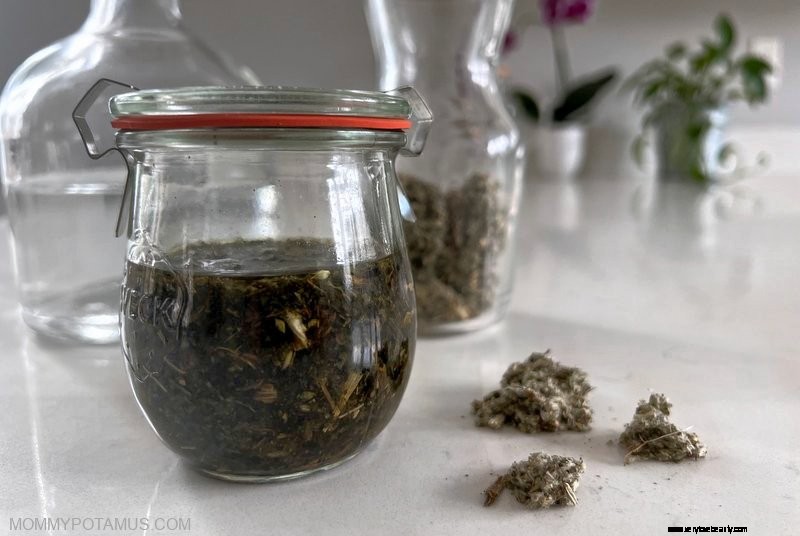
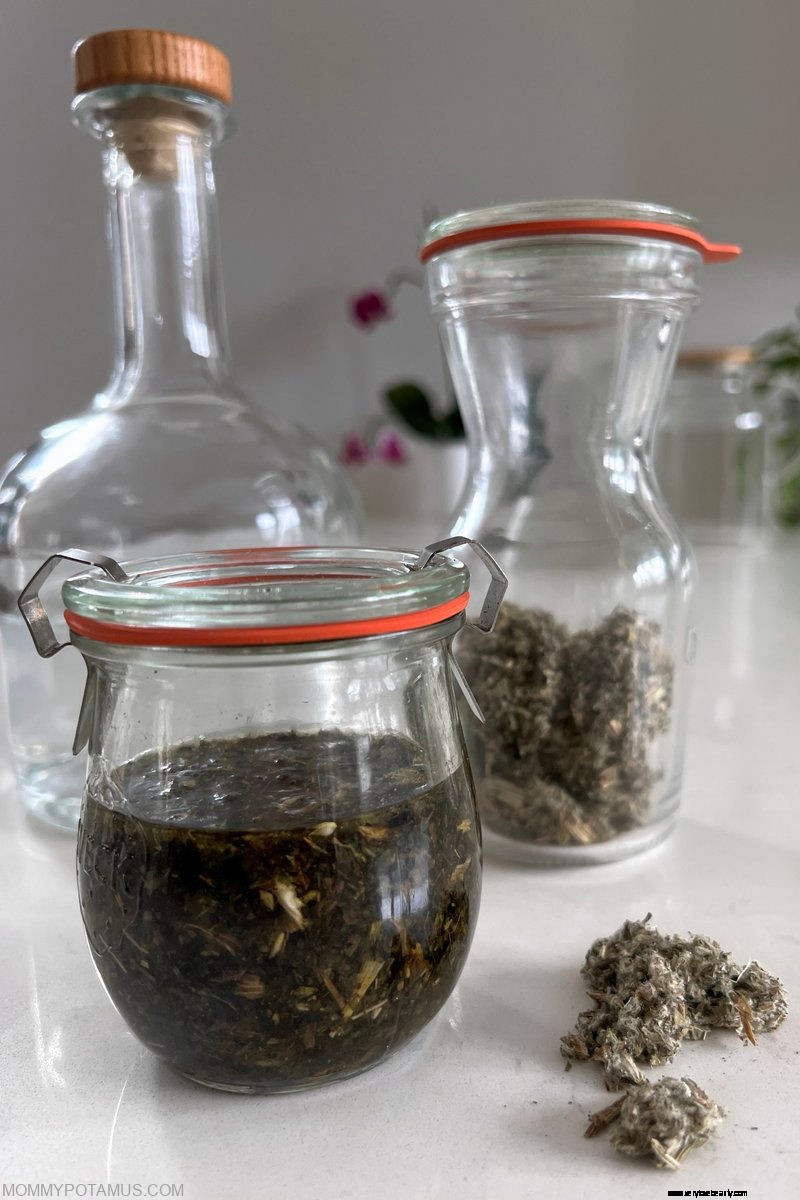
As a tincture, Rosalee de la Foret recommends making a 1:5 tincture (this is a ratio of herb to alcohol) with the alcohol being at least 60 proof (30% alcohol). The suggested amount is 3-5 ml (about 1/2-1 tsp) three times per day.
Here’s how to make it:
Ingredients
To Make
There’s a reason artichoke is much more popular as a concentrated tincture than as a tea. It’s bitter, like really bitter.
I sometimes add 1/4-1/2 tsp to lemon ginger tea to sip before or after a meal, but I don’t brew up artichoke leaf by itself.
I only found a couple of cautions regarding artichoke leaf in all my herbal books and other research sources :