
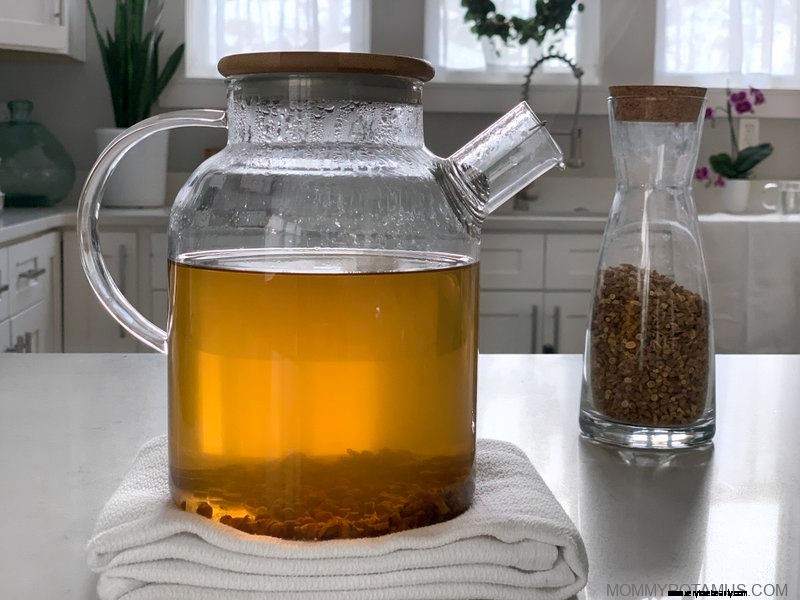
For thousands of years, the golden roots of the astragalus plant have been revered for their ability to support immune function, longevity, energy levels and more. It’s got a mild, nutty, slightly sweet flavor that works well in teas and soups, making it easy to incorporate into your daily routine.
Astragalus’ Chinese name, huáng qí, means “yellow leader” because the yellow root is considered one of the most important herbs in Traditional Chinese Medicine (TCM).
I’ll cover what makes it so special below, but first I want to remind you that none of these statements have been evaluated by the FDA, this article is not medical advice, and it is not meant to diagnose or treat any condition. Please talk with your healthcare provider about any herbs you are considering.
Now that we’ve got that out of the way, let’s dive in.
Also known as milk vetch, the astragalus plant creates beautiful flowers, but only the roots are considered beneficial.
There are actually over 2,000 species of astragalus, but only two are used therapeutically — Astragalus membranaceus (synonym Astragalus propinquus) and Astragalus mongholicus. These are the ones you want to look for when considering a supplement, tea or tincture.
Both contain bioactive compounds that work synergistically together, including:
It’s also rich in potassium and magnesium, which is often called “The Magic Mineral,” plus vital trace minerals like copper and manganese.
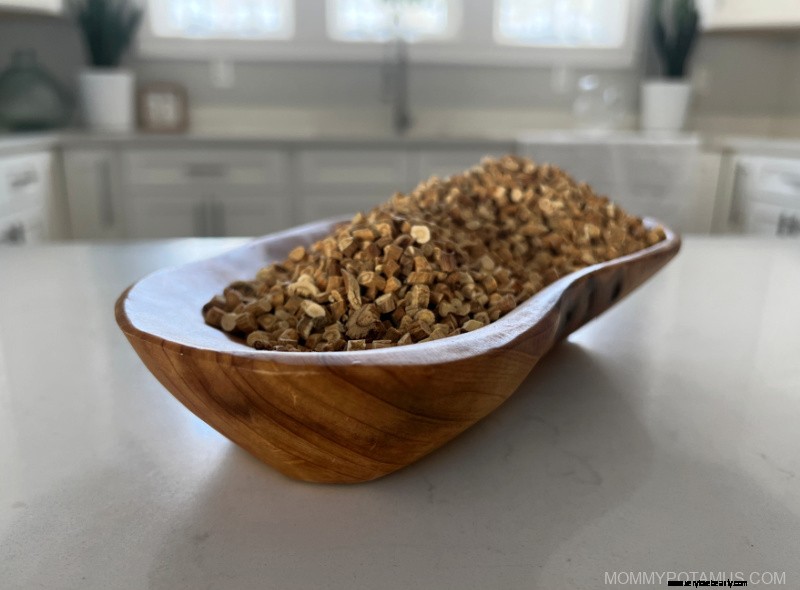
Together, the constituents listed above give astragalus its therapeutic properties. Let’s take a look at some of the most well-researched benefits.
One of the wonderful things about astragalus is that it’s classified as an immune modulator, meaning that it helps to encourage balance in both underactive (immune compromised) and overactive (autoimmune disease) systems. (2)
“It is extremely safe and well tolerated, and it is particularly useful for supporting the immune system,” writes Donald R. Yance, CN, MH, RH(AHG). (3)
He also writes:
“I classify astragalus as a secondary adaptogen, not a primary adaptogen, because it does not have a direct or profound effect on the neuroendocrine system. However, for persons under immunological stress (from chemotherapy, surgery, traveling, lack of sleep, or debilitation due to an acute infection) I consider it a primary adaptogen.” (3)
Studies suggest that it supports our reticuloendothelial system, which is a diffuse system of cells that destroys pathogens via eating them (phagocytosis). (2)
Like many herbs, modern research seems to support traditional use. For example, “In China, astragalus has enjoyed a long history of use in traditional medicine” to support “Wei Qi, or ‘defensive energy,’ or in Western terms, the immune system.” (3)
Because of these properties, astragalus is a favorite herb to include in tinctures and teas when extra immune support is needed.
Astragalus “is also regarded as a potent tonic for increasing energy levels.” (3)
This may be due to its positive impact on the mitochondria, which serve as the “batteries” that power our cells. (4) It makes sense when you consider that mitochondria burn oxygen for fuel, and researchers have found that astragalus increases “oxygen uptake and the systemic utility of oxygen.” (5)
Also, as I shared in this post on rebooting our body’s stress response, when we get stuck in stress mode, our bodies “steal” a hormone called pregnenolone to make extra cortisol. Pregnenolone is often called the “mother hormone” because it’s used to make all kinds of hormones – estrogen, progesterone, testosterone, DHEA, and, of course, cortisol.
If too many of our resources are directed toward making cortisol, it can impact levels of other hormones that are needed for energy. Low estrogen, testosterone and DHEA are all associated with decreased energy levels. (6) (7) (8)
Herbs like astragalus help the body maintain energy levels by making it more adaptive to stress, which means it can devote more energy to making various hormones instead of loads of cortisol. Here’s a guide to getting started with adaptogens.
In one study, researchers found that a compound within astragalus positively influences production of the telomerase (hTERT) enzyme. (9)(10) This enzyme maintains or lengthens telomeres, which is significant because telomeres directly impact cellular aging.
Telomeres are sometimes compared to the plastic ends on shoelaces that prevent them from fraying, only instead of protecting laces they protect our DNA. Here’s how an article in Scientific American explains it:
The faster the telomeres shrink, the more quickly we age at a cellular level. By helping to maintain telomere length, astragalus is thought to support optimal aging.
This small, double-blind, placebo controlled study found that taking astragalus for six weeks was helpful for easing symptoms associated with seasonal allergies.
Other herbs and supplements may be beneficial, too – I’ve covered them in this article on natural remedies for seasonal allergies.
Astragalus is thought to support cardiovascular health in a few ways:
Our bodies break down toxins via oxidation – a process that transforms them into water-soluble compounds that can be flushed out of the body. Oxidation produces free radicals, which can damage tissues and accelerate aging unless they are neutralized by antioxidants.
Astragalus provides antioxidant support in two ways by:
A 2016 meta-analysis suggests that astragalus may support healthy blood sugar metabolism for some people. (14) However, more studies are needed to confirm this effect.
Astragalus is often taken daily (or nearly so) during cold and flu season to support healthy immune function. It can be used alone or combined with complementary adaptogens such as licorice root, ginseng, reishi, lion’s mane, shizandra berry and cordyceps, among others.
I include it in my adaptogen chai tea recipe and take it as a tincture as needed for energy or immune support.
In terms of how much to take, herbalist Rosalee de la Foret writes that “Astragalus works best when taken in higher amounts for a long period of time. I recommend 15-30 grams of the dried root daily.” (16) In terms of tablespoons, that’s approximately 5-10 tablespoons.
Medical Herbalism recommends between 10-30 grams, or about 3-10 tablespoons.
You’ll find instructions for making astragalus tea and tincture below, as well as how to incorporate it into nourishing soups.
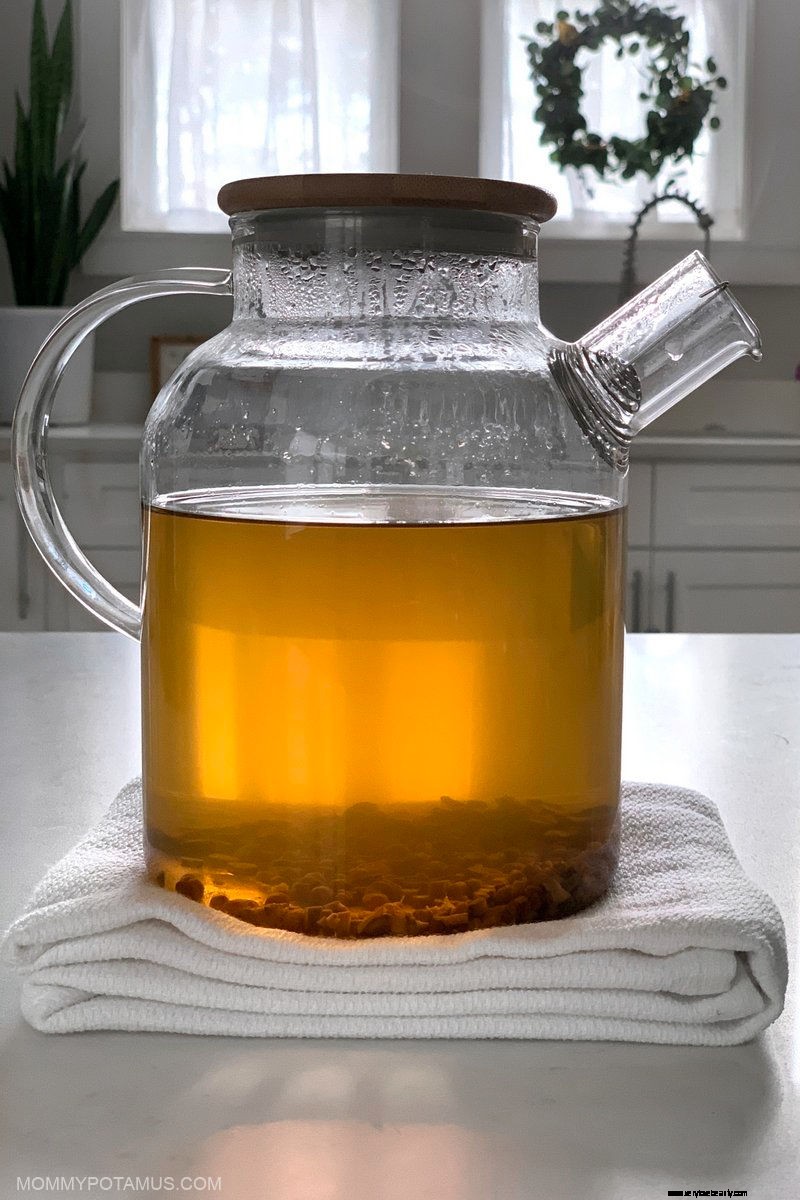
Roots take a little coaxing to release their therapeutic properties, so astragalus is best prepared as a long-simmered tea (decoction). In Adaptogens: Herbs For Strength, Stamina and Stress Relief, ethnobotanist David Winston and herbal expert Steven Maimes recommend 1-3 cups per day.