
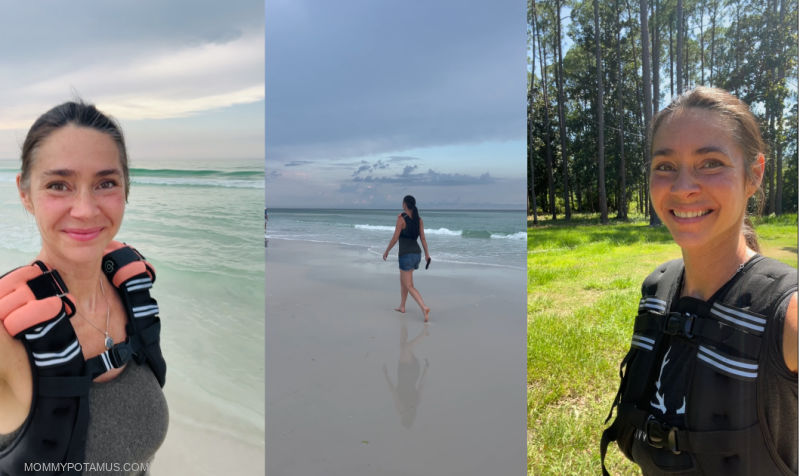
Self-care looks different for me than it used to. In my 20s, I thought the ultimate grown-up drink was wine. In my 30s, it was coffee. Now in my 40s, it’s water – with minerals. (Don’t worry, coffee, I still love you too.)
A few other things have changed, too. My teens tuck me in now, I eat protein like it’s my part-time job, and I throw on a weighted vest at least once a day – because nothing says thriving like walking around in something that looks like tactical gear.
You’ve probably noticed that weighted vests are everywhere lately, and you might be wondering if they’re truly a game changer or just a gimmick. After logging hundreds of miles in one (actually two), I’m here to tell you they’ve earned a permanent spot in my weird-but-wonderful wellness toolkit.
If you care about maintaining muscle mass, bone strength, core strength and stability in the years ahead, you should seriously consider adding it to yours, too.
I’ll explain why below, but first a quick reminder: None of these statements have been evaluated by the FDA, this article is not medical advice, and it’s not meant to diagnose or treat any condition. Now let’s dive in.
In The Comfort Crisis, Michael Easter highlights rucking – walking with a weighted backpack called a rucksack – as one of the simplest, most effective ways to build both physical and mental resilience. It’s not some trendy fitness fad – it’s a foundational part of training for Army Special Forces, who rely on it to build real-world strength, endurance, and grit.
These days, that same training concept is making its way from special forces to the sidewalk, as more people discover the powerful benefits of adding weight to everyday movement.
Weighted vests, sometimes called ruck vests, are designed to deliver the same benefits as rucksacks while distributing the weight more evenly across your torso for better comfort and mobility. They come in several forms, from low-profile vests that resemble fishing gear to rugged options that look like tactical armor. Some have pockets that let you add or remove weight to match your training goals, while others come pre-loaded and ready to go right out of the box.
Before we dive into the benefits of weighted vests, let’s talk about why so many women – especially in perimenopause and beyond – are training like the elite.
They’re rewriting the old script that says midlife = fragility. Instead, they’re committed to staying strong, steady, and capable in the years ahead.
What’s fueling the surge in strength training among midlife women? A deeper understanding of what hormones really do.
Estrogen, progesterone, and testosterone aren’t just about reproduction – they’re key players in nearly every system of the body. Estrogen alone acts as an anti-inflammatory, antioxidant, regenerator, and regulator. (1)(2)(3) When hormone levels decline, as they naturally do in perimenopause and menopause, the effects can ripple through nearly every aspect of health.
We’re talking about a loss of bone density, shrinking muscle mass, and joints that aren’t quite as stable – plus a higher risk of pain, fractures, and frozen shoulder. And that’s only the beginning.
These hormonal shifts also impact how we metabolize glucose (sugar) and lipids (fats), setting the stage for metabolic syndrome – a cluster of issues that raises the risk for cardiovascular disease, type 2 diabetes, and other chronic conditions. (4)(5)
One hallmark of metabolic syndrome is an increase in abdominal visceral fat. Unlike brown fat, which burns energy to help regulate temperature, visceral fat works against us: it reduces insulin sensitivity and disrupts healthy lipid metabolism, both of which raise the risk for inflammation, blood sugar dysregulation, and heart disease. (4)(6)(7)
The good news is that these changes aren’t a foregone conclusion. Nutrition and regular movement – especially the kind that builds and preserves muscle – can help us counteract the metabolic shifts of midlife and stay strong from the inside out. (4)
Wearing a weighted vest can take familiar workouts – like walking or bodyweight exercises – and make them more effective, helping build the strength and stability we need to stay strong, steady, and ready for whatever life throws our way.
By adding just a little extra resistance, you increase the intensity of movement, raising your heart rate, burning more calories, and giving your muscles and bones a reason to adapt and grow stronger with every step.
It’s also incredibly versatile and easy to scale. If you don’t have a consistent exercise routine, simply walking a few hours a week with a weighted vest can significantly boost calorie burn compared to walking without weight – without feeling like you’re “working out.”
At the same time, if you already have a solid fitness routine, you can use a weighted vest to level up your strength work, increase training density, or add load to bodyweight movements like lunges, push-ups, or squats.
Here are some of the most research-backed benefits:
Earlier, I mentioned how hormonal shifts in midlife can disrupt metabolic health. Now let’s dig deeper into why muscle is such a big piece of that puzzle – and what we can do about it.
We naturally begin losing muscle mass around age 30 – about 3–8% per decade – and that loss typically accelerates during perimenopause and menopause as estrogen levels decline. (1) But this isn’t just about strength. Skeletal muscle plays a central role in how our bodies regulate blood sugar and fat.
When we lose muscle, we also lose one of our biggest allies in metabolic health. Muscle acts like a sponge for sugar in your bloodstream, soaking it up and storing it for energy. As muscle mass decreases, our ability to manage blood glucose weakens, which can lead to insulin resistance, weight gain, and eventually, conditions like metabolic syndrome.
In fact, studies tracking women through menopause show that even without changes in diet or exercise, declining estrogen is linked to higher fasting glucose, increased visceral fat, and reduced insulin sensitivity. (8)(9) And since muscle is also involved in lipid metabolism, losing it can throw off our cholesterol levels, increase inflammation, and make it harder to maintain a healthy body composition.
The good news? Resistance training – including rucking or walking with a weighted vest – can help reverse that trend.
In one study, women who performed lower-body strength training while wearing weighted vests three times a week for nine months showed increased lean body mass, improved muscle strength and power, and better lateral stability – a big deal when it comes to preventing falls as we age. (10)
Another small study suggests that simply adding weight loading may help the body metabolize fat more efficiently, giving your metabolism an extra edge. (11)
In other words: what we carry now can change how we carry ourselves for decades to come.
Muscle loss isn’t just a strength issue – it’s a bone health issue, too.
Muscles and bones work as a team. Every time a muscle contracts, it tugs on the bone it’s attached to, creating the kind of healthy stress that signals the body to maintain and rebuild bone tissue. But when we lose muscle, as often happens during perimenopause and beyond, that pulling force weakens – and with it, the stimulus to keep our bones strong. (12)
In other words, less muscle means less bone-building activity, which helps explain why bone loss tends to accelerate during the same years that muscle mass declines.
Estrogen also stimulates bone-building osteoblasts, so as levels drop we can’t take for granted that our bones will stay naturally strong without effort.
Bottom line: Without enough resistance – either from muscle contractions or external forces like gravity – bone tissue gradually breaks down faster than it’s rebuilt.
That’s where weighted vests come in.
Gravity keeps our bones strong – take it away, and they quickly thin out. Astronauts in microgravity lose 1–1.5% of bone density per month, the equivalent of years’ worth of aging, because their skeletons aren’t being stressed by weight-bearing forces. (13)
On Earth, walking or exercising with added weight offers the opposite benefit. Each step with a weighted vest increases impact on your skeleton, prompting osteoblasts, the bone-building cells, to reinforce and rebuild bone tissue.
In a landmark 5-year study with postmenopausal women (average age 64) combined jumping exercise with a weighted vest three times a week. The vest group maintained hip bone density, while a control group lost around 4%–5% at several hip sites. (14)
Also, in a randomized controlled trial, postmenopausal women exercised three times per week while wearing weighted vests that were progressively loaded up to 15% of their body weight. After 12 weeks, they showed a 14.5% decrease in NTx, a marker of bone resorption, indicating lower bone breakdown. They also gained 40% in ankle strength and increased fat-free mass compared to controls. (15)

We already know that doing lower-body strength training with a weighted vest boosts lean muscle and builds strength – so it’s no surprise it also helps with balance, core stability, and overall functional strength.
In twenty-something athletes, studies have shown enhanced performance in both resistance and explosive movements, such as the bench press, pushups, and power cleans, when weighted vests are added to traditional strength routines. (16)(17)
But the benefits go well beyond younger athletes:
On the core strength and posture front, carrying weight across your torso requires those muscles to constantly stabilize your spine during movement. This enhanced demand leads to improved core strength, posture, and coordination over time. (20)
Training with a weighted vest was shown to raise blood lactate thresholds in runners – a key indicator of endurance capacity and aerobic fitness (aka oxygen efficiency). (21)
Weights used in training ranged from 5% to 40% of body weight. Heavier loads helped improve sprint speed, while lighter ones were more effective for longer-distance workouts.
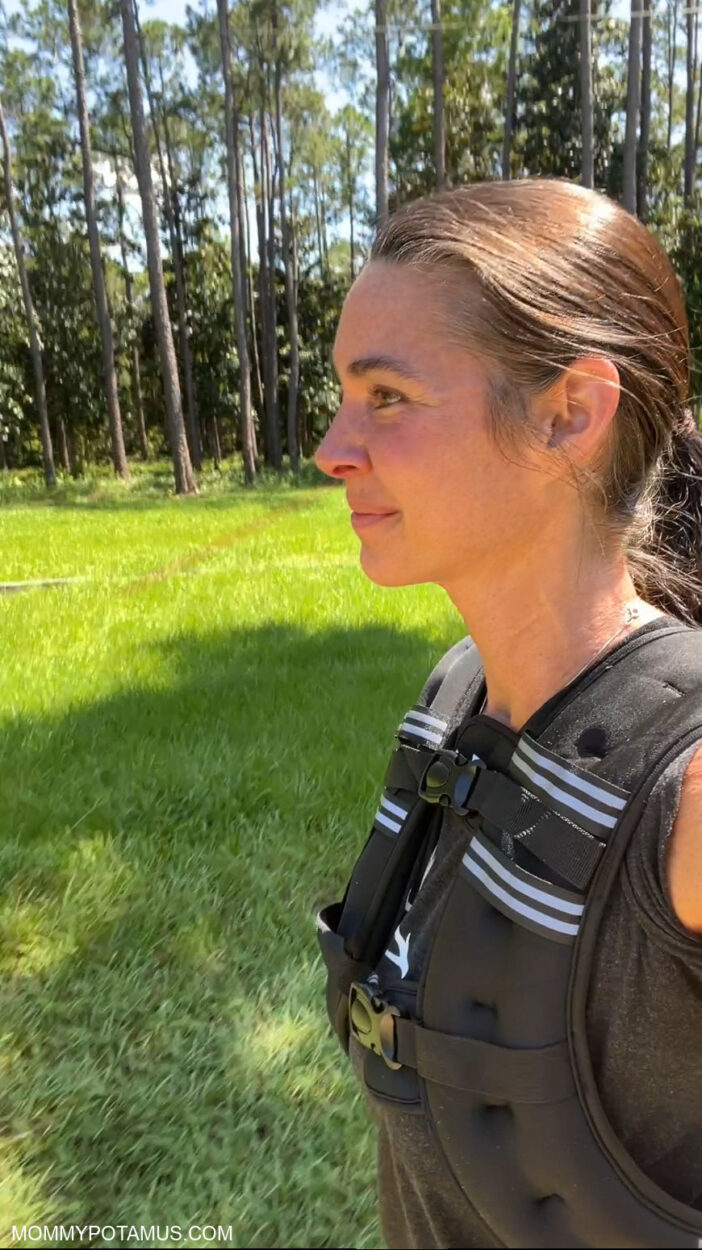
This year, two of my three kids are dual-enrolled in college and high school (from home). I love spending time with them (and my husband and pre-teen), so taking advantage of the time we all have together is a big priority.
At the same time, I’m looking at the season ahead . . . knowing that I want to feel strong, resilient, and excited to get up each day.
For me, rucking has become a way to savor the present with family (and sometimes friends) while also preparing for the future. I ruck each morning on a solo walk that helps me mentally sort priorities for the day, then in the evening I take a longer walk – usually with my husband, daughter, or sons (or some combination of that).
Some mornings I’ll sprint on my own – or challenge my boys to a race on our evening walk. I usually wrap up with a few squats.
Here’s what I’ve come to love most about it…
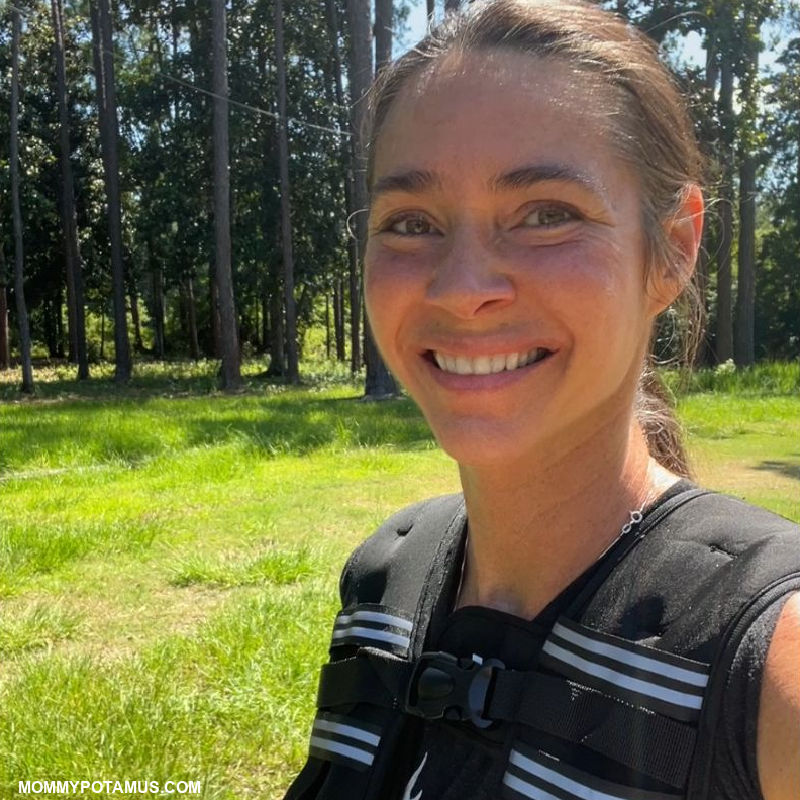
One of the best things about weighted vests is that almost anyone can use them, regardless of fitness level. Here are some general tips for getting started:
There are two main types of vests: fixed-weight and adjustable. Fixed-weight vests come with a set amount of weight built in, while adjustable vests have removable inserts that let you customize the load based on your goals or energy levels. Ideally, I prefer vests that are adjustable in weight so that I can increase the amount every few months.
However, many of the adjustable ones are not very “boob friendly,” aka they squish the chest area . . . and the ones that don’t are generally pricey.
Because I wasn’t sure if I would even like rucking, I decided to go with this fixed weight vest that was highly rated for comfort and slightly less than 10% of my body weight. It had a slight chemical smell when it arrived, but I didn’t notice it when I walked outside in the fresh air.
After a few weeks, I felt ready to increase my load, so I wrapped some ankle weights onto the vest to experiment with different weights and figure out what to order next. I decided on one that’s between 10-15% of my body weight.
The lighter one still gets regular use – the weight ratio is appropriate for my teens to use, and I also slip it on when I want to do a high-intensity workout with a lower load.
Eventually, I’ll invest in a weighted vest that is washable, comfortable, and adjustable in weight . . . but that product doesn’t exist just yet. For now, here are my top recommendations:
Zelus Fixed Weight Vest – I have this model in two weights. It’s comfortable, easy to slip on, and distributes weight evenly.
Zelus Adjustable Weight Vest – I seriously considered this one, which appears to be more chest-friendly than other option. In the end, though, I preferred the other design because I thought it would allow for better airflow when I walk on hot days.
Thanks for reading! If you try a weighted vest, let me know how it goes.