
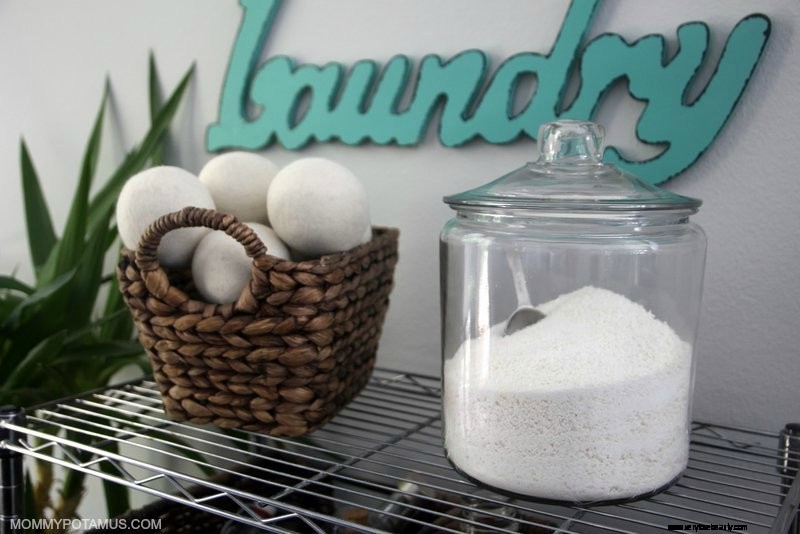
Have I ever told you about the time I washed newborn clothes with the tags and hangers still on? Or the time my preschooler decided to “help” with the laundry by adding a load of cloth diapers to my freshly cleaned whites?
Personally, I’m not up for adding complications to my laundry routine, which is why I love this easy homemade laundry detergent.
It’s super simple to make and has received a lot of positive feedback, like this comment from Hillary:
And this one from Cee:
Before we dive into the recipe, I’ve updated this article to answer some of the most commonly asked questions I’ve received over the years.
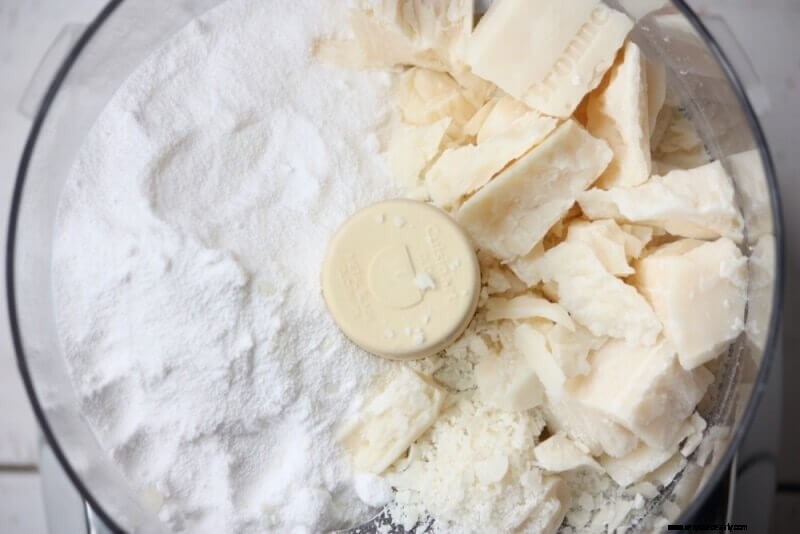
According to Chris Woodford, who holds a masters in Natural Sciences from Cambridge University:
Detergents can be made from other things, too, like natural or synthetic compounds that help separate dirt from fabrics using the same mechanism as soap. Both work by reducing the surface tension of water, which loosens dirt so that it can wash away.
Bottom Line: According to Woodford, all soaps are detergents but not all detergents are soaps.
I call this recipe laundry detergent because that seems to be the name most people recognize, but it could just as easily be called homemade laundry soap.
As I wrote about here, a University of Washington study of some of the top-selling laundry products and air fresheners found that they all emitted at least one chemical regulated as toxic or hazardous under federal laws. (source)
Interestingly, none of the chemicals were listed on the label, and five of the six products emitted chemicals which are considered by the Environmental Protection Agency to have no safe exposure level.
Fortunately, in the past few years several companies have begun offering non-toxic options that work well – I’ll cover those later in the article.
Although I do buy laundry detergent every once in awhile, I like making my own because it’s an easy way to save money on household expenses.
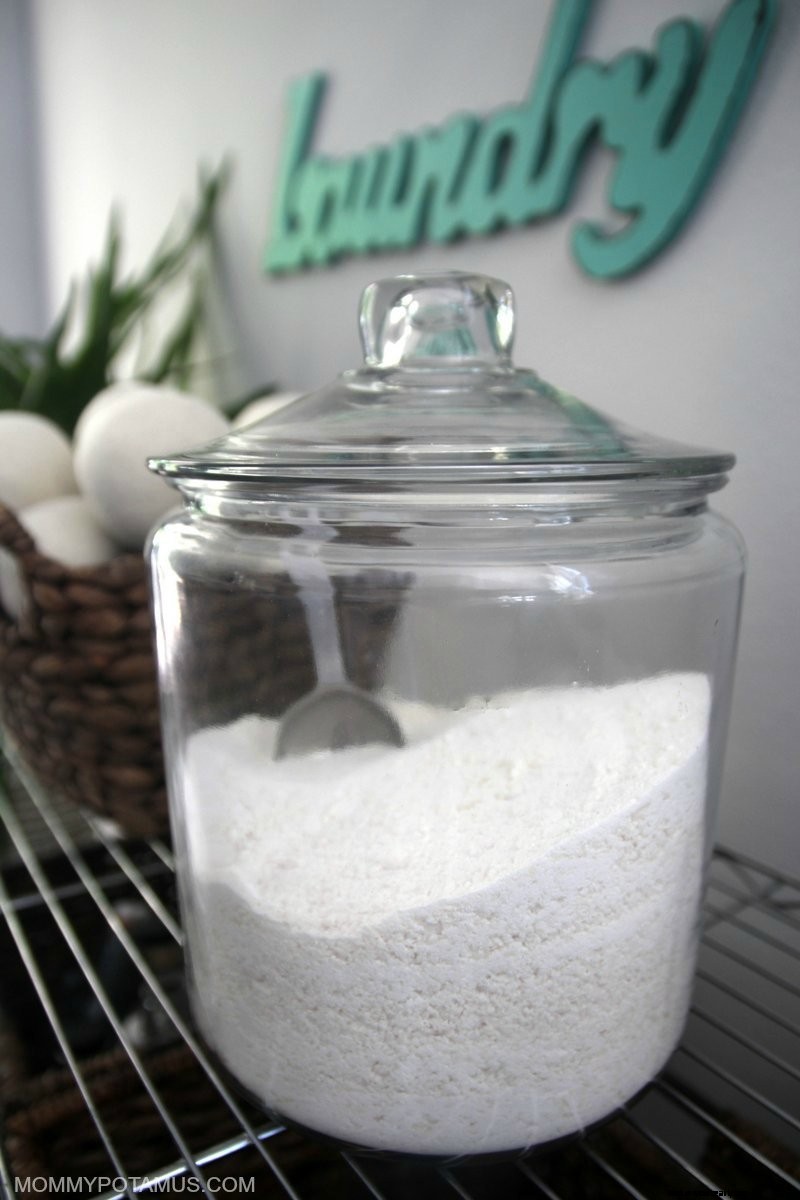
If you’ve ever searched around for laundry detergent recipes online, you’ve probably seen ones that have five, six or even seven ingredients. It may seem like they’d be more effective than ones with just two or three, but simplicity really does work in our favor here.
That’s because instead of mixing a weaker ingredient with a stronger one, I just use the more effective of the two. For example, according to this post, “Baking soda is only half as strong as washing soda at softening water and doesn’t allow the cleaning pH to go nearly as high. And if you have a stronger product on hand, why dilute it with a weaker one?”
No one uses baking soda in commercial formulas. . . not even Arm & Hammer! With that in mind, here are my essentials for making homemade laundry powder:
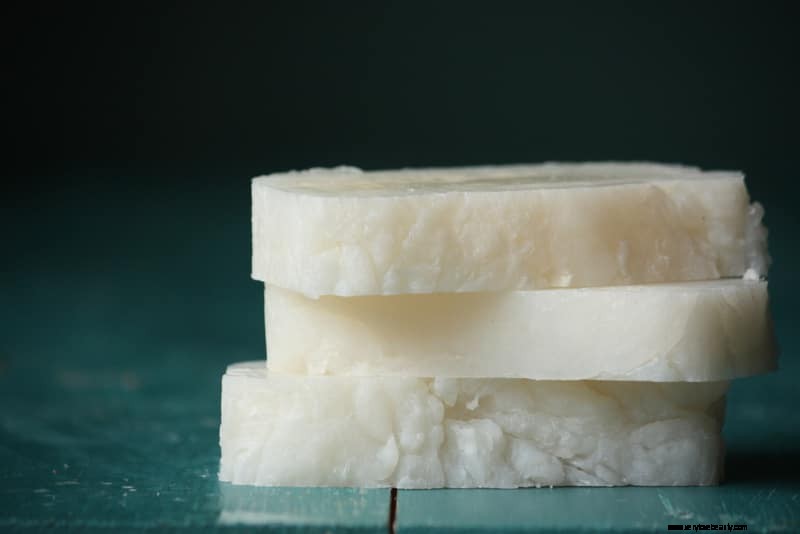
There are two basic kinds of soap:
With that in mind, here are my top bar soap options in order from good to best.
Dr. Bronner’s Castile Soap (Good) – Made with clean ingredients, this soap is widely available and works well for many. Depending on the type of water you have it **may** cause buildup over time, but then again it may not. I use it on occasion when I don’t have my best option on hand, and it’s worked well for me.
Kirk’s Castile Soap (Better) – This bar is made from coconut oil, which has got serious cleaning power when made into soap. It does have a little extra moisturizing oomph because it’s intended for skin, but it’s worked beautifully for me as a laundry bar.
Pure Coconut Oil Soap (Best) – This three-ingredient homemade soap is my favorite because it doesn’t contain lots of added oil for moisturizing purposes. It’s easy to make and has excellent cleaning power.
Pure Tallow Soap Flakes (Best) – This is my top store-bought option. I don’t know how they source their tallow but the ingredients are good overall.
Found in a lot of commercial detergents, washing soda helps to degrease and deep clean clothes. It also helps by binding to minerals that can prevent the soap you’re using from getting into laundry fibers and doing their job.
If you have it on hand, you can make washing soda from baking soda with this method.
Works well as a stain remover and degreaser.
Although not part of the main recipe, here are some additions worth considering:
I add 1/2 cup white vinegar to each load for two reasons:
The easiest way I’ve found is just to add it to a Downy ball so that it releases after the initial wash cycle.
There are several chlorine-free bleach alternatives that are great for brightening, whitening, and deodorizing. Here are my top picks: