
There’s nothing like a warm bath to relax muscles and calm frayed nerves, and with a few simple ingredients you can upgrade the experience into a skin softening, deeply moisturizing bath soak.
First made famous by Cleopatra, who prized them as part of her routine for radiant skin, milk baths have long been used to nourish and hydrate skin while soothing irritation. Queen Elizabeth the 1st was also a fan, so I guess you could say that bathing in milk is a skincare treatment fit for a queen.
As far as titles go, Duchess of Dishes or Queen of Laundry is about as official as things get for me, but lately I’ve been indulging in a warm milk bath that leaves my skin feeling moisturized without feeling oily. Though the ingredients are simple, the experience is luxurious and perfect for winding down after a long day.
Traditionally, milk baths involve adding whole milk or milk powder to the tub before dipping in for a soak. However, many people are sensitive to the proteins in milk, so powdered coconut milk is often used as a substitute. It has its own unique benefits, which we’ll dive into later.
I first came across the idea of coconut milk baths via this Herbivore Bath Soak, which I included in my gift guide this year.
After receiving a bottle as a gift, milk baths quickly became a weekly ritual for me. But since I’m a DIYer by nature and the ingredient list was super simple, I decided to see if I could save some money and make the next batch myself.
As it turns out, making milk baths is RIDICULOUSLY EASY, and unlike store-bought options, you can customize your bath with essential oils and dried lavender or rose petals.
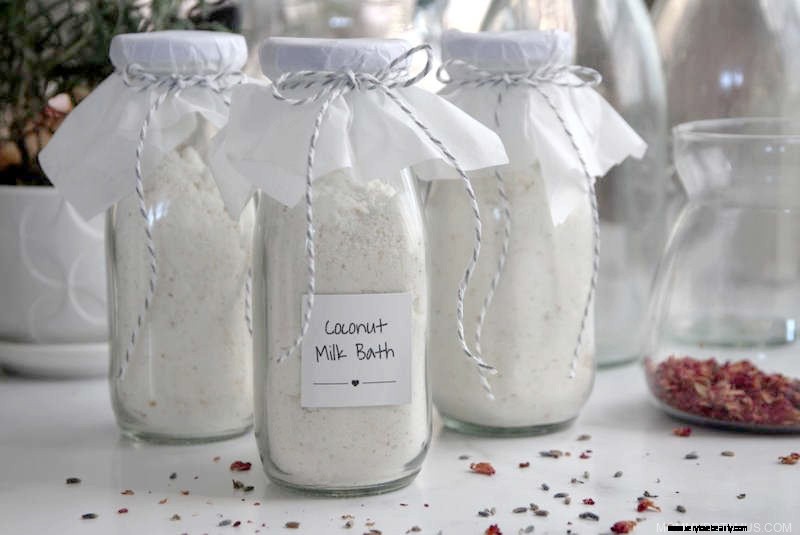
They make a lovely handmade gift idea, too. I just made up a batch in cute little glass milk bottles to give to friends and family and I love how they turned out.
Here are the simple yet luxurious ingredients we’ll be using:
Coconut milk is rich in lipids, particularly medium-chain triglycerides, that cling to skin and help restore moisture levels without feeling heavy or oily.
It’s also rich in copper – which supports collagen and elastin production when applied topically – along with other minerals including magnesium, manganese, phosphorous, potassium, zinc and iron.
Oatmeal baths have been traditionally used to soothe skin irritation of all kinds – sunburns, eczema flares, and more. When used in skincare, oatmeal is considered gentle enough for babies, kids, and adults with sensitive skin.
Research suggests that its benefits for skin may be due to the presence of:
Baking soda helps soften skin and can soothe itchy skin (if that’s an issue).
It’s said that Cleopatra added rose petals and lavender to her milk baths, and I totally get why. In addition to being beautiful, they’re incredibly fragrant if you crush them in your hands and breathe in their essential oils.
However, something to keep in mind is that you don’t want rose petals or lavender buds to go down the drain and potentially clog pipes, so if you include them you’ll want to place a bathtub drain protector over your drain before you empty the water.
There’s no denying that a few drops of lavender, cedarwood, or another calming oil create an aromatic environment that promotes deep relaxation, but there are a couple things to know before incorporating them into this recipe:
It used to be believed that powdered milk alone could disperse essential oils throughout bathwater, but in the last few years experts like Robert Tisserand have warned that they can clump together, come into contact with skin in their undiluted form, and cause irritation.
That’s why I’ve recommended adding a dispersant to this recipe in order to ensure that the essential oils are well diluted throughout the water. Natrasorb, which is a type of tapioca starch that has been modified to absorb and carry large amounts of oils, works best. (Regular tapioca starch won’t work.) (3)
If you don’t want to buy Natrasorb, you can add the essential oils to 1.5 tablespoons of liquid castile soap and pour it directly into the bath while the water is running.
Still not sure this is the DIY for you? Here are the top three reasons you might want to give them a try:
The lipids found in coconut milk cling to our skin without causing an oily/greasy sensation, oatmeal creates a thin protective layer, and baking soda softens and calms itchiness.
For sunburns specifically, tepid baking soda baths are recommended by Seattle Children’s Hospital for easing discomfort. Tulane dermatology professor Patricia K. Farris, M.D. suggests soaking in a cool oatmeal bath to soothe skin and help with itching. (4) (5) I’ve got both suggestions covered in this recipe.
Also, while moisturizers like coconut oil can trap heat and delay healing for sunburned skin, coconut milk powder is water soluble and – in my opinion – a much better option. It helps restore moisture while still allowing skin to breathe. You can find more home remedies for sunburn relief here.
Warm baths in general activate our parasympathetic nervous system, which helps us unwind from stress.
According to Bruce Becker – a physician and research professor at Washington State University – who has conducted research on warm water soaks:
While our bodies are designed to sleep best in a relatively cool environment (usually 65-72°F), a warm bath or shower before bed can a facilitate good night’s sleep.
According to this study, a hot bath taken 1.5 hours before bed decreased sleep fragmentation in older adults with sleep challenges. Click here for more science-backed sleep tips.
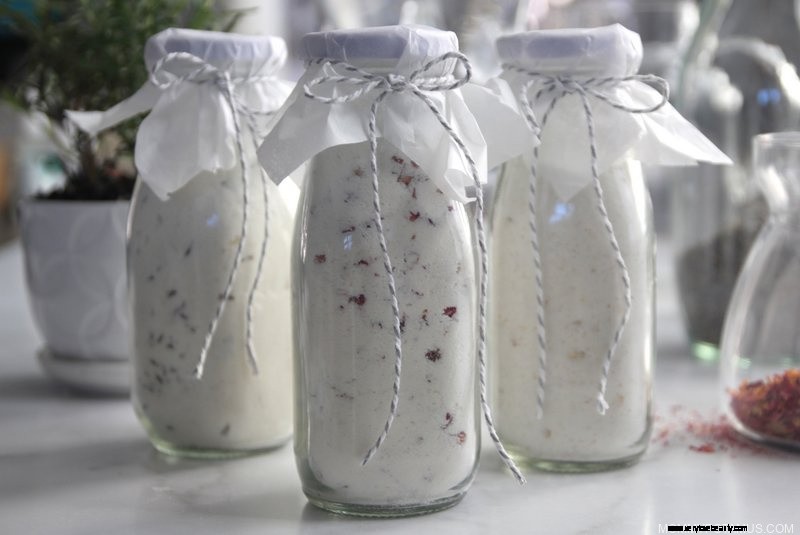
The recipe below will fill approximately 5 of these cute little glass milk bottles depending on how many optional additions you include. I covered the tops with tissue paper and a little bakers twine to give to friends and family.
Also, as a gift for signing up for my newsletter, I’ve created a free printable label template that works perfectly with these labels. The labels are not super sticky so you really have to press them on, but once they’re on they stay put (at least in my experience).