
Are your nerves feeling a little frayed lately? Chances are it’s a good time to soothe the 14,000+ nerve endings you walk on every day . . . while also exfoliating and softening the soles of your feet, of course.
This DIY foot scrub uses gentle pressure to relax the 7,200 nerves contained in each of your feet, which in turn sends a message to your entire nervous system to release tension. Like all skin scrubs, its main purpose is to exfoliate away dry skin, and it does a great job of that, too.
That’s a good thing, because although our bodies are constantly sloughing off old skin cells and generating new cells, the process tends to slow down as we get older. The reduced turnover rate can create a buildup of old, dead skin cells, leading to dry, patchy, flaky or cracked skin.
Regular exfoliation helps optimize the shedding of dead skin cells, which stimulates the stratum corneum (outermost layer of our skin) to regenerate with more young, healthy cells. It also helps with the absorption of nourishing oils, body butters and lotions.
Because the skin on the soles of our feet is tougher than, say, our elbows, there’s a little more involved in the exfoliation process. Here’s what I recommend:
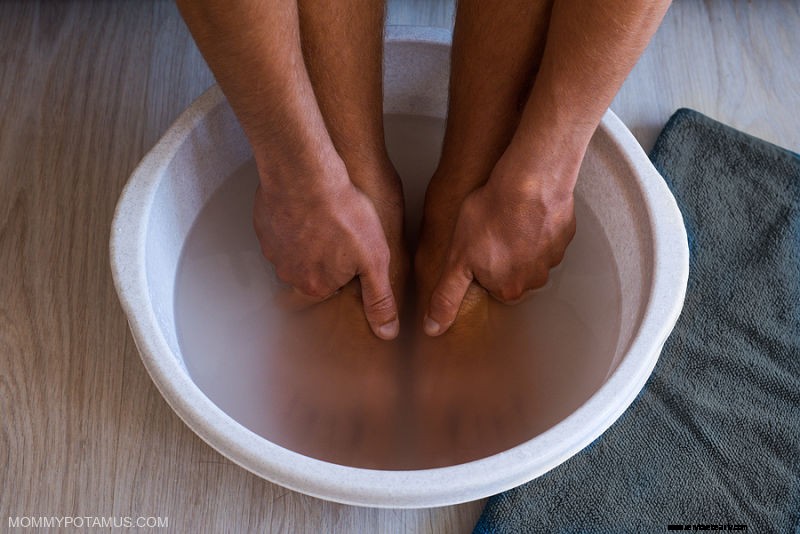
Warm water is excellent for softening up thick calluses so they can be sloughed off, and it’s also deeply therapeutic for tired feet.
To create a relaxing foot soak, fill your tub, sink or foot spa with warm/hot water and add 1/2-1 cup of epsom salt or 3-4 tablespoons baking soda to the water. Although baking soda will help soften skin, I prefer magnesium sulfate (epsom salt) because:
Magnesium is an electrolyte that supports skin hydration. In one study, researchers found that another magnesium-rich salt (Dead Sea salt) improved skin barrier function and enhanced skin hydration in participants with dry skin. They concluded that its beneficial properties “are most likely related to the high magnesium content” and that magnesium is known to support cell renewal and barrier repair. (1)
Although Dead Sea salt will work in this recipe, epsom salt is more affordable. I typically reach for it first and save the Dead Sea salt for special occasions.
Magnesium is well-absorbed through the skin and has lots of benefits beyond skin hydration. (2) It supports deep sleep, muscle relaxation, the production of a calming neurotransmitter called gamma-aminobutyric acid (GABA), detoxification, and healthy energy levels due to its role in the production of ATP (adenosine triphosphate), which are the energy packets made in our cells. Click here to read more about its many benefits here.
If you have very dry, thick skin, you may want to consider using a pumice stone before moving on to the scrub for a polished finish.
Use a spoon to scoop a tablespoon or so out of your jar. The scrub, when stored properly, will last many months or longer, which is why you don’t want to introduce water or microbes into the jar.
Place the scrub in your palms. Apply in a circular motions over your feet, focusing on rough areas like the heels as needed. This scrub can make the shower slippery, so I prefer to apply in a bath or while using a footbath. If you do apply in the shower, I recommend using a stool and/or bath mat to avoid slipping.
Continue to massage until your skin feels soft, but make sure not to overdo things and cause irritation. Only use the foot scrub on intact skin – avoid any areas that are cut or inflamed. Rinse with warm water and pat skin dry.
Now that you’ve exfoliated away the dry skin, it’s time to seal in the mineral-rich water and lipids your skin has absorbed. A good moisturizer supports the barrier-protecting function of your stratum corneum, which is the lipid layer that keeps water from escaping through our skin into the environment (transepidermal water loss).
Some of my favorite moisturizers are:
Tallow balm – Tallow balm is uniquely compatible with our skin’s biology, leaving it supple and nourished after use. It’s perfect as a post-pedicure balm, daily face and body moisturizer, or as a soothing balm for sunburn or eczema. Here’s how to make it, and what to buy if you don’t want to DIY. Use MOMMYPOTAMUS at checkout for 10% off your first order.
Whipped body butter – This is my absolute favorite whipped body butter recipe. It’s not greasy, leaves skin feeling SO SOFT, and is super simple to make.
Lotion Bars – Luxurious and silky smooth, this blend of cocoa butter, coconut oil and beeswax is super easy to make. You’ll love the way it feels, and you’ll feel good about knowing what you’re putting on your skin.
Intensive Moisturizing Lotion – This DIY lotion recipe is nothing short of magical. All you need is a quick whir of the immersion blender to make a batch.
The optimal time to reapply your foot scrub will vary based on a few factors including your overall skin type, the climate you live in, and what’s most convenient for you.
More is not necessarily better, because exfoliating too often can irritate your skin. Start with once per week and increase or decrease based on how your skin responds. Some people prefer 2-3 times per week, while others prefer every 2 weeks.
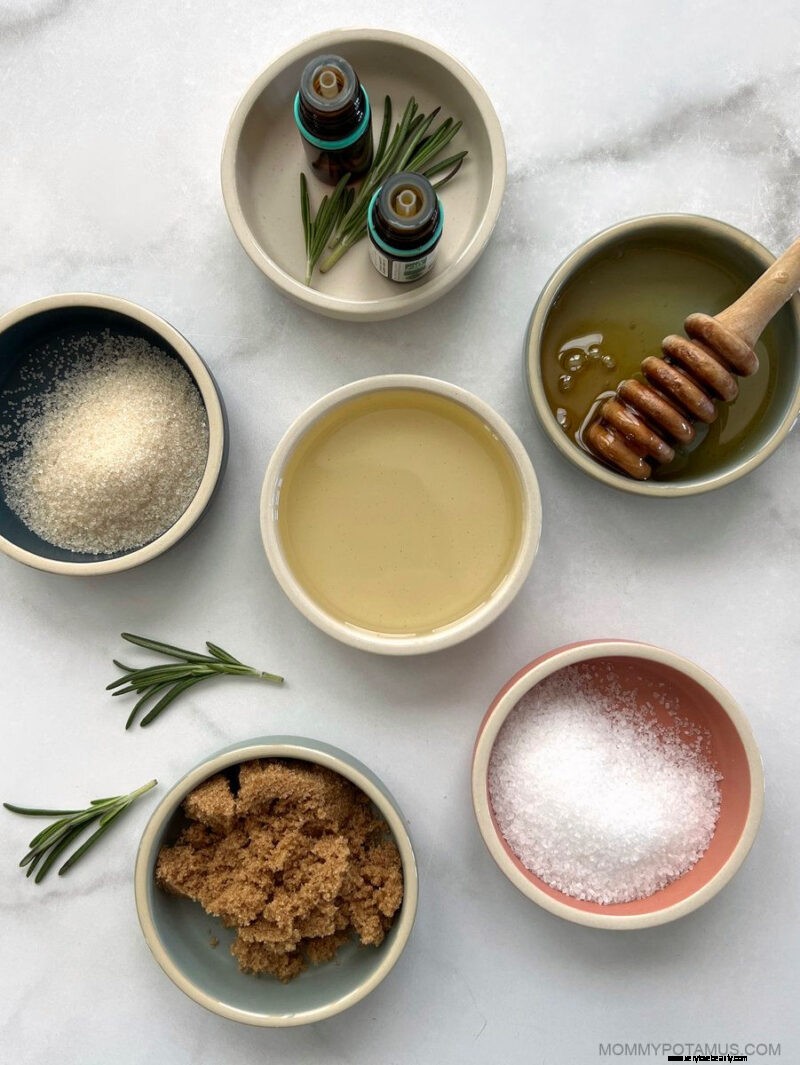
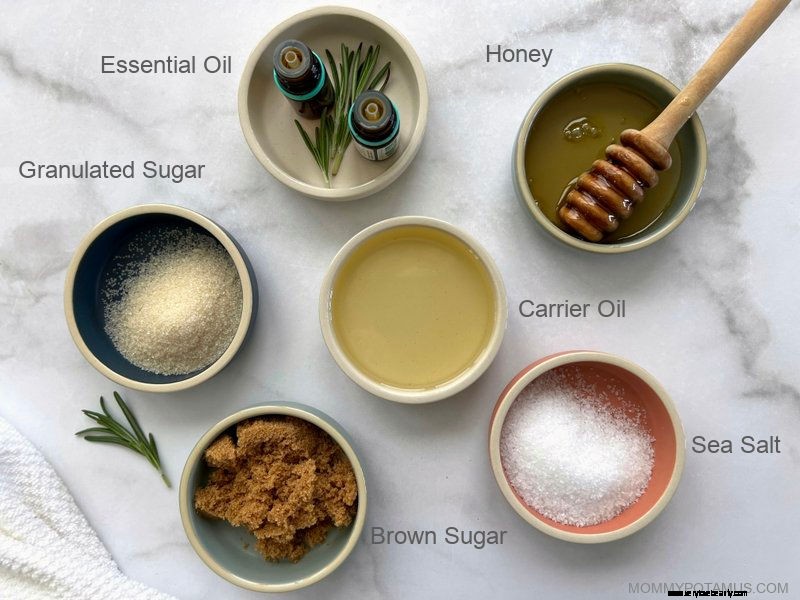
Sugar or Salt – Sugar contains naturally occurring glycolic acid, which helps to dissolve dead skin cells as it’s massaged into skin. It’s also a humectant, which means that it draws moisture to skin. Granulated white sugar is a little more coarsely ground than brown sugar, making it ideal for sloughing away skin. With that said, brown sugar makes an excellent polishing scrub when just a little roughness is present. Unrefined sugars like sucanat typically don’t work well as exfoliators.
Though salt doesn’t contain glycolic acid, certain unrefined salts are rich in minerals that nourish skin. It also has some antimicrobial properties, making it a good choice for a foot scrub. Whether you choose sugar or salt, something to keep in mind is that the size of the granules affects the exfoliating properties of your chosen ingredient. Small granules have a lighter, polishing effect while medium-size granules exfoliate more thoroughly. Very large granules tend to be ineffective.
Carrier Oil – Nourishing oils derived from olives, coconuts, olives or avocadoes infuse the skin with hydrating lipids.
Essential Oils – Although totally optional, essential oils like peppermint can deepen the refreshing/revitalizing experience of a good foot scrub. On the flipside, calming oils like lavender can enhance feelings of relaxation.
Honey – As I wrote about in this guide to washing your face with honey, it’s both a humectant (moisture gatherer) and cleanser that rinses away clean.