
Gelatin is the final product of denaturation (processing) of animal connective tissue (skin, bones, cartilage, tendons). In other words, it is pure collagen protein. Outwardly, it looks like a viscous and transparent substance, odorless.
But why ordinary gelatin has earned such a wild popularity recently?
The answer is simple. Nowadays, the fashion for natural cosmetics is growing by leaps and bounds. And gelatin, as you know, is an inexpensive and completely natural remedy.
It is sold absolutely at any grocery store. One has only to lend a hand, and now you are holding a bag of powder, which includes a whole range of useful substances: protein, vitamins E and B, minerals and trace elements.
IMPORTANT: Due to its rich composition, gelatin cares for hair, improves its appearance, and also protects from bad weather and sunlight. Most often, gelatin is used to prepare masks and create the effect of lamination.
When applying the mixture to the hair, each individual hair is wrapped in a thin, transparent film. This film not only smooths the structure of the hair and fills all its irregularities, but also has a strengthening and protective effect.
At the same time, the hair breathes, receives the necessary nutrition and hydration, looks thicker and smoother, at the same time, the film protects it for a long time from all harmful environmental influences (sun, wind, cold, dust). Masks with edible gelatin will benefit hair only if cooked properly.
There are several nuances of cooking a homemade mixture:
See more details on the preparation and use of gelatin hair mask in the video below:
Like any care product, a gelatin-based product helps one, and can harm others. Why could this happen? Firstly, if the rules for preparing and applying the mixture described above are not followed. Secondly, with individual intolerance to gelatin.
Minuses:
Masks with gelatin do not have strict contraindications. But when using them, you need to pay attention to several limitations:
We figured out what gelatin is, how it is useful for hair and how it works on hair, we list all its pros and cons. Summarize. Does using gelatin more often benefit or harm hair? This question cannot be answered unequivocally, because we are all individual and the same means can have different effects on different people.
If we turn to opinions about gelatin on third-party Internet resources, we will see many positive reviews about its use for curls, which undoubtedly indicates the popularity and effectiveness of edible gelatin in hair care.
Millions of women have already tried this amazing natural remedy, try it too! Who knows, maybe a gelatin mask will transform your hair!
Everyone has heard about home lamination of hair with gelatin. I was no exception. Before applying a wonderful composition to her curly hair, I began to monitor articles and reviews regarding the harm and benefits of gelatin for hair. Read the results of my verification below.
The benefits of a gelatin hair mask are described on the Internet in a variety of ways. This and many recipes for using the tool, and comparative photos “before”, “after”, and video reviews. I will say this, a gelatin hair mask is used to recreate the salon procedure of lamination at home.
Lamination is a procedure for coating hair with a special composition in order to make them more manageable, smooth, shiny and silky.
Naturally, not everyone has a desire and means to visit lamination salons with professional means (and it is necessary to repeat it every month). Therefore, resourceful girls have chosen methods for using inexpensive improvised means to obtain the desired result. We are talking about gelatin hair masks. Why in plural? Yes, because the number of their recipes can not be counted. The easiest way is gelatin + water.
Depending on the degree of hair damage, the amount of gelatin varies (from a tablespoon to a glass of water, to two tablespoons to three - water). More precisely, each girl has her own recipe for a hair mask with gelatin.

Having read all this information, I decided to try the gelatin mask on my curly hair. But I did not hold it for more than an hour (some girls even leave the mask for the night) and used it with a straightening balm. The result is less “fluffiness” on the top of the head, but I did not notice much shine or softness. On the contrary, the hair has become stiffer. I will not continue experiments.
Have you tried making a gelatin hair mask? What are the results observed and write your recipes!
Gelatin is an excellent tool for hair, it gives it a healthy and well-groomed appearance. Since the chemical basis of this substance is collagen, the main connecting protein of the human body, gelatin naturally restores hair. It envelops each hair and protects it from the harmful effects of external factors, and also regenerates the natural structure of the hair.
Lamination of hair is one of the restorative procedures for hair. At home, they make gelatin lamination. A special mixture based on edible gelatin is applied to the hair, which envelops them along the entire length. After the procedure, they grow faster, their structure is restored and lively shine returns. Lamination is also done by owners of curly hair - after the procedure, the hair becomes obedient and strengthens.
It is not difficult to prepare a gelatin mixture for lamination. For this, a tablespoon of dry edible gelatin is bred in three tablespoons of warm water. If the hair is long or thick, you can make more of the mixture, but proportions should be observed. For a normal consistency, the mixture needs three times as much water as gelatin. Then the composition is left for half an hour or more, so that it swells. If the mixture does not become homogeneous, lumps remain, then it is heated in a water bath until gruel forms, with a consistency like thick sour cream. The main thing is not to bring the mixture to a boil. In order not to burn the scalp and not damage the hair, apply a cooled composition. If the packaging indicates another method for diluting gelatin, you must use it, but observe the proportions necessary for lamination.
Before the procedure, you need to wash the hair well with shampoo and rinse with air conditioning, you can apply a softening balm or mask. Hair is easily soaked with a bath towel, but not dried. The gelatin mixture is evenly distributed along the entire length of the hair, avoiding the roots. Then they wrap them with cling film or put on a plastic hat and cover with a natural towel on top. You can carefully warm the hairline with a hairdryer on a towel for a quarter of an hour so that the gelatin penetrates the hairs better. After another half hour, the gelatin mixture must be thoroughly washed off with warm water and leave the hair until it dries naturally.
The result of this lamination depends on the individual characteristics of the hair, but, without doubt, the procedure will be effective if used correctly. You can repeat gelatin lamination every two weeks, but do not do the procedure for a long time. Before the procedure, make sure that there are no allergies or contraindications.
Effective cosmetics for hair can be made on the basis of edible gelatin - masks that not only restore hair, but also accelerate their growth. Before applying the mask, wash your hair thoroughly. The mask is applied to wet curls for a quarter of an hour, then wrapped in hair with plastic wrap and a bath towel. If the hair is very damaged, you can heat it over a towel with a hairdryer in low temperature conditions. This will ensure complete decomposition of gelatin and enhance the effect of the mask. It is not recommended to apply the mask on the roots and on the scalp - it tightens the skin and can cause peeling with prolonged exposure.
There are many options for gelatin masks, you can add to the gelatin mixture those components that are suitable for a particular type of hair. The basis of such masks should always be gelatin and water in 1: 3 proportions. If edible gelatin does not dissolve well, you can heat it in a water bath.
Since this substance is very viscous, you need to use cosmetic gelatin carefully. Otherwise, the hair will stick together, and the scalp will tighten, that is, there will be no positive effect. Washing off the gelatin mixture may take a long time.
To gelatin well washed off, you need to properly prepare the mixture. The most important aspect in this case is the uniformity and consistency of the mixture. If gelatin granules remain in the mask, warm it up and mix it so that in the end there are no solid particles left. Such a mask is poorly washed off the hair even if it is too thick. Basic gelatin gruel should consistency resemble thick fat sour cream or gel. The mask can be whipped a little, but so that a continuous foam does not form. If necessary, you can add warm water to it. A poorly mixed mask will stick together hairs and fall off.
If the hair is curly or naughty, then you can add a few drops of balm to the gelatin mixture - this will facilitate washing off.
It is recommended to ensure that the gelatin does not harden on the hair: for this you need a plastic film and a natural towel over the hair. Rinse off such a mask with warm water without shampoo until the mixture is completely left on the hair. Then rinses rinse with cool water.
Finally, a balm can be applied to the hairline or rinsed with a decoction of medicinal herbs. It is not recommended to blow dry hair. To remove the remnants of the gelatin mask, dry hair is combed with a fine comb.
Plain food gelatin is a storehouse of useful substances for hair. The whole secret lies in its structure and chemical composition. This substance is synthesized from an animal product, less often from a plant product, that is, gelatin is completely natural. Therefore, hair is well perceived cosmetics based on this product.
The main structural element of gelatin is collagen - a connective protein. It acts on the scalp and hair. Collagen penetrates well into tissues and replaces missing or damaged cells, thus, collagen strengthens and restores hair and skin. A feature of collagen, which is part of gelatin, is its size. Common collagen molecules are too large to penetrate directly into the cells. But gelatin contains hydrolyzed protein, which is much smaller in size than regular collagen. That is, it is already at one of the stages of decomposition, and the body does not expend energy on additional chemical reactions, but simply “lets in” hydrolyzed collagen into the tissues. Due to collagen, the hair becomes smooth and elastic, skin properties are improved and tissue nutrition is normalized. Collagen works well on strands that are damaged when stained. This protein is involved in restoring the natural color of hair.
In addition to collagen, amino acids are useful for hair, 18 of which contain gelatin. Most of these amino acids are essential for healthy curls.
Food gelatin also contains trace elements that are needed for hair and scalp - iron, magnesium, sodium, potassium, calcium, sodium and phosphorus.
Thus, in its composition and action, gelatin is an ideal tool for damaged, dull and weak curls. It intensifies hair growth, protects and strengthens them, improves nutrition, restores shine and natural color of hair.
Gelatin can be harmful if the mixture is improperly prepared, gelatin masks are used too often, or lamination is made with gelatin. Hair will become stiff, naughty, heavy and voluminous, can fall out if you abuse gelatin. They will also be harmful if the curls are badly damaged and weakened - gelatin compounds can upset the protein balance of tissues. It is not recommended to use them if the hair is restored using other means.
Food additives, which are sometimes added by gelatin producers to improve the connective effect, are harmful to hair. Therefore, before preparing the mixture, you should carefully study the composition of the product or you can make gelatin at home.
Gelatin mixtures should be applied very carefully to the scalp: if you leave the mask on the skin, peeling, redness and itching may begin. Usually gelatin has a good effect on the skin, but the mask on the hair does not need to be kept for too long - during this time it tightens the skin and violates the water-lipid balance.
You can harm your hair and skin, if you boil a gelatin mixture - then amino acids are destroyed. Also, you can not apply a hot mixture to curls, so as not to get burns.
Contraindications to the use of gelatin cosmetics are:
The use of gelatin for hair has recently become a super popular beauty trend. And although leading cosmetic brands have not yet fully appreciated it, but in various Internet communities, groups and forums, women and girls are excitedly discussing recipes for homemade masks based on gelatin. Many have already seen from their own experience that gelatin can be a good alternative to salon hair lamination. After successful experiments, the hair becomes as shiny and elastic as after this expensive procedure. And the look of the hair becomes more well-groomed.
How is it good for hair? Take note of at least these arguments:
In this article we will not describe in detail all the advantages of using gelatin in hair care: a lot has already been written about them. And we will not analyze the minuses either, because there are no minuses here. At all. No, theoretically, one minus is possible - it is called "lack of information." If you have firmly decided that your hair cannot live without gelatin, then use it wisely. Especially for you we publish 10 golden rules that cannot be ignored.
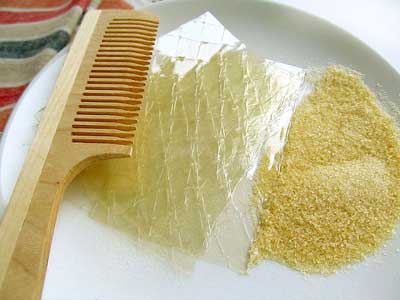
Gelatin truly has a beneficial effect on dry, brittle and damaged hair. It strengthens their structure, increases volume, improves elasticity. After gelatin masks or wraps, dry and thin hair no longer seems like chicken fluff or stiff tow. But a similar application for oily hair is a big question. The fact is that, creating a kind of film on the hair, gelatin partially makes them heavier. And bold strands without this often lack lightness.
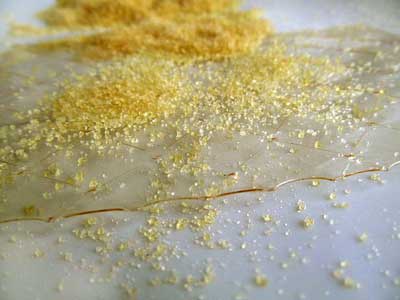
Culinary gelatin, as you know, is available in two forms - in the form of granules (powder) and in the form of leaf blades. For the preparation of masks that you will apply to the hair, by and large, both are suitable. But sheet gelatin in practice often turns out to be less concentrated: the solution prepared from it is not as saturated as the one in which the same amount of granular product was put. If you want to see a tangible result on your hair, still make the choice in favor of gelatin powder.
Gelatin should always be diluted with room (or, in extreme cases, slightly heated - not higher than 40-45 degrees) water. The fact is that in very cold water it will swell badly. And from exposure to too high a temperature, it loses all its beneficial properties. Therefore, please do not boil the gelatin with boiling water. This also applies to the technology of making hair masks, and culinary manipulations.
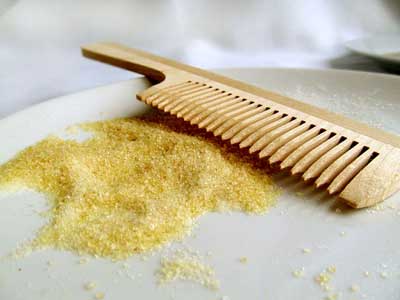
The ideal proportion for diluting gelatin with water is 1: 5. In other words, for one tablespoon of gelatin powder, it is better to take 5 tbsp. tablespoons of water. It’s no longer necessary: \u200b\u200byou’re not going to cook jelly, but to laminate your hair. In addition, in a small amount of water, the grains of gelatin swell faster, absorbing all the moisture, and you do not have to wait long. Correct proportions in accordance with the length of your hair: for medium length strands, you can take 2 tbsp. tablespoons of gelatin and 10 tbsp. tablespoons of water, and for long hair - from 3 tbsp. spoons of gelatin and from 15 tbsp. tablespoons of water.
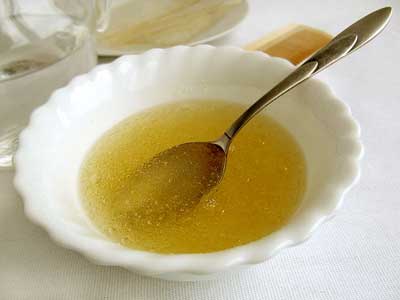
As soon as the gelatin swells, it will need to be warmed up so that it dissolves in water: after all, we need to apply a liquid mass to the hair, and not a jelly-like substance. It is better to dissolve gelatin in a water bath. If you do this on a stove, then carefully watch that the mass does not boil: the boiling point completely deprives the gelatin of its basic properties.
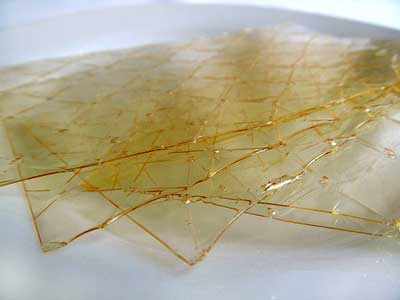
In whatever form you apply gelatin to your hair, try not to rub it into the hair roots. This is especially true for owners of sensitive scalp. Under the influence of gelatin, a feeling of tightening or peeling may occur. It’s better not to initially discomfort yourself.
Not sure where to start using gelatin in hair care? Start by washing your hair. Measure the amount of shampoo you need for one wash, mix it with a gelatin solution and wash your hair as usual. You can even hold a “cocktail” of gelatin and shampoo on your head for several minutes without rinsing, and only then rinse with warm water. When the strands are dry, and you look at yourself in the mirror, it will become clear to you whether the gelatin has met your expectations or not.
Absolutely any components can be added to hair masks with gelatin - it will not muffle their beneficial effect. But the most comfortable texture of such masks will turn out if a sufficiently thick base is chosen for them. The ideal option is egg yolk, which goes well with gelatin. By the way, droplets of your favorite essential oils will not be superfluous.
Rinse your head after a gelatin mask or soaping with shampoo, where the gelatin solution was mixed, you need only warm water. From a low temperature, gelatin will begin to solidify right in your hair: individual strands stick together, and combing them will be quite problematic.
How often can you pamper your hair with gelatin treatments? There are practically no restrictions. You can wash your hair with the addition of this substance in shampoo after 2-3 days (we, unfortunately, do not have information about the benefits or harms of daily use), masks with gelatin are usually made one to four times a week.
P.S.: If this article was useful to you, you can say “thank you” to its author by writing a comment or clicking the button of your favorite social network under the publication.
If your hair is exhausted by endless traumatic styling and radical dyeing, and as a result become dull, brittle and lifeless - it's time to save them! But do not rush to sign up with a stylist, because there are many homemade tricks that will return a healthy and shiny look to your hair. Take at least gelatin. On its basis, you can simply and quickly prepare a lot of masks, drinks, homemade shampoo with gelatin and even an effective tool for straightening and laminating hair at home. In terms of effectiveness, such a procedure is in no way inferior to the salon, and allows you to save not only financial resources, but also time
For this, you can use both animal gelatin and plant agar-agar, since both of them contain a sufficient amount of collagen and other necessary substances. For all types of gelatin therapy at home, it is best to use instant gelatin: this will not only save time, but also easily get the composition of the required consistency.
An important point: since gelatin is a concentrated source of collagen, it can occasionally cause allergies. Therefore, if you already had an allergic reaction to gelatin, then you should not risk it - even external use can cause an undesirable reaction.
The regular use of cosmetics and drinks with gelatin can bring great benefits to the body due to the collagen contained in it, and a huge amount of useful substances and vitamins. Among them are vitamin E, sodium, magnesium, and protein proteins. They not only make hair shiny and docile from the outside, but also allows you to strengthen them from the inside. Gelatin therapy can help over-dried and brittle hair, making it smooth, docile and elastic.
Gelatin therapy has many advantages:
But with all the undeniable advantages, gelatin therapy has its drawbacks, and clear medical contraindications:
In order to make hair strong, healthy and shiny, it is not enough at all to apply gelatin to the hair in the form of a mask, shampoo or balm with gelatin or a home-made lamination product. Complex therapy also includes regular ingestion of gelatin.. Good news - substantial part of the necessary dose can be obtained by enjoying a variety of jellies, marmalade, soufflé and other gelatine dishes. But in addition to increased calorie content, the dose of gelatin in this case is not sufficient to improve hair.
There are two main ways to use gelatin: tincture of gelatin in water or milk.
For this you will need: 105 grams of gelatin, (the amount needed for a monthly course of therapy, water.
Cooking:

To do this, you will need:
Gelatin - 5 grams, milk - 100 milliliters.
Preparing such a tincture is very simple:
Many interesting masks can be made on the basis of gelatin: for strengthening hair, a universal mask for all types, as well as for oily or dry hair. In any case, this is a real find for owners of thin and naughty hair who lack shine. As a result, your hair will be transformed literally before your eyes, because a positive effect is noticeable after 1-2 applications of such a mask.
An important point - for the preparation of cosmetics with gelatin, it is best to use instant gelatin.
Universal mask for all hair types.
This is a basic mixture, on the basis of which you can prepare a lot of other masks.

For fast hair growth:
The second option, contributing to the rapid growth and increase in hair volume – mustard mask.
To make a mask for dry or oily hair, add to the base mixture: for oily hair - 1 yolk and a teaspoon of lemon juice. But dry hair will literally be transformed after a mask with the addition of a few drops of almond, or any other oil.
Shampoo and balm with gelatin. Benefits and home cooking
Gelatin is a universal remedy on the basis of which you can quickly and easily prepare a lot of excellent cosmetics, including shampoo or nourishing balm with its addition. To do this, you do not need to prepare a shampoo base at home, because there is a much less time-consuming and effective way:
Gelatin Nourishing Hair Balm:
Laminating hair at home is a fairly simple way to turn thin and naughty hair into a real silk waterfall. To do this, it is enough to repeat this procedure once a month, and the result will not be inferior to the salon procedure of lamination. This is also evidenced by the reviews of trichologists, confirming the effectiveness of such a procedure carried out at home to straighten and give a shiny and well-groomed appearance to the hair.

"Home" set for laminating hair
The procedure for home lamination of hair can be either single-phase or biphasic. The two-phase procedure includes not only the lamination procedure itself, but also the preliminary application of gelatin shampoo on the hair. When laminating after applying it, the hair needs to be removed under a shower cap, wrapped in a bath towel and held for 40-50 minutes. After that, rinse your hair with warm water, and you can proceed to the lamination procedure itself. Such a multiphase procedure performed at home will allow you to forget for at least a month about problems with rare and naughty, or insufficiently voluminous hair.
But do not forget to regularly “feed” your hair with a new portion of the gelatin shell. If this is not done, the hair will quickly acquire a rather untidy appearance due to the gradual peeling of the gelatin coating.
But with a limited time, you can completely limit yourself to a single-phase procedure: in this case, you just wash your hair with ordinary shampoo, apply a balm, and immediately proceed directly to the lamination procedure.
The lamination mixture is very similar to a gelatin mask, and is prepared according to the same principle:


Lamination will help to remove the "untidy wave" from the hair


After lamination, the hair becomes “live”


