
Household pets, like cats and dogs, are a part of the family. They give you love and joy, and I'm sure there's no chance they'll be moving out to make room for your baby. But keep in mind that pets can bring more than fun into your home—they bring in diseases that can be dangerous to both you and the fetus.
Your cat can quite innocently cause some trouble during your pregnancy. Cat feces can contain a microscopic protozoan (a very tiny organism) called Toxoplasma gondii. This protozoan can be passed to a human in two ways:
More: Common Feline Diseases
Being infected by this organism causes a condition called toxoplasmosis.
Toxoplasmosis is rather rare. It is estimated that the chances of contracting toxoplasmosis for the first time during pregnancy are approximately 1 in 1,000.
The symptoms of toxoplasmosis are quite mild and are often passed off as some kind of cold or flu. An infected person might get a low-grade fever, cough, headache, fatigue and swollen glands.
If you have had a cat in your home for a long time, it's very likely that you've already had toxoplasmosis—this is a good thing! After infected, the body builds up antibodies (disease-fighting cells) to protect itself from a repeat infection.
If you already have toxoplasmosis antibodies, it is unlikely that exposure during pregnancy will cause your baby any harm. (It is estimated that about one half of the American population has been infected.) But if you have never been exposed to toxoplasmosis or if you're not sure, it is very important to protect yourself now.
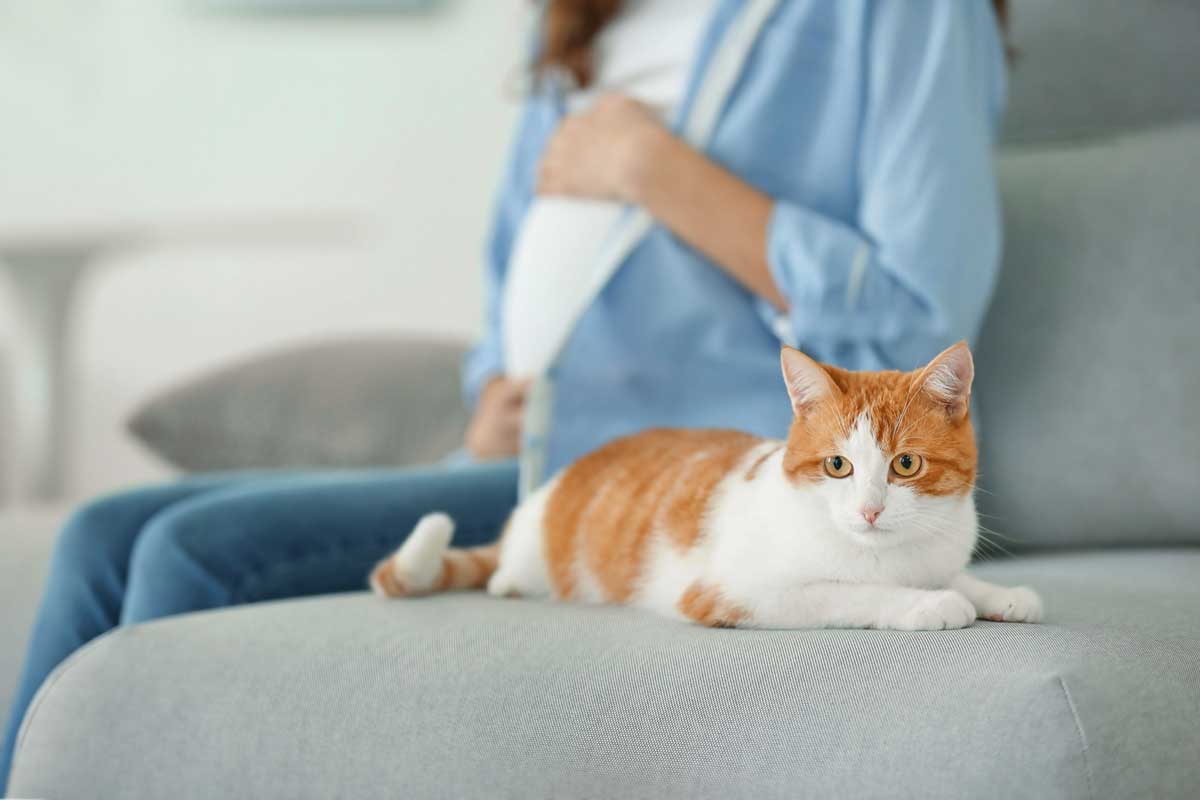
If toxoplasmosis crosses the placenta in the first few months of pregnancy (especially in the second month) it can severely damage the fetus. Problems can range from premature birth or low birth weight to serious central nervous system defects and even stillbirth.
More: Impacts of Premature Birth
Don't let this information scare you. Use it to protect yourself and your baby. Be smart and follow these steps:
Even if you don't have a cat, you can still be exposed to toxoplasmosis by handling or eating raw meat. The organism is found especially on pork, beef and mutton. It's a good idea to wear gloves when handling raw meat, cook meat thoroughly, wash your hands with soap before eating, and clean all kitchen counters and utensils exposed to the meat.

If your dog has been to the vet this year and is up-to-date on its rabies shots, you shouldn't worry about caring for it during your pregnancy. As an extra precaution, you might have it examined for parasites at regular intervals (especially if it is allowed to run loose).
Animal parasites have been known to infect humans. Although the effect of a parasitic infection on a fetus is unknown, the illness experienced by the mother cannot be good for the baby.
Pet turtles are on the list of animals to be careful around when you're pregnant. That's because they are known to transmit salmonella bacterial infections to humans. (This is the same bacterium you can get from raw chicken that causes food poisoning.) If you have a turtle, try to avoid touching the animal and the water it swims in. Be sure to wear gloves when you clean the tank or change the water.
Pregnancy comes with a list of things to avoid in order to keep your baby safe. Check out Top 9 Foods to Avoid While Pregnant to learn more.