
Essential oils have been used in alternative medicine for thousands of years. Beyond their often pleasant scents providing aromatherapy, many essential oils are believed to provide biological benefits, such as antiseptic and anti-fungal properties. One such oil is tea tree oil, which has been used medicinally for over one hundred years in Australia for its therapeutic qualities.
Tea tree oil (also known as melaleuca alternifolia) has been used as a pure essential oil and as an active ingredient in products to provide antimicrobial, antiseptic, and anti-inflammatory properties. Tea tree oil has also gained popularity in skincare formulations, as it has proven itself to be an effective acne fighter. Many of the same bacteria that tea tree oil combats on the face can be found on the scalp — where it causes similar chaos in the form of dandruff and irritation.
Meet the Expert
Is tea tree oil the holistic solution to your dandruff and itchy scalp? We turned to two dermatologists and a cosmetic chemist for their advice on using tea tree oil for the scalp and hair.
Type of ingredient: Antimicrobial, antibacterial, and anti-inflammatory properties.
Main benefits: Soothes the scalp, treats dandruff, and improves overall scalp health.
Who should use it: Generally, anyone with dandruff or other scalp inflammation can benefit from tea tree oil. Tea tree oil can be used on all hair types and textures, but it can be irritating, so those with sensitive skin should use it cautiously.
How often can you use it: If applying tea tree oil directly to the scalp, use 2-3 times per week. Shampoos containing tea tree oil can be used daily, but the scalp should be monitored for irritation.
Works well with: Emollients or other calming ingredients to help reduce any chance of irritation or sensitivity.
Don’t use with: There are no known ingredients that interfere with tea tree oil, but it should not be used in conjunction with other active ingredients that cause irritation or sensitivity.
Tea tree oil has the ability to transform your hair, starting at the scalp. Its antimicrobial, antibacterial, and anti-inflammatory properties make it a potent treatment for dandruff, improving overall scalp health. Healthy hair and new growth start at the scalp, so improving your scalp health should be the first step in any attempt to increase hair growth.
When using tea tree oil to treat the hair and scalp, it's important to make sure you are using an essential oil and not just a fragrance oil, as fragrance oils do not contain the same health benefits. Essential oils are obtained through hydrodistillation, steam distillation, dry distillation, or the mechanical cold pressing of plants. These differ from fragrance oils, which are often manufactured in a lab.
The experts agree that tea tree oil is safe for all hair types and textures, as it has little to no effect on the hair itself. Tea tree oil can be used to treat scalp conditions, such as dandruff, but it is important to note that it has the potential for irritation. Rabach explains that anyone can use tea tree oil, but it can cause contact or irritant dermatitis and allergic reactions.
"People that have allergies to Balsam of Peru, benzoin, colophony tinctures, eucalyptol, or plants from the myrtle family, have a greater likelihood of being allergic to tea tree oil and those people should skin test by putting some oil on their Inner arm and waiting two to three days," Rabach cautions.
Tea tree oil can be used in two ways to benefit your scalp health: in its pure essential oil form or as an active ingredient in shampoos. Due to the high potential for sensitivity when using tea tree oil on the scalp, it is recommended that you dilute it with a carrier oil before application. Tea tree oil is often best applied to the scalp in a shampoo, especially for those with more sensitive skin to minimize the risk of sensitivity or irritation, Garshick cautions. It is also important to check the label to see how much tea tree oil is present to know what to expect, as stronger concentrations are more likely to irritate. As with any other new ingredient, it is important to test a small skin patch before applying it to your whole head.
:max_bytes(150000):strip_icc()/2261539-b227171836834740824d7c288ddf0b0d.jpeg) Paul Mitchell
Tea Tree Special Shampoo
$15
Shop
Paul Mitchell
Tea Tree Special Shampoo
$15
Shop
Garshick says this combines a blend of tea tree oil, peppermint oil, and lavender oil, leaving a cooling and refreshing feeling on the scalp. It can be used by all hair types and is also safe for color-treated hair.
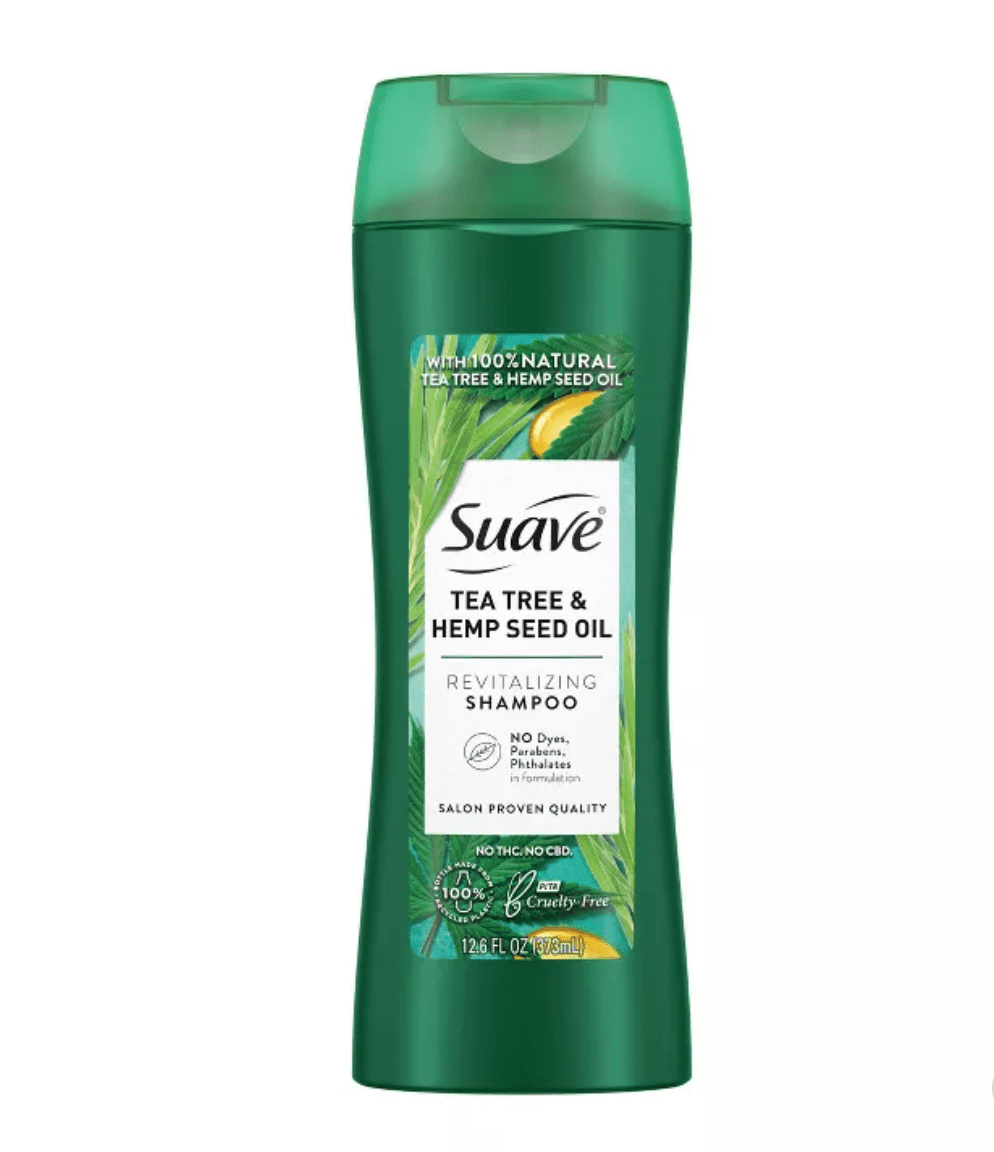 Suave
Tea Tree and Hemp Seed Oil Revitalizing Shampoo
$3
Shop
Suave
Tea Tree and Hemp Seed Oil Revitalizing Shampoo
$3
Shop
This shampoo contains both tea tree oil and hemp seed oil, which Rabach says washes the scalp while leaving it feeling soft and rejuvenated.
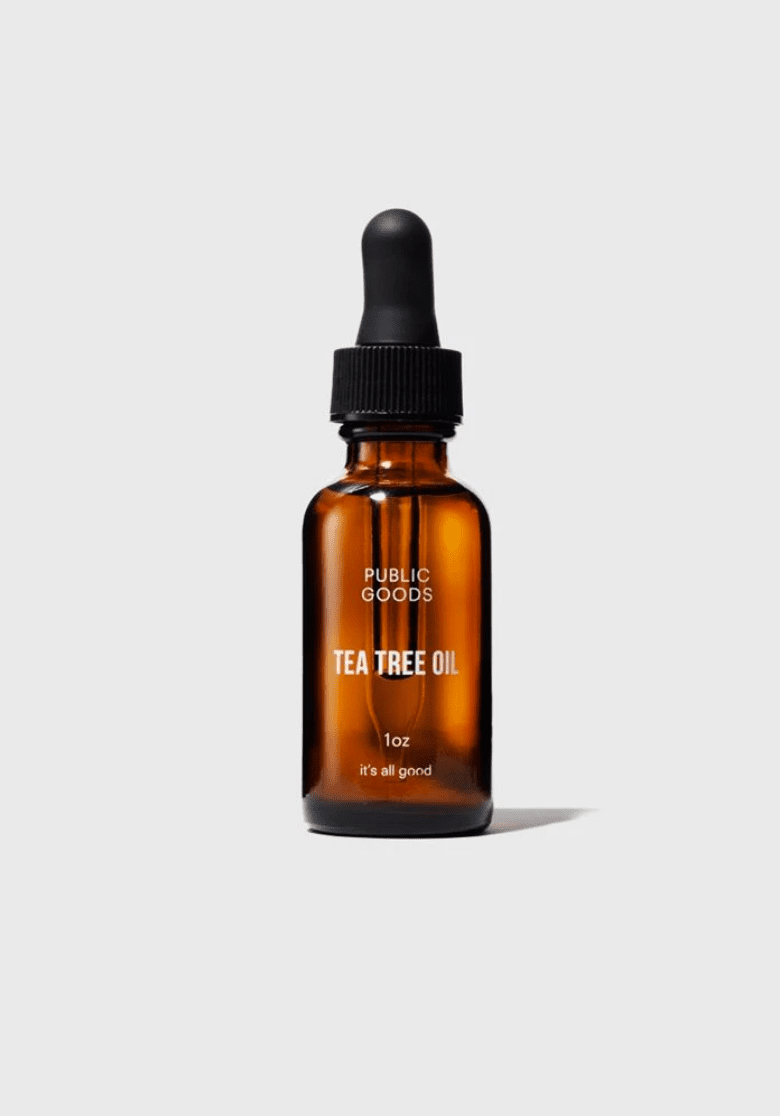 Public Goods
Tea Tree Oil
$8
Shop
Public Goods
Tea Tree Oil
$8
Shop
This 100% natural, organic tea tree oil can be diluted with water or oil, or used as-is (just take a few drops and rub them into the scalp).
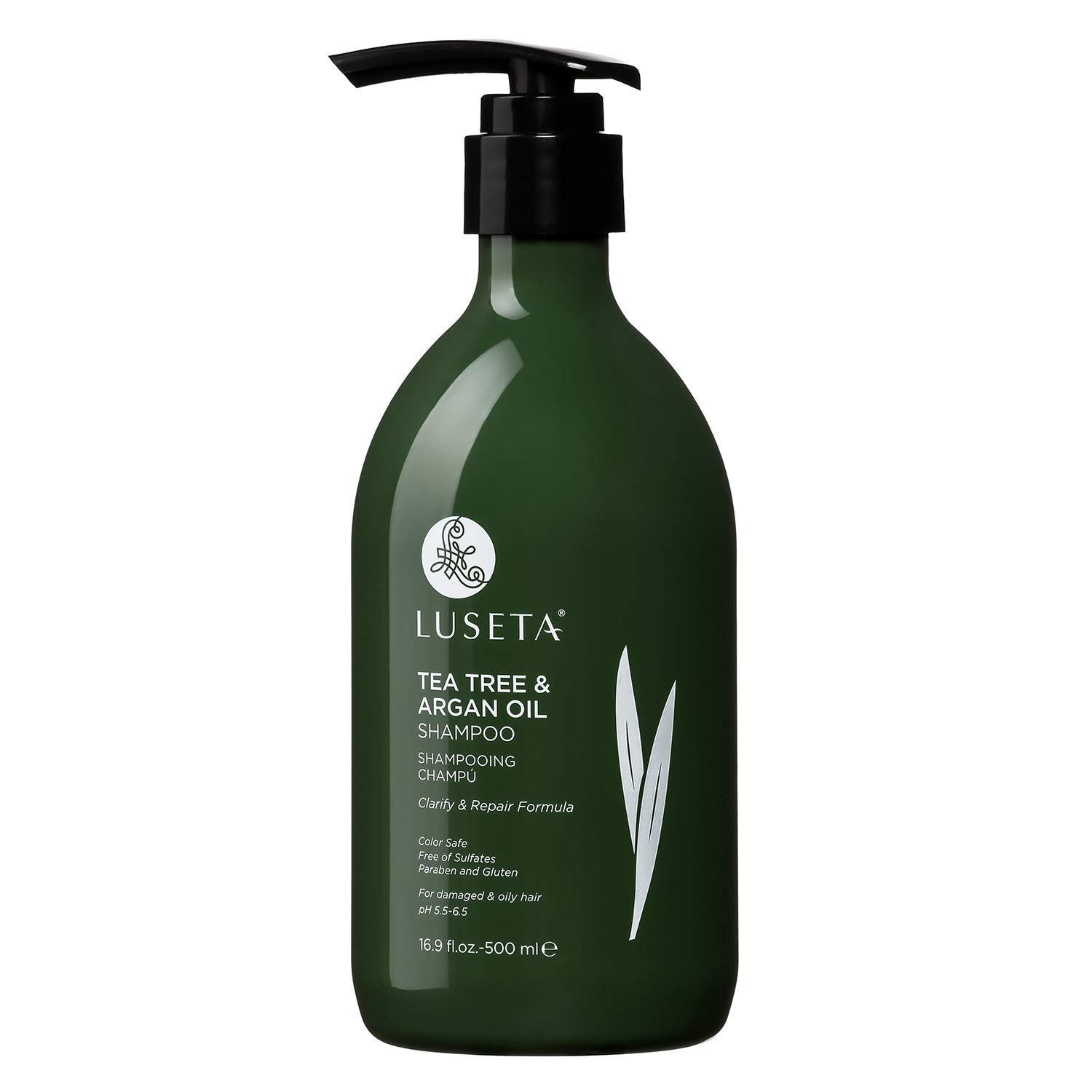 Luseta
Tea Tree & Argan Oil Shampoo
$32
Shop
Luseta
Tea Tree & Argan Oil Shampoo
$32
Shop
Tea tree oil and argan oil work together to reduce dryness and itching on the scalp, and to help alleviate dandruff.
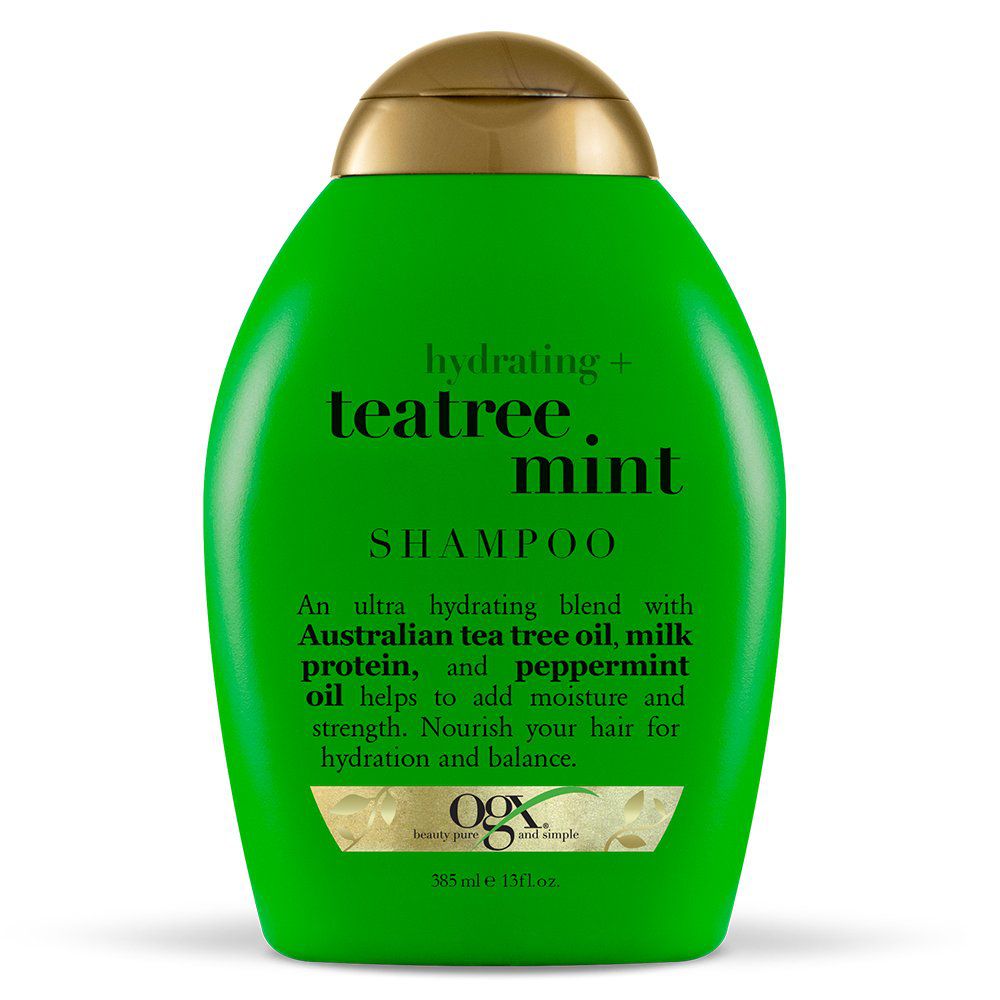 OGX
Hydrating + Tea Tree Mint Shampoo
$7
Shop
OGX
Hydrating + Tea Tree Mint Shampoo
$7
Shop
This budget-friendly shampoo is refreshing, thanks to a blend of mint and tea tree oil — meanwhile, milk proteins help strengthen and moisturize strands.
Tea tree oil is largely safe, though it may cause skin irritation. If so, discontinue use and consult an expert.
Thanks to its antibacterial properties, tea tree oil can help with flakes and dandruff.
Tea tree oil can help with conditions such as eczema, which can cause irritation on the scalp.