
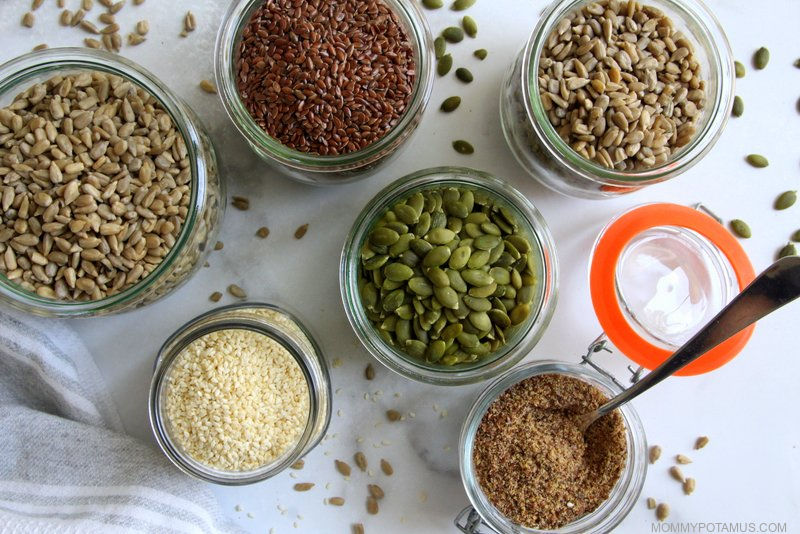
Women usually try seed cycling after hearing about it from a friend, or reading an article, or even talking to a practitioner. And once they do, many give it high marks for supporting smoother cycles, easing PMS, and feeling more balanced throughout the month.
Me? I accidentally started a loose form of seed cycling by inhaling my family’s stash of sunflower seeds in the weeks before my period . . . three months in a row.
Cravings can be cues that something needs extra support, so I always pay attention when one starts showing up consistently – beet kvass in the spring, dandelion when my detox pathways need extra love, chicken soup when my body needs easily digestible nourishment, and apparently sunflower seeds during my luteal phase.
So, when I realized my cravings aligned with the long-standing practice of seed cycling for hormonal balance, I decided to officially give it a try.
If you’re wondering what exactly seed cycling is, how it works and if there’s any research to support it, you’re in the right place. We’ll dive into all that below.
As always, none of these statements have been evaluated by the FDA, this article is not medical advice, and it is not meant to diagnose or treat any condition.
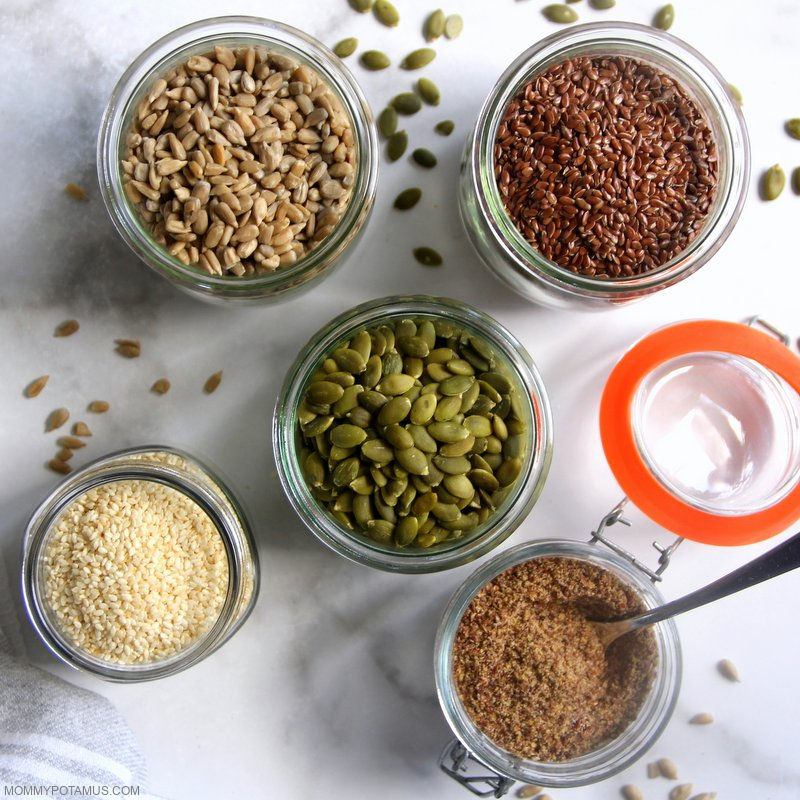
Seed cycling is the practice of eating specific seeds during the two main phases of your menstrual cycle to support your body’s natural hormone production and encourage gentle detoxification.
The seeds are eaten raw and freshly ground. Whole seeds often pass through the digestive tract without breaking down fully, so grinding is recommended to make their nutrients more accessible. You can enjoy them on their own or sprinkle them into smoothies, salads, or yogurt.
Seed cycling can be used at any stage of a woman’s life, however, most women use it to support a specific goal – an easier perimenopause, the restoration of natural rhythms after coming off birth control, or as part of a broader hormone-support plan to address symptoms like acne, irregular periods or PMS, for example.
Even after menopause, when monthly cycles have ended, some women turn to seed cycling to support estrogen levels. As a bonus, the seeds are rich in nutrients that promote overall vitality.
There’s encouraging science behind the seeds themselves, but direct research on the full “seed cycling” protocol is still limited. Here’s what we know (and what we don’t).
Flax and sesame seeds are rich in lignans (a type of phytoestrogen). In humans, lignans can support estrogen metabolism toward “gentler” metabolites and, in some contexts, compete with stronger estrogens at receptors. (1)(2)(3)
For example, a small trial shows ground flaxseed increases the 2-hydroxyestrone:16α-hydroxyestrone ratio in postmenopausal women, a commonly discussed marker of favorable estrogen metabolism. (1)
Similar shifts have also been observed in premenopausal women. In a 7-week randomized crossover trial, adding 5–10 grams of ground flaxseed daily produced a dose-response increase in the 2:16 ratio, suggesting the effect isn’t limited to women after menopause. (4)
In another study, sesame intake in postmenopausal women has been shown to raise SHBG (which binds sex hormones) and increase urinary 2-hydroxyestrone while also improving antioxidant status. (3)
In plain English, these studies suggest that flax and sesame seeds may help your body handle estrogen in a gentler, more balanced way, while also fine-tuning how much of it is active at any given time.
Practical note: Most studies use ground (milled) seeds because they’re better absorbed. Whole seeds can pass through intact; grinding substantially increases enterolignan bioavailability.
Seeds contain minerals and antioxidants that are tied to ovarian function. Pumpkin and sesame seeds are rich in zinc, which is involved in steroid hormone synthesis and follicle development. Zinc deficiency disrupts normal ovarian signaling. (5)
Sunflower and sesame seeds—our luteal-phase seeds—are rich in vitamin E, a nutrient linked in small human studies to improved luteal function, possibly by supporting antioxidant defenses and blood flow to the corpus luteum. (6)
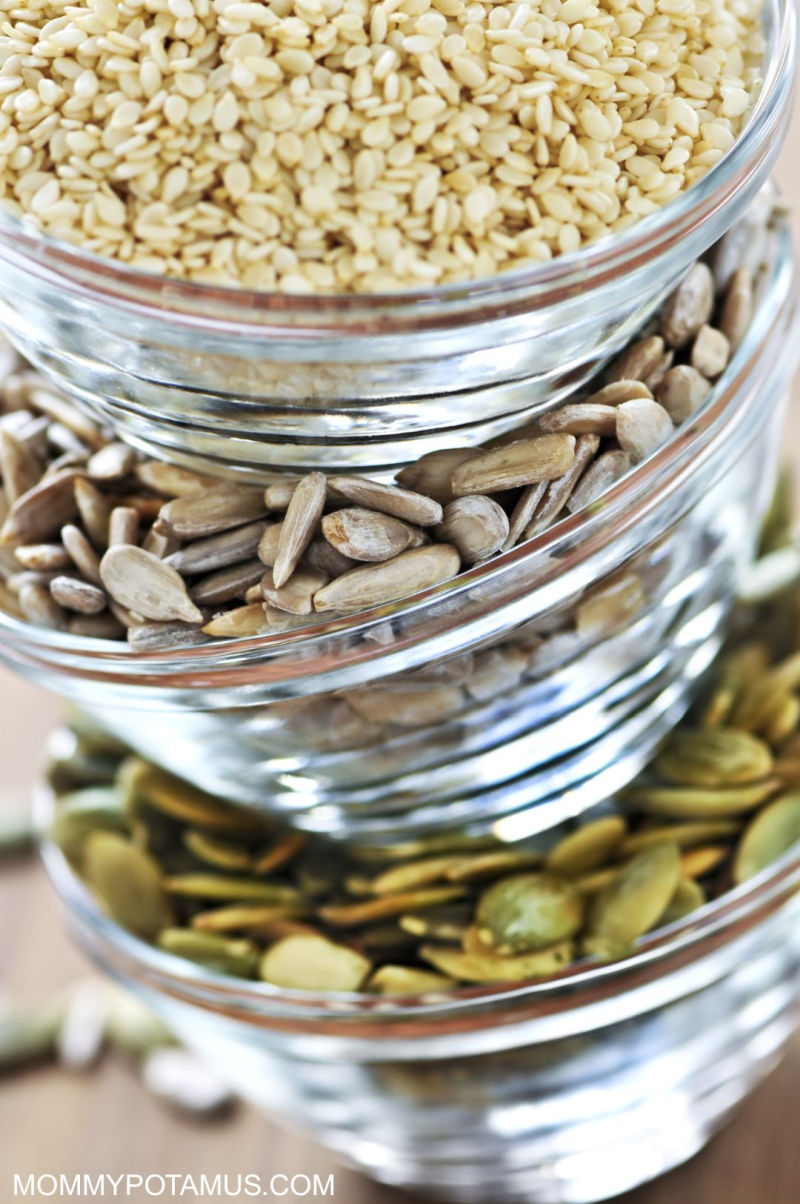
A registered clinical trial is underway to test seed cycling for menstrual regularity and PMS, but here’s what we know right now:
Follicular (period start → ovulation): Flax + pumpkin. Flax lignans are thought to help keep estrogen metabolism in a favorable range as levels rise; pumpkin adds zinc, laying groundwork for healthy progesterone production later.
Luteal (ovulation → next period): Sesame + sunflower. Sesame brings more lignans (helpful when we don’t want estrogen dominance late in the cycle), while sunflower is naturally rich in vitamin E, a nutrient associated with luteal support in small trials.
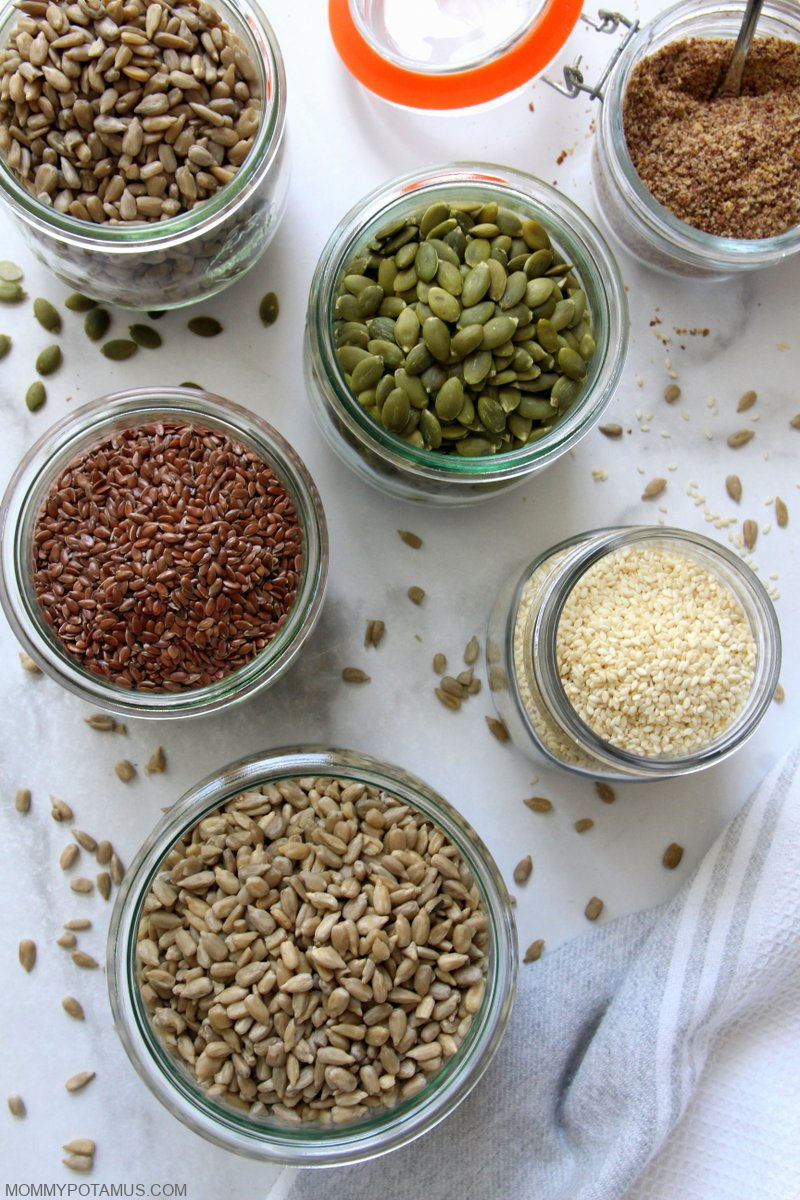
In principle, seed cycling is simple – but knowing a bit about your menstrual cycle helps you make the most of it. The cycle has two main phases: the follicular phase (before ovulation), when estrogen naturally rises, and the luteal phase (after ovulation), when progesterone is higher and estrogen tapers off.
Here’s how seed cycling typically works, alongside amounts used in research:
Phase 1 – Follicular (Day 1 of period → ovulation)
Phase 2 – Luteal (Ovulation → day before period)
Tips for Best Results:
There’s good nutritional logic — and some human data — behind using seeds for hormone support, but they’re also nutrient-dense foods that benefit overall well-being.
Women’s hormones work like a symphony, and they respond to everyday inputs—what we eat, how we move, how well we sleep, how we handle stress, and even what we’re exposed to in our environment. (10) Those levers can nudge our hormones toward balance and harmony . . . or out of it.
Seed cycling isn’t meant to stand alone — it’s most effective when paired with other cycle-supportive habits:
Would you like to read an article about bioidentical hormones, vagus nerve exercises or another topic? Leave a comment and let me know!
If you feel like you’ve tried every health trend out there and aren’t experiencing the changes you’re hoping for, let’s work together to create a customized approach just for you.
As a Functional Diagnostic Nutrition Practitioner (FDN-P), I use in-depth functional lab testing with lifestyle changes to help women identify and resolve roadblocks to healing.