

So, you already love elderberry syrup and fire cider for immune support during the winter months, but you know it’s a good idea to rotate herbs and you’re looking for new options. Perfect! Meet the five flavors fruit – schisandra berry (also spelled “schizandra”).
For most of us, foraging probably looks more like braving the checkout line with cranky kids than hiking for a day without food in Siberia, but we can learn a thing or two from generations of hunters that have done exactly that.
According to Donald Yance, CN, MH, RH(AGH), schisandra “berries and seeds were used by Nanai (Goldes or Samagir) hunters as an energy tonic to prevent exhaustion, to improve night vision, and to reduce hunger and thirst,” writes Donald Yance, CN, MH, RH(AGH), (Adaptogens in Medical Herbalism, p. 580). Newer research suggests it’s also helpful in supporting and balancing the immune system. (source)
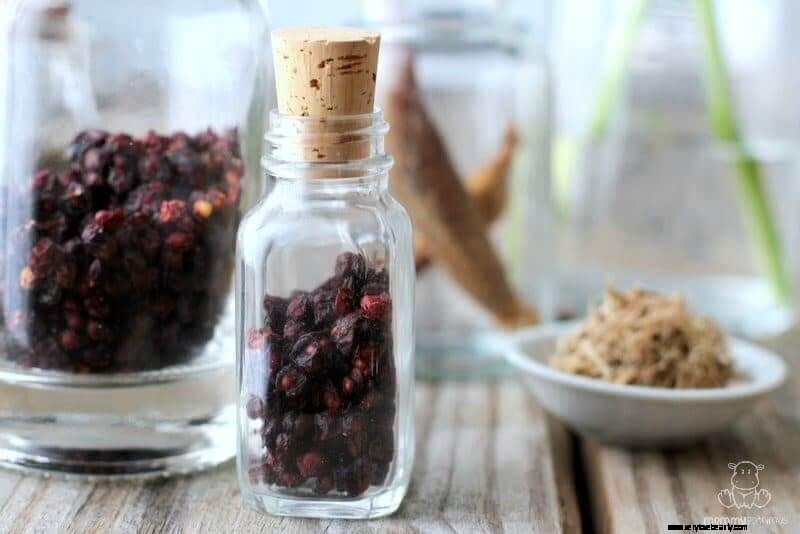
Schisandra is still used to this day in that region, and modern research has confirmed that it is a highly valuable adaptogen, or herb that helps the body to adapt to emotional and physical stress.
The Chinese name for shizandra is wu wei zi, which is translated as “five flavors fruit.” This is because “schizandra berries have all five flavors (sweet, sour, bitter, pungent and salty) recognized in that tradition. The peel and flesh are sweet and sour, the seed is pungent and bitter, and the whole fruit is salty” (Adaptogens: Herbs For Strength, Stamina & Stress Relief, pp. 195-196).
It’s definitely not the kind of fruit you nosh on as a snack, but it does make a sweet and tangy tea or flavoring syrup. In today’s post I’m going to show you how to make it into a syrup similar to elderberry syrup.
In traditional Chinese medicine, schisandra berry is valued for its ability to:
According to the Botanical Safety Handbook: 2nd Edition, schisandra is a Safety Class 1C herb (Gardner & McGuffin, 2013, p.794). This category is described as:
The “C” designation indicates that schisandra is an herb for which clinically relevant drug interactions are known to occur. See the “What else do I need to know?” section below for more information.
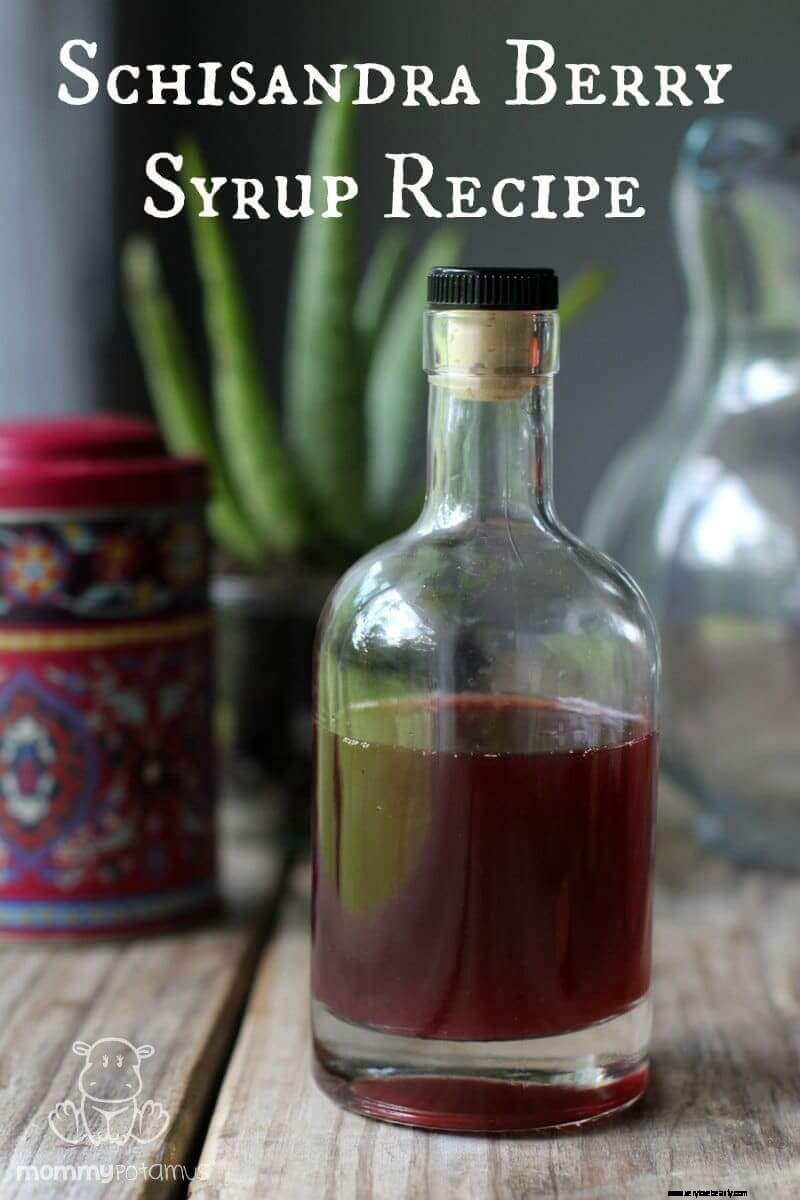
This tangy and sweet syrup is incredibly versatile – if you’d like to give it a try but are not quite sure what to do with it, here are some ideas: