
If you have diastasis recti, you’re probably stuck between two bad options.
Either you’re afraid to exercise because you don’t want to make things worse—or you’re exercising, but constantly concerned you’re doing damage without realizing it.
That uncertainty is the real problem.
Diastasis recti recovery isn’t about doing nothing, and it isn’t about pushing through. It’s about rebuilding basic core control first, then progressing carefully as your body allows.
This article shows you how to do that—what to start with, what to avoid, and how to know when you’re ready to move on.
If you’re dealing with diastasis recti, you’re probably thinking two things:
The good news is that research shows diastasis recti exercises can help you minimize the gap and improve strength, functionality, and postpartum body satisfaction—but only if you start the right way.
Because early on, your main job isn’t to “sculpt six-pack abs.” It’s to avoid doing anything that increases intra-abdominal pressure (pressure inside your belly) enough to strain the connective tissue that’s trying to heal.
To do that, follow these three simple rules.
Early on, avoid movements where you strain or crunch your torso—especially anything that feels like you’re contracting your abs hard.
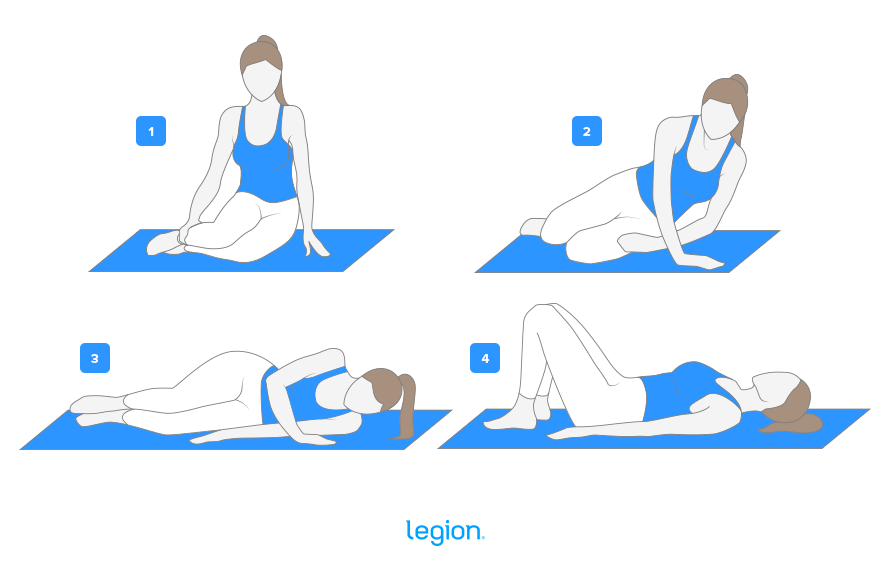
That includes the obvious stuff (traditional sit-ups and crunches), but it also includes everyday movements that new moms often don’t think about—like getting up and lying down.
Learning the right way to get up and lie down takes pressure off your abs and helps you rebuild core strength and control without pain or bulging. Here’s how to get up:
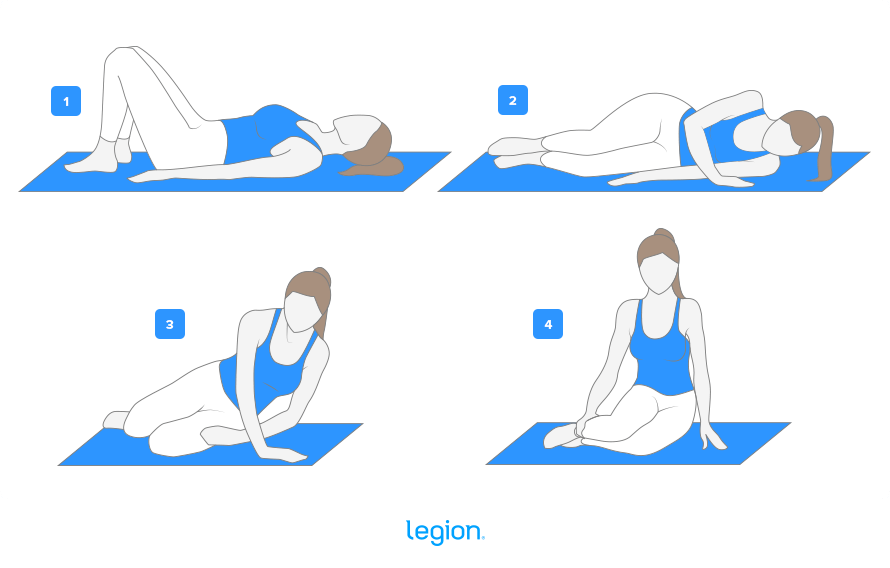
To lie down, do the same in reverse:
You don't need supplements to build muscle, lose fat, and get healthy. But the right ones can help. Take this quiz to learn which ones are best for you.
Take the Quiz
To regain your pre-baby strength, you need to train the muscles deep within your core—especially your transverse abdominis and pelvic floor.
To do this, use simple, controlled drills like breathing, pelvic floor work, and gentle core-strengthening exercises that teach you how to brace properly again without straining the midline of your abs (more on the specifics soon).
Many women want to jump back into intense exercise immediately after giving birth, but that isn’t a great idea.
Most health professionals recommend taking up to 6 weeks to recover after a vaginal delivery and up to 10 weeks after a C-section before returning to exercise like lifting weights.
That doesn’t mean you have to do nothing during that time. In fact, gentle, well-chosen movement early on is usually helpful—you just want to avoid the stuff that spikes pressure or makes you strain.
And that’s why you should focus on things such as . . .
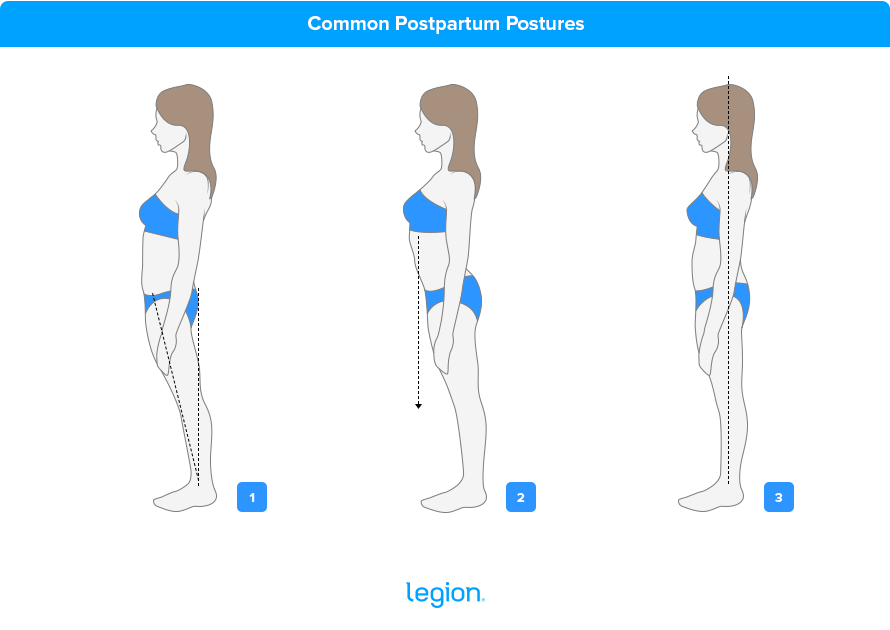
Many women notice their posture changes after giving birth. Some begin to over-arch their lower back, pushing the pelvis forward in front of the chest and knees (figure 1). Others do the opposite, with the lower back and hips tucking under as the back muscles compensate for weaker abs, pushing the chest forward and tilting the pelvis downward (figure 2).
There’s no such thing as “perfect posture,” but aiming for a neutral position—where your shoulders, hips, and knees are roughly stacked on top of each other—generally places less stress on your abs and connective tissue (figure 3).
Throughout the day, get into the habit of checking in with your posture during everyday tasks. For example, stand tall while brushing your teeth instead of hunching over the sink, and when carrying your newborn, keep your hips under your shoulders rather than letting them drift forward or to the side.
Most women can resolve diastasis recti at home, but it’s smart to see a doctor or physical therapist who specializes in diastasis recti if you find a gap that’s larger than five centimeters (finger breadths) wide.

If you only take one thing from this article, make it this:
Breathing and bracing are the foundation of every diastasis recti exercise that actually helps.
That’s because closing the gap in your abs isn’t just about “working your abs.” It’s about regaining strength through your midsection without cranking up intra-abdominal pressure and straining the linea alba (the connective tissue that joins the two vertical columns of the rectus abdominis muscles).
Breathing and pelvic floor exercises are the first step because they gently train the deep muscles that stabilize your midsection (your pelvic floor and transverse abdominis).
Once you can create tension in these muscles without holding your breath or bearing down—and without pushing your belly outward (“doming”)—you can progress to harder training without stressing the connective tissue you’re trying to heal.
The drills below are how you learn that skill—practice them until you can engage your deep core without holding your breath, bearing down, or doming.
Before you begin with elevators, imagine the hardest you can contract your pelvic floor muscles. This is your “level 3.”
Here’s how to put the above exercises into a workout. Most women can do this workout within a week or two of giving birth, though if it feels uncomfortable, it’s best to allow yourself more time before starting. For best results, perform this workout every day throughout your recovery:
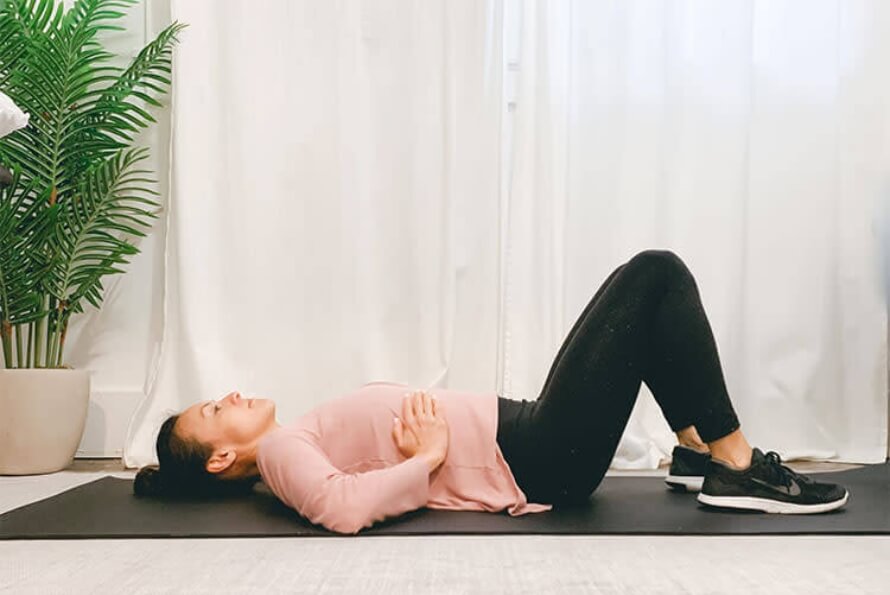
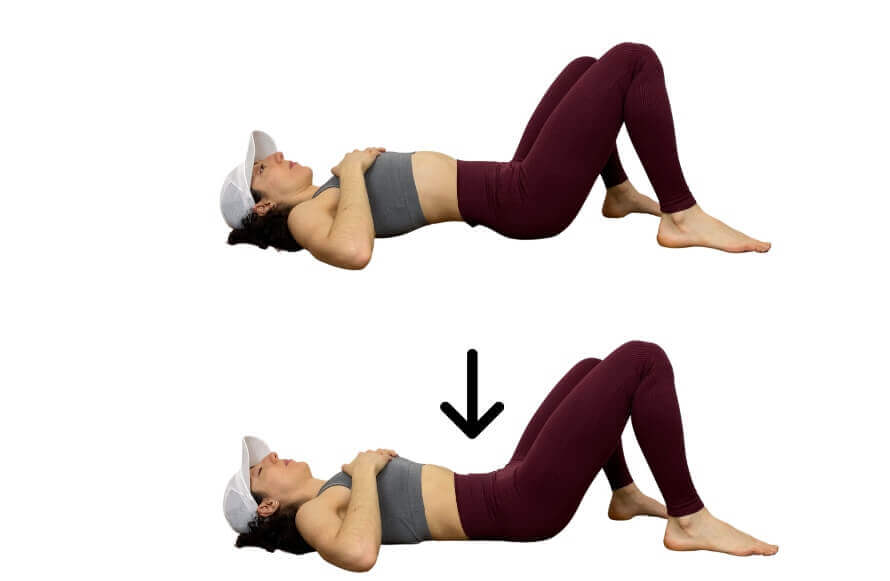
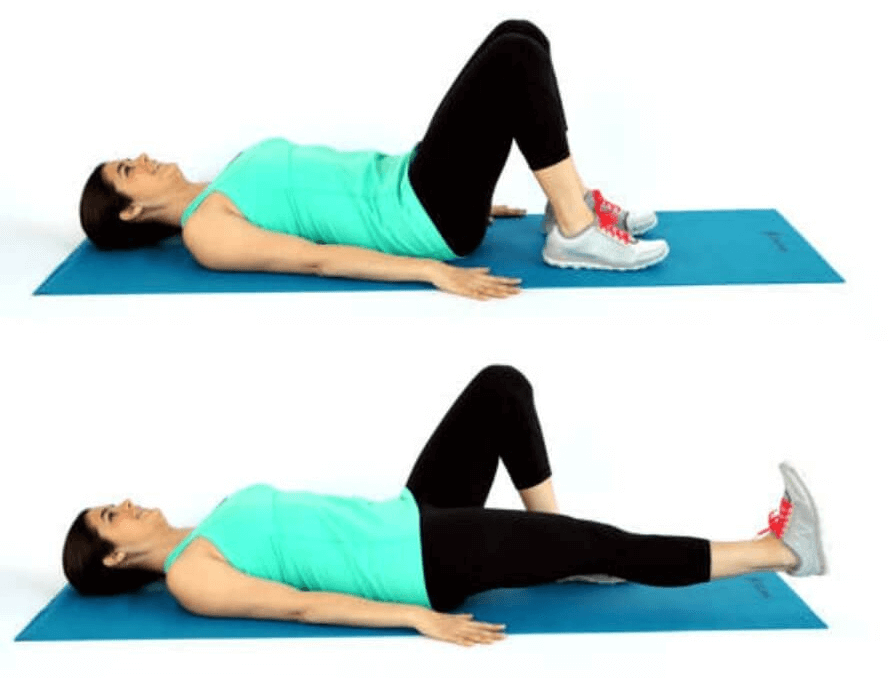
After a few weeks of breathing and pelvic floor training, most women are ready to add simple movements that strengthen their midsections.
A quick rule to follow as you do these:
If you feel strain down the middle of your abs or you notice your belly pushing outward, make the movement easier (smaller range of motion, slower tempo, less leverage) or stop and come back to it later.
How many calories should you eat? What about "macros?" What foods should you eat? Take our 60-second quiz to get science-based answers to these questions and more.
Take the Quiz
After a week or two of doing the foundational exercises, you’ll likely be ready to slowly introduce intermediate exercises—using the same guardrails as before to make sure you’re ready.
Specifically, if you see your belly push outward or a ridge appear down the center of your abs—or you catch yourself holding your breath to brace—make the movement easier or stop and come back to it later.
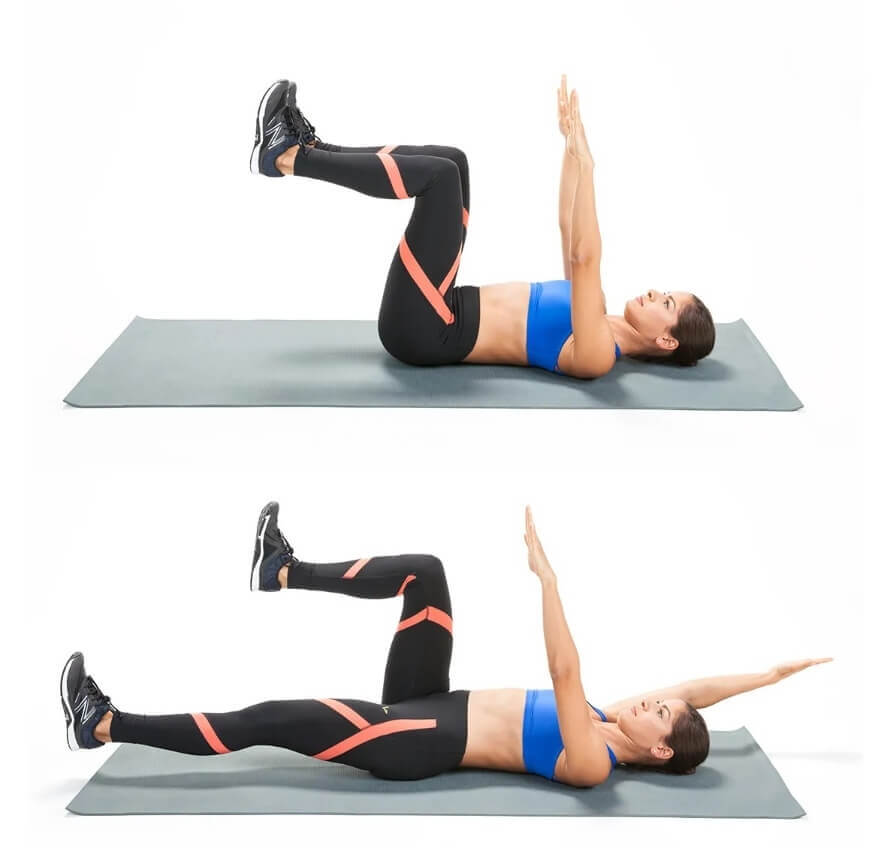
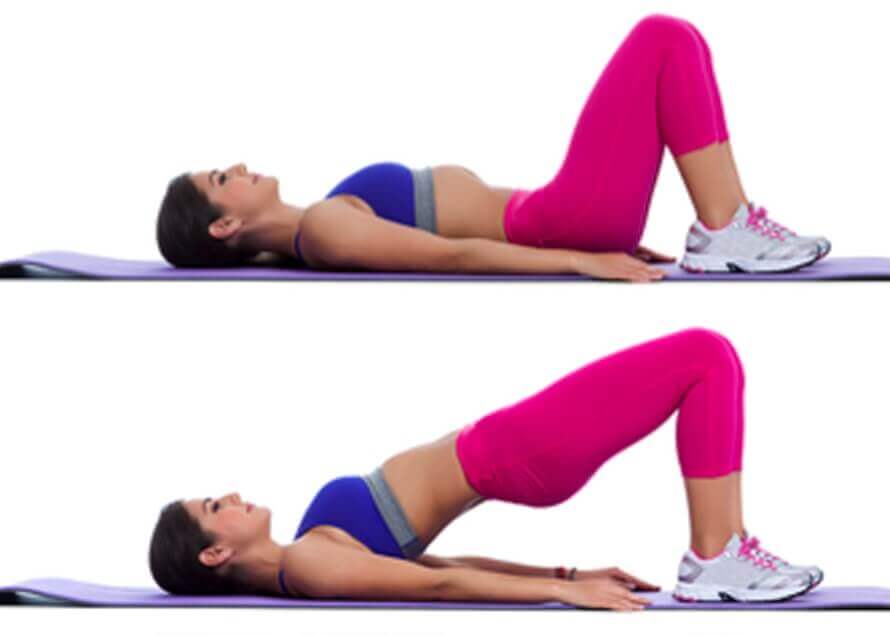
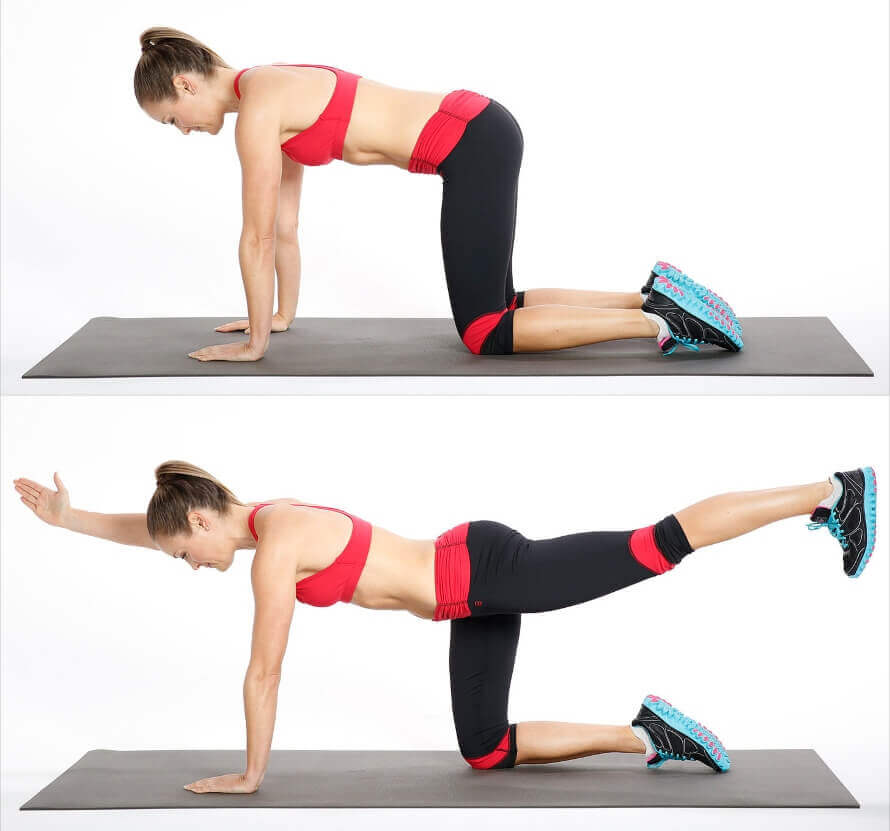
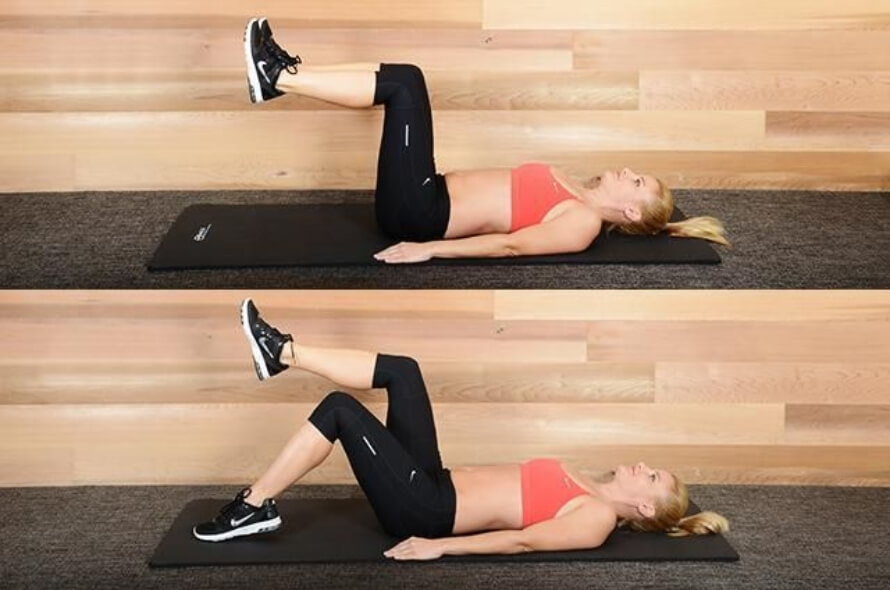
Skip any exercise that makes you strain, pushes your belly outward, or creates a ridge down the middle of your abs. If that happens, the exercise is too advanced right now—so regress it or come back to it later.
Common troublemakers include:
We don’t have good research showing whether resistance training is safe or effective for diastasis recti. Because of that uncertainty, it’s usually best to take a conservative approach.
After giving birth, the first step isn’t getting back to the gym—it’s rebuilding basic core strength, functionality, and control. That’s where the breathing and abdominal exercises in this article come in, and most women can begin working on those well before they’re cleared for harder exercise (usually in the first few weeks after giving birth).
At some point—often around 6–10 weeks postpartum—you’ll be cleared by your doctor. That clearance is important, but it’s also easy to misunderstand. It doesn’t mean your body is fully ready for heavy training again. It just means there’s no major medical reason you can’t exercise.
From there, let your body set the pace. If your core feels strong and recovered, do some light strength training 2–3 times per week. If it doesn’t, spend more time on the core work and try weightlifting again later.
There’s no prize for rushing this. Taking a slower, more cautious approach now usually makes it easier to return to full training later—without unnecessary setbacks.
Now that you know which exercises to do, the next question is how to organize them into workouts.
The workouts below keep things simple and structured, so you know exactly what to do each session.
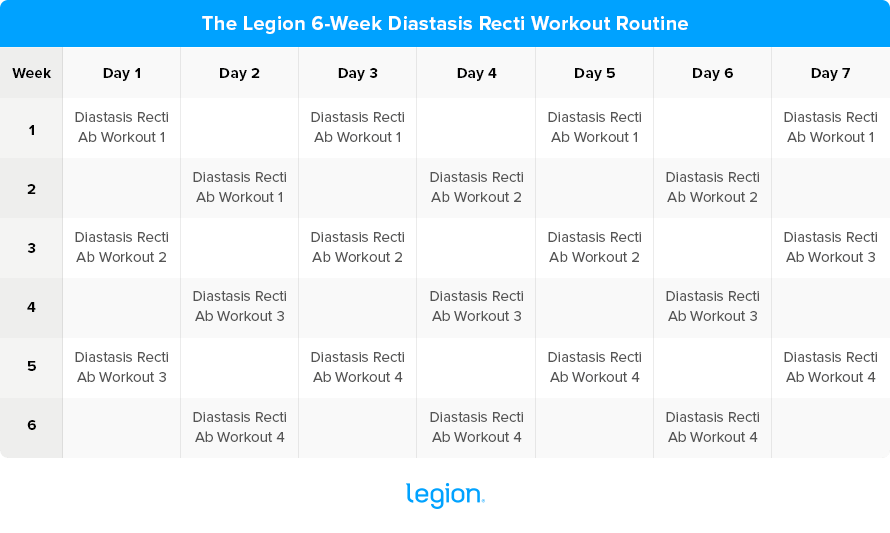
Below is a sample 6-week plan showing how you might rotate the workouts above over time.
You can usually begin the Breathing and Pelvic Floor Workout about one to two weeks after giving birth, and most women benefit from doing it daily. This helps you rebuild basic core control before moving on to anything more demanding.
Once that feels comfortable, you can begin adding in the workouts from this routine. Many women prefer to start each workout with the Breathing and Pelvic Floor Workout as a “warmup,” but that’s entirely optional.
Think of this 6-week plan as an ideal progression, not a strict schedule.
If you don’t feel ready to move on, keep repeating the same workout instead of progressing. You might do the same workout for a few extra days—or even an extra week—before moving on, and that’s fine.
Try to complete each workout in one session when you can, but don’t stress if that’s not possible. If you need to stop (to tend to your baby, for example), just pick up where you left off later.
If you ever feel unsure about whether your body is ready to progress—or something doesn’t feel right—pause and check in with your doctor before continuing.
. . . and it's yours for free. Take our 60-second quiz and learn exactly how many calories you should eat, what your "macros" should be, what foods are best for you, and more.
Take the Quiz
Diastasis recti usually improves over time, but the right exercises can help you regain strength and function faster—if you approach them the right way.
Start by avoiding movements that make you strain or push your belly outward, and focus first on breathing, pelvic floor work, and gentle core exercises that rebuild control.
Progress slowly, let your body set the pace, and don’t rush back into intense training. With patience, consistency, and smart progression, most women can restore the core strength they had pre-pregnancy.
Often, yes—especially when the separation is mild to moderate. The key is doing the right kind of exercise: start with breathing, pelvic floor training, and gentle core exercises that help you rebuild control and strength without straining or pushing your belly outward.
Progress to harder exercises only when the easier ones feel controlled and comfortable. And if you have a large gap (around five centimeters or more), or anything feels painful or unusual, it’s smart to see a doctor or pelvic-floor physical therapist.
Focus on function rather than “flattening.” When your deep core is working well again, your stomach often flattens as a side effect.
In practical terms, avoid movements that make you strain or push your belly outward, rebuild control with breathing and pelvic floor work, then add the foundational and intermediate exercises in this article and progress slowly.
Also pay attention to everyday habits that can keep stressing your abs—like posture and how you get up and lie down. If your belly is still significantly protruding months later, or you’re not improving, get checked by a qualified professional.
The basic idea is similar: rebuild core strength and control without straining or pushing the belly outward, then progress gradually. The main difference is the cause. In women, diastasis recti is usually pregnancy-related.
In men, it can be related to weight gain, improper bracing during training, or other factors—and sometimes a midline bulge can be a hernia instead.
So if you’re a man with a noticeable ridge or bulge down the middle of your abs (especially if there’s pain), it’s smart to get checked by a doctor before trying to “train it away.”
Check out these articles: