
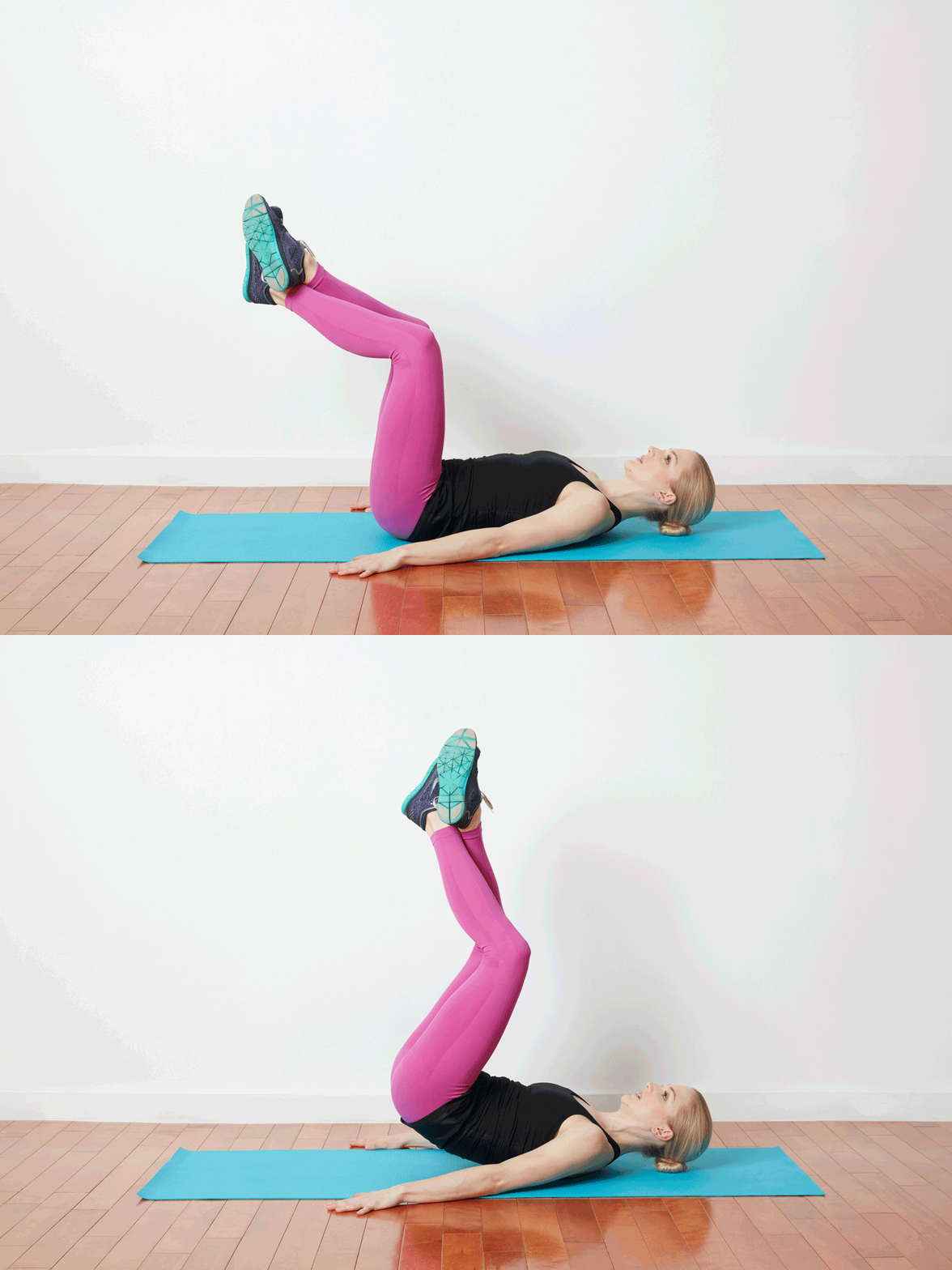
Also Known As: Reverse press up, reverse crunch
Targets: Abdominals
Level: Beginner
The hip lift is a good ab exercise to strengthen your major abdominal muscles as well as the deep abs. It is less stressful on the back than some ab exercises such as crunches. Try to work up to two sets of 10 to 12 repetitions, with a short break between sets. Add this exercise to a core workout or a total body workout two to three times per week.
The primary muscle used in this exercise if the rectus abdominis, which is the "six-pack" muscle that draws your ribs to your hips. Secondarily it recruits the obliques, which are the muscles that run down the side of your torso, and the deep transverse abdominis that stabilizes your spine and core. This deep ab muscle is especially hard to work with other core exercises.
By developing a strong core you will help improve your posture and be better able to stabilize your movements. That can help with sports performance as well as in daily life. Because you do the exercise with slow and controlled motions, it can help build these muscles for that sought-after ab definition. In fact, the American Council on Exercise has said this is the seventh most effective ab exercise.
Use Explosive Training to Improve Sports PerformanceYou will want to use a mat or other soft surface for this exercise. To get into the starting position, roll back until your back and head are resting comfortably on the ground. Place your arms by your sides, with palms face up or face down. Raise your legs so they are straight up toward the ceiling and perpendicular to your torso, with your knees aligned over your hips.
You can have bent knees, but if you straighten the knees you will also stretch the hamstrings during this exercise. Your feet can be flexed or neutral, whichever is comfortable for you. Many find pointing the toes toward the ceiling can help them focus during the lift. Your legs and torso are now in the starting position. They will return to this position at the end of each repetition.
Get the most from this exercise by avoiding these errors.
As you lower yourself, ensure your leg motion is under control so your knees remain directly over your hips. This will help prevent strain on the lower back.
Don't try to use your leg muscles or momentum to raise your hips. You want only your abs to be engaged in drawing your pelvis to your rib cage. Keep your knees at the same angle as you roll your hips up.
Keep your neck and head still. Don't lift them at any time during the movement.
You can perform this exercise in different ways for comfort or for more of a challenge.
Find the knee angle that works best for you. Your knees can be bent or your legs can be straight, just so long as your knees are lined up over your hips in the starting position. Some people also find it more comfortable to cross their ankles.
If you are doing the exercise with bent knees but are having problems in isolating your abs, place a foam roller between your knees and calves. Squeeze it so your legs won't get involved in the lifting motion.
This exercise is made more intense by bending your legs at the knees and, as you lift your hips, drawing your knees as far as you can toward your head. In this variation, first your hips and then your lower back will lift off the mat. Do not roll so far forward that your upper back loses contact with the mat. Return to the starting position between each hip lift.
You can combine this move with a leg extension or leg raise. Starting with your back and hips flat on the mat and legs extended, engage your abs and bring your knees to your chest, then press your hips up. Lower your hips to the mat and extend your legs straight out. Lower them slowly till they almost touch the ground.
Repeat without allowing the legs to touch the ground between repetitions. By not allowing your legs to touch the ground, your abs will remain engaged throughout the set.
How to Do a Leg Curl: Techniques, Benefits, VariationsYou should not feel pain in your lower back, hips, or neck while performing this exercise. If you do, gently come out of the position and end the exercise. You are likely to feel quite a burn in your abdominals, but you should not feel any sharp pain.
Incorporate this move and similar ones into one of these popular workouts: