
7 min read
Monogamy may seem like the default setting for a healthy relationship—after all, once you've found "The One," why would you want to be with anybody else? But new research shows it's not a requirement for relationship and sexual satisfaction, two key indicators of wellbeing that can substantially contribute to quality of life. In fact, people who practice ethical non-monogamy "are likely to experience equal levels of relationship and sexual satisfaction" as those who practice monogamy, according to a 2025 meta-analysis of 35 different studies.
So, it should come as no surprise that interest in ethical non-monogamy (ENM), also known as consensual non-monogamy (CNM), is on the rise. In fact, 31 percent of American singles have explored ethical non-monogamy, according to the 2024 Match Singles in America report. This is up from roughly 21 percent in 2014, per findings from two national samples of single Americans.
But what exactly is ENM? “Ethical non-monogamy is an umbrella term for any variation of relationship styles that involves romantic or sexual relationships with more than one person that is consented to by those involved,” says Liz Powell, PhD, a licensed psychologist and author of Building Open Relationships.
“Ethical” is in the title for a reason, as it differentiates ethical non-monogamy from cheating on a partner with whom you’ve agreed to be monogamous. “ENM is different from cheating because in ENM, all parties involved should be acting with consent and clearly communicating knowledge of other connections happening,” says Meg Jeske, LPC, a relationship therapist and adjunct instructor at Lewis & Clark’s Graduate School of Education and Counseling.
Meet the Experts: Liz Powell, PhD, is a licensed psychologist, sex therapist, and author of Building Open Relationships. Meg Jeske, LPC, is a relationship therapist and an adjunct instructor at Lewis & Clark’s Graduate School of Education and Counseling. Joli Hamilton, PhD, MHC, is a certified sexuality educator and host of the podcast Playing With Fire. Libby Sinback is a relationship coach, educator, and host of the podcast Making Polyamory Work.
Each relationship is as unique as the people in it, but many ENM relationships fall into these general categories:
Some people feel drawn to forms of consensual non-monogamy as a result of their early dating adventures, and others come to it later in life for a variety of reasons, including:
Ultimately, the only way to know if ENM is right for you is to “spend some time reflecting on your values, and [your goals for] romantic and sexual relationships,” says Libby Sinback, relationship coach and host of Making Polyamory Work. “Reflecting on this and the role those types of relationships play in your life can help you figure out if non-monogamy is truly aligned with who you want to be and how you want to live.”
Before you make any physical entry into ENM, Sinback recommends seeking out resources, such as books, podcasts, and articles (like this one).
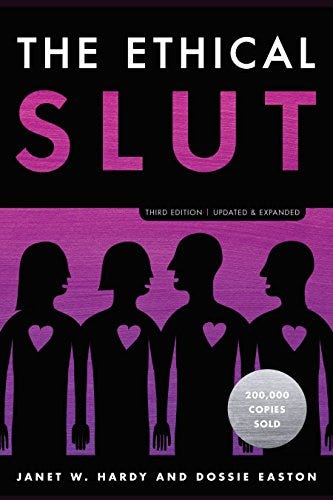
Besides educating yourself at home, it can also be useful to seek out people who practice ENM in your local community, says Sinback. For example, you might attend a meet-up, whether online or in person, and cultivate connections with those who can share their own personal experiences and offer a supportive environment.
“If you’re already in a [monogamous] relationship and thinking about exploring ENM in the context of your current relationship, it’s important to know that going from monogamy to ENM is not a process of small tweaks but instead a major restructuring of the entirety of your relationship,” says Powell. “Part of being successful in ENM is unpacking the norms of heteronormative, mono-normative culture.”
Okay, but... how? Start by asking yourself and your partner these questions, says Hamilton:
“If you have a solid sense of why you are exploring, and you’re willing to invest energy in the process of experimenting,” Hamilton says, “you may find that there is a style of ENM that works great for you.”
“When opening an existing relationship, folks will often try to create agreements or rules that are designed to help alleviate their fears, anxieties, and insecurities,” says Powell. “[However,] these kinds of agreements and rules don’t tend to work out well in the long run as they are structural solutions to emotional problems.”
Instead, think about what you would want in certain situations and figure out what emotional or relational work you need to do to get there. For example, if you want to feel secure enough in your relationship to manage jealousy and be happy for your partner’s happiness with others, you might familiarize yourself with the practice of compersion.
When you feel ready, look for like-minded matches on dating apps. Pretty much any app can work for ENM these days, so long as you choose the appropriate profile settings and make it clear in your bio that you’re non-monogamous. That said, dating apps Feeld and #Open are favorites among the ethical non-monogamous crowd because of their open-relationship-friendly features, such as the ability to link to a partner’s profile.
“So much of the drama of ENM comes down to [people’s] fear that if a partner turns their attention to someone else, it must mean [they] are lacking in some way,” says Hamilton. “[That's why] developing a strong sense of self-worth is invaluable.” Granted, this can be tough because in the monogamous paradigm, many tie their self-esteem directly to being someone’s special person, she adds.
So, if you struggle with jealousy or feeling like you’re not enough, double down on your self-worth affirmations, share your concerns with a mental health counselor (if that's financially feasible), and be sure to put effort into your friendships, says Hamilton. And of course, you can always ask your partner(s) for reassurance when you need it.

Stella Harris is a certified intimacy educator, professional coach, trained mediator, and the author of Tongue Tied: Untangling Communication in Sex, Kink, and Relationships and The Ultimate Guide to Threesomes. Her freelance career is never dull; highlights include being sent to a strip club with a press pass, appearing on the evening news to discuss the importance of sex education in schools, and speaking as an authority on banana slug mating habits. In her free time, she curls up with scary books and horror movies.

Lindsay Geller is the lifestyle director at Women’s Health, where she oversees the Sex & Love, Relationships, and Life sections and manages Women’s Health+ content. She has 10 years of experience covering sex, relationships, health, fitness, and general lifestyle topics for print and digital publications. She currently lives in New Jersey with her husband and loves going on runs around her local park with her rescue dog.