

Whether you like a thorough cleanse every day or need a pick-me-up for once in a while, face brushes can really do the trick. They make the cleansing routine feel more involved and luxurious, and they can also get your skin feeling silky soft.
Read this article to learn all about what face brushes are and how they work. I’ll break down all of the benefits and drawbacks of using cleansing brushes, and I’ll give you all the tips and tricks for how to use a face brush as well as how to take care of them. We also explain the different kinds of cleansing brushes, so you can choose the right one for you.
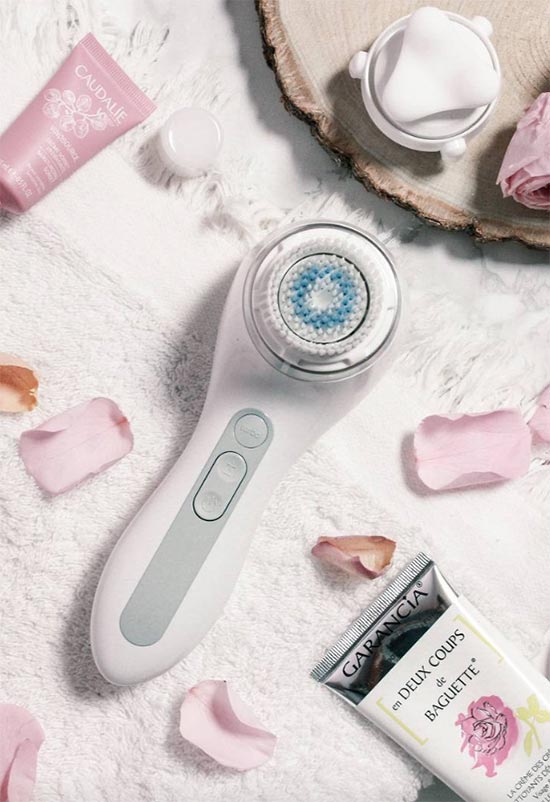
Facial cleansing brushes are tools meant to improve your facial cleansing routine. These brushes are usually made of two parts: the handle and the brush. The handle part is non-replaceable, while the bristled brush can be changed either as it becomes worn down or from use to use based on the user’s needs.
There are also silicone face cleansing pads that are made of one piece, with gentle, thicker bristles made of the same silicone materials.
Both tools require either batteries or charging, since part of their magic comes from their ability to spin or vibrate in order to give the skin a better cleansing. The combination of a textured surface and mechanical motion works the cleanser into the skin, exfoliates the face, and gives a wonderful facial massage.
There are many reasons why you should consider getting a face brush or a cleansing pad, which we discuss here!

Although facial cleansing brushes don’t have serious side effects, there are some cons you should consider.
Many face brushes, especially the round-brushed ones, give a very thorough face exfoliation. Since it is recommended that people use a face brush every day, many people end up over-exfoliating their skin, especially if their brush head is a little on the rougher side.
The key to avoiding this is to start off only using the face brush a few times a week, and paying attention to how your skin responds. If your skin starts feeling tight or irritated, then stop using your face brush for a couple of weeks, or until your skin recovers.
Some face brushes can be difficult to truly keep clean. While the bristles are usually made to be anti-microbial, debris can still easily hide in between them.
In the worst case scenario mold and bacteria can grow between the crevices of the face cleansing brush, and then be transferred to the skin. As long as you clean your face brushes thoroughly, this shouldn’t be an issue.
Face brushes can sometimes cause an acne breakout known as purging, especially for those who haven’t exfoliated their skin regularly before. As layers of dead skin are removed, the skin responds by breaking out.
This is common with all kinds of skin-resurfacing treatments including retinol and glycolic acid. Usually, the breakout disappears after a week, never to return.
Face brushes, along with any other kind of physical exfoliation, are not appropriate for those with active, inflamed breakouts. The cleansing brush bristles can break the inflamed skin and spread bacteria around. Those suffering from inflamed acne should wait for it to clear a little before using face brushes.
Those with sensitive skin should be very careful when trying out face cleaning brushes – especially exfoliating face brushes.
There are two main products on the market for you to choose from. More frequently you will see facial cleansing brushes like the Clarisonic Mia. These brushes have a round head, and their bristles are made of a soft material, which may or may not be anti-microbial.
These face brushes will vibrate and sometimes also spin as they are held against the face, moving cleanser around, stimulating the skin, and dislodging dead skin cells. They tend to give the skin a stronger exfoliation in addition to a thorough cleansing.
Brush heads can be replaced for different effects, with some brush heads made to be more gentle, while others are rougher. These cleansing brushes require more thorough cleansing, as it is easy for debris to get caught in between the bristles.
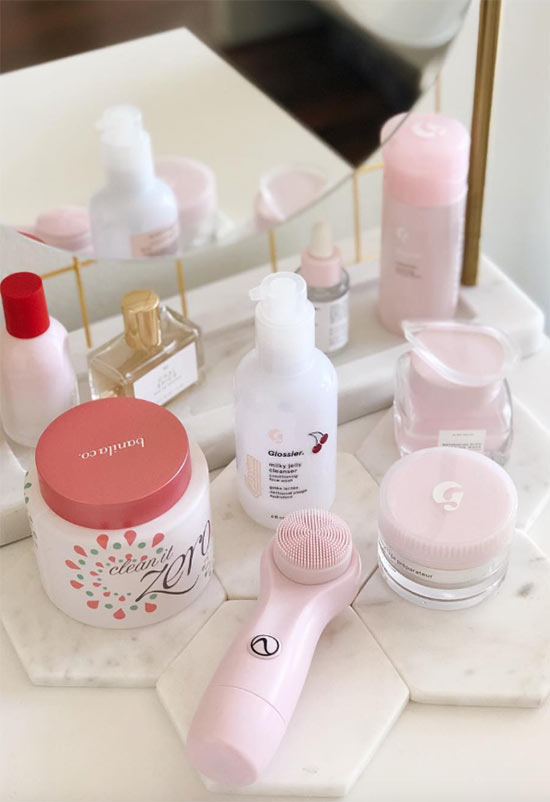
Then there are the facial cleansing pads, like the Foreo Luna. These silicone tools also have bristles and vibrations, but their bristles are much duller. Unlike cleansing brushes, the cleansing pads give a much more gentle cleansing that is still extremely thorough.
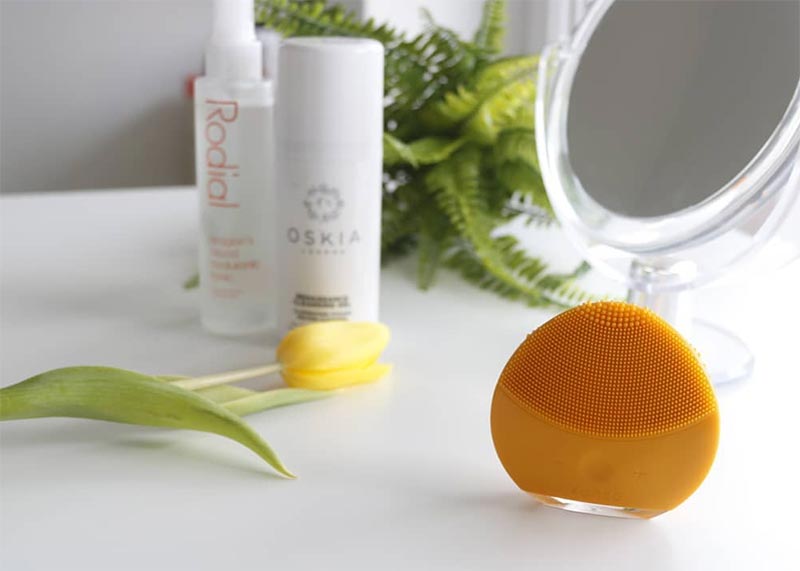
Facial cleansing pads don’t exfoliate the skin as much, so they are more appropriate for everyday use. They are also much easier to clean because they don’t hold debris. Lastly, the silicone pads last a very long time, and since they only come in one piece, you do not need to buy replacement heads for them.
If you have a sensitive skin type, then definitely consider a silicone based cleansing pad. On the other hand if your skin does well with high pressure cleansing, then consider facial cleansing brushes the better choice for you.
There are quite a few ways to go wrong when using facial cleansing brushes or face cleansing pads. At the beginning ease your way into using the face brush slowly. Don’t immediately start using it every day both morning and night. Instead, start out by using the facial cleansing brush a few times a week.
See how your skin responds to the specific brush you have, and consider whether you want to work your way up to using it every day. Since some brush heads are more exfoliating than others, they don’t need to be used more than a few times a week.
If you’re wearing heavy makeup, it is best to remove it first with a face wipe or makeup remover on a cotton pad. For light or no makeup, a single cleanse should suffice.
Moisten your face with a splash of cool or lukewarm water, and then massage into it a nickel-sized amount of a gentle, low-pH foaming gel or cream cleanser.
Massage the cleanser into your skin in gentle, circular motions. Make sure your whole face is covered in a light foam.
Run your brush head under the water to get it wet. The more water used in this process, the better the cleansing will be. If you feel like you need more cleanser, you can also squeen a dollop of it into the center of your cleansing brush.
You can now start massaging! Using as little pressure as possible, run the face brush against your skin in gentle, circular motions.
Begin by covering all of the larger areas of your face like your chin, cheeks, and forehead. Work your way inwards towards the nose, making sure to get into all the crevices.
Avoid using the cleansing brush over the delicate skin that is around the eyes.
You want this whole process to take no less than 15 seconds but no more than a minute.
Once you’re finished massaging your whole face with the brush, splash your face with water to remove the cleanser.
Finish off the routine with the rest of your skin care: toner, serums, special treatments, and a moisturizer. If you used your facial cleansing brush in the morning, make sure to also apply an SPF, as exfoliation makes the skin more sensitive to sun exposure.
It is extremely important to keep your face brush clean, otherwise you can transfer all kinds of bad bacteria to your skin. You want to give your face cleansing brush a gentle clean after every use, and once a week you should give it a deep clean.

Immediately after using your cleansing brush, rinse it under the tap to remove any cleanser, makeup, and dead skin residue that might be on it from the cleansing. If your face brush’s head doesn’t have antimicrobial bristles, then make sure to also wash it with some soap and water.
Once that is done, shake it to remove excess water, and put it somewhere where it can stay clean and get dry quickly. Avoid keeping it in moist environments, as that is when mold thrives.
Once a week or so give your face brush a more thorough anti-bacterial treatment. Remove your brush head and put it in a bowl filled with a 70%-alcohol solution. Let it sit in there for about 5 minutes – this is all the time it takes for the alcohol to destroy all the bacteria that might have gotten trapped in the brush.
Take it out of the bowl, and give it a quick wash with water and soap. Leave it somewhere clean to air dry.
Much like with electric toothbrushes, the bristles on face brushes get worn out after regular use. That is why most companies will sell replacement brush heads.
If you use your cleansing brush multiple times a week, then chances are you will notice the difference after a few months. Most people find that they need to replace their brush heads every three to four months.
If you only use your face cleansing brushes once or twice a week, you might be able to wait as long as six months. If you’ve opted for a silicone face cleansing pad instead, then you won’t need to worry about replacements!
Photos via @linixf, Instagram