
A green cleaning expert shares how she created a faster, easier and less toxic sanitation routine for her bathroom in four easy steps.
Our editors and experts handpick every product we feature. We may earn a commission from your purchases.
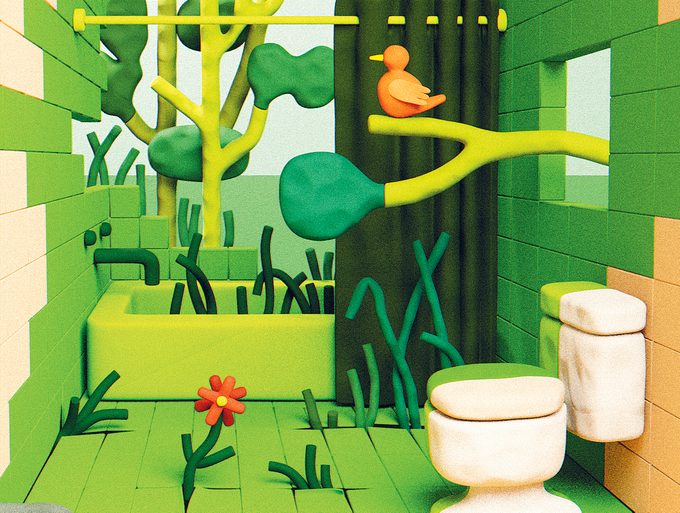 Illustration: Hudson Christie
Early in the 2010s, I began to realize that my bathroom was the most toxic place in my house. I read headline after headline warning consumers about the negative health effects of chemicals in beauty products. Documentaries such as Stink!, about the toxic chemicals found in everyday products, left me further alarmed. I had all kinds of unsafe chemicals in my cupboards. Maybe it shouldn’t have been that much of a surprise, especially when it came to the cleaning products. Many of them do have warning labels.
Now it makes me cringe to think that I spent years cleaning with harsh chemicals without wearing rubber gloves. I wasn’t protecting myself against the toxins that can penetrate the biggest organ we’ve got: our skin. Additionally, breathing in cleaning products’ fumes can be bad for our lungs. Toxic substances may irritate air passages, be absorbed by the lungs into the bloodstream, or lead to a decline in lung function with long-term use. I resolved to change my cleaning habits—immediately.
What I didn’t know back then was that my efforts were also laying the foundation for sustainable and low-waste living. It makes sense. Less stuff equals less waste. Fewer toxins equals healthier people and a healthier planet. And, the chemicals we use at home often find their way into the natural environment.
Fast-forward to today, and I’m seeking out bathroom products that are healthier (i.e., non-toxic), with a minimalist approach (i.e., fewer products, more functionality) and that are low waste (i.e., have less packaging). My transition took years, but there are many ways to speed up the process to a cleaner, greener bathroom.
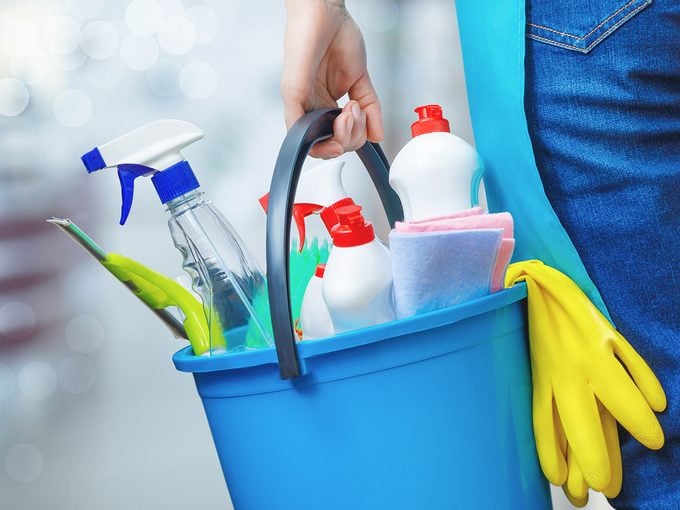 Photo: Shutterstock.com
The air inside our homes is two to five times more polluted than the air outside. This is due to things like building materials, home furnishings, air fresheners and cleaning products releasing harsh chemicals into the air, including ones linked to asthma, developmental harm and cancer. Here’s what to ditch:
You’ll also want to look out for these dangerous ingredients in your beauty products.
Pull out all of your cleaning supplies. Then, using the EWG website’s database on household cleaning products, assess everything and discard anything that no longer meets your standards. You can give these away, donate unused products to organizations that accept them, and throw away anything that remains.
After going through the exercise above, assess what’s left. Ask yourself:
While it’s freeing to declutter, it’s also less wasteful to use up what you already have at home.
Once you’re ready to fill in any gaps in your leftover cleaning supplies, consider the following low-waste options:
Tara McKenna is the founder of The Zero Waste Collective and author of Don’t Be Trashy: A Practical Guide to Living with Less Waste and More Joy.
From the book DON’T BE TRASHY: A Practical Guide to Living with Less Waste and More Joy by Tara McKenna. Copyright ©2021 by Tara McKenna. Published in the United States by Rodale Books, an imprint of Random House, a division of Penguin Random House LLC.
Next, conduct a room-by-room sweep with our healthy home checklist.