
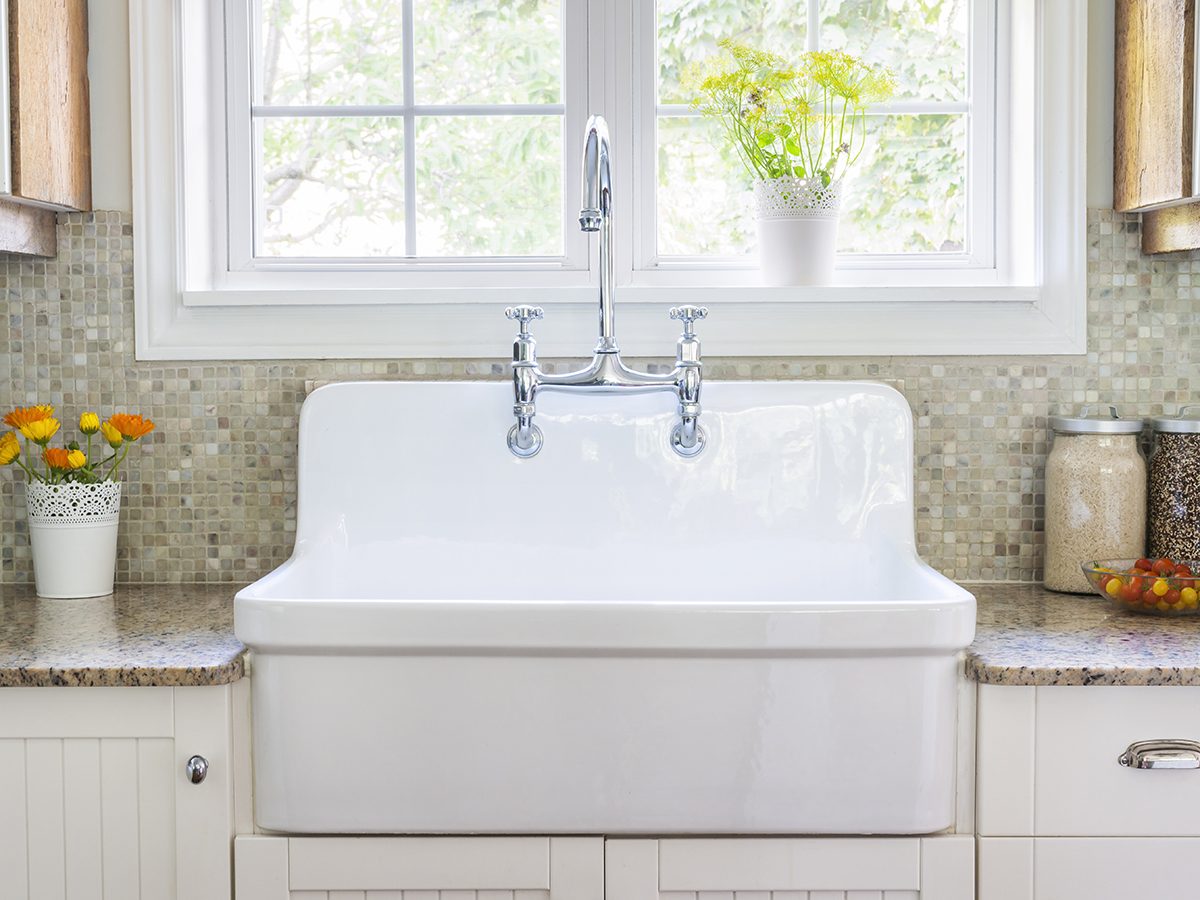
A kitchen should be functional, and attention must be paid to every housekeeping detail. From a hygiene perspective, the kitchen must be kept clean or else the food prepared in it may become contaminated and cause illness. I find that if you clean as you go, it becomes much easier to maintain.
ⓘ 2 / 14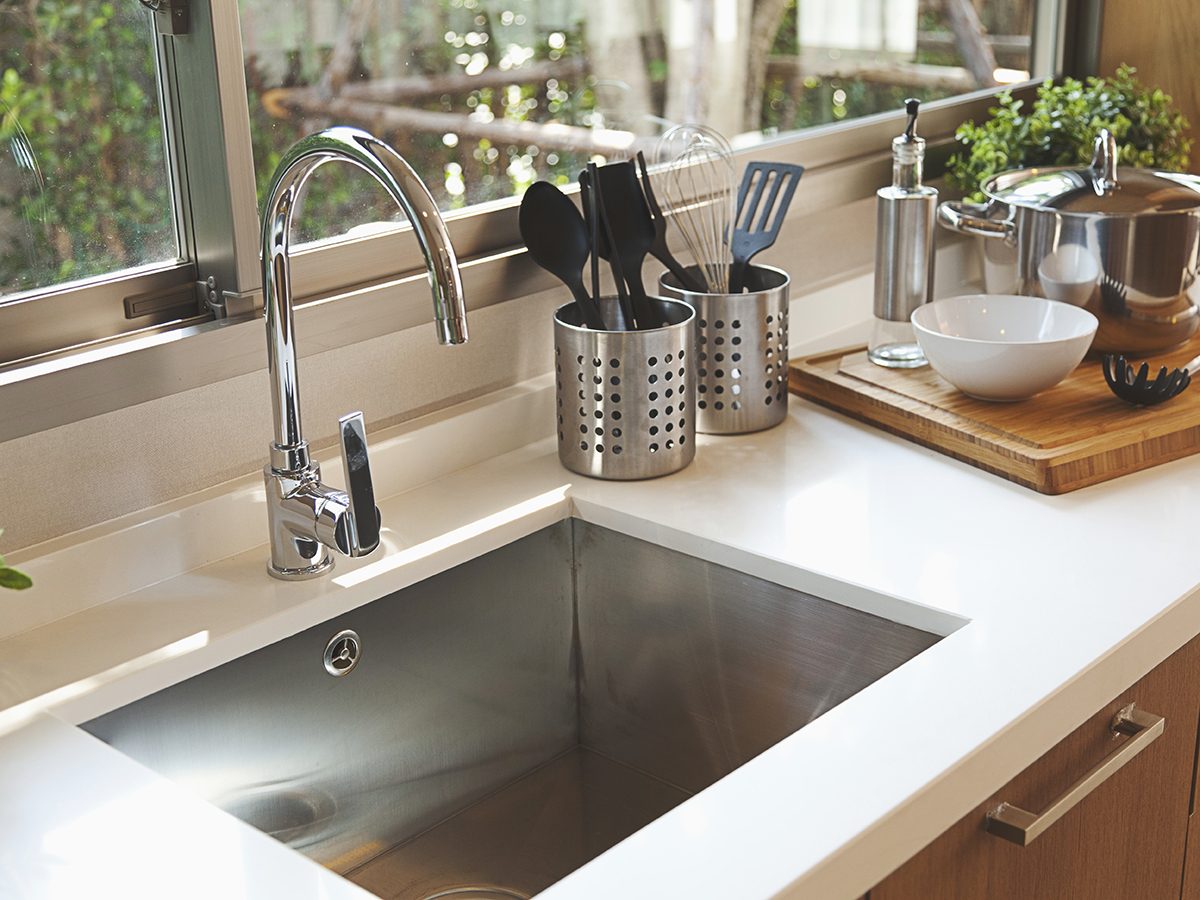
The kitchen sink is one of the dirtiest spots in the house! That is because, unlike bathroom surfaces (which we clean with disinfectant cleaners), most of us wash kitchen surfaces with just soap and water. (Don’t miss these indispensable bathroom cleaning tips.)
Foods that contain acids and/or salt (citrus, vinegar, pickles, mustards, etc.) will stain and corrode stainless steel if they rest on the surface for too long, so don’t let these items linger on a stainless steel sink.
Check out 10 cleaning myths you need to stop believing (and what to do instead).
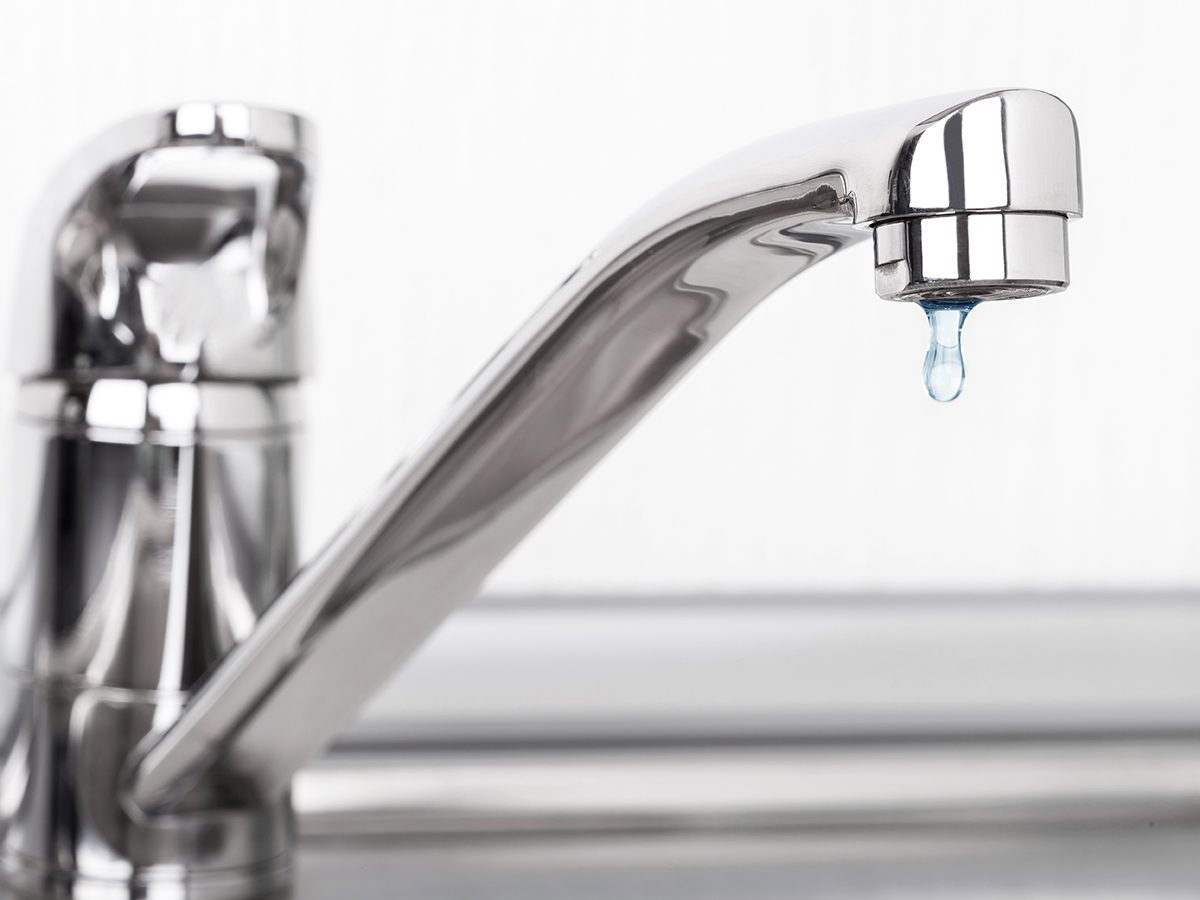
Chrome is a resilient plated metal.
Don’t forget to clean the base of your taps. A toothbrush is the perfect tool for getting into these areas.
Here are more toothbrush cleaning hacks you’ll wish you knew sooner.
4 / 14
Get to know more clever cleaning tips that actually work.
5 / 14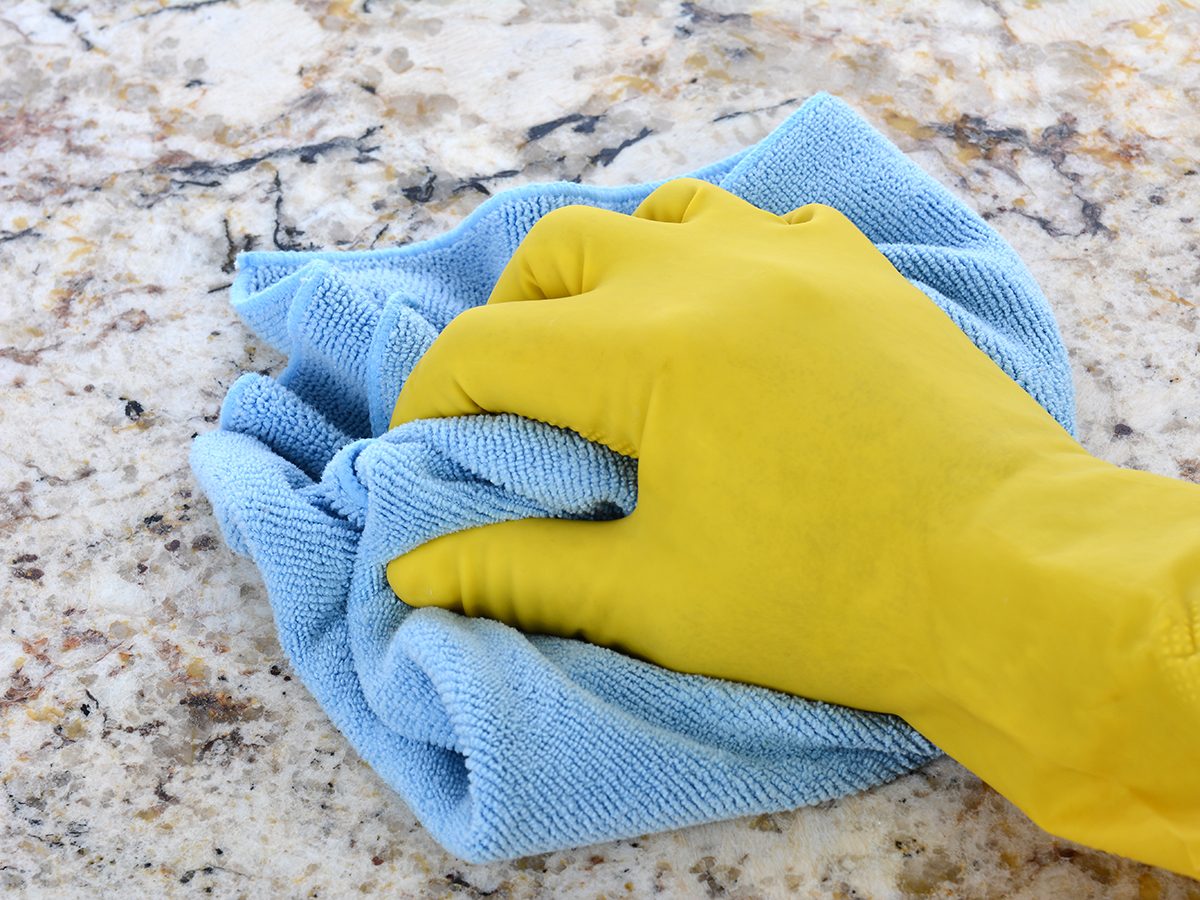
Kitchen countertops are high-traffic areas in terms of usage. In a busy kitchen, these surfaces are in constant contact with food, so they need to be cleaned often, and sanitized or disinfected regularly. Always clean the surface before sanitizing or disinfecting:
Remember, never use abrasive cleaners, as you risk scratching the countertop, and never use acid (vinegar, lemon juice, etc.) on stone surfaces.
Find out more things you should never clean with vinegar.
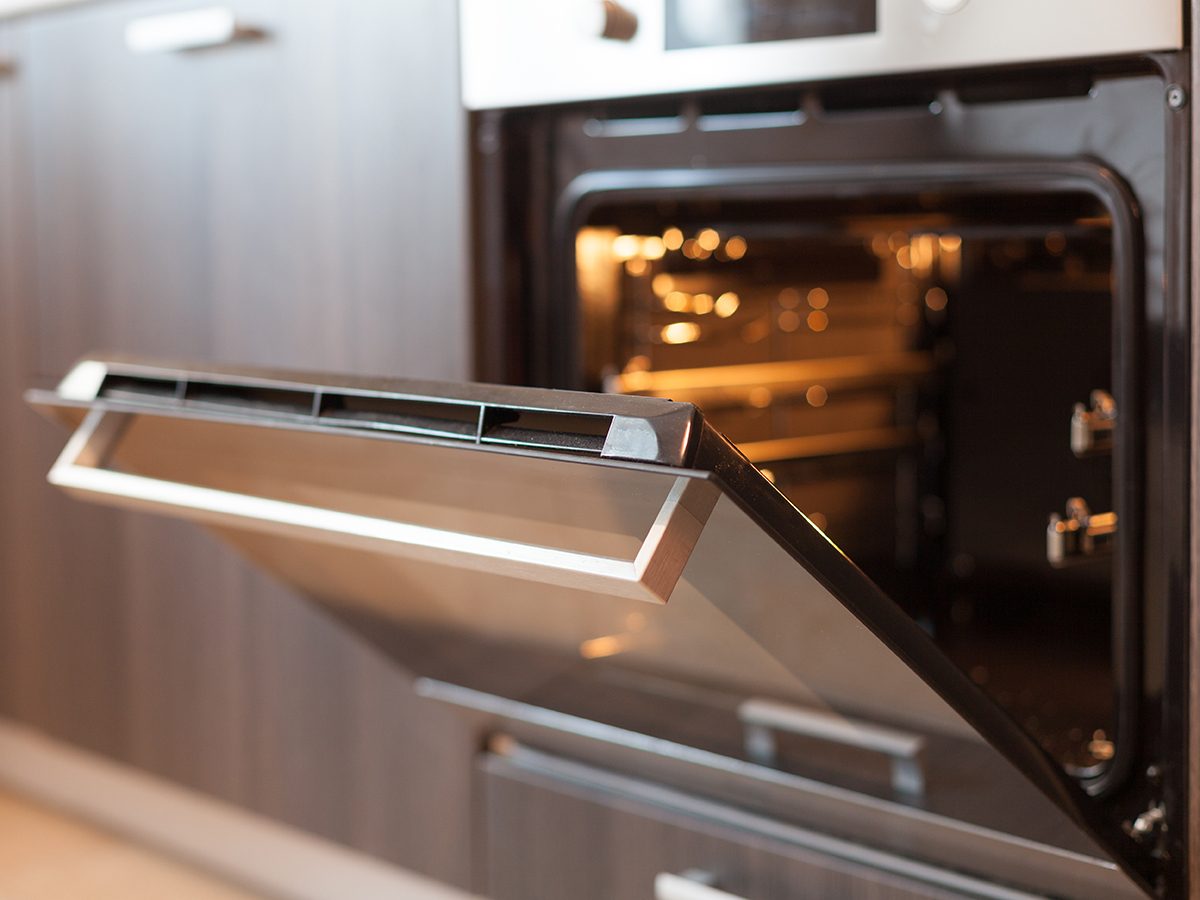
After each use, once the oven has cooled, wipe the surface with a solution of pH-neutral dish soap and water to remove grease and spills. This will help reduce the overall number of deep cleans required. Many ovens have a self-cleaning feature, which makes cleanup easy—check the manual if you are unsure.
If you have a manual-clean oven, you will need oven cleaner and proper safety gear: rubber gloves, safety goggles and even a mask. Always make sure to read and follow the instructions on the packaging before you start cleaning.
Find out more easy tips for cleaning your microwave, stove top and oven.
7 / 14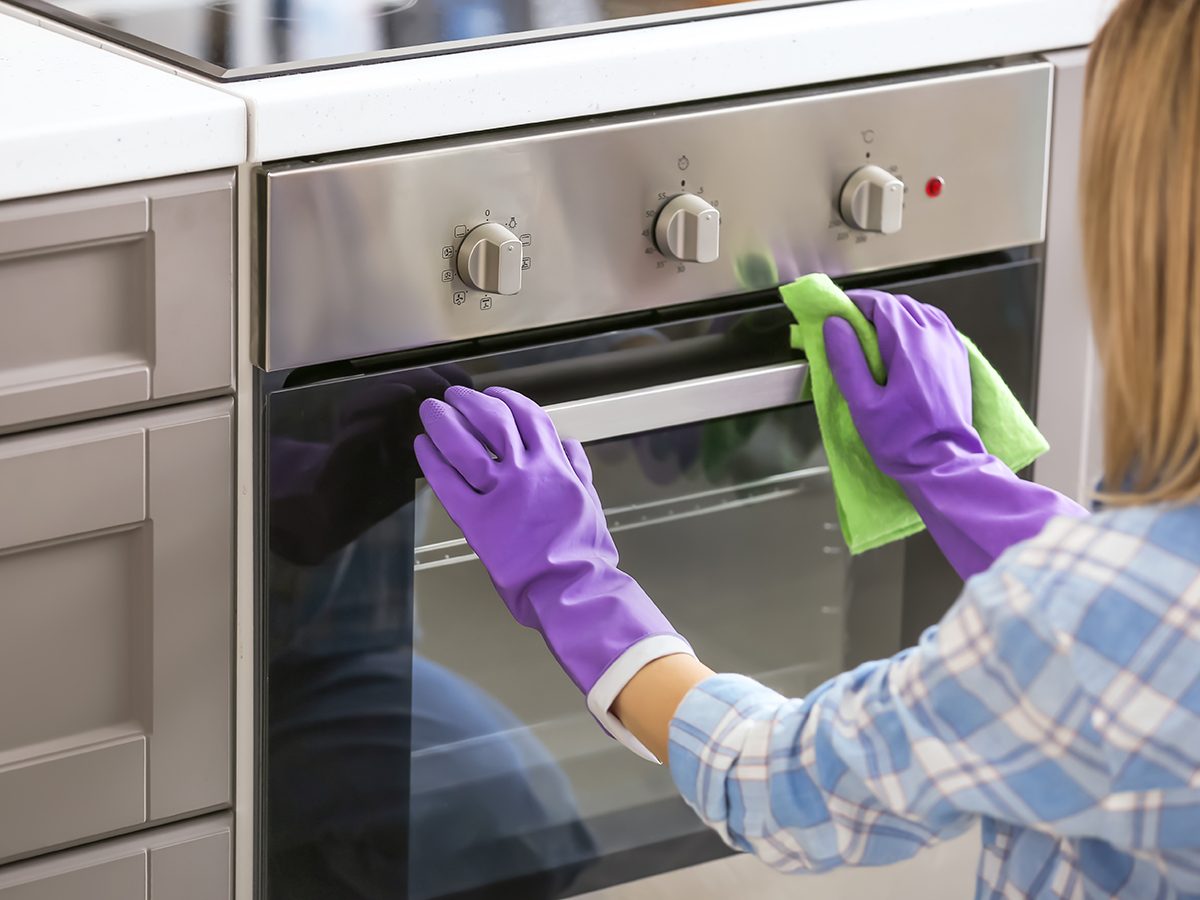
Always wait until surfaces are cool before cleaning. Clean spills and splatters as soon as possible, as they will become harder to remove over time. Clean the exterior surface of the oven with a solution of pH-neutral dish soap and warm water daily, or as required.
Check out more nearly forgotten house cleaning tips from the past.
8 / 14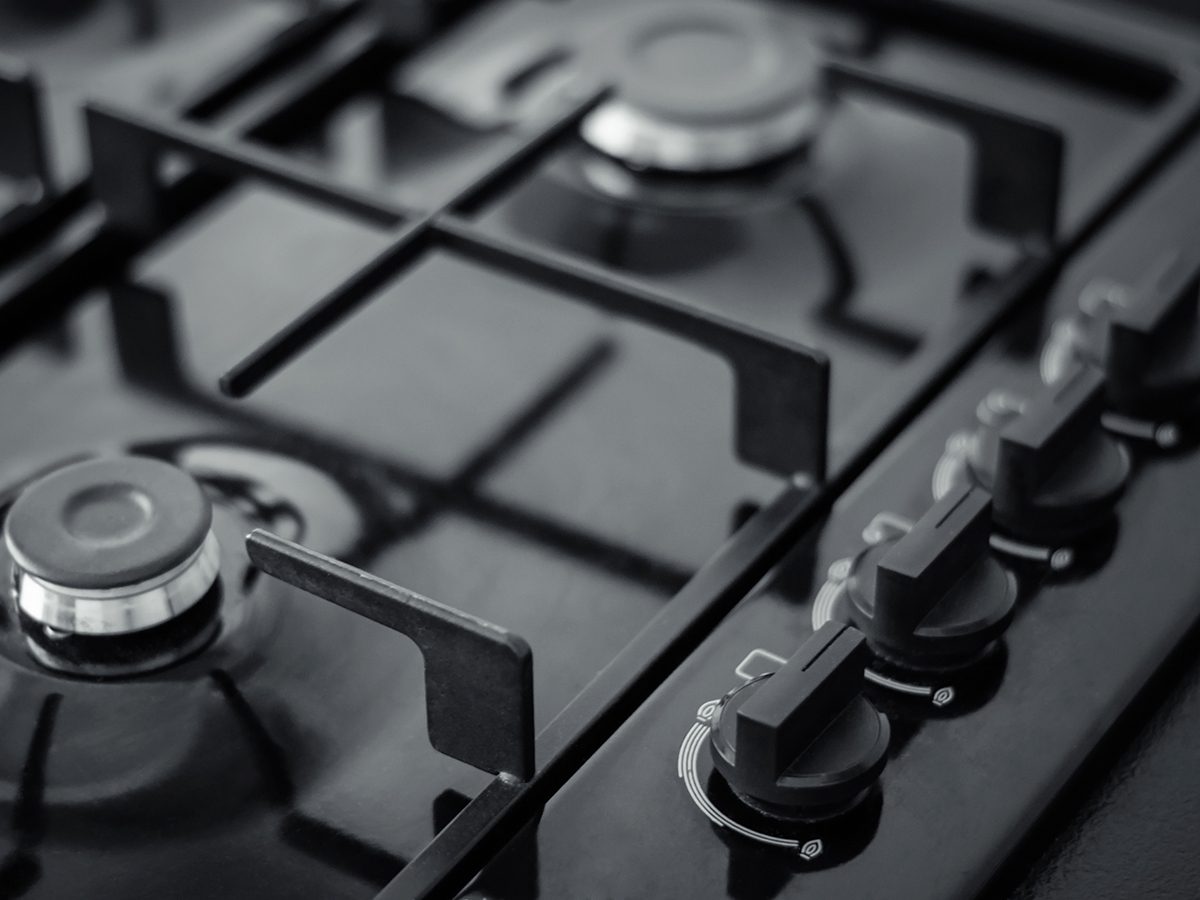
After each use, wipe the surface with a soft cloth or sponge dampened in hot soapy water to remove grease and spills.
Gas stovetops will vary from model to model. Always consult the owner’s manual for correct cleaning procedures. Occasionally, the tiny holes supplying gas to the burner can get clogged. To unclog them, turn off the gas valve and use a paperclip or a pin to remove debris.
After each use, wipe the surface with a soft cloth or sponge dampened in hot soapy water to remove grease and spills.
Use a plastic scraper to remove any baked-on residue. Then wash the smooth stovetop surface with a solution of pH-neutral dish soap and warm water—acidic cleaners will damage the ceramic.
Find out the surprising ways you’re shortening the life of your stove top.
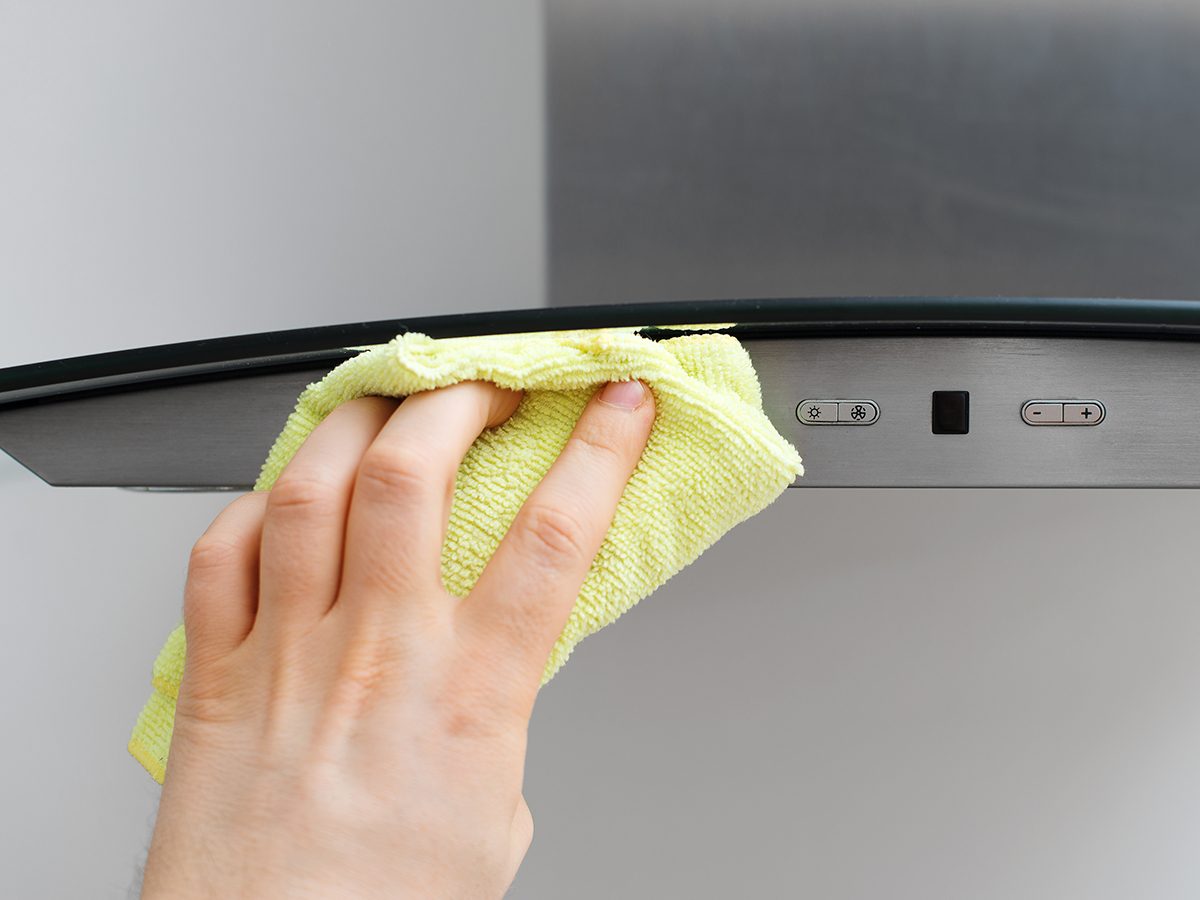
Start by clearing the surrounding area, including any pots, pans and other items that might be hung from or near the hood. To do a proper job that area must be clear.
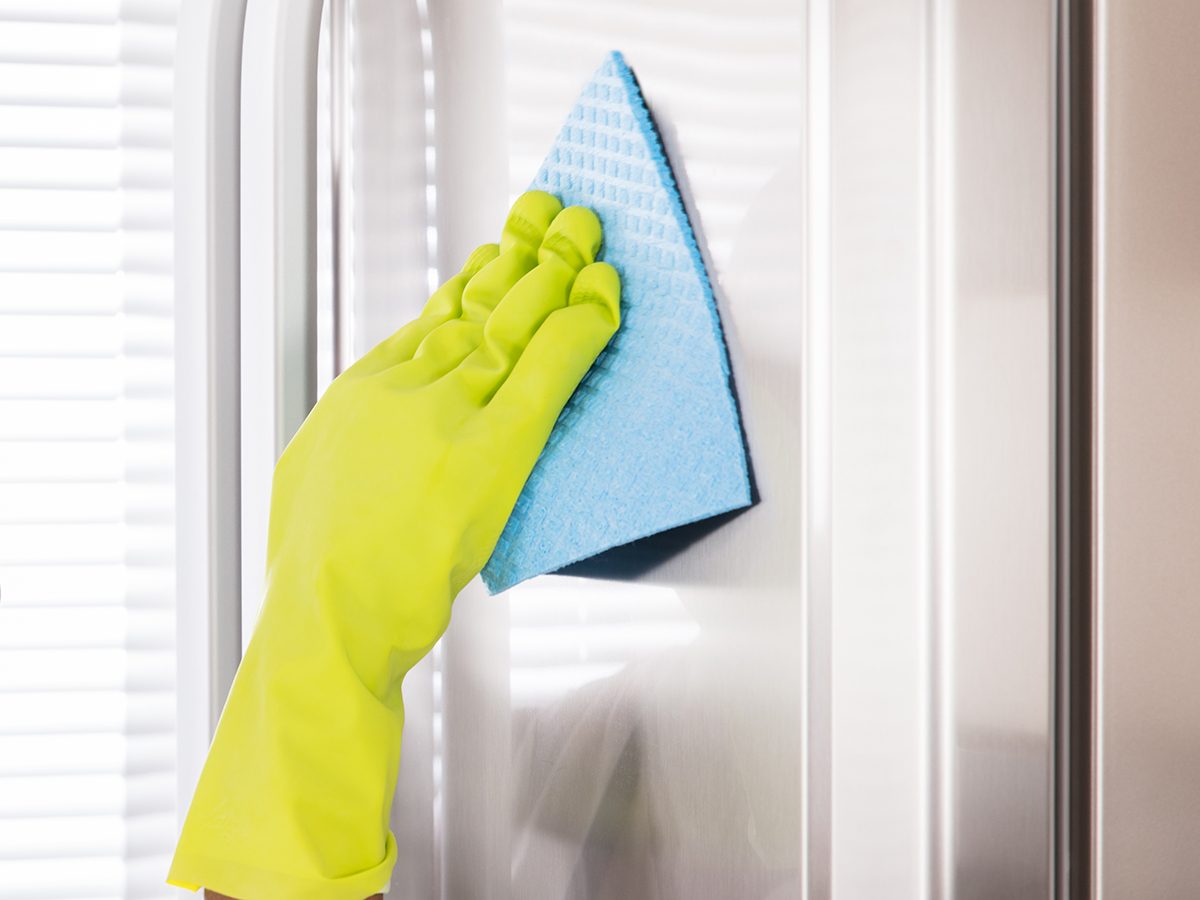
Clean the exterior surface and door handles of your refrigerator daily with a soft cloth dampened in a solution of pH-neutral dish soap and warm water. Rinse off soapy residue with the cloth dampened in fresh water, then dry thoroughly, always wiping in the direction of the grain/brushed finish.
Unplug the refrigerator and clean the condenser coils every 3–6 months, using the soft brush attachment of the vacuum to remove dust and dirt.
Could you be shortening the life of your refrigerator without realizing it?
11 / 14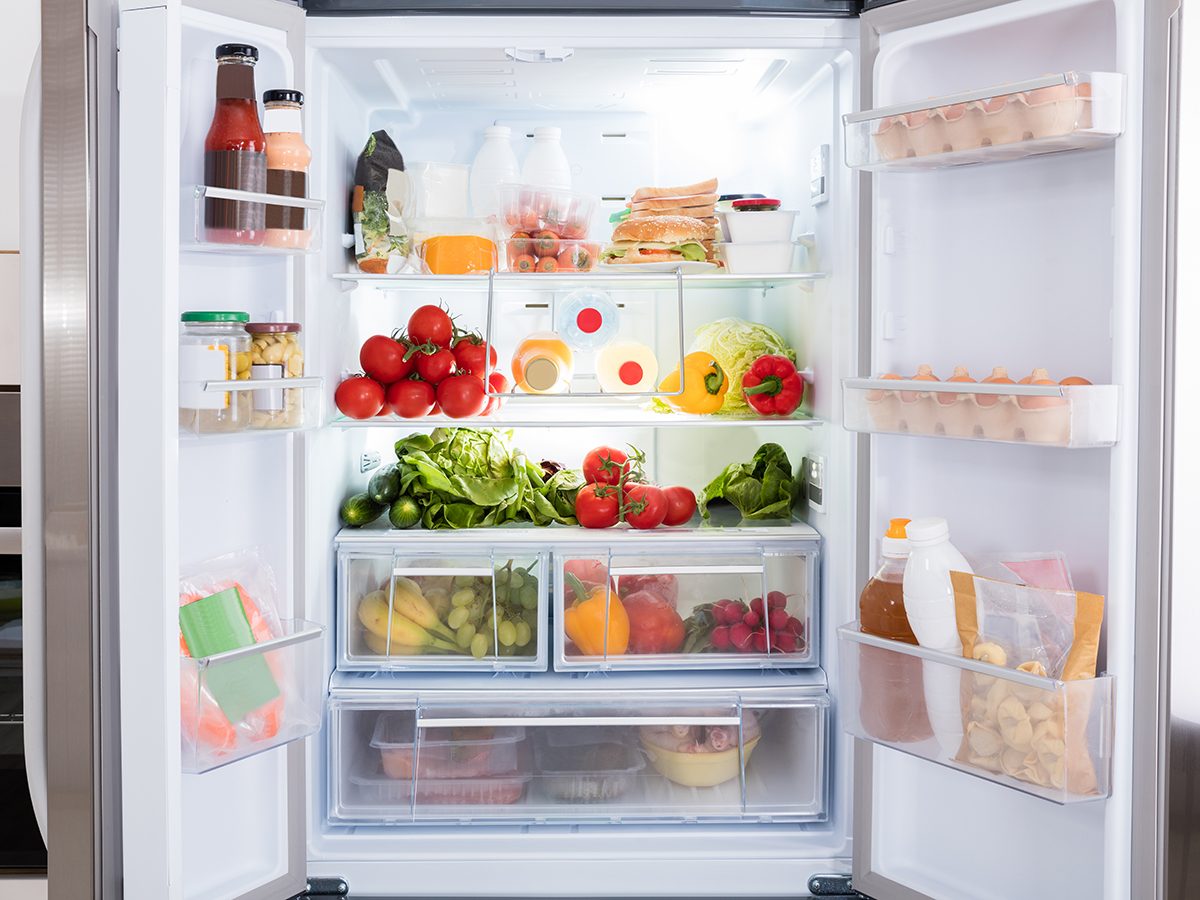
Keep fridge interiors clean by wiping up spills, drips and grime immediately, and do a deep clean approximately every 3 months. The best time to deep clean the fridge is when the shelves are close to bare, so you’ll have fewer items to remove.
Don’t miss HGTV star Bryan Baeumler’s best kitchen reno tips.
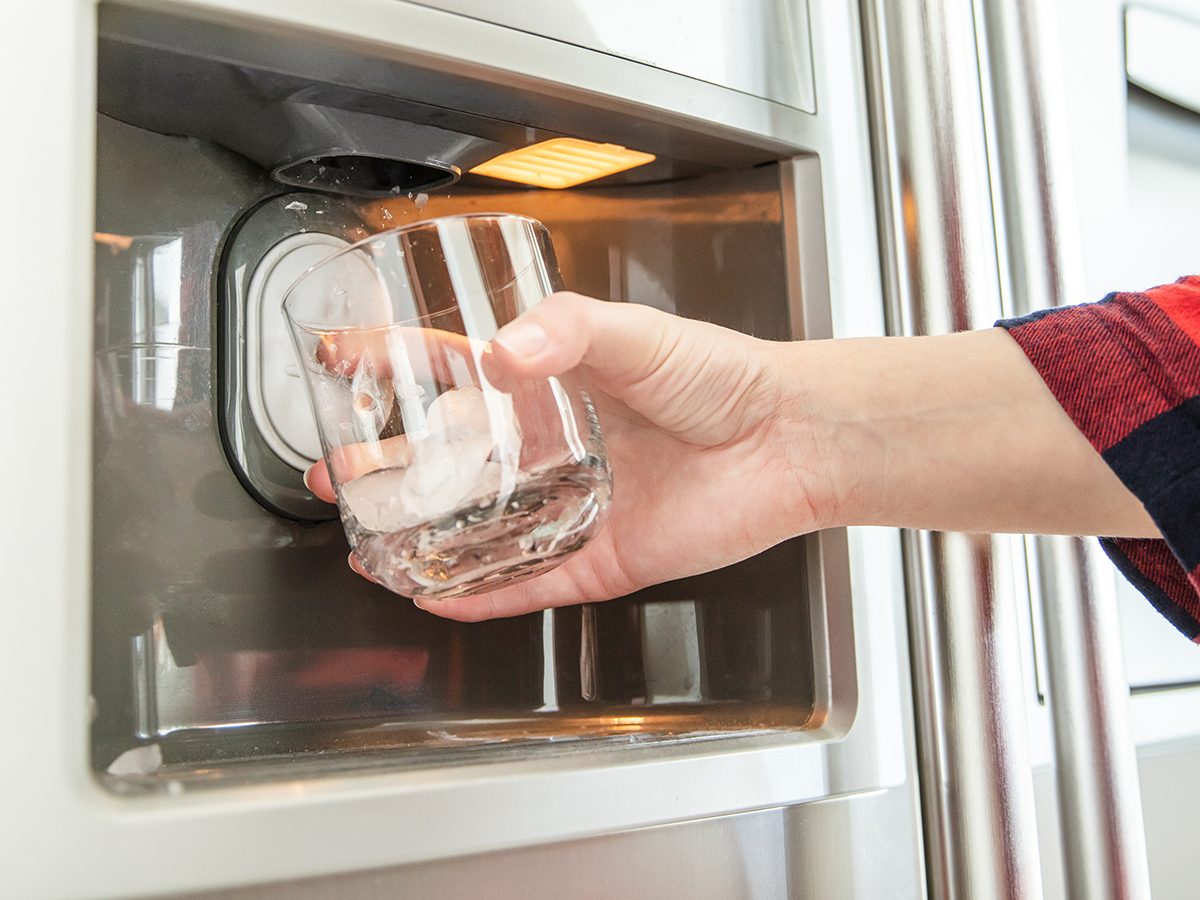
Clean the exterior surface with a soft cloth dampened in a solution of pH-neutral dish soap and warm water. Rinse off soapy residue with the cloth dampened in fresh water, then dry thoroughly.
Once a month, toss out all the ice and sanitize the ice storage bin with a solution of equal parts vinegar and water. (Find out 100+ more brilliant uses for vinegar all around the house.)
Twice a year, clean the ice-making system to avoid mineral build-up. Procedures will vary from model to model, so check your manual for the manufacturer’s prescribed cleaning procedure.
13 / 14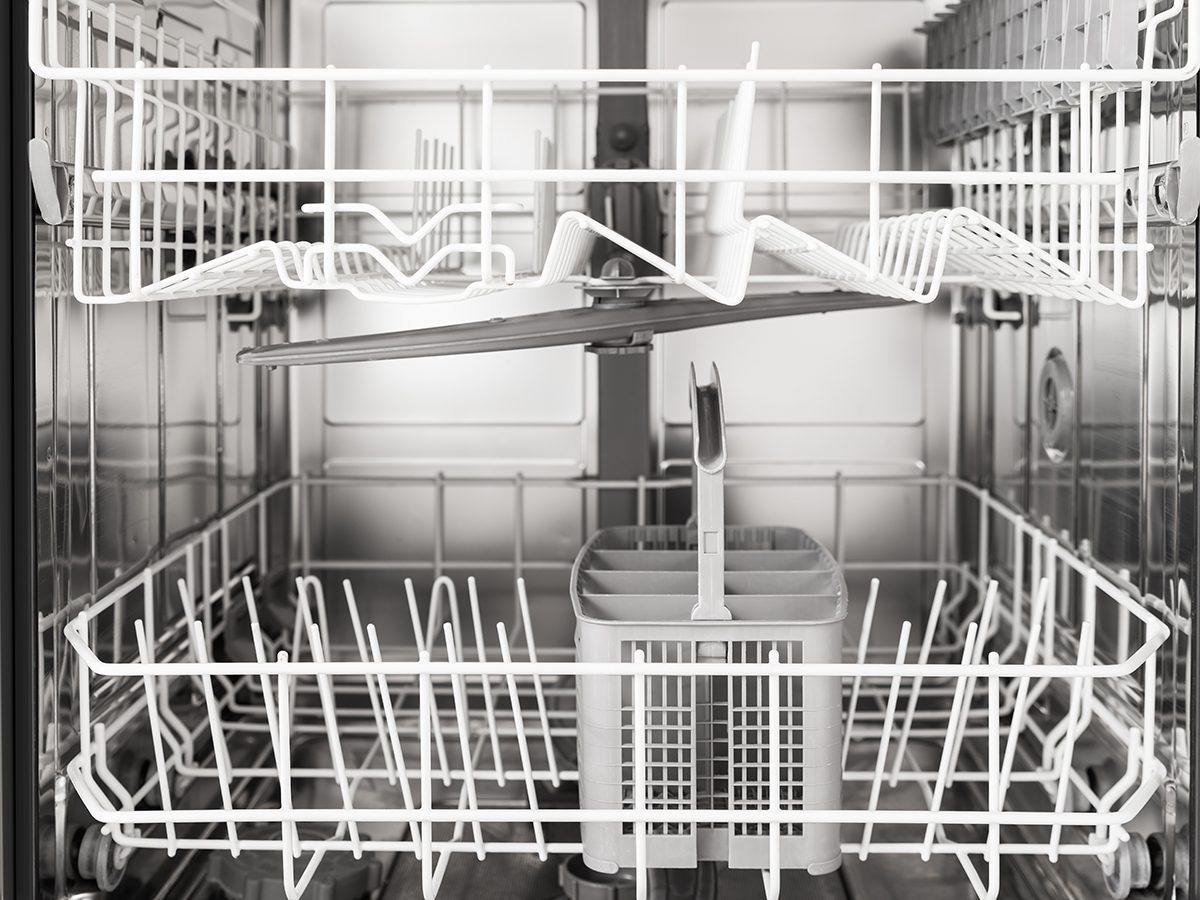
Find out the surprising ways you’re shortening the life of your dishwasher.
14 / 14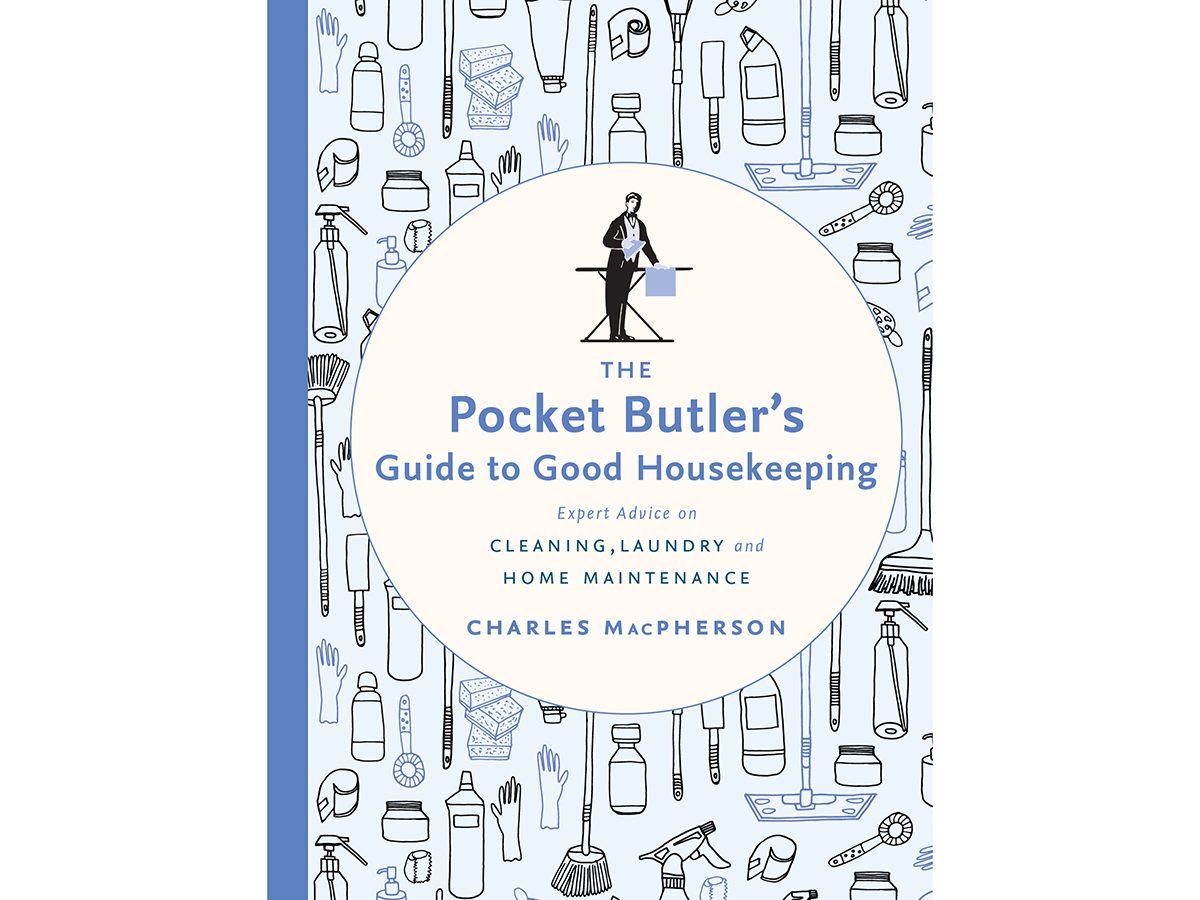
For more clever cleaning tricks that actually work, check out Charles MacPherson’s indispensable new book, The Pocket Butler’s Guide to Good Housekeeping (Appetite by Random House, 2020). With step-by-step instructions for cleaning, organizing and maintaining every room in your home, The Pocket Butler’s Guide to Good Housekeeping comprises information-packed chapters on cleaning, laundry, organization and more. Looking for recipes for natural and gentle cleaning products? Want to finally master those crisp hospital corners for making your bed? Look no further than this definitive cleaning caddy companion.
Excerpted from The Pocket Butler’s Guide to Good Housekeeping by Charles MacPherson, Copyright © 2020 Charles MacPherson. Published by Appetite by Random House®, a division of Penguin Random House Canada Limited. Reproduced by arrangement with the Publisher. All rights reserved.
Next, check out 45 clever spring cleaning tips you’ll wish you knew sooner.