

I love kindergarten rules… but sometimes I really want to break the one that says “Keep your hands, feet, and objects to yourself.”
“Oh, your baby has reflux?” My hand twitches a bit as I force it to stay by my side.
“You’re struggling with low milk supply?” I put my hand in my pocket . . . it can’t be trusted.
“Your baby is waking every two hours to nurse at six months old?” At this point the urge is so strong I use my other hand to slap myself.
What do I want to do? Check for a tongue / lip tie, of course! They can be such a source of SO. MUCH. MISERY. for nursing mamas and their sweet babes, including me.
Unfortunately, the symptoms are often misdiagnosed as other conditions like colic, reflux, and failure to thrive because many pediatricians and lactation do not know how to properly identify them. Since writing about this subject three years ago I cannot count the number of messages I have received that said, “My pedi said there was nothing wrong so we suffered for months, then we got a second opinion and discovered a severe tie!”
While I was in New York getting Levi’s ties revised last month, Dr. Kotlow informed me that he gets at least one family per week who heard about him here. (If you’re not familiar with him, Dr. Kotlow is considered the foremost expert on tongue/lip ties in the United States.)
Where are all these people hearing about my story? From YOU. Thank you for sharing my posts and helping get the word out – you have changed more lives than you know!
In this post I’m going to share with you some new tips Dr. K showed me for identifying tongue and lip ties at home, plus I’ll share the #1 critical mistake they make when assessing a tie.
Bottom line: If you’re a mama and you suspect a problem there probably is one. Tongue ties are not just about structure, they’re about function, and there is no one more qualified than you to determine if a baby’s latch feels “off.” Of course, these statements have not been evaluated by the FDA and are not intended to diagnose, treat, or cure any disease. I’m simply saying that a mama’s sense should be trusted, so if your gut says something is off and a home exam gives you reason to believe a tie might be an issue, find an informed care provider that will take your concerns seriously.
Now let’s get started!
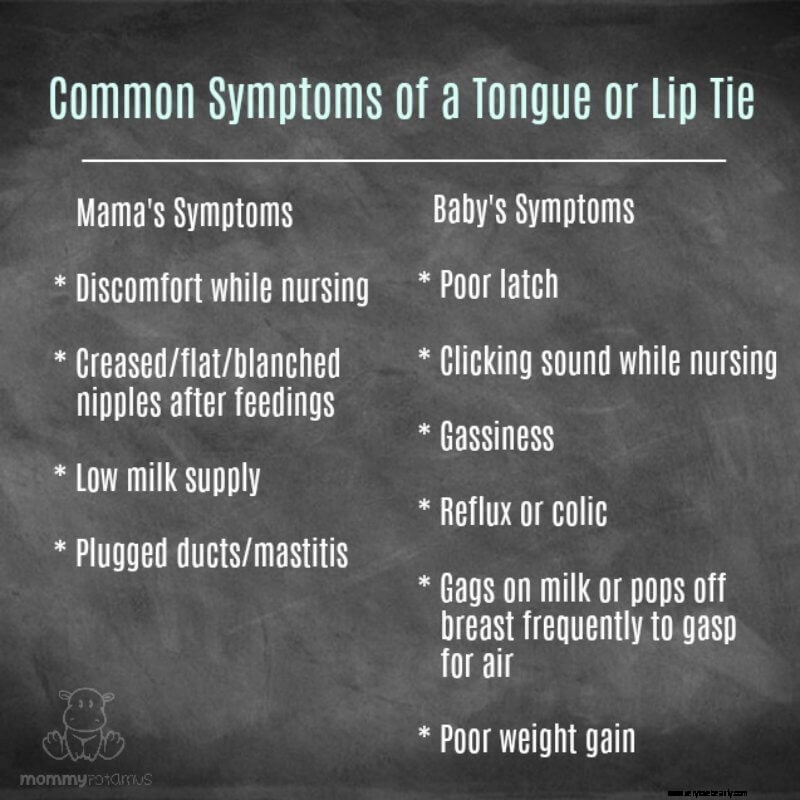
“The most important diagnostic tool is not looking at the lip, or looking at the tongue. Although it’s important to clinically evaluate them… it’s mother’s symptoms,” Dr. Kotlow told me.
Why? Because a mother’s breast can come in many different sizes and shapes, as can a baby’s mouth. The crucial factor is how the two function together. Here are some things to look for when determining whether there is a concern:
If some of these issues are present, move on to step 2.
What is the #1 mistake pediatricians and lactation consultants make when diagnosing tongue ties? According to Dr. Kotlow, it’s how they position baby for the exam.
“Correct examination of infants requires the infant be placed on the examiners lap with the infant’s head facing the same direction as the person evaluating the infant and the infant’s feet facing away from them. Just looking at the frenum in the mother’s lap will most likely lead to an incorrect or missed diagnosis.” (Source: Tongue-Tie Fact Sheet provided by Dr. Kotlow)
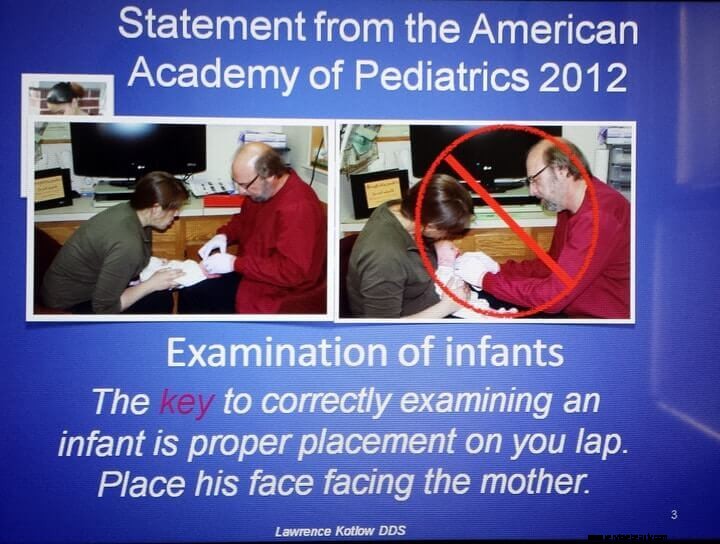
Now that you know how to position baby, here’s how to check for a tie:
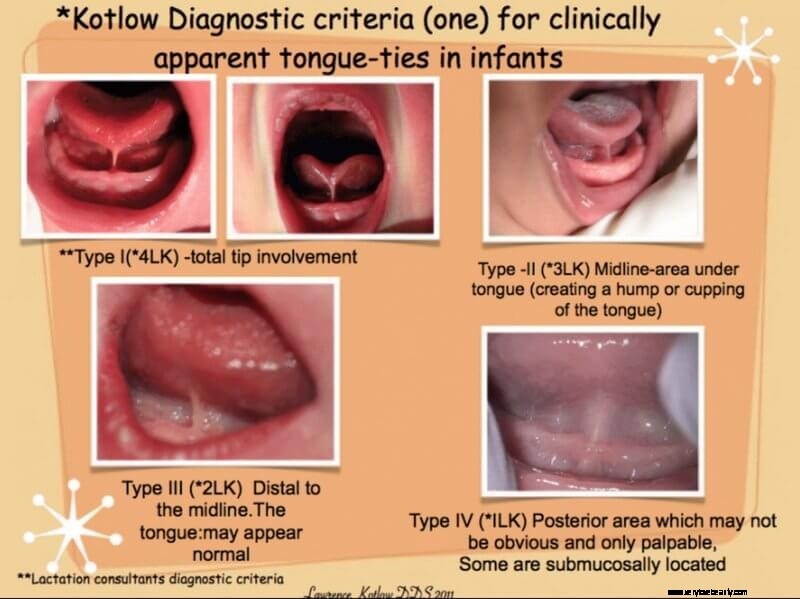 Here is a step-by-step exam guide from lactation consultant Catherine Genna.
Though anterior ties (at the front of the mouth) are pretty straightforward, posterior ties may be a bit tricky to identify. Here’s a video in which Dr. Kotlow demonstrates how to get a sneaky posterior tie to reveal itself:
See that bulbous section in this baby’s lip? ↓

It’s called a lip callus, and it forms when babies can’t flange their lip out properly when nursing. Here’s what a latch should look like:
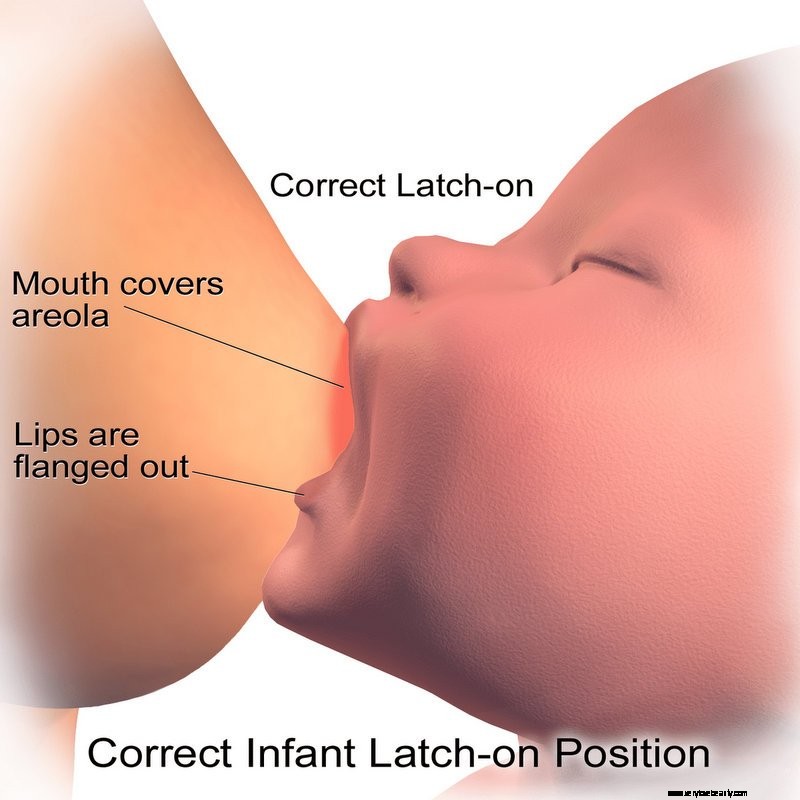
When the lip is not able to flange or “flip out” properly – as is the case with a lip tie – a friction-induced callus can form. Is baby free from a lip tie if you don’t discover a callus? Not necessarily, but if you find one chances are pretty good a tie is present.
Now let’s look for the source of many nursing problems – including the lip callus – a maxillary tie (aka lip tie). Once you lift the lip, look for a band of tissue that connects the lip to the gum area. If the frenulum (aka the band of tissue) is tight, a lip tie is likely.
Some of the complications associated with a lip tie are:
Tooth decay occurs because baby may not be able to clear their mouth properly, causing pockets of milk to collect near the upper lip. As the top four teeth come in the milk may rest on them and cause decay.
Reach in to your mouth with your thumb and feel the roof of your mouth. Toward the back you’ll notice a spot where the hard palate meets the soft palate. Now, using your index finger find this same spot in your baby’s mouth. If you feel compression along the entire length of your finger – like a gentle massage – this is good function.
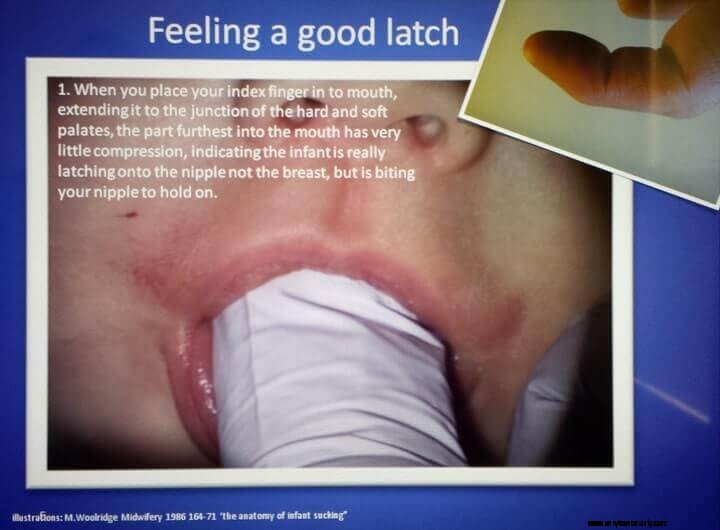
If most of the compression is at the front of the mouth, this is an indication that your baby is actually grabbing the nipple to hold on instead of compressing the whole breast. This kind of latch often results in discomfort and poor milk stimulation.
In this post I share how to connect with Dr. Kotlow, who is the leading expert on tongue/lip ties in the United States. He doesn’t diagnose via email, but if you send him a photo of your child’s mouth along with any symptoms you’ve noticed, he’ll let you know for FREE if the photo/symptoms are suggestive of a tie. I also discuss different treatment options and link to providers around the country.
Also, here’s an article on post-treatment care.
I recently learned that I have the MTHFR genetic mutation, which researcher Dr. Ben Lynch believes may be one of the causes of tongue and lip ties. (source) According to some estimates, about 50% of the U.S. population has at least one form of the mutation. If you’d like to learn more on this subject, I’ve put together a beginner’s guide to MTHFR here, and a FAQ page here.
Please share them in the comments!
Tongue Tie Fact Sheet by Dr. Lawrence Kotlow
Congenital Tongue-Tie & Its Impact On Breastfeeding
Photo credits: Diathesis (on Flickr), Blausen.com staff. “Blausen gallery 2014“. Wikiversity Journal of Medicine. DOI:10.15347/wjm/2014.010. ISSN 20018762.