
Okay, folks, I have only admitted to wetting my pants one time publicly, and I say without shame that it was a glorious experience. However, I’m not exactly hoping to make a habit of it, you know?
And yet, after becoming a mother I suddenly developed a fear of trampolines, Super Bowl commercials, and sneezing. If Ryan Gosling memes had been around back then I’d have been a goner – seriously, have you seen these?
Anyway, back to the subject-at-hand, which I’m sure is #1 on your list of conversation topics for dinner soirees, backyard BBQ’s, and baby showers – INCONTINENCE! After Katie was born I sought the help of a specialist to help me rehabilitate my pelvic floor. Like 99.99% of the experts out there, she recommended kegels.
Chances are you have tried them, too – but what if the kegel instructions you find online, and in most medical offices, childbirth classes and magazines can actually MAKE MATTERS WORSE? Did you almost fall out of your chair just now? Stay put and I’ll explain.
Most of us think of childbirth as the cause of incontinence, but according to some experts it really just accelerates a process that most people in our culture experience. The primary cause goes back to modern factors, so over time women who have not given birth – and even men – find that they cannot “hold it” anymore.
What modern factors, you ask? Apparently, the main culprits are the way we use the toilet, the shoes we wear, the way we sit and how we exercise. Here’s why:
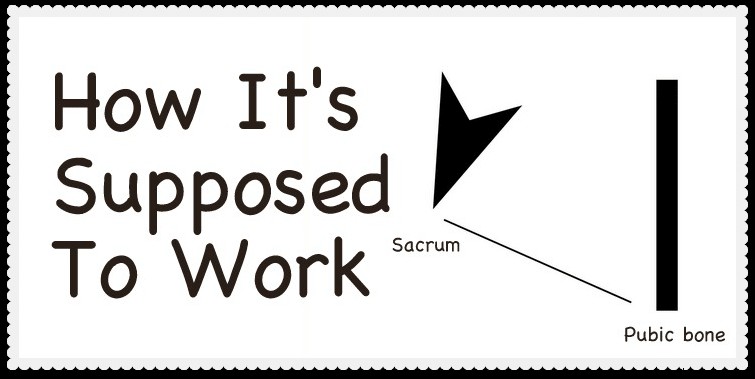
The pelvic floor is made up of the muscles, ligaments and tissue which attach to our pubic bone and sacrum. Basically, it’s what holds up our organs so they don’t fall out. According to Katy Bowman of Aligned and Well, we want the pelvic floor to be like a trampoline – taut yet supple. To get this taut characteristic, it’s important that the pelvic floor be kept firmly in place on both sides.
Unfortunately, these days many of us have weak gluteal muscles due to lack of use. Instead of squatting to pee, we sit on toilets that flush. We sit on big, overstuffed chairs that cause us to tuck our sacrum under rather than push it out. We don’t do as much walking as we used to. Collectively, all of these things contribute to weak gluteal muscles.
When the bum is weak it doesn’t hold up it’s end of the trampoline well, and we end up with something that looks like this:
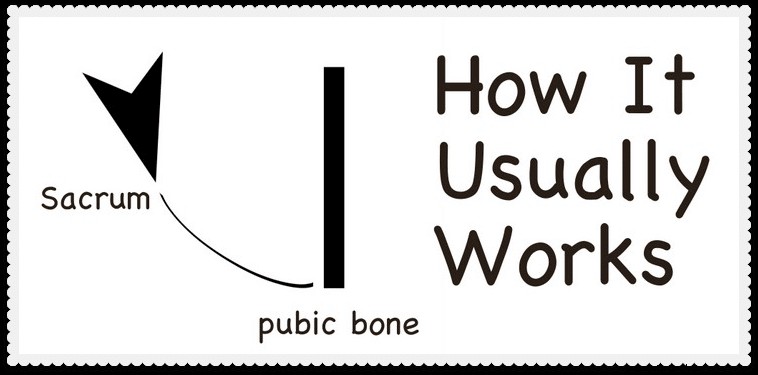
The trampoline has turned into a hammock! In this state, the pelvic floor cannot properly support your organs and maintain the functions it was designed to.
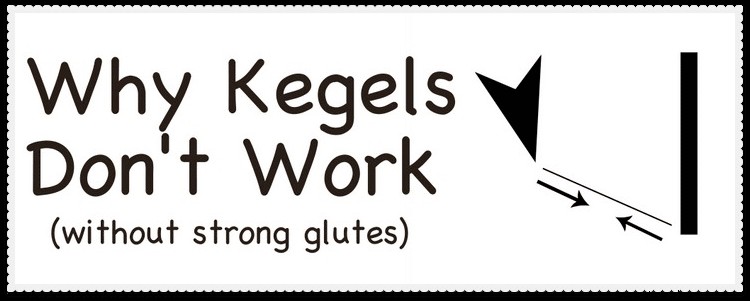
According to biomechanist Katy Bowman, Kegel exercises can tighten the area temporarily, but without strong glutes they’ll actually just pull the sacrum closer to the pubic bone and cause more dysfunction over time.
There it is, y’all! Squatting to pee in the shower is GOOD for you because it allows you to engage your pelvic floor in the way it is optimally designed for. Of course, you CAN just do squats, but for best results you’ll need to make sure that you practice relaxing your pelvic floor muscles, stopping just shy of urinating. Or you can just pee in the shower.

So here’s the deal: It seems that kegels – if done by themselves – can make matters worse by making the muscle shorter/tighter and pulling the sacrum in. If you have strong glutes this is probably not an issue, but there are other things to keep in mind. Most kegel advice is bogus, says Alyce Adams, RN – aka The Kegel Queen. According to Alyce, here are some top kegel “don’ts.”
Don’t do hundreds per day
“Here’s why we don’t do 200 kegels a day. Kegels work by increasing your control of the pelvic floor muscles, and by building mass and tone in the pelvic floor. How would you build mass and tone in any other muscle in your body? As anyone who does weight training knows, you’d do a small number of strong, sustained reps. Not 200 “quick flicks,” or 200 anything! Your pelvic floor is no different. We have decades of research to tell us what types of kegel programs work. Why aren’t more people using it?” The Kegel Queen, R.N.
Don’t do little squeezes
“Just like any other strength training, Kegels should consist of several strong and sustained reps.” says The Kegel Queen. You need a strong squeeze and a full release. According to Katy Bowman, not fully releasing is like doing arm curls and then leaving your arm curled up. You’ve contracted your muscle but you can’t properly use it. (source)
Don’t do them while driving
It’s hard to focus on doing a STRONG squeeze and full release while handing snacks to the kids in the back seat, flipping on your turn signal and trying to remember if you’re supposed to take the first or second left.
“1. To do a strong and sustained contraction requires focus. Could you dead lift your max weight while driving? Impossible, of course, but even if you could do this move in a car, you wouldn’t because it requires too much concentration.
2. Having a routine is what makes any exercise program succeed. Saying you can do Kegels anytime doesn’t mean you will.
3. A proper Kegel includes fully relaxing; letting the muscles go completely soft, and letting your mind go with it. Not something you want to do behind the wheel.” – The Kegel Queen
Don’t move the wrong muscles
“Kegel Queen says that the pelvic floor and only the pelvic floor–not your butt, your abs, your hip flexors–should contract during a Kegel.” (source)
Don’t make the wrong movement
“A Kegel, says the Queen, is a contraction that lifts the pelvic floor up and forward” (source)
Don’t make kegels complicated
“Devices that require you to take off your pants will eventually collect dust in the back of your underwear drawer, says The Queen.” (source)
Theoretically, kegels wouldn’t be necessary if we’d grown up squatting more often and not tucking our sacrum’s while we sit. However, in some cases they may be appropriate. If I were going to go this route, I’d consult an expert or check out The Kegel’s Queen’s materials to make sure I’m engaging the right muscles. Personally, though, I’m going with squats!
Ditch the high heels – here’s why
Don’t tuck your sacrum under when you sit – try this instead!
Squat – This post is specifically written for mamas preparing for childbirth, but it applies to everyone
If you want to jump on trampolines, snort with laughter over Ryan Gosling memes and, um, sneeze, make sure that your glutes are strong enough to hold up their end of the pelvic floor. For more info check out “Down There For Women” by Katy Bowman.
Will you change your approach to kegels after reading this? Why or why not?