
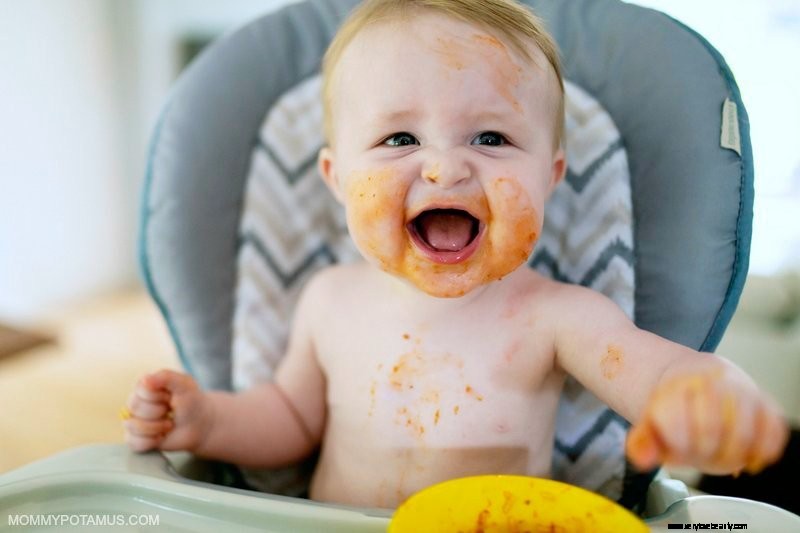
There are two big questions when it comes to starting solid foods: when to start and what are the best first foods. You probably found yourself here looking to answer the second question (welcome!), but if you’re still waffling over the first, check out this post for more on timing.
Spoiler alert on the first article: There’s no magic date or age that works for everyone to introduce solids, as every baby will exhibit the signs of readiness at different ages.
However, there is a lot of wisdom (and common sense) in how traditional cultures have approached food introduction that we can learn from when determining the best first foods to offer. Let’s take a look at some of this background and how it translates to our modern day kitchen tables.
Before we do that, though, I want to mention that although I’ve co-authored this article with nutritionist Hillary Bennetts, it is purely for educational purposes and not medical advice. Please talk with your healthcare provider about what approach is best for your situation. Now that we’ve got that out of the way, let’s dive in.
In addition to the two big questions about feeding babies – WHEN and WHAT – there’s also a mini-question: HOW?
As in, how should food be be prepared for baby? Purees? Soft foods that they can grasp and put in their own mouths? In mama circles around the world, this is known as the debate between purees and baby led weaning (BLW). Let’s take a look at what exactly each of these approaches involve.
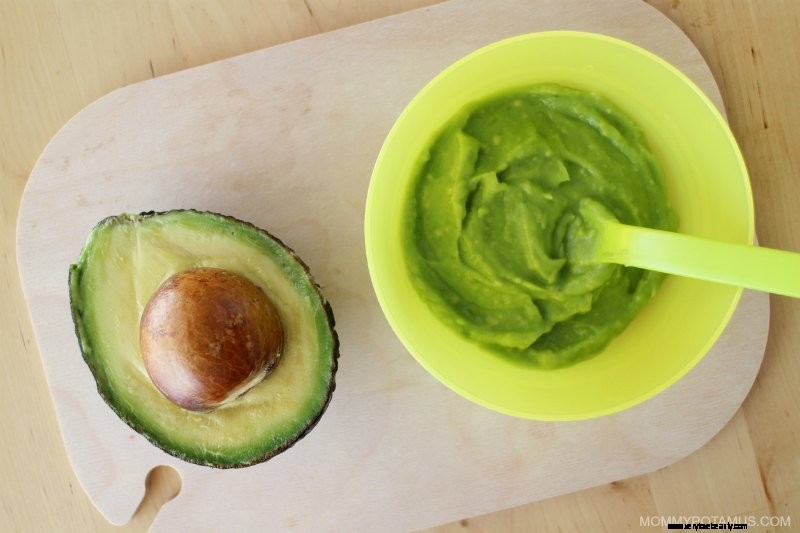
Offering purees typically involves pureeing a single ingredient or a combination of a few ingredients to your baby. Purees can easily be made at home by cooking fruits, veggies, and even meats, and then blitzing them in a blender to make them easy for baby to swallow.
There are also loads of purees on the market in jars and pouches. Whether homemade or store-bought, this approach generally involves a parent or caregiver feeding a baby with a spoon and requires watching for cues from baby indicating that they want more or are no longer hungry.
On the opposite end of the spectrum is baby-led weaning (BLW). This approach involves offering baby a variety of whole prepared foods, similar to what the rest of the family is eating. Rather than offering a spoonful of puree, baby led weaning allows a baby to practice self-feeding.
The benefit is that the baby can choose what and how much of what is offered to them, all while exploring and experiencing different textures with their hands and mouth. The parent or caregiver is still in control of what is offered, but baby is in charge of selecting from their choices, as well as the amount of what they eat and the pace of the meal.
Well, fair warning, it isn’t appetizing, but it does make a lot of sense. Many traditional cultures use a bit of a hybrid approach, a technique called pre-mastication. It involves a parent pre-chewing food to share with baby. Gross as it may sound, this technique boasts the benefits of both methods of food introduction.
Baby is offered the same food as the rest of the family, but in a form that is slightly easier for the baby to chew and digest. I’m not mentioning this because I think you need to chew your baby’s food (I personally didn’t!), however it shows how both the pureed and self-feeding approaches are traditional in their own way.
Because yes, while it’s true that our great-grandmothers didn’t have blenders, blenders do a great job of simulating – with one exception – what traditional cultures have done for a long time. The exception? Pre-mastication may have some unique benefits for the immune system. Then again, so might “cleaning” a dropped pacifier (or other object) by sticking it on your mouth instead of sterilizing it, so I don’t think it’s absolutely necessary.
At the same time, if you’ve ever tried to feed a baby with a spoon, you know they’ll often try to grab the spoon because they want to feed themselves. In that sense baby led weaning makes a lot of sense. Self-feeding help develop babies develop their pincer grasp and overall coordination, and if you offer a variety at each meal it may have some other benefits, too.
For example, one study found that babies who were exposed to more varied and textured foods (via a modified Baby Led Weaning approach) starting at six months went on to consume a wider variety of fruits and vegetables by two years of age.
Although it changed a little with each baby, my approach was a mix of both Baby Led weaning and purees. When we were at home I served my babies whatever we were eating that was safe for them, plus some veggie mashes to supplement what they couldn’t eat. When we were out and about I usually packed homemade snacks, but also relied on pre-made organic puree pouches at times.
Back then the only pre-made available options were mostly fruit, which didn’t keep my babies full or happy for long. Recently, though, Serenity Kids started making low sugar baby food that uses only ethically sourced meats, organic savory veggies, and healthy fats.
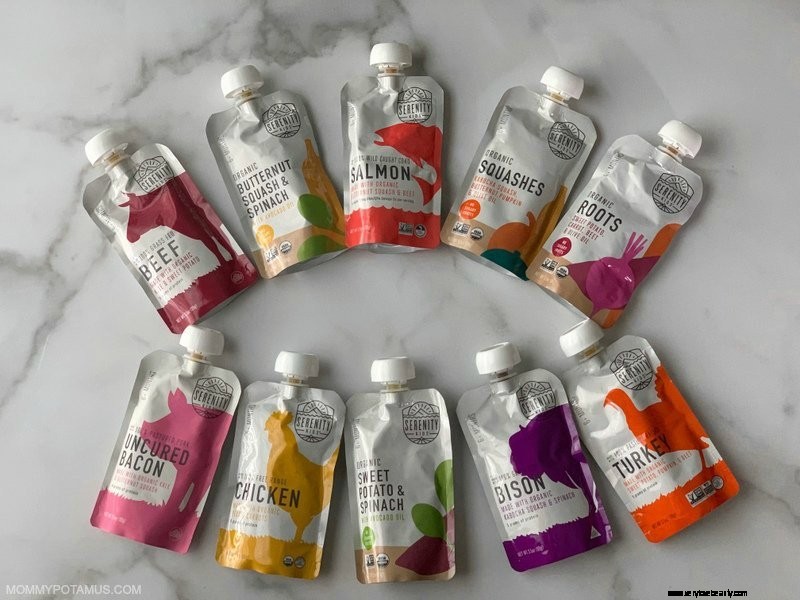
I wish they’d been around when my kids were little because – as you’ll read in the next section on best first foods – these are all great options for nourishing a growing baby.
If you want to try them out, you can go to Serenity Kids and save 10% off your first order with coupon code MOMMYPOTAMUS.
So, what’s THE BEST baby food to start with? Well, of course there isn’t just one! Babies have lots of nutritional needs, so it’s important to offer a variety of foods.
That said, it’s best to introduce one new food at a time and wait 3-5 days before introducing the next one. This allows you to observe any adverse responses or reactions (like tummy troubles, rashes, etc.) to a new food, and be able to isolate the cause. If you offer too many new foods at once, you won’t know which one was the troublemaker in the event of a reaction.
Babies have little bellies, so aim to focus on foods that give your little one the biggest bang for their nutritional buck. Each of the foods listed below have important macro- and micronutrients that your little one needs for growth and development, and each of these foods can be offered in whatever way you find most comfortable or appealing.
Decide what is best for you and then try these foods in whatever form you see fit, as a puree on a spoon to be served by you or by baby, or in a safe, cooked, whole form for baby to practice self-feeding.
There’s no debate here, fat is absolutely essential for a baby’s growth and development. The American Academy of Pediatrics states that “no restriction of fat and cholesterol is recommended for infants less than 2 years.” (2) And with fat comprising 45-55% of the calories in human breast milk, babies are quite accustomed to high fat diets. (3)
Why is fat so essential? Well, babies are growing at such a rapid pace, and fat is a key component in those processes. It’s used for brain development, hormone regulation, immune system development, and to absorb fat-soluble vitamins like A, D, E, and K. Not to mention, fat helps with satiety, and don’t we all want our little loves sleeping longer stretches with full bellies?!
So, what to try? Here are some ideas:
Animal proteins may not be the first thing that comes to mind when you think of the best first foods, but believe me, they should be! Meat, fish, and eggs have benefits well beyond protein for little ones, and are a traditional first food. (4)
They’re high in several nutrients that are essential for baby, and they come in forms that are easily digested and absorbed by their bellies and bodies. In addition, as long as they’re properly sourced, animal proteins are an excellent source of both monounsaturated and saturated fats.
Here are some ideas to try:
Fruits and vegetables are full of vitamins, minerals, and antioxidants that are good for your growing baby. Veggies should be cooked and soft, ideally using a healthy fat and/or bone broth. Remember, this will not only boost nutrition and flavor, it will also help with satiety.
So, what to try?
Rice cereal is often recommended by pediatricians as baby’s first food, but let’s look at this a little bit closer. First, what is rice cereal? Well, it’s essentially white rice that is pulverized into a powder that is fine enough to mix with water into a puree. But since refined white rice is basically stripped of its naturally occurring vitamins and minerals, rice cereal typically has synthetic vitamins added in to boost its nutrient profile.
As I’ve mentioned before, there are some potential issues with synthetic vitamins, so I prefer natural sources whenever possible.
But it’s not just the nutritional aspect that’s concerning. Rice cereal has also been found to contain heavy metals like arsenic. A 2016 study published in JAMA Pediatrics found that intake of infant cereal and other rice-containing foods, such as rice snacks, contribute to an infant’s arsenic exposure. They concluded that efforts should be made to reduce exposure during the critical phase of development of an infant’s life. (6)
The bottom line? Offer your little one the nutrients they need in their real forms. They’re better absorbed, easier to digest, and they taste better too (yes, rice cereal is about as flavorful as it sounds).
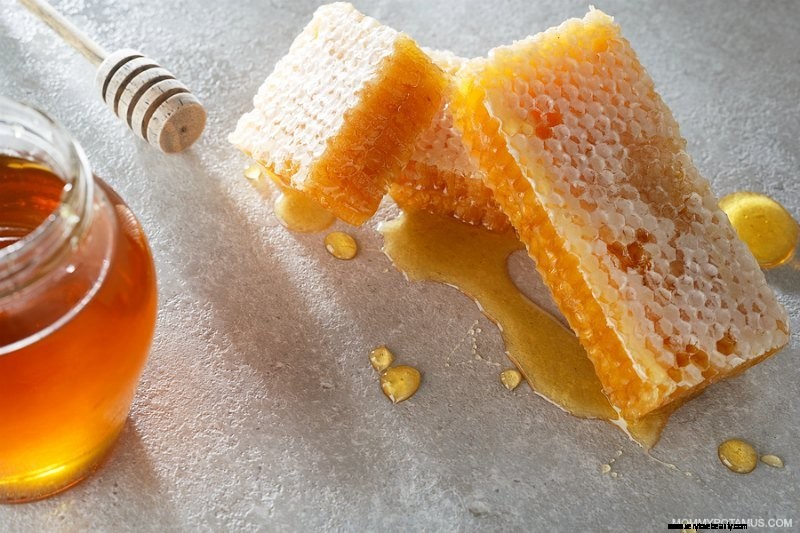
Of course, just as important as which foods to offer is which foods not to offer! First up? Honey! Yes, it is a great unrefined sweetener, but the American Academy of Pediatrics warns that it also comes with a risk of botulism for little ones under the age of one.
Why? Because honey contains Clostridium botulinum spores which can grow and release toxins in an infant’s intestines. While more mature digestive systems can handle these spores, infants cannot, so honey is important to avoid in baby’s first year. Be sure to read labels on any packaged food, as honey can hide in unexpected places, like breads, baked goods, marinades, and sauces.
Other foods that should be avoided at this age are due to their risk as a choking hazard. Little ones are just learning to chew, so certain types of foods should be skipped until they’ve got the process down a bit better.
Of course, this is not an exhaustive list, so if you have any question about whether a specific food is appropriate please talk to your healthcare provider.
A study often referred to as the Baby-Led Introduction to SolidS – or BLISS study for short – was designed to develop safe guidelines for baby led weaning. Here are their recommendations for parents:
“1. Test foods before they are offered to ensure they are soft enough to mash with the tongue on the roof of the mouth (or are large and fibrous enough that small pieces do not break off when sucked and chewed, eg, strips of meat) especially in the early months.
2. Avoid offering foods that form a crumb in the mouth.
3. Make sure that the foods offered are at least as long as the child’s fist, on at least one side of the food.
4. Make sure the infant is always sitting upright when he or she is eating, never leaning backwards.
5. Never leave your baby alone with food; always have an adult with the child when he or she is eating.
6. Never let anyone but your baby put food into her mouth; the infant must eat at her own pace and under her control.”
While it used to be recommended that allergenic foods be avoided until a child is 1-2 years old, recent research suggests that early and frequent exposure to small, consistent doses of common allergens may actually reduce the risk of developing a food allergy. (8) (9) (10) The top 8 allergenic foods include eggs, soy, wheat, cow’s milk and products made from it, sesame, tree nuts, peanuts, and sesame.
Since it can be hard to work some of these foods into your little one’s diet, companies like Ready, Set, Food have started offering precisely measured portions of common allergens that can be added to a daily bottle or food to potentially reduce the risk of allergies.
My kids were exclusively breastfed and I very rarely pumped so – even if it had been available at the time – this approach would not have worked for my family without a commitment to daily pumping. Since we don’t have a history of food allergies I probably wouldn’t have opted for it, but if we did I would definitely have considered it. Ready, Set, Food uses organic ingredients, and you can find out more about them here.
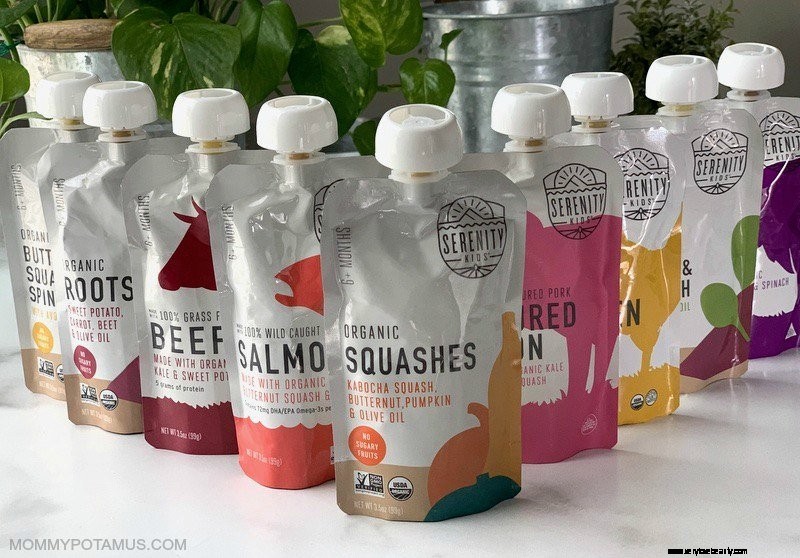
Serenity Kids makes low sugar baby food that uses only ethically sourced meats, organic savory veggies, and healthy fats. I wish they’d been around when my kids were little, especially for days we were on the go.
If you want to try them out, you can go to Serenity Kids and save 10% off your first order with coupon code MOMMYPOTAMUS.
Ready, Set, Food offers precisely measured portions of common allergens that can be added to a daily bottle or food to potentially reduce the risk of allergies.
Got a question? Please leave it in the comments below!
Sources
1. Wolchover, Natalie (2012) Should You Pre-Chew Your Baby’s Food?
2. Morey, Sharon (1998) American Academy of Pediatrics Releases Report on Cholesterol Levels in Children and Adolescents
3. Wic Works. Nutritional Needs.
4. Howcroft, Rachel (2013) Weaned Upon A Time: Studies of the infant diet in prehistory
5. Kuzemchak, Sally. Why You Shouldn’t Delay Meat for Babies
6. Karagas, Margaret et. al. (2016) Association of Rice and Rice-Product Consumption With Arsenic Exposure Early in Life
7. Healthy Children by the American Academy of Pediatrics. Choking Prevention
8. Feeney, Mary et. al. (2016) Impact of peanut consumption in The LEAP Study: feasibility, growth and nutrition
9. Enquiring About Tolerance (EAT) Study Final Report