

Although in some indigenous cultures cellulite is virtually unheard of – even among women in their 60s and beyond – we don’t live in one of them. I have some cellulite, and if you’re a woman reading this there’s a 90% chance you do, too. In my previous article (link above) we dove into the causes of cellulite, and in this one we’ll cover some dermatologist recommended treatments and natural remedies.
Now, if you’re thinking that I sound overly focused on something that is most people say is purely cosmetic, keep this in mind: The weakening of connective tissue that leads to cellulite formation also impacts our joints, circulatory systems, and skin. It’s not a disease by any stretch, but it can offer valuable insight into the overall health of our skin, connective tissue, blood vessels and lymphatic system as well as hormone levels.
I chose the title for this post to help people who are searching via Google find this information, but I want to be clear: You and I are lovable with every dimple, crinkle, roll or whatever else we have that society tells us to be embarrassed about.
I’m taking steps to improve my connective tissue because I love my body, not the opposite. That’s why in this series I’ve compiled what I believe to be the most valuable insights for supporting overall health with the side benefit of reducing cellulite.
If you’re skeptical of cellulite treatments in general, I’m with you. Some can improve the “orange peel” or “cottage cheese” appearance of cellulite on a short-term basis, but they don’t typically address its underlying causes.
However, in a double blind, randomized, placebo-controlled study conducted by Dr. Murad, author of The Cellulite Solution, participants experienced a 78% increase in skin firmness after eight weeks of implementing his recommendations.
He has created a 3-pronged approach that makes sense to me and aligns with some things I’ve tested personally. Some of his suggestions were new to me, though. I’m testing them now and will let you know how it goes.
Quick note: If you haven’t already, I suggest reading this article on the causes of cellulite before diving into the remedies. Everything will make a lot more sense.
Now that we’ve got that covered, here’s a quick overview of Dr. Murad’s 3-pronged approach.
Although I consider his book to be very helpful, it was published awhile ago and I don’t think all of the dietary recommendations are supported by current research. In this post you’ll find my modified approach. If you’re wondering how to actually go about accomplishing the three things listed above, here’s an overview of the steps:
According to Dr. Murad, cellular hydration is vital for maintaining healthy connective tissue. As we age, the integrity of our cells begins to weaken, and they lose the ability to attract and hold water. Well-hydrated cells are essential for plump, healthy skin and connective tissue, so we need to give our bodies the necessary nutrients to support cell integrity.
The body also needs raw materials for repairing connective tissue, which can be obtained through a healthy diet and strategic supplementation.
Let’s take a closer look at the nutrients he just mentioned:
According to Dr. Murad:
Lecithin is basically a mixture of phospholipids (mostly phosphatidylcholine) and oil that make up the cell membrane. Most options on the market are soy-derived and extracted using chemical solvents like hexane, which can leave residue behind after it is filtered. However, there are sunflower-derived forms of lecithin that are mechanically extracted without solvents – this is one of them. I’m storing mine in the freezer to prevent oxidation.
Other good sources of lipids are:
Dr. Murad recommends “approximately 2000 to 4000 mg – or about the amount of food in a rounded tablespoon of soy lecithin granules or one large egg – is a good dosage to aim for.” Both soy and sunflower lecithin are 16% choline, so the amount should be the same.
The best sources of essential fatty acids, particularly DHA, are cold water fatty fish (salmon, sardines, anchovies, herring and mackerel) and cod liver oil.
As mentioned in my previous post, decreased microcirculation that affects blood flow (bringing nutrients to the area) and lymph fluid removal (taking waste away) are both thought to be contributors to cellulite formation. When lymph fluid builds up it can cause persistent low-grade inflammation that damages connective tissue.
Antioxidants are thought to help by reducing inflammation. There are lots of options out there, but here are the ones I’m using:
Pomegranate peel powder – Rich in ellagic acid, dried pomegranate peel is a bitter powder that I gulp down with a small amount of water in the morning. It’s definitely not going to win any flavor contests, but “Due to its incredible antioxidant potency within the skin, ellagic acid is a vital ally in the fight against cellulite, which is unleashed by free radical damage within the skin.” (The Cellulite Solution)
Vitamin C – We’re some of the only mammals that can’t make our own vitamin C, which is a bummer because this little nutrient does double duty. Not only is it an amazing antioxidant, it’s also necessary for the formation of collagen that our bodies use to repair connective tissue.
As I mentioned in this post on synthetic vs. natural supplements, our bodies don’t always recognize and use synthetic vitamins the same as naturally occurring ones. In one study, just 1 gram of daily vitamin C was found to impair mitochondrial function and reduce athletic performance, and other studies point to possible concerns as well. (1) For that reason, I always opt for natural forms like the pomegranate peel powder above or this whole-food based vitamin C.
The body uses glucosamine to make hyaluronic acid, which is a polysaccharide that can absorb up to 1,000 times its weight in water. It helps our skin hold moisture and stay supple, but unfortunately over time our bodies make less of it.
Supplementing with hyaluronic acid’s building blocks can help optimize production, so Dr. Murad recommends taking glucosamine in a supplement form like this one. Although not mentioned in the book, bone broth is also an excellent source of glucosamine plus amino acids that are building blocks for the body’s connective tissue matrix. It’s easy to make in an Instant Pot or on the stove, and you can also buy high-quality beef bone broth protein powder here, and chicken bone broth powder here.
Grass-fed gelatin is also amazing for increasing collagen production. In a study conducted at the Tokyo University of Agriculture & Technology, researchers looked at the effects of UV exposure on mice that were separated into three groups. Mice were either:
When results were measured, the mice who were exposed to UV light without gelatin experienced a 53% average drop in collagen levels. Interestingly, the mice that were exposed to UV light and received the gelatin supplement actually experienced an average collagen increase of 17%. (2)
According to Dr. Lionel Bissoon, M.D., who wrote The Cellulite Cure, the indigenous populations mentioned in my previous post (that don’t have cellulite) tend to consume plants that are high in phytoestrogens. According to his theory, this may help keep their estrogen levels on the high side – thus reducing collagen breakdown – as they age.
Because the modern world is full of phytoestrogens that are impossible to completely avoid, I’m not intentionally adding any to my diet.
Our skin is so much more than a sensing organ – it plays a vital role in immune function, temperature regulation, detoxification, hormone function, and of course cellulite.
When the stratum corneum (our outermost layer of skin) is weak, it makes us more vulnerable to external damage from factors like excess UV exposure that break down collagen and elastin. It also becomes more like tissue paper than sturdy canvas, which makes it easier for fat cells to push up.
According to Dr. Murad:
Exfoliation – either through manual methods like dry skin brushing or body scrubs, or chemical methods like alpha hydroxy acid applications – stimulates the stratum corneum to strengthen and regenerate with young, healthy cells.
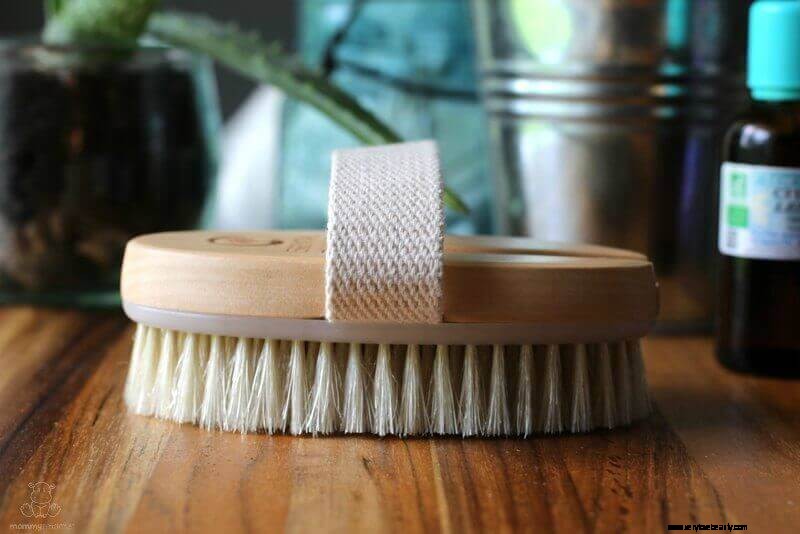
Of the exfoliations options mentioned (chemical, loofah, and dry brushing), I prefer skin brushing because it helps with cellulite in several ways: It increases microcirculation to the area (which brings nutrients), supports lymphatic drainage (takes away waste), and encourages the regeneration of collagen and elastin.
If you’re new to dry brushing, check out my guide that explains how to get started. Although you may notice changes almost right away, as I did because it moved excess fluid out of my tissues, keep in mind that the formation of new collagen and elastin takes time. Dry brushing is not a one-time treatment, but a lifestyle that continues to support skin and connective tissue health over time.
Also, although it doesn’t have the exfoliation benefits, I believe a Myobuddy Massager or whole body vibration plate may be even better at increasing microcirculation and lymphatic drainage than dry brushing. They could be used along with a homemade body scrub to achieve all three benefits.
Many so-called cellulite treatments such as creams use topical diuretics like caffeine to dehydrate the area, which can temporarily reduce the appearance of cellulite. However, choosing moisturizers that hydrate instead of dehydrate is what’s needed to fortify the skin’s natural barrier that helps hold water in, keeping connective tissue plump and supple.
According to Dr. Murad:
He recommends using an antioxidant-rich moisturizer that incorporates water loving molecules like hyaluronic acid with something oil-based that seals the outer layer of skin. I’m experimenting with a two-step approach that starts by applying my hyaluronic acid serum, then follows with a moisturizing oil or antioxidant-infused shea butter. Tallow balm is also another great option for sealing in moisture.
Some of the recommended ingredients to look for in a moisturizing product are:
I’m testing some DIY recipes that incorporate these suggestions – recipes coming soon!
Dry brushing, mentioned above, is probably one of the most important lifestyle changes because it works on so many levels. However, there are several others worth noting:
According to Peggy Emch, author of Primal Moms Look Good Naked: A Mother’s Guide to Achieving Beauty through Excellent Health:
Restrictive underwear reduces circulation, which prevents our bodies from getting optimal levels of nutrients to the area and efficiently. It can also impair lymph flow, which is needed to clear waste away. There’s actually even something called Panty Girdle Syndrome, which happens when women develop leg edema (swelling) from wearing underwear. If the elastic is too tight, it severely constricts the groin and buttocks areas. (2)
The groin area contains lots of lymph nodes, so keeping that area free flowing is essential for healthy lymphatic function. Dr. Bissoon, who wrote The Cellulite Cure, says a lot of the dimpling he sees in patients coincides exactly with the panty line. Here are the general guidelines he recommends for choosing underwear:
The lymphatic system doesn’t have a pump like the heart, so it relies on movement and gravity to move fluid throughout the body. When we sit for long periods lymph can become stagnant, so it’s best to take breaks and do something active. Taking a walk is a great option.
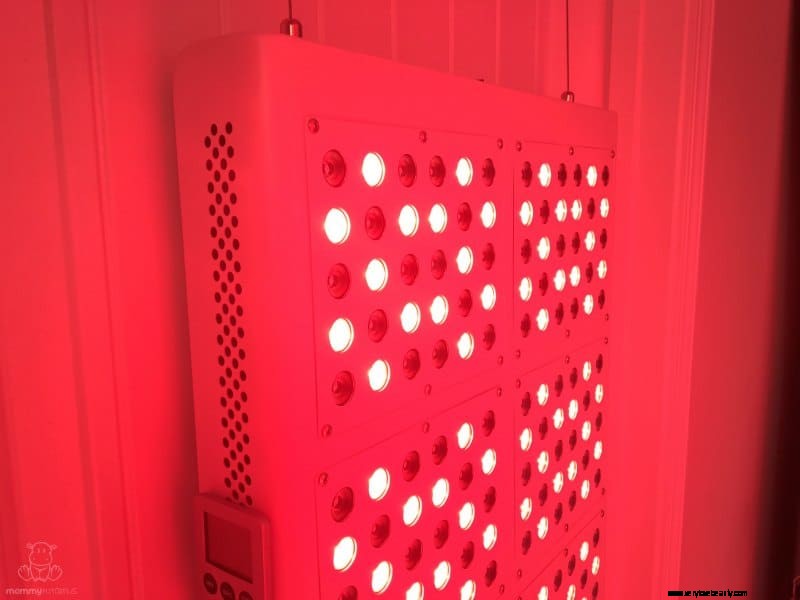
Although not mentioned by Dr. Murad, red light therapy helps improve skin texture by:
That was a whole lot of information, so here it is again in a nutshell.
Have a question about cellulite or a specific cellulite treatment? Please leave it in the comments below!
Article Sources:
1. Gomez-Cabrera, Mari-Carmen et. al. (2008) Oral administration of vitamin C decreases muscle mitochondrial biogenesis and hampers training-induced adaptations in endurance performance. Retrieved from https://academic.oup.com/ajcn/article/87/1/142/4633311
2. Borumand, Maryam and Sibila, Sara (2014) Daily consumption of the collagen supplement Pure Gold Collagen®reduces visible signs of aging. Retrieved from https://www.ncbi.nlm.nih.gov/pmc/articles/PMC4206255/
3. Wunsch, A et. al. (2014) A Controlled Trial to Determine the Efficacy of Red and Near-Infrared Light Treatment in Patient Satisfaction. Reduction of Fine Lines, Wrinkles, Skin Roughness, and Intradermal Collagen Density Increase. Retrieved from https://www.ncbi.nlm.nih.gov/pubmed/24286286
4. Avci M.D., Pinar et.al. (2013) Low-Level Laser Therapy for Fat Layer Reduction: A Comprehensive Review. Retrieved from https://www.ncbi.nlm.nih.gov/pmc/articles/PMC3769994/