

“Table for one trillion, please.” It may seem like a funny way to request a spot at your favorite healthy restaurant, but it’s actually pretty accurate.
In this New York Times article, Michael Pollan describes the one trillion, er, one-hundred trillion, microbes that sit down to dine with us at each meal. More than just creepy freeloaders, these guys have a profound impact on our health – maybe even more than genetics. Here’s how Pollan explains it:
Although the ratio of human to bacterial cells in the human body has recently been revised – the estimate is that we’re about 50/50 – the fact remains that the microbes we carry with us exert a huge influence on our health, and even on our emotions.
Unfortunately, modern life has not been kind to this second genome – often called our microbiome. Factors like processed foods, the overuse of antibiotics, environmental toxins and less time spent outdoors have drastically reduced the diversity of microbes we carry.

“Disorders in our internal ecosystem — a loss of diversity, say, or a proliferation of the ‘wrong’ kind of microbes — may predispose us to obesity and a whole range of chronic diseases, as well as some infections.” – Michael Pollan, Some of My Best Friends Are Germs
Now it’s easy to gloss over this and think “yeah, yeah, lots of factors go into metabolism.” That’s true, but get this: In this study, researchers “took two groups of mice whose digestive tracts had been sterilized. In the first group, they colonized the mice’s intestines with flora from an obese cage mate. In the second group, they colonized the intestines with flora from a lean mouse. They then fed these two groups of mice the same diet for 2 weeks.” (source)
The mice who received the microbes from the obese mouse gained more weight, despite comparable food intake and intake levels.
Other studies have demonstrated that microbes implanted from lean mice into overweight mice caused the mice to lose weight. To me, this research is not really about weight loss or gain, but rather a reminder that our lifestyle choices are impacted by the health of our internal microbiome.
By serving up hearty meals for our one-hundred trillion, of course! According to Stanford microbiologist Justin Sonnenburg, “The safest way to increase your microbial biodiversity is to eat a variety of polysaccharides.” (source)
In case you are wondering, that’s smart guy speak for the things that nourish our gut bacteria – inulin, fiber and resistant starch for example. Now, you already know what fiber is and you may have heard of inulin, but chances are you are asking yourself . . .
Unlike probiotics, which are beneficial bacteria that we take internally through supplementation or fermented foods, resistant starch is a prebiotic – or food for our bacteria.
Dr. Amy Nett explains it this way:
When beneficial bacteria feed on resistant starch, they produce short-chain fatty acids such as butyrate, which help to increase metabolism, decrease inflammation and improve stress resistance. (source)

Bacteria have favorite foods just like we do, so I incorporate a variety of resistant starches to nourish different populations. There are three naturally occurring types:
Type 1 RS is “physically inaccessible, bound within the fibrous cell walls of plants. This is found in grains, seeds, and legumes.” (source)
Type 2 RS is “Starch with a high amylose content, which is indigestible in the raw state. This is found in potatoes, green (unripe) bananas, and plantains. Cooking these foods causes changes in the starch making it digestible to us, and removing the resistant starch.” (source) Tigernuts also belong to this category. They’re very sweet and can be eaten as a snack whole, or ground into a flour to make no-bake cookies with – my kids LOVE these resistant starch cookie dough bites. For info on the brand I use, check out the Pantry Staples section on this page.
Note: We don’t eat raw potatoes, but raw potato starch (not flour) can be consumed in smoothies. However, even after cooking potatoes there’s still a way to benefit from the resistant starch they contain. More info in the next paragraph.
Type 3 RS is “Also called retrograde RS since this type of RS forms after Type 1 or Type 2 RS is cooked and then cooled. These cooked and cooled foods can be reheated at low temperatures, less than 130 degrees and maintain the benefits of RS (6). Heating at higher temperatures will again convert the starch into a form that is digestible to us rather than ‘feeding’ our gut bacteria. Examples include cooked and cooled parboiled rice, cooked and cooled potatoes, and cooked and cooled properly prepared (soaked or sprouted) legumes.” (source)
To recap, some whole-food forms of resistant starch are:
Since resistant starch hit the nutrition scene, recommendations to consume isolated forms of it like potato or tapioca starch have become very popular. This is understandable: throwing a spoonful of starch into a smoothie or in your oatmeal is super easy.
However, although there are times when it may be appropriate to incorporate isolated forms of resistant starch, here are a few points worth considering:
In my kitchen, the preferred sources of resistant starch are cold potato salad with homemade mayo, tigernut flour cookies, rice and bean salad, dehydrated green banana chips, and smoothies made with green bananas or plantains – sometimes with an additional resistant starch flour added in. (Options are tigernut flour, green banana flour, plantain flour, and organic potato starch.)
We take care to vary the sources so that we don’t overfeed any particular population, and we include both soluble and insoluble fiber from lightly cooked, raw or fermented vegetables. Research suggests it works synergistically with resistant starch to encourage a diverse microbiome, and is especially important to include with RS2 starch found in green bananas, plantains and raw potatoes.
Of course, I also include high quality probiotics (you can find info on the two I take here) and fermented foods to increase the number good guys in my gut.
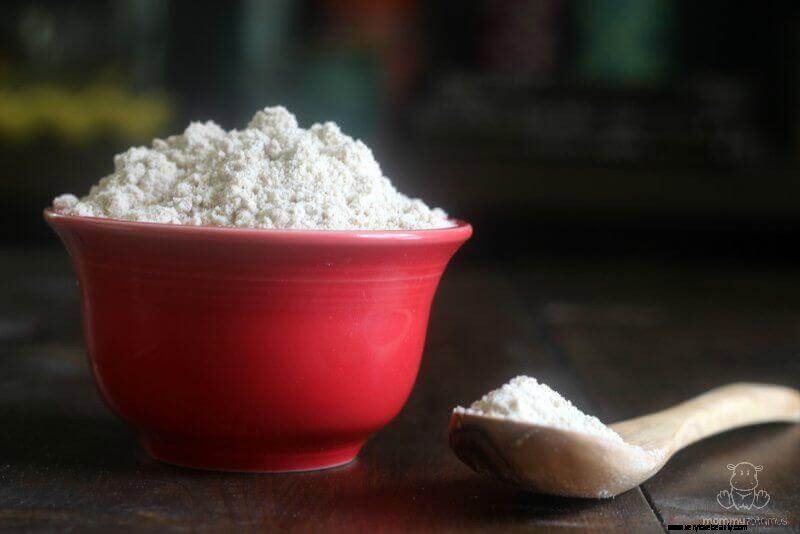
Several gut healing protocols restrict intake of resistant starch. The goal in doing so is to rebalance the gut microbiome before giving it lots of food to feast on – that way, the resistant starch nourishes a wide variety of beneficial gut bacteria.
This is often the approach taken with small intestine bacterial overgrowth (SIBO), which is exactly what it sounds like – an overgrowth of normal bacteria or the presence of pathogenic bacteria in the small intestine. The goal in restricting resistant starch is to starve the bacteria, however some practitioners have found that supplementing with resistant starch improves SIBO in some cases. (source)
Like most things, there’s probably not a one-size-fits-all approach that will work for everyone. Here’s what I mean:
Bottom line: We’re all biologically unique. Maybe it makes sense for some people to incorporate resistant starch into a SIBO or autoimmune protocol, while for others it won’t. It’s important to listen to our bodies and make adjustments as needed.
That said, if restricting resistant starch seems like the best approach, it’s important to remember that gut healing diets are meant to be temporary. Long-term avoidance of resistant starch – and other fermentable forms of fiber – appears to have a negative impact on the gut microbiome. In other words, starving gut bacteria can be beneficial when trying to kill off pathogenic populations and replenish them with beneficial ones. However, starving them on an ongoing basis appears to result in a a less robust microbiome.
According to Dr. Amy Nett, “Studies indicate that the benefits of resistant starch may be seen when consuming around 15 to 30 grams daily (equivalent to two to four tablespoons of potato starch). This may be too much for some people to tolerate, particularly in the setting of gut dysbiosis, and going above this amount is not necessarily beneficial.” (source)
If using potato starch, he recommends starting with about 1/4 teaspoon and working your way up if it’s well-tolerated. Because my family incorporates whole food forms of resistant starch into our meals, I didn’t worry about measuring the exact amount each of us was eating. Instead, I just served small portions at first and increased our intake as long as we didn’t experience any digestive issues. (We didn’t except for once when we ate WAY too many resistant starch cookie dough bites.)
Share this article by pressing one of the links below!