

We take in about 23,000 breaths every single day, mostly without thinking about it. Personally I think that’s a good thing, because there’s already so much to focus on – cooking with wholesome ingredients, swapping out home products for non-toxic options, time with family, good sleep, and more.
However, a clean air check-in every once in awhile is well worth your time. According to the Environmental Protection Agency, the air in your home or office is likely to be 2-5 times (sometimes up to 100 times) more polluted than the air outside. (1)
Fortunately, little changes can make a big difference, and I’ll cover what you can do to easily improve indoor air quality in this article.
It took awhile for me to research and choose a high quality air purifier, so while I was waiting I researched and implemented several other strategies to improve indoor air quality.
Before we dive into them, though, let’s take a look at the pollutants they target.

If you want to dive deeper into what each one is, this post on choosing the best air purifier is a good place to start. Now, here are six budget-friendly ways to make your indoor environment healthier (plus a couple of options that are more of an investment).

According to an EPA report called The Doormat Study, lead-contaminated soil tracked into the home is the source of almost all the lead dust inside homes.
Removing shoes at the door reduced lead dust by 60 percent over a five month period, but using a doormat and then removing shoes at the door reduced indoor lead dust by 98.5%. (6)
Doormats may also help reduce the amount of pesticides and other contaminants tracked into the home.
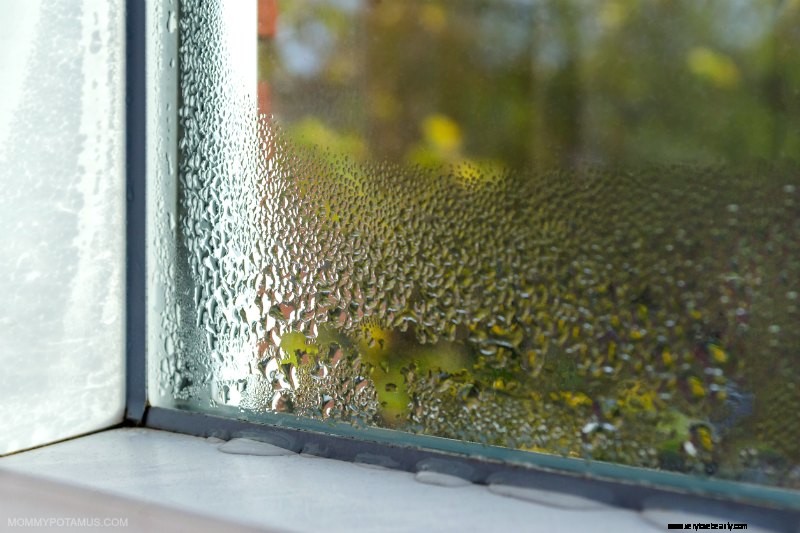
Excess moisture is a breeding ground for bacterial, mold and mildew growth, while too little moisture can cause dry skin and mucous membranes (throat, nose, eyes,). The Environmental Protection Agency recommends keeping indoor humidity levels between 30 percent and 60 percent.
A friend of mine who is a functional medicine M.D. that specializes in mold toxicity suggests aiming for the 40% range with a max of 50%.
You can test indoor humidity levels using a humidity monitor called a hygrometer, which is highly accurate and easy to read. Make sure to pay close attention to areas that are likely to be more humid, such as bathrooms and the kitchen.
If humidity levels are over the recommended ranges, a dehumidifier can be helpful. Here are some of the top rated options:

Leaky houses – or houses that exchange indoor air with outdoor air via openings around windows and doors, etc. – are bad for energy efficiency but good for air quality.
According to the Consumer Product Safety Commission, a house that is well-sealed “may have higher pollutant levels than other homes.”
Fortunately, according to the EPA, one inexpensive way to improve indoor air quality is through natural ventilation – aka turning off the A/C and opening up the windows as often as possible. (EPA) It may also be helpful to turn on fans as well to help the indoor/outdoor air circulate better.
Here are a couple of things to keep in mind with this approach: If you’re sensitive to pollen it would be a good idea to wait until pollen counts are low, and if you live in a high-humidity area you will want to run a dehumidifier after you close the windows.
Carpets can act like a sponge, absorbing mold, dust (including lead dust), flame retardants, dust mites and other contaminants. (7)
It’s important to clean them often, but according to environmental engineer John Roberts vacuuming “deposited more dust than it picked up so that over time carpets became a disgusting repository of toxic substances.”
Unlike sweeping and regular vacuums which stir the dust up into the air, a true HEPA vacuum uses powerful suction to capture and retain dust particles instead of spreading them. It doesn’t just reduce reduce flame retardant dust either – it also captures dust mites, mold spores, and pollen.
The same is thought to be true of hard floors – sweeping tends to stir up contaminants while using a HEPA vacuum captures it.
This HEPA vacuum was voted best budget pick by Prevention Magazine.
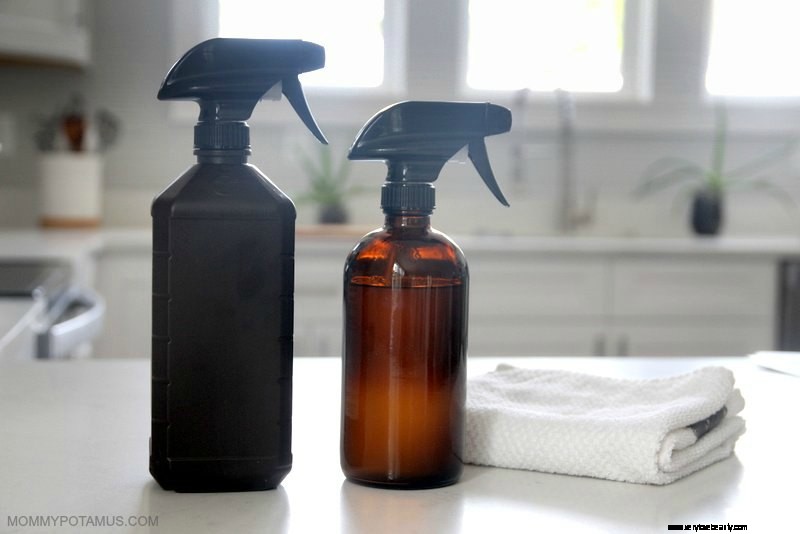
Cleaning Products & Air Fresheners – According to a new study, regular use of conventional cleaning sprays can have as much of a negative impact on health as smoking a pack of cigarettes a day.
That’s why one of the first steps to improving air quality is to switch over to non-toxic cleaning products. Also, use essential oil room sprays and simmer pots instead of artificially-fragranced air fresheners, and opt for homemade beeswax candles (or store-bought) instead of paraffin candles.
Furniture – Try to opt for pieces that aren’t sprayed with chemical flame retardants. Here’s a list of manufacturers that don’t use them. Some are expensive, but some are relatively inexpensive. Also, opt for solid wood furniture when possible.
If you have to buy new furniture that is likely to contain VOCs, let it off-gas outside for a little while before bringing it in if possible. Investing in a non-toxic mattress is another good way to improve indoor air quality since you spend about 1/3 of your life breathing the air right next to it.
When redecorating or remodeling– Choose green building materials whenever possible. I know from experience that this is not always realistic – when my husband and constructed a small building on our homestead a few years ago we didn’t have access to many green building materials, so we made sure to get a very good air filter to help soak up the VOCs after construction was complete.
Important note on remodeling: If your home was built before 1978, make sure to check for lead before starting a remodel.
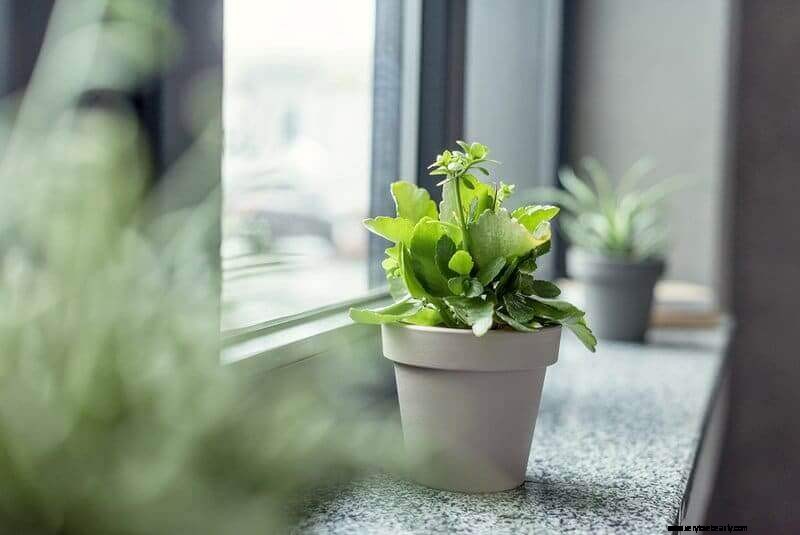
A famous NASA experiment found that common indoor plants can improve indoor air quality by removing organic pollutants like volatile organic compounds (VOCs), which have been linked to a variety of health issues.
Critics of the NASA study say that the plants performed well under lab conditions, but may not deliver the same results in a home environment. Personally, I think they’re well worth incorporating for even a modest air purifying benefit, especially when you consider that indoor plants lower our mental and physical stress, and boost overall well-being, creativity, and productivity too.
Also, another study found that the soil microorganisms found in potted plants also remove VOCs.
Dr. Bill Wolverton, who conducted the original NASA study, wrote a book called How To Grow Fresh Air: 50 Houseplants That Purify Your Home Or Office. Here are some of the easier plants to grow that he recommends:

Since this post is about inexpensive options for air filtration I didn’t include air filtration units – however, they can make a huge difference and you can find a guide to choosing one here.
Moso bags are a budget friendly air purifying option that can help absorb odors and certain toxins in small spaces like cars, closets, bathrooms, gym bags and pet areas. They’re filled with activated charcoal, which is the same stuff that companies like Austin Air use in their top-rated air filters . According to Moso:
Unlike air purifiers that circulate air in large rooms – using a fan to draw it through a filter and then redistributing it back into the room – Moso bags rely on passive absorption of nearby contaminants. That’s why they work best in small spaces – because they only impact air that is close by. They’ve worked well for me in closets, and customers rave about them on Amazon:
Each bag lasts about two years (it needs to be set out in the sun every month or so to keep it working), and after that you can cut the charcoal out of the bag and use it in your garden. Here’s where to buy them.
We’ve already touched on how dust mites negatively impact air quality, but we haven’t actually covered what they are and why. Dust mites are microscopic bugs that are closely related to spiders and ticks. They don’t bite people, but they do eat skin cells that people shed and they love warm, moist environments.
Their effect on air quality has do to with the droppings and body fragments they leave behind. (Ewww.)
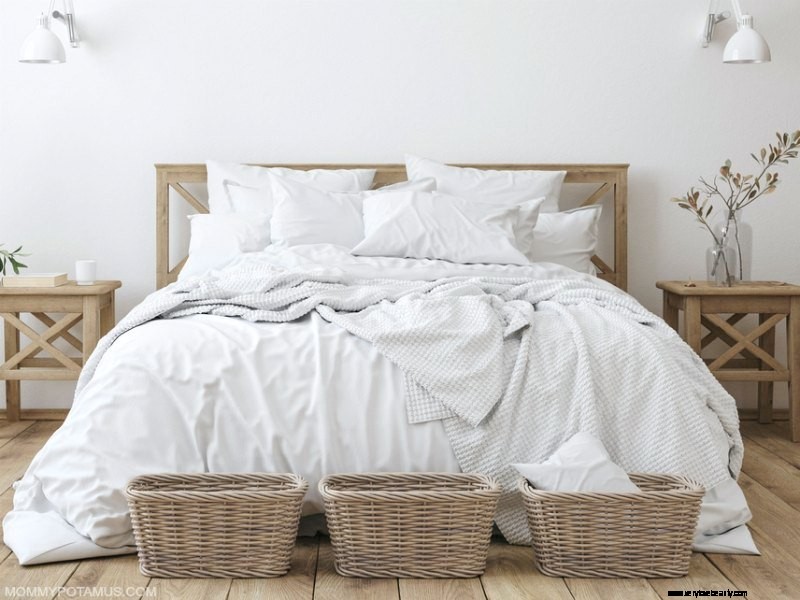
One of the best ways to reduce dust mites is to wash sheets, pillowcases, blankets and bedcovers in hot water (130F or higher) once a week to kill dust mites and remove the allergens they shed.
If you can’t wash a particular item but you can put it in a hot dryer (130F or higher) for at least 15-20 minutes it will kill the mites. Washing is better because it removes the allergens they’ve already deposited, but the dryer will at least inhibit them from making more if done frequently.
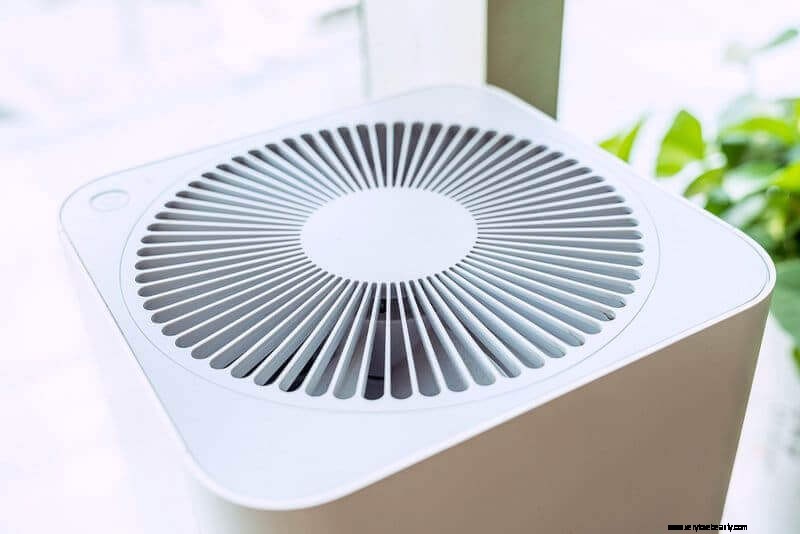
Last but definitely not least, a good quality air filter can make a huge difference in indoor air quality. I’ve put together a guide that explains the pros and cons of different purifying options such as HEPA filtration, activated carbon, ionic filtration and more, plus my top air filter picks – you can find it here.
Test for radon– Radon is a colorless, odorless radioactive gas that’s produced by decaying uranium in the soil. It’s not considered a concern outside because it is diluted by so much fresh air, but when it makes its way into homes it can build up in higher concentrations.
Because the air pressure in homes is usually slightly lower than the pressure outside, the gas can be sucked up into homes through cracks in the foundation or walls if radon is nearby.
Fortunately, if a radon issue is found (using one of these test kits or the help of a professional), the problem can be resolved by improving ventilation.
Install a carbon monoxide detector – According to the EPA, “A variety of items in your home such as unvented kerosene and gas space heaters, leaking chimneys and furnaces, and gas stoves” can release odorless carbon monoxide in the home.
In addition to servicing equipment to make sure it’s in good working order, it’s also a good idea to install a carbon monoxide detector to monitor for any problems that may arise.
I’ve created a free ebook for you as a gift for signing up for my newsletter. 7 Non-Toxic Cleaning Recipes That Really Work covers seven recipes that you can make in just a few minutes each for squeaky clean windows, sparkling dinnerware, lemon-fresh countertops, and more. Subscribe to my newsletter below and you’ll be redirected to a download page for immediate access to this PDF ebook.
Sources For This Article
1. Environmental Protection Agency. Improving Indoor Air Quality
2. Adgent, Margaret et. al. (2014) Brominated Flame Retardants in Breast Milk and Behavioral and Cognitive Development at 36 Months
3. Callahan, Patricia and Roe, Sam (2012) Fear fans flames for chemical makers
4. Joshi, Sumedha (2008) The sick building syndrome
5. American Lung Association. Dust Mites
6. Environmental Protection Agency. Reducing lead exposure from remodeling and soil track-in in older home
7. Uhlig, Robert. (2001, May) Carpets are piled high with toxic pollutants.
8. Consumer Product Safety Commission. The Inside Story: A Guide to Indoor Air Quality