Sometimes called knitbone or All Heal, comfrey (Symphytum officinale L.) has been used for centuries to support wound and bone healing, and at one time was recommended as a tea to soothe digestive issues. Most often found in moist grasslands, this perennial herb is rich in a bioactive compound called allantoin that plays a role in cell formation and granulation.
In other words, it supports the body in creating new tissue and microscopic blood vessels during the healing process.
It’s often used for:
- Soothing sprains, bruises, swelling, minor shallow-cut skin injuries and burns
- Easing tight muscles
- Boosting softness and shine when used as a hair rinse
- Moisturizing skin, which is why it’s incorporated into many skin serums, creams and salves
In this article I’ll show you how to infuse the therapeutic properties of comfrey into oil, make it into an herbal salve, and we’ll also dive into the controversy around comfrey tea.
As always, I want to mention that none of these statements have been evaluated by the FDA, this article is not medical advice, and it is not meant to diagnose or treat any condition. Please talk with your healthcare provider about any herbal supplements you are considering.
How To Use Comfrey Externally ^
Although ingesting comfrey is not recommended (more on that below), using comfrey externally is considered safe and can be very helpful for supporting the healing process with breaks, sprains, and strains, as well as minor shallow-cut skin injuries and burns. (1) It’s even been shown to ease tight muscles and support a healthy inflammatory process. (2)(3) Comfrey roots are the most powerful, followed by young leaves, with older leaves considered the least powerful.
Of course, you don’t just rub roots or leaves on whatever area you’re trying to address. Most often, the therapeutic compounds in comfrey are infused into a carrier oil and then massaged onto the area. Other times, a plaster of fresh leaves or poultice made from dried leaves is applied.
We’ll dive into how to make comfrey oil, comfrey salve and a comfrey plaster/poultice below, but first here are some safety considerations you should know about external use:
- Some people experience a skin rash reaction from comfrey leaves, so be careful during your first time handling them or using remedies made with comfrey leaves.
- As we’ll dive more deeply into below, comfrey contains several compounds called pyrrolizidine alkaloids, or PAs, which can cause liver damage if taken internally. Chemically speaking PAs have very low solubility in oils, so comfrey oils and salves should be low in PAs. (4) However, my coauthor for this article, registered herbalist Lori Rose, PhD, RH (AHG), and professor at Hill College’s Holistic Wellness Pathway, recommends using it for no more than 4-6 weeks at a time to avoid any potential toxicity issues.
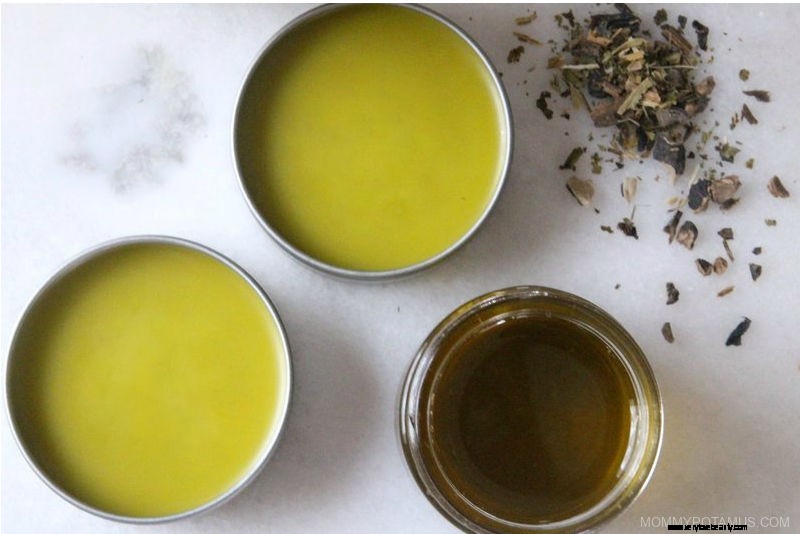
Comfrey Oil: How To Make It & Where To Buy It ^
The most common way of using comfrey externally for connective tissue injuries or small wound healing is through comfrey-infused oils. Below is my super easy and affordable process for making it, but if you don’t want to DIY you can find comfrey oil here. Because the bottles only contain one ounce you’d need four to make the salve recipe below.
Another option would be to just buy two and cut my recipe in half, or buy some comfrey roots/leaves and make it at home for much less. Here’s what you’ll need:
Ingredients
- Organic dried comfrey leaves or comfrey roots
- Olive oil (Or another oil that you prefer. Almond and avocado oil are good options, as is jojoba)
Instructions (Slow Method)
This is the traditionally preferred method because it’s thought to preserve the delicate constituents found in comfrey (and other herbs) best. However, sometimes it’s just not practical to wait 4-6 weeks for a batch, so I’ve also included a faster method below.
- Place dried comfrey leaf or root in a clean, dry glass jar.
- Next, pour in the oil – add enough so that the comfrey is covered by about one-half inch of oil. Herbs expand as they soak in liquid, so adding the half inch ensures that they stay covered. Comfrey root will stay at the bottom so it’s easy to tell how much to add, but comfrey leaves float and that can make things a bit more challenging. What I do is use my thumb to mark the top of the dried comfrey in the jar before I add the oil, then add about 1/2 inch above that.
- Cover the jar with a tight fitting lid and give it a good shake.
- Place the jar in a paper bag and store near a warm, sunny window. Some people skip the paper bag, but others believe it helps protect some of the valuable constituents found in comfrey from breaking down due to UV light. Give the jar a good shake when you walk by it every day.
- Once the oil has been infusing for 4-6 weeks, strain out the herbs and pour the oil in a clean, glass jar. Store in a cool, dark cabinet until needed.
Slow Cooker Instructions (Quick Method)
- Follow steps 1-3 from the “Slow Method” section above.
- Cover your jar with cheesecloth (or a paper towel that is cut into a small square) and secure it with a rubber band.
- Place a kitchen towel in the bottom of your slow cooker and place your jar inside. Add enough water to cover about half the jar and set to the lowest setting for 2-24 hours. My slow cooker has a warm setting so I can infuse it at a very low temperature for 24 hours, but for slow cookers that only have a “low” setting instead of a “warm” setting, I recommend only infusing for 2-8 hours. Whether or not you place the lid on the slow cooker is largely determined by how hot it gets and how long you plan to infuse it. If you’re infusing it on low for 2-3 hours the lid will probably be helpful in helping it warm up more quickly and retain heat better, but if you’re infusing for 3-6 hours the lid may cause too much heat to be retained. You can always start with the lid and remove it if you decide to extend the infusing time. If your slow cooker tends to run hot I recommend leaving the lid off.
- Strain out the comfrey leaves/roots using cheesecloth and pour the herbal oil in a clean, glass jar. Store in a cool, dark cabinet until needed.
