
Nope, we aren't talking about garden pests! Inchworms are a full-body exercise move that requires only your body and a flat surface or mat. Anyone from beginner to advanced exercisers can do them, they don't involve any equipment, and the only space you need is enough room to have you be in a plank position. Best yet, they are meant to work a wide variety of muscles and may also be helpful for improving stability. They can be done at any time, but thanks to their stretching properties, they are often used at the start of a workout. Read on to discover everything you should know about inchworms, including their benefits and how to perform your personal best ones.
Meet the Expert
If the idea of an exercise called inchworms makes you envision crawling on the floor inch by inch, you're on the right track. This move involves going from a standing position to a plank position and back, with small forward and backward motions of your hands. Puleo says that it's a functional, dynamic move because of how you go from standing to plank and back, and Gonzalez says they're "one of the best bangs for your buck" exercises. He says they're "typically performed at the beginning of training sessions like strength training, interval-based workouts, or just preparing for a cardio session" but can be performed any time.
This exercise has you using your upper body, core, and lower body simultaneously; when we say it's a "full-body" move, we mean precisely that! Gonzalez says that inchworms "are a great way to increase mobility, warm up the body for working out, and fire up the core!" He says that "the plank position fires the core by activating the upper body and lower body at the same time, " and "one of the greatest benefits of the inchworm is working on hamstrings and back flexibility."
Puleo says that by "starting in the standing position, the first awareness is posture and how we are organized against gravity." From there, with that increased awareness, "placing hands on the floor requires flexibility of the hamstrings and back." Additionally, "walking out to plank requires strength and stability, walking forward and back into the hinge requires strength and mobility in the hips and shoulders, and rolling up to standing is flexibility in the spine and learning how to rise from the floor."
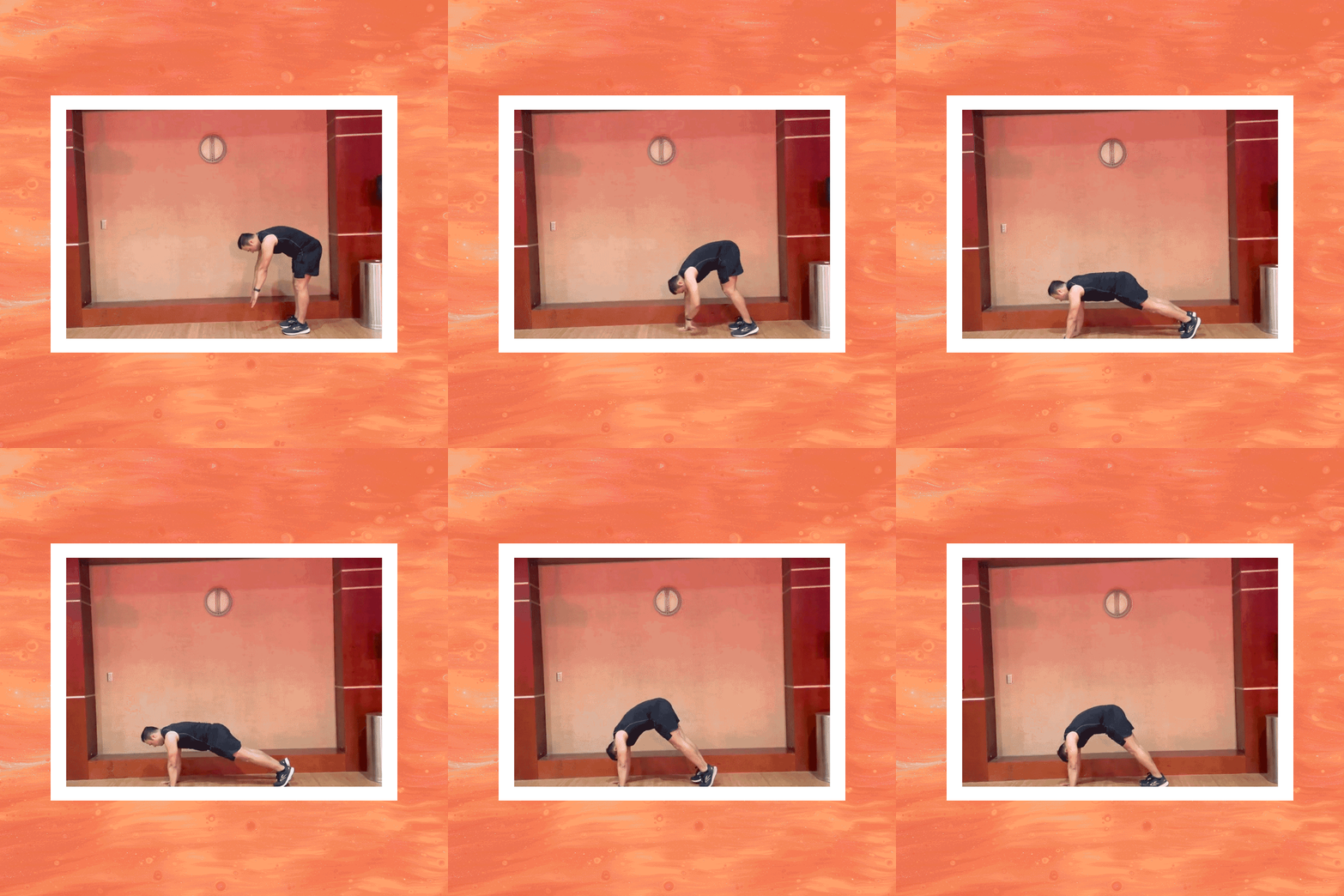
Nico Gonzalez / Design by Tiana Crispino
Though this move is very straightforward, proper form is still important to focus on.
Holding too long: this is a dynamic move, and no part should be held as you move through it. Puleo cautions that "holding too long in any one position detracts from the flow as this exercise is great for teaching integration of the core with the hips, spine, and shoulders."
Anyone who has problems with balance or vertigo is not a fit for inchworms. That's because you might get dizzy by moving from a standing position to the ground and back. Additionally, if you have a wrist injury, this isn't a fit for you since your weight is placed on your hands. If a plank position creates pressure on your neck or shoulders, you should avoid this exercise. Lastly, Puleo recommends you "proceed with caution" if you have any hip or spine limitations.
If this exercise feels too difficult or too easy, it can be altered to suit your needs better.
For less flexible people, Gonzalez recommends that "during the pike position there may be a point where flexibility limits your range. At that moment, allow knees to bend, then stretch for four-to-six reps. This will dynamically allow the muscles to lengthen and slowly relax into the stretch."
If you're unable to be in a high plank position, perform this move on a workout bench to put less pressure and weight on your wrists and core.
If you have difficulty with your wrists, Puleo suggests using a dumbbell through the move to keep them in a neutral position.
Rather than walking your legs forward to meet your hands, you can get comfortable first with the move by walking your hands forward to a place shy of a plank, then walking them back to standing.
Inchworms are a full-body exercise that requires no equipment. They use your upper body, lower body, and core to move from a standing position to a plank and back again. Their name is apt because the motions are made with small movements, and you "crawl" forward, similar to how an inchworm does. Inchworms should be avoided by anyone with wrist, shoulder, neck, back, or hip problems and aren't a match for people with vertigo or balance issues. The exercise can be made easier or more difficult, meaning there is an option for anyone (who doesn't have preclusive injuries). If you're looking for a new exercise to jumpstart your workout, inchworms are a perfect option.
The Best Home Workout Equipment, According to Byrdie Editors