
The first time someone told me they wanted “warm blonde,” I reached for a honey gold formula and nearly ruined a friendship. She meant warm like a sandy beach at sunset, not warm like a jar of tupelo honey, and that was probably the most useful miscommunication of my early career because it taught me something I carry into every consultation now. Warm blonde is not a color, it’s a conversation. It’s a whole territory that stretches from barely-there golden to deep caramel to shades that flirt so hard with copper they’re practically redheads, and every single one of those reads differently depending on what’s underneath it. Your natural base, your skin, even the water in your shower can shift where a warm blonde lands. So when you save twelve pins on Instagram and they all look different from each other, that’s not confusion on your part, that’s you responding to warmth itself without knowing exactly which version of it is yours yet.
Here’s what I wish more colorists would admit out loud, because it would save everyone a lot of grief: the toner is where most warm balayage falls apart. Not the lightener, not the technique, the toner. There’s this instinct, especially among newer colorists, to panic when gold shows up in the bowl and reach for ash to neutralize it, and then the client leaves with something that photographs warmly but looks dull and kind of muddy when you’re standing in front of her at the coffee shop. A real warm blonde needs to hold its warmth on purpose. You want a beige-gold, maybe with a little copper whispered through it depending on where you started, and you want to be able to see the color actually shift when you walk from your kitchen into the sunlight. That shift is how you know the tone is alive and doing what it should. The other thing I find myself repeating constantly is that placement will make or break this look faster than the shade will. You could mix the most perfect honey formula on the planet, but if the sections are chunky and start right at the root, you’re going to walk out looking like you time-traveled back to a 2012 highlight appointment instead of wearing something modern and lived-in. Finer pieces around the face, more saturation through the mid-lengths, and real depth left at the root so the grow-out looks intentional from day one, that’s what separates the balayage you love at three months from the one you regret at three weeks.
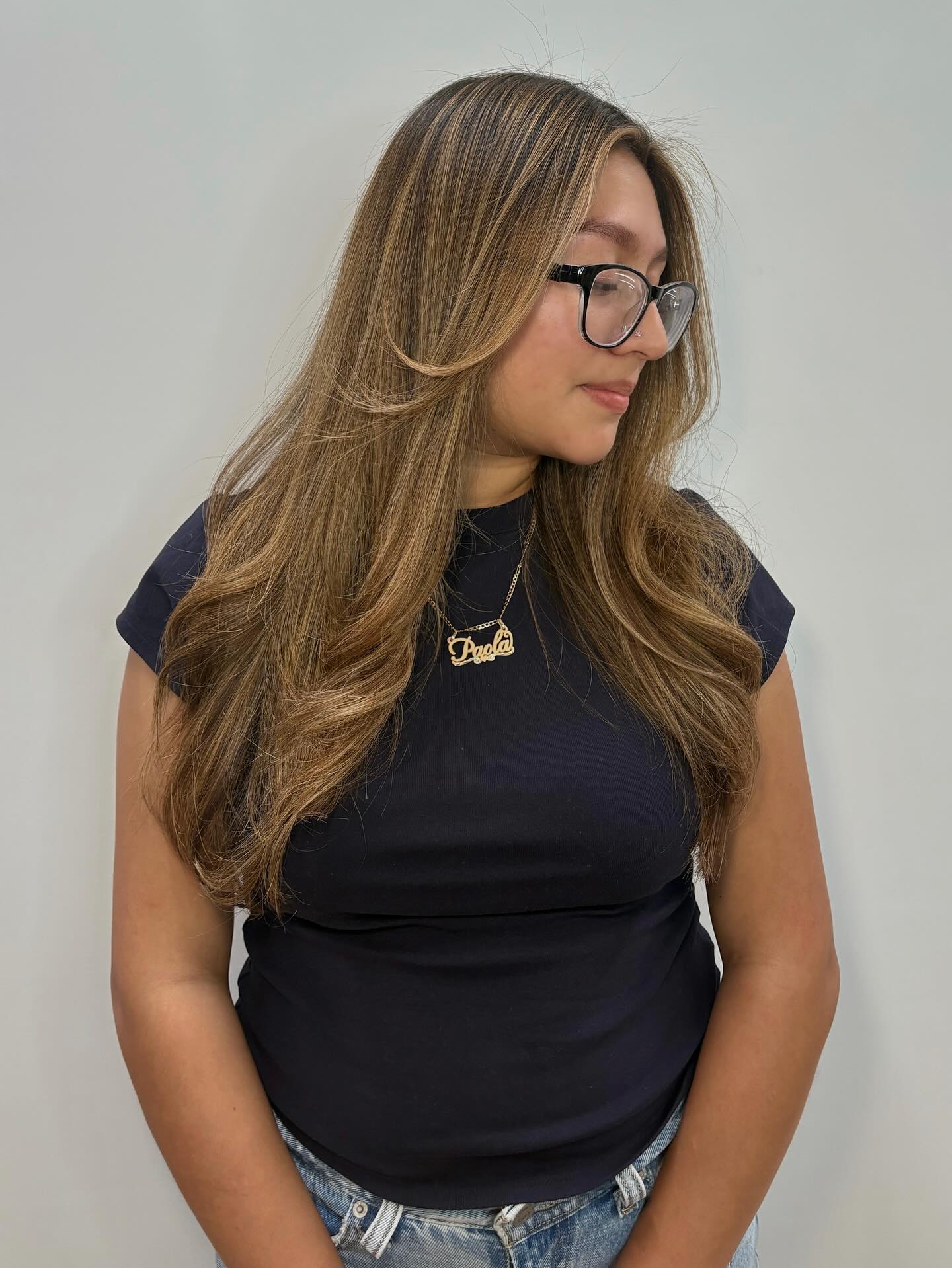

This is the color that makes people ask if you just came back from a trip, which is funny because it’s actually one of the more deliberate placements you can do. The face-framing pieces are fine enough that they melt into the rest of the hair rather than announcing themselves, and on finer density like this that matters a lot because chunky highlights on thin hair never look like anything other than chunky highlights on thin hair. What I really like is how the mid-lengths stay a touch deeper while the brightness lives where light would naturally fall, around the face and scattered through the ends. If you’ve been nervous about balayage looking too obvious, this is the template.
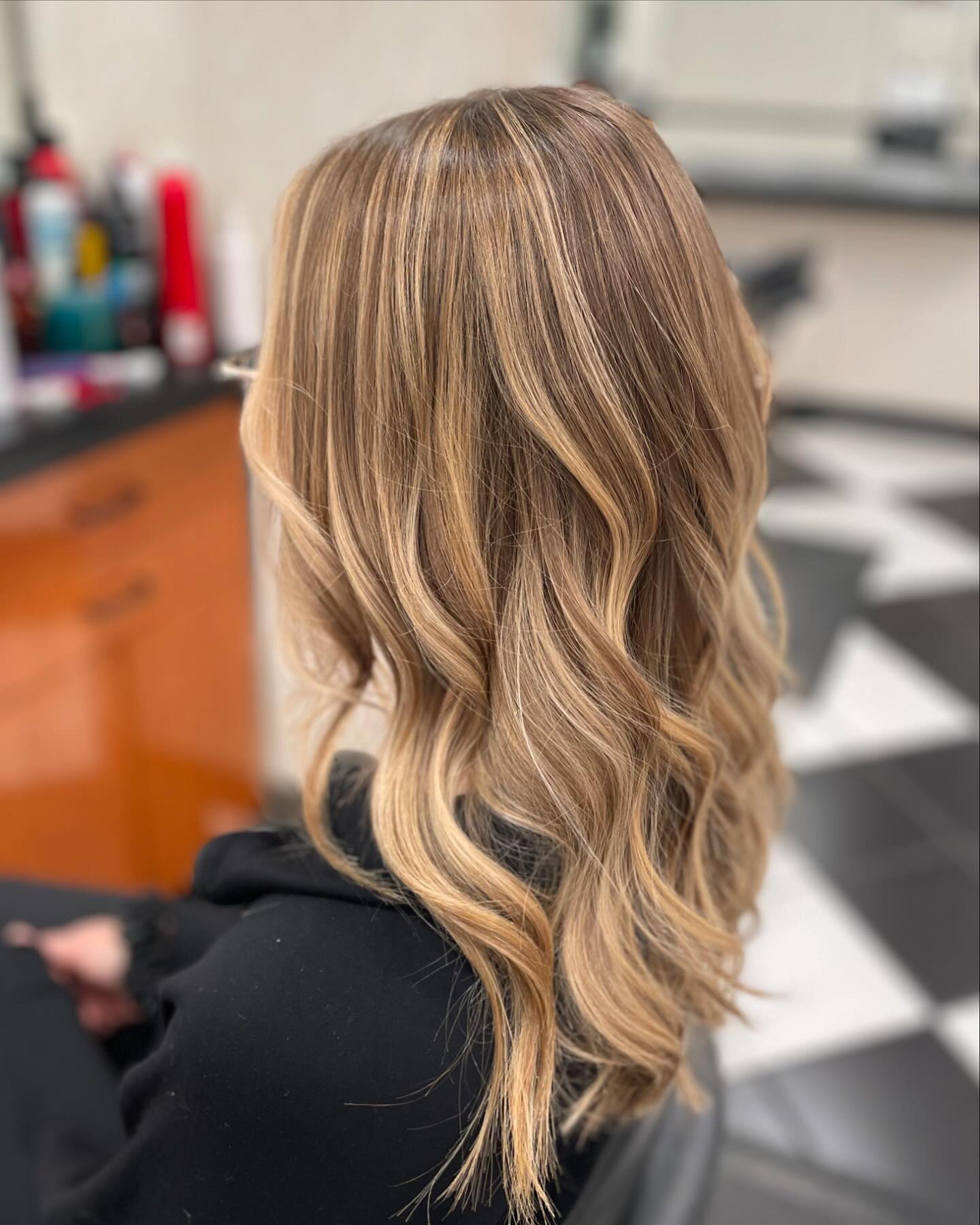
The copper in this is what makes me stop scrolling. So many clients will say they want warmth and then get nervous the second I mention copper, but look at what happens when it’s layered in as an accent instead of the main color, it gives the whole thing a richness that pure blonde just can’t achieve on its own. The styling is doing real work here too because those loose waves are what let you actually see the tonal shifts. If you wore this bone straight, it would still be nice, but you’d lose about half the visual depth. Something worth thinking about if this speaks to you: ask your colorist to apply a copper-gold toner on just the interior pieces while keeping the surface a cleaner gold.
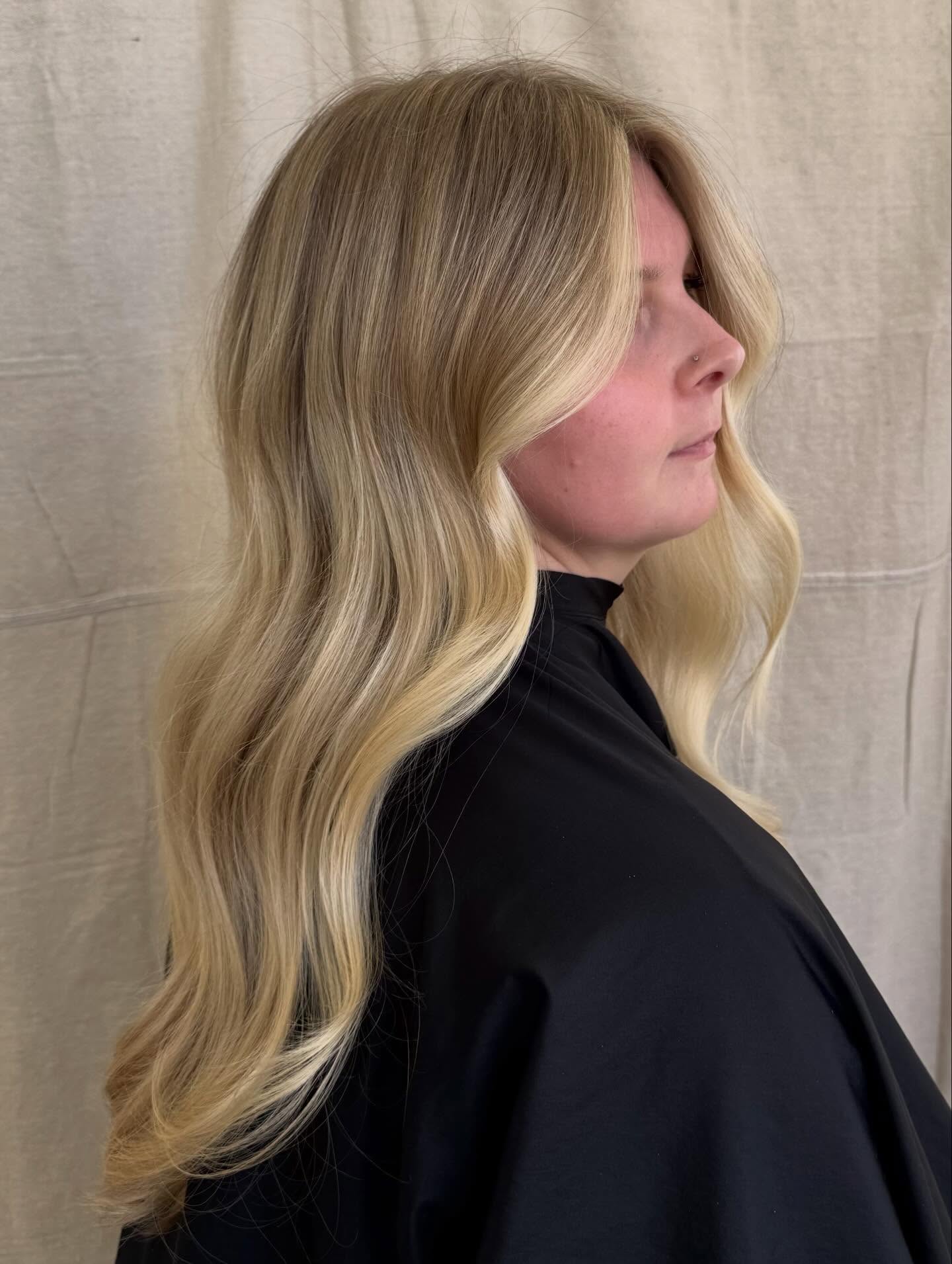
This is the one I want to point at every time a client says she can only come in every four months. The root area dissolves into the blonde so gradually that there’s no line, no demarcation, nothing that screams “I’m overdue.” The layers are pulling their weight here too, creating separation between the tones so you get dimension from the cut itself rather than needing six different shades in the formula. I’ve seen balayage like this look nearly as good at twelve weeks as it does fresh out of the chair, and that’s not something I say often because it’s genuinely rare.
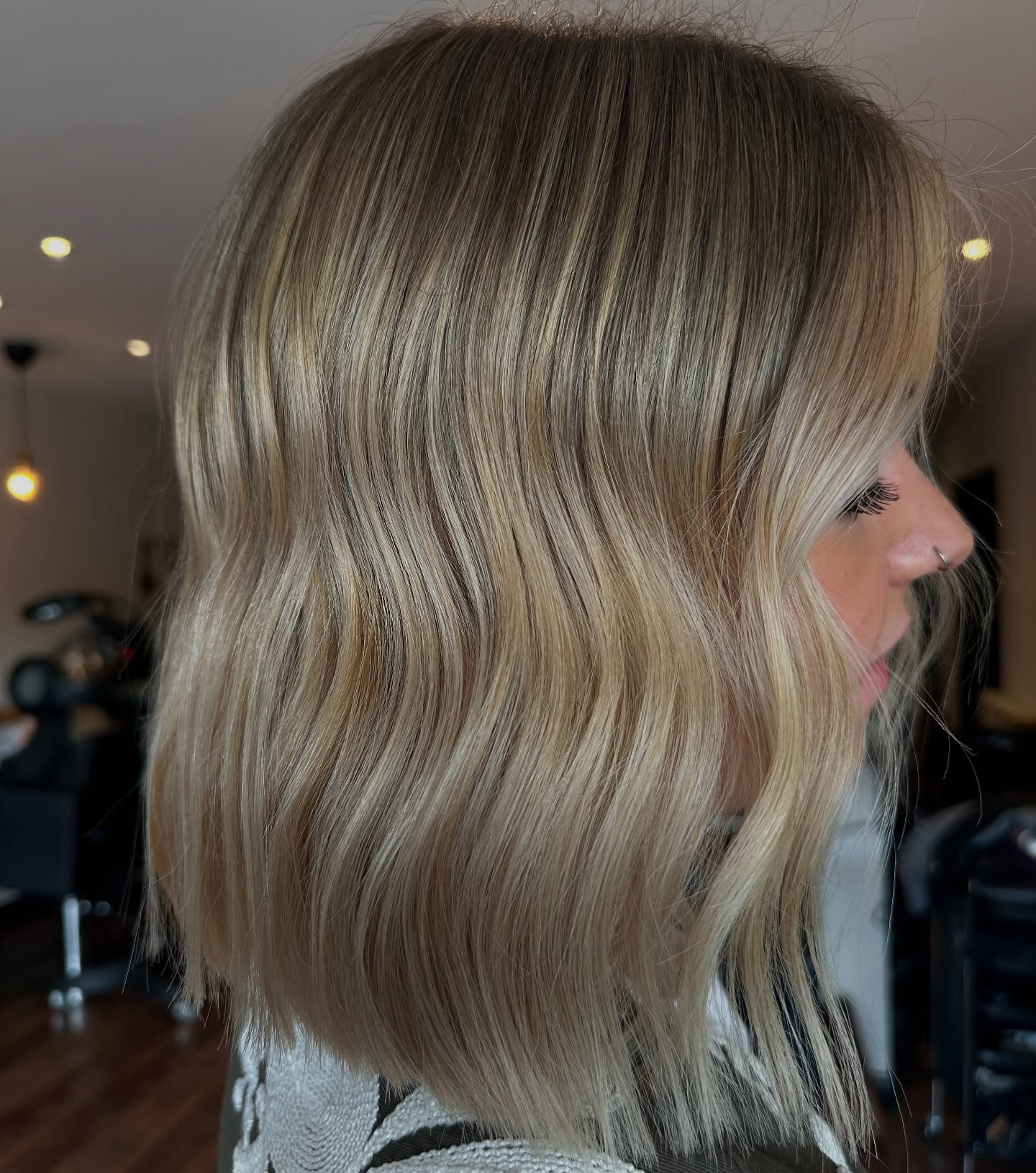
Clean color, smooth blend, warmth that runs consistently from root through end. At this length, balayage can sometimes get lost because there’s not much hair to work with, but the slight face-framing layers give just enough movement to let the color breathe and show its range. What tells me the toner was done right is the consistency, there’s no banding, no spots where it goes unexpectedly cool, just even warmth all the way through. This is the kind of result that looks polished even when you’ve only air-dried it and run your fingers through.
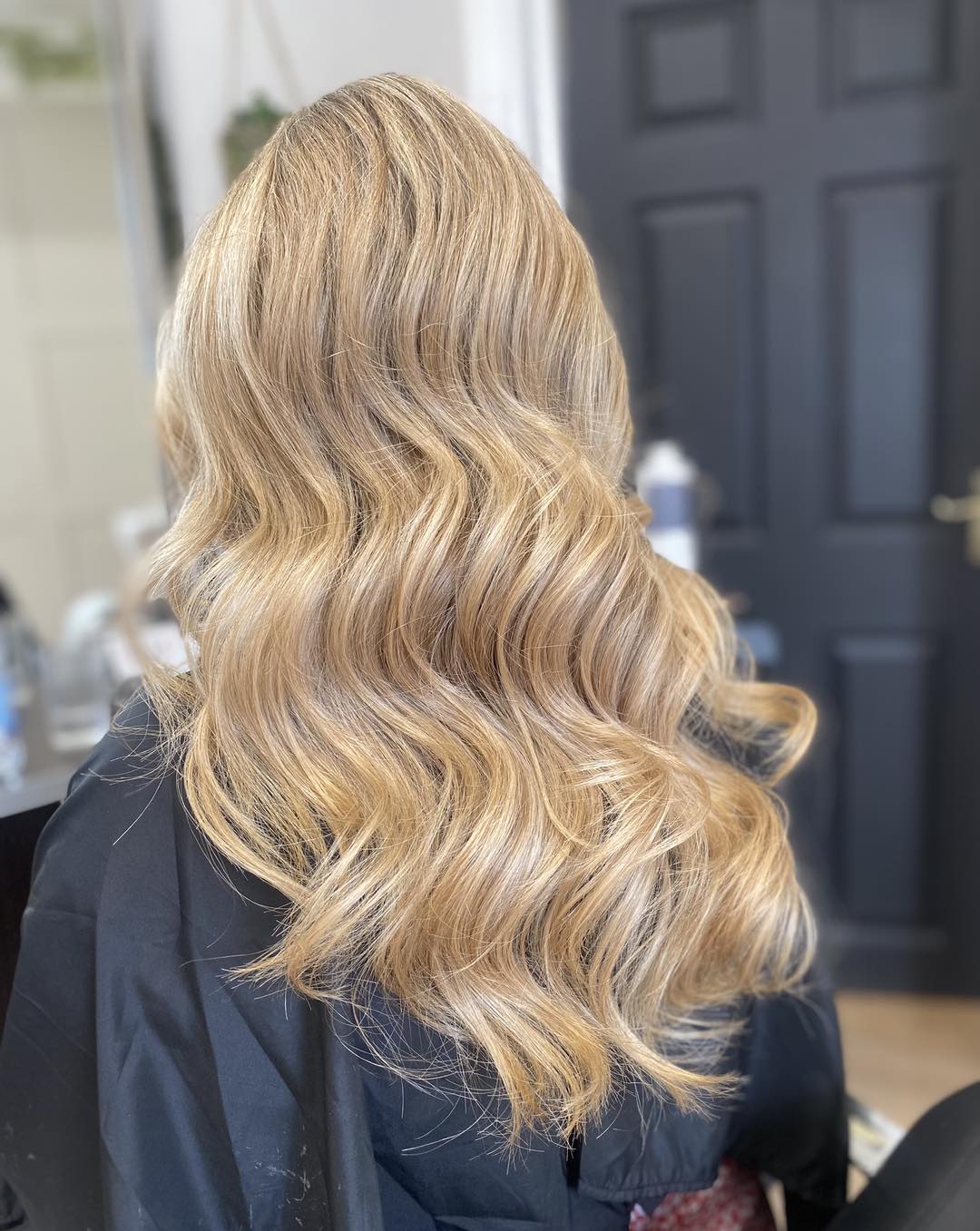
The shine is what I noticed first, because you can absolutely lift hair to this level of blonde and destroy it in the process, and clearly that did not happen here. That kind of reflectivity only comes from a cuticle that’s still mostly intact, which means whoever did this was paying attention to their developer strength and their timing rather than just cranking everything up for speed. The interplay between the lighter pieces and the slightly deeper lowlights gives it a multi-tonal quality that single-process blonde simply cannot touch. If you’re going this light, a bond repair treatment needs to become a permanent part of your routine, not a suggestion.
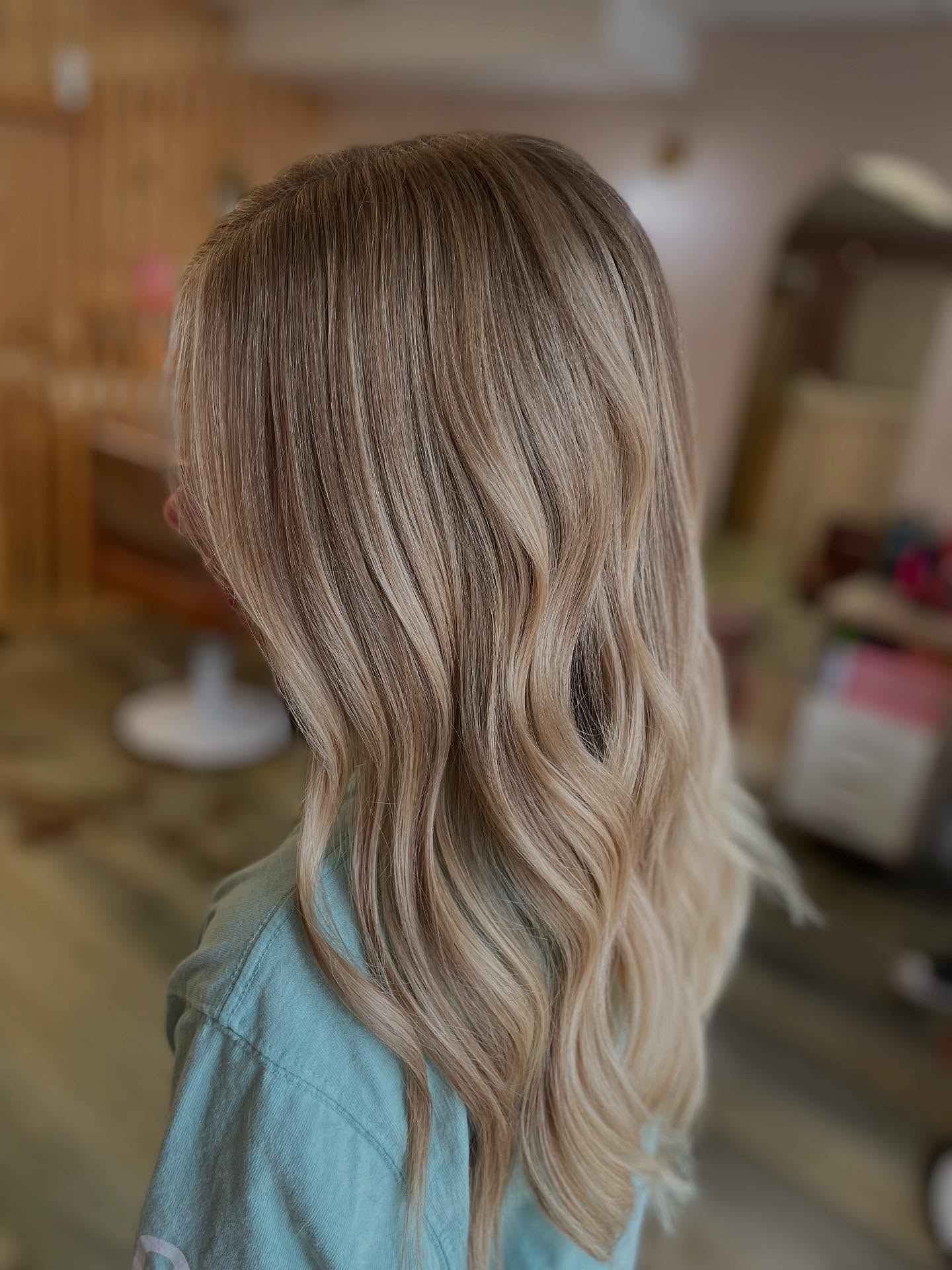
This is the balayage for the person who wants to look like she doesn’t think about her hair much but somehow always looks great. The root-to-blonde transition is so gradual that regrowth just becomes part of the aesthetic rather than a problem to solve. I actually think the finer density works in its favor here, because each piece moves independently and gives you that easy, separated look that thicker hair has to fight for with razoring and texturizing. Low maintenance with a high return, which is harder to achieve than it looks.
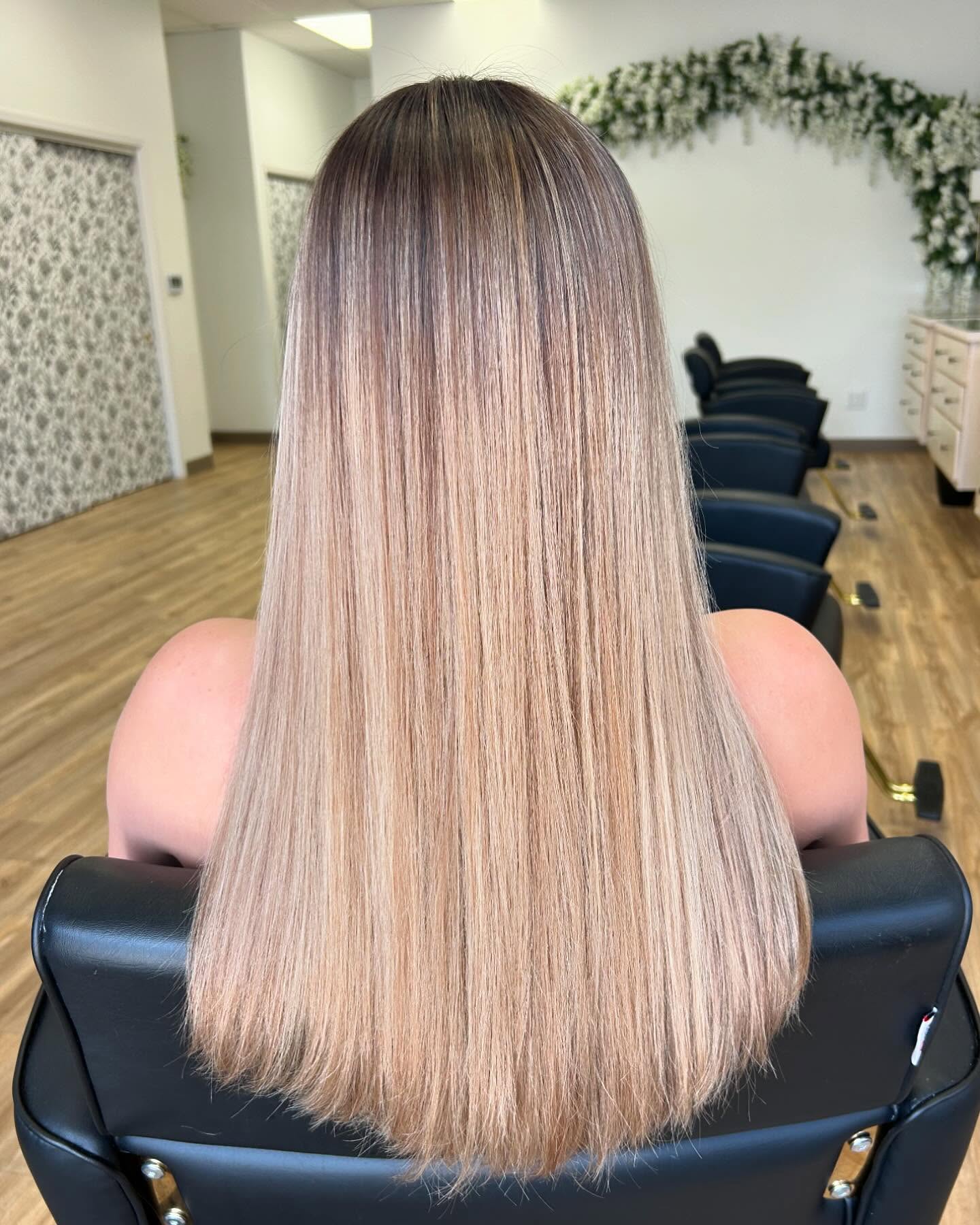
Balayage on sleek straight hair is unforgiving. There is nowhere to hide a patchy blend or a hard line, and this passes the test without any help from texture or waves. The dimension is quiet but present, you can see it in the way light moves differently across the mid-shaft compared to the ends. I will say that if you’re wearing your hair this smooth on a regular basis, you need a heat protectant that actually performs and not just one that smells good, because those ends will tell on you fast if they’re taking heat damage you’re not addressing.
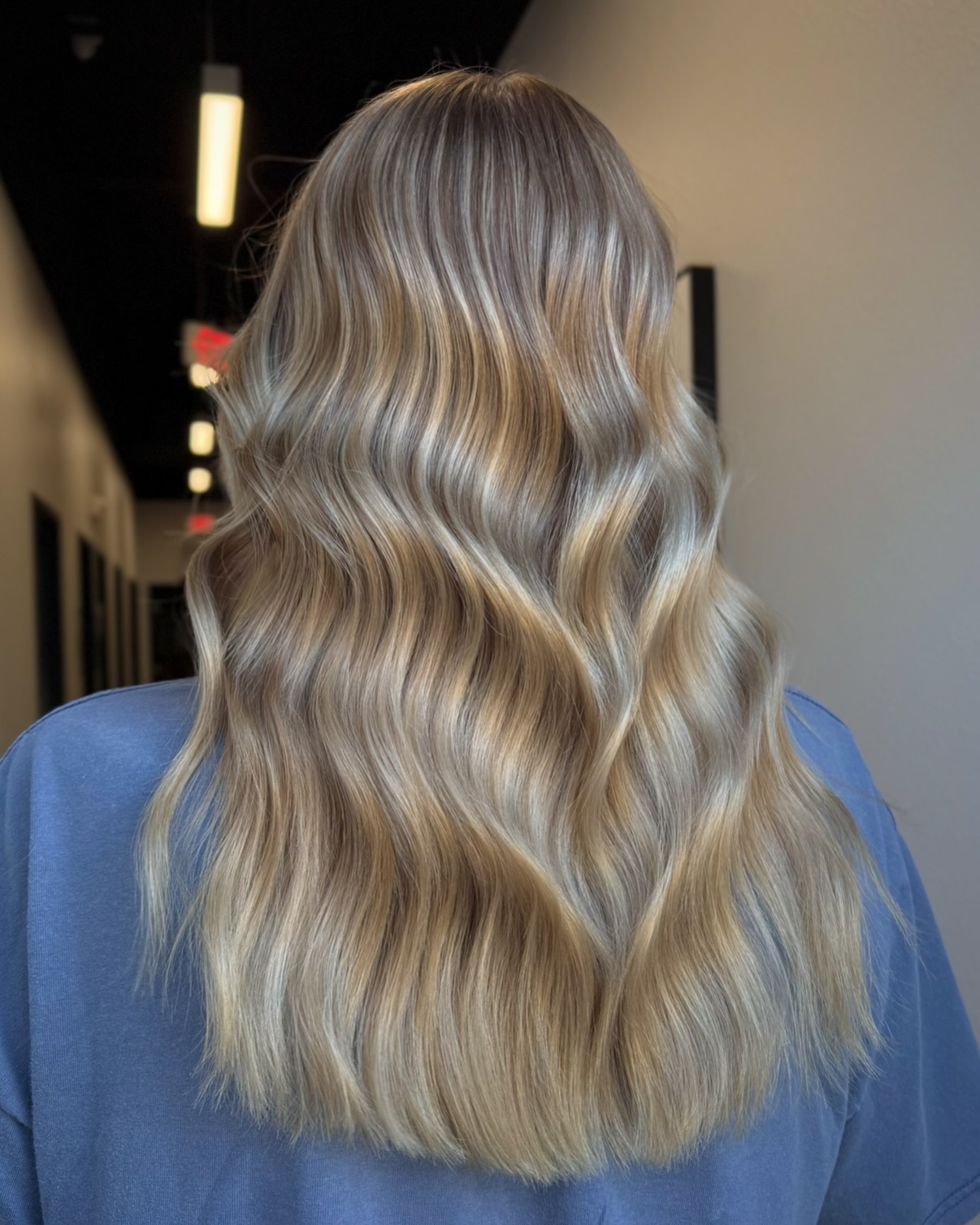
There’s a quality to this color that genuinely reminds me of honey in a glass jar when you hold it toward a window, that deep amber-gold that shifts depending on the angle. The root-to-blonde transition is seamless without ever feeling abrupt, and the natural wave pattern is showing off every shade change in a way that styled curls sometimes can’t replicate because these bends are irregular and unpredictable, which is exactly what makes it look real. I’d call this a true warm blonde rather than the neutral-warm you see in a lot of this collection, so if your skin runs cool or pink, it might pull too golden on you. But on warm or olive undertones, this is going to make everything around it look better.
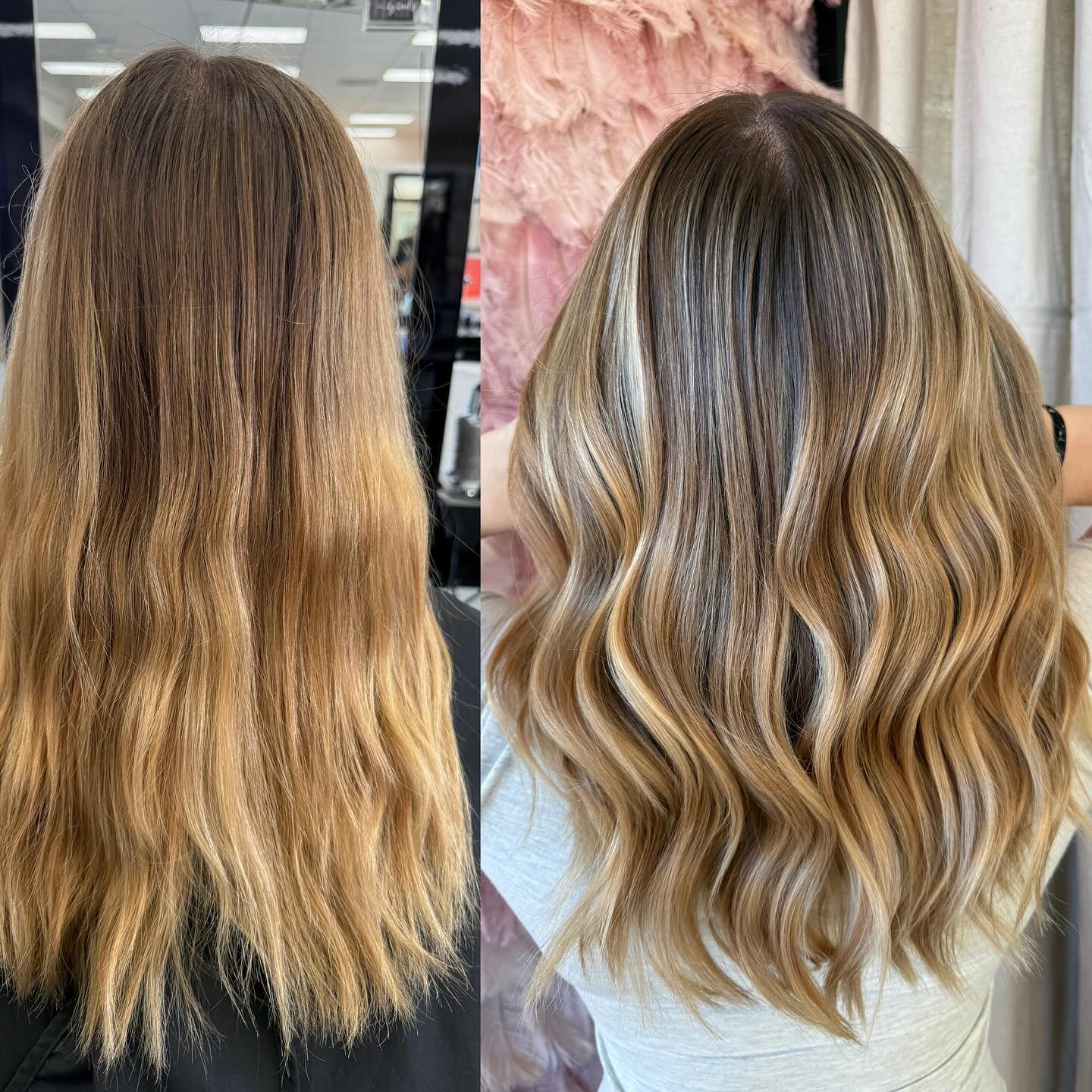
What’s smart about this one is where the color lives. Instead of loading all the brightness around the face, the colorist concentrated saturation through the mid-lengths so the waves have this quality where the deeper bends read almost caramel and the peaks catch gold. It’s placement that rewards movement, meaning it genuinely looks better when your hair is doing something rather than sitting still. If you tend to style with a wave or a curl on most days, this kind of approach is going to give you more than face-framing brightness ever could.
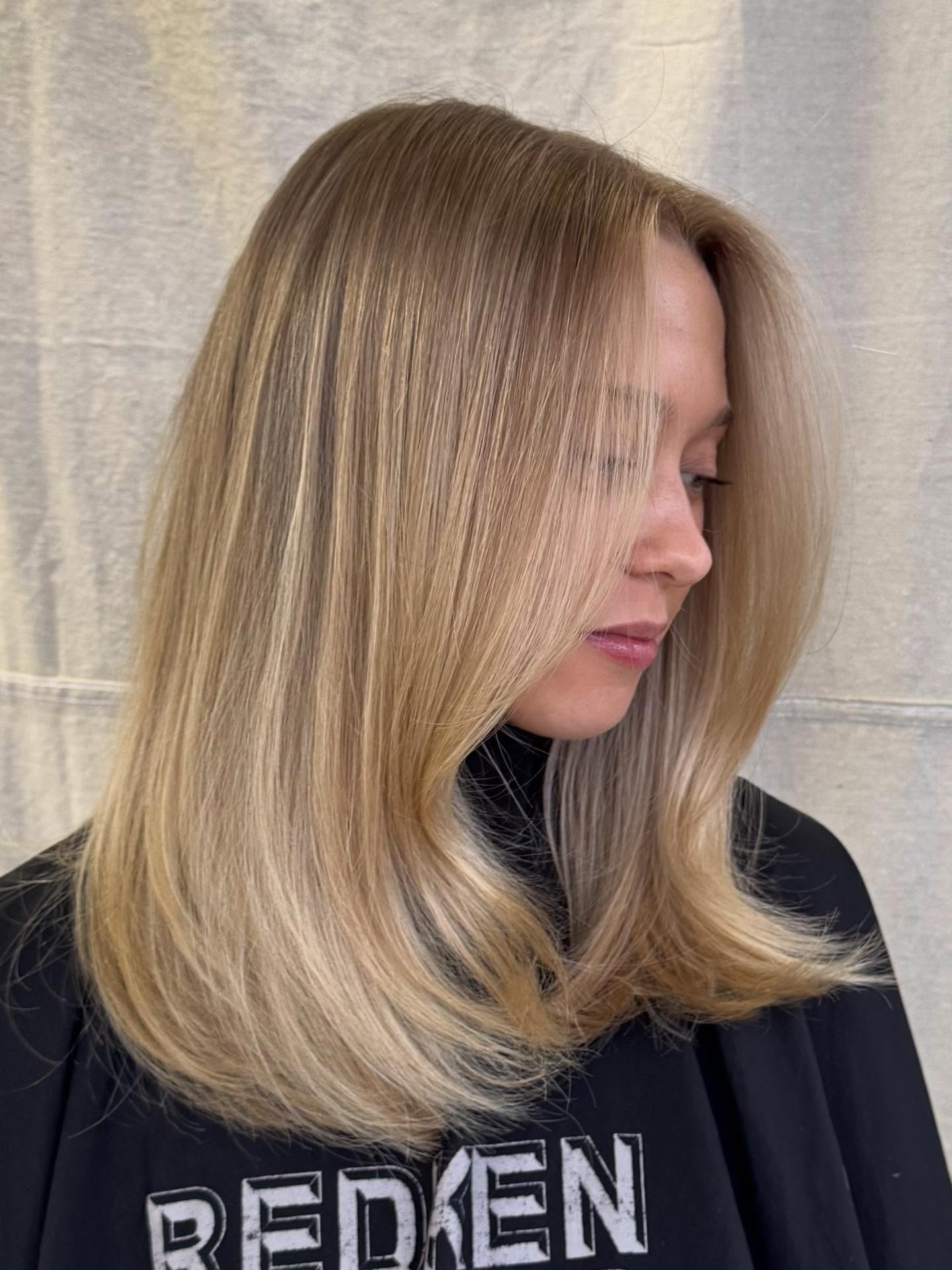
You can tell this is the same colorist because the blend quality is consistent with her other work in this collection, that same reliable hand. But what’s carrying this look is the cut, that blunt-ish perimeter with just enough internal texture to keep it from falling flat and heavy. I think we overcomplicate balayage sometimes with too many tones and too many techniques when what actually makes it land is a good haircut sitting underneath it. This is proof of that.
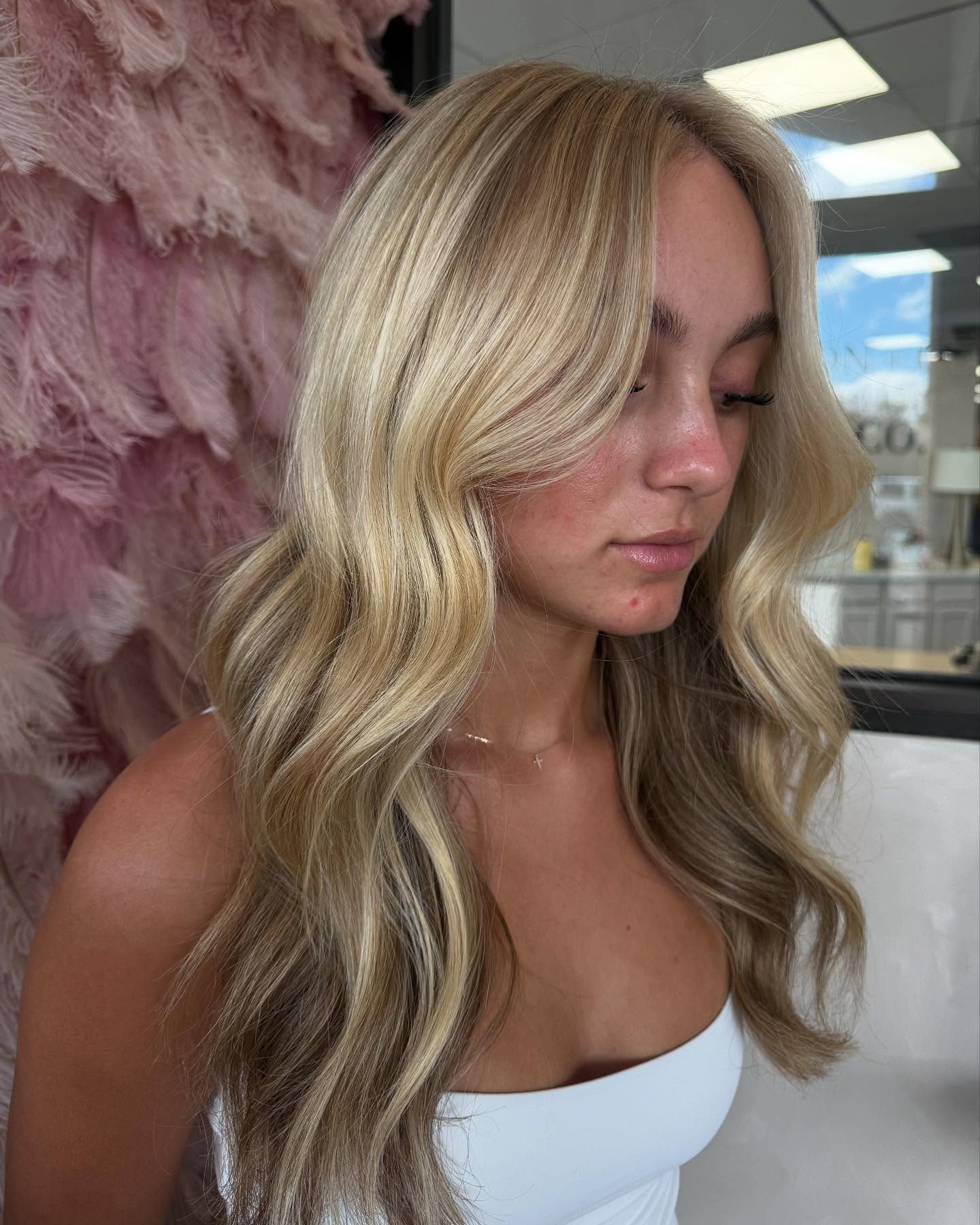
This is one I’d genuinely want to recreate, and I don’t say that about most of what comes across my feed. The technique is a foilyage with a root smudge, which is standard enough on its own, but what makes it clever is the reverse-balayage underlayer, meaning the darker pieces are painted underneath the blonde rather than simply left at the root. When the hair moves you catch flashes of that deeper tone and it creates a richness that a straightforward balayage just cannot produce. The curtain pieces around the face are bright enough to do their job without looking disconnected from the rest of the color story. If I had one note, it’s that you’ll want a large-barrel iron for that wave pattern, and you’ll need toning appointments to keep the blonde from drifting too warm as it oxidizes over time.
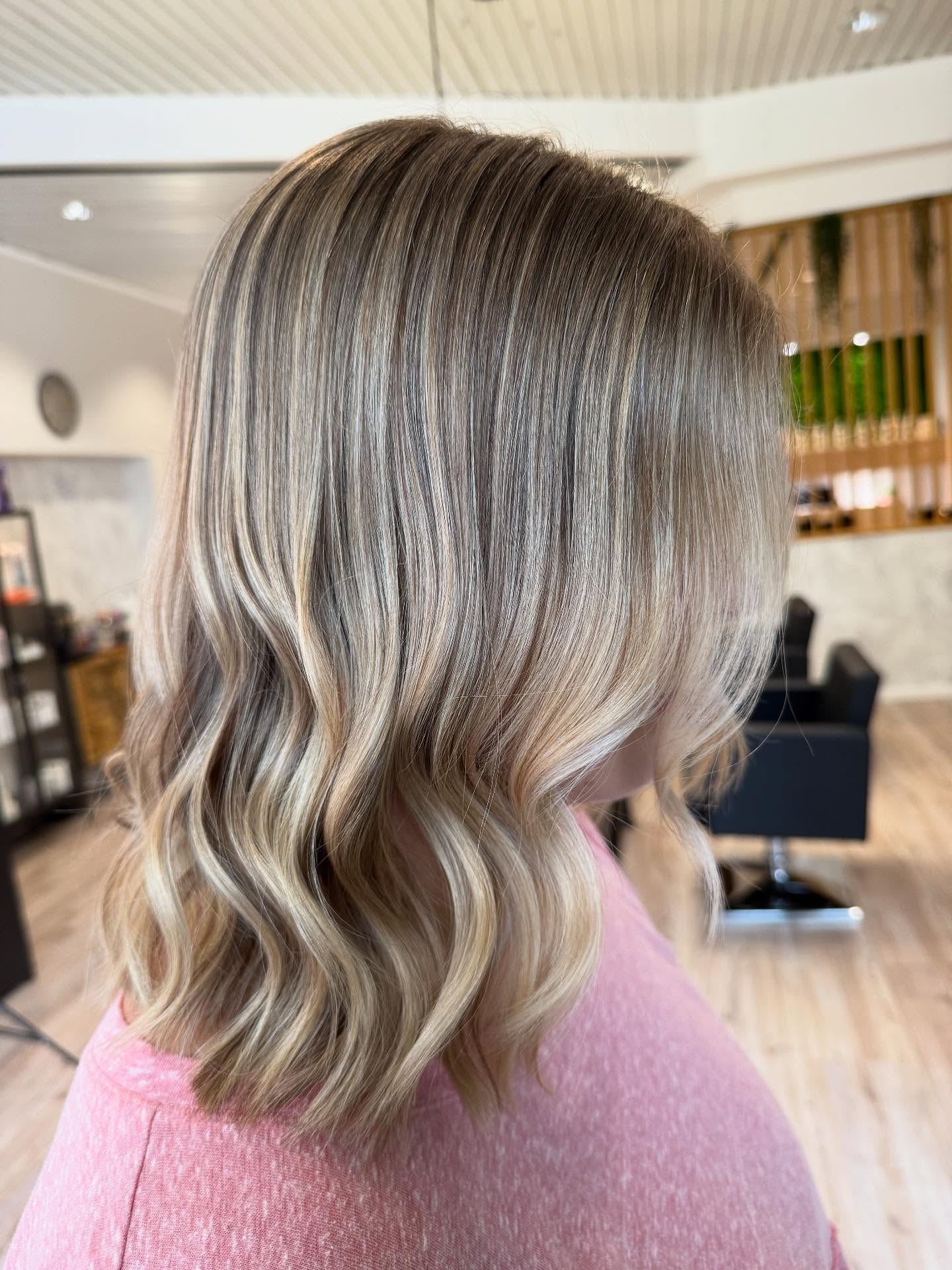
Pretty and uncomplicated, and I mean that genuinely. Not everything needs to be a technical showcase to be worth doing. Sometimes you just want a little more blonde and a little more warmth, and this delivers exactly that without making a production out of it. The texture keeps it casual, the layering is minimal enough that your shape doesn’t change dramatically, and the overall effect is someone who looks like she’s been in the sun a bit more than usual. I’d actually recommend this as a starting point if you’ve never had balayage and want to test the waters without committing to anything dramatic.
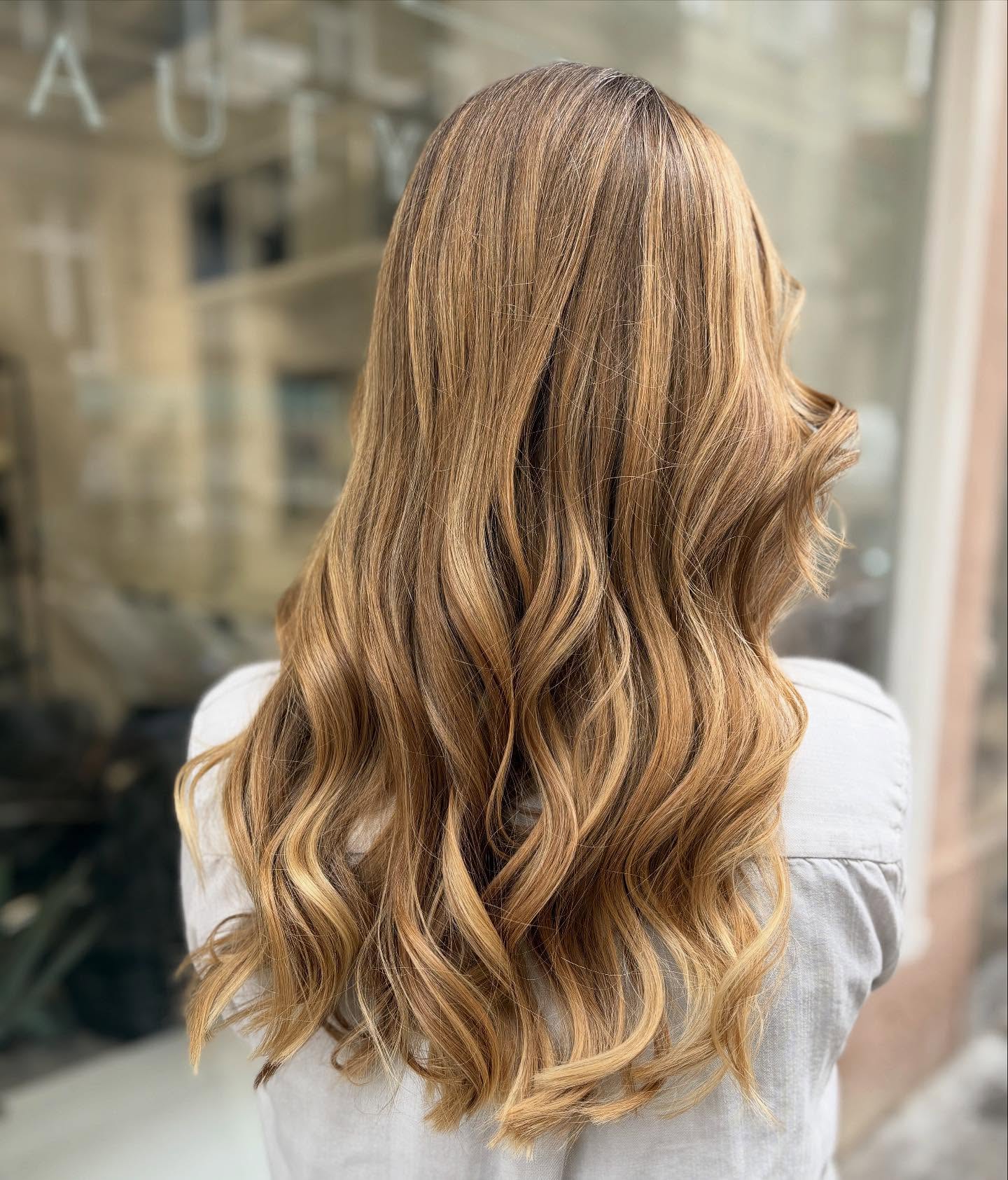
This is genuinely beautiful color and I want to explain what makes it work, because it’s not just one thing. The blend from root to golden end isn’t just smooth, it’s alive. There are at least three distinct tones moving through the mid-shaft and they’re all in the same warm family, so nothing fights and nothing clashes. The waves are helping, obviously, because every bend catches a different shade, but even the formula work alone is impressive. On thicker hair like this the balayage has room to really show its range, and the colorist used every bit of that canvas. This is the kind of result that takes a skilled hand and probably a solid four hours in the chair, and you can feel the time that went into it.
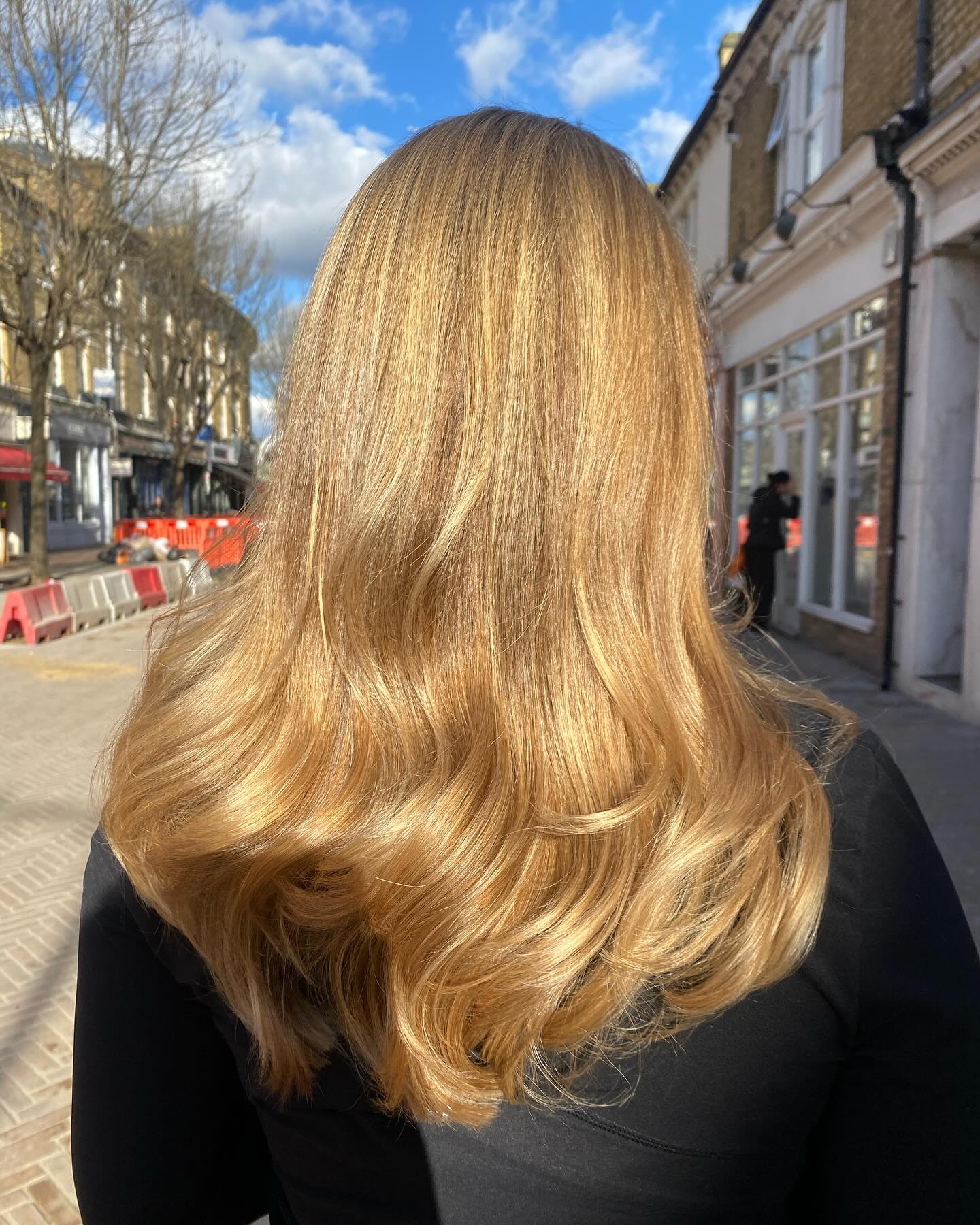
A solid warm blonde that does exactly what it set out to do. The silkiness of the hair is telling me the lightening process was gentle, probably a low-volume developer with longer processing time rather than rushing with something stronger, and that patience shows in the finished product. It’s not the most adventurous color in this collection but it’s beautifully executed and sometimes that matters more than being interesting.
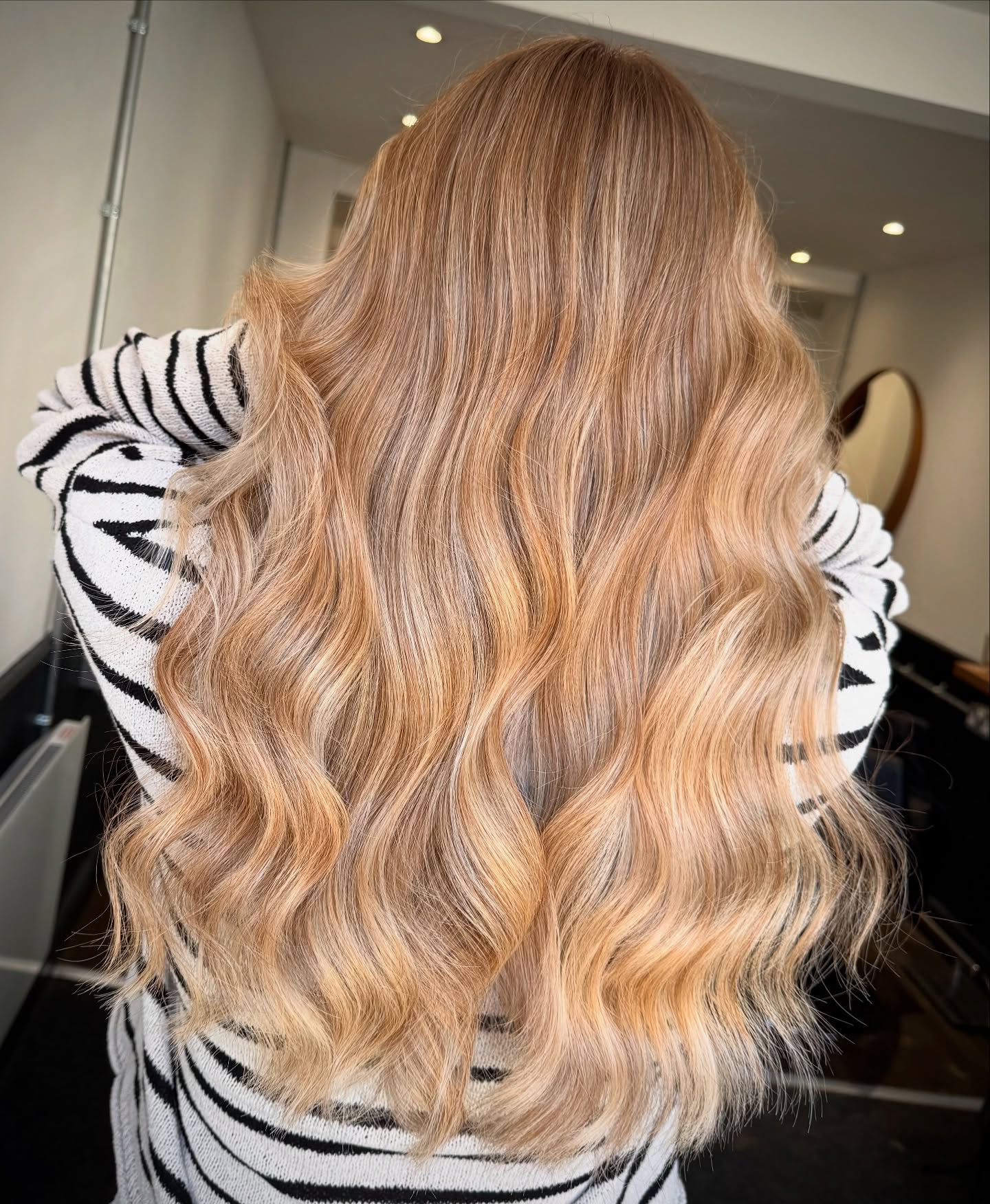
When I see hair this long carrying balayage this bright and it still looks this healthy, I know someone was careful. Getting length past the collarbone to hold blonde without going crispy is a genuine skill, and it usually means the colorist was conservative with the lightener at the ends where the hair is oldest and most porous. The waves are giving the color its full impact, that push and pull between the shadowed bends and the highlighted peaks is what everyone is chasing when they say they want “dimensional.” On hair this long, a weekly deep conditioning mask is not a suggestion, it’s the difference between this result and something you’d rather pull back in a bun.
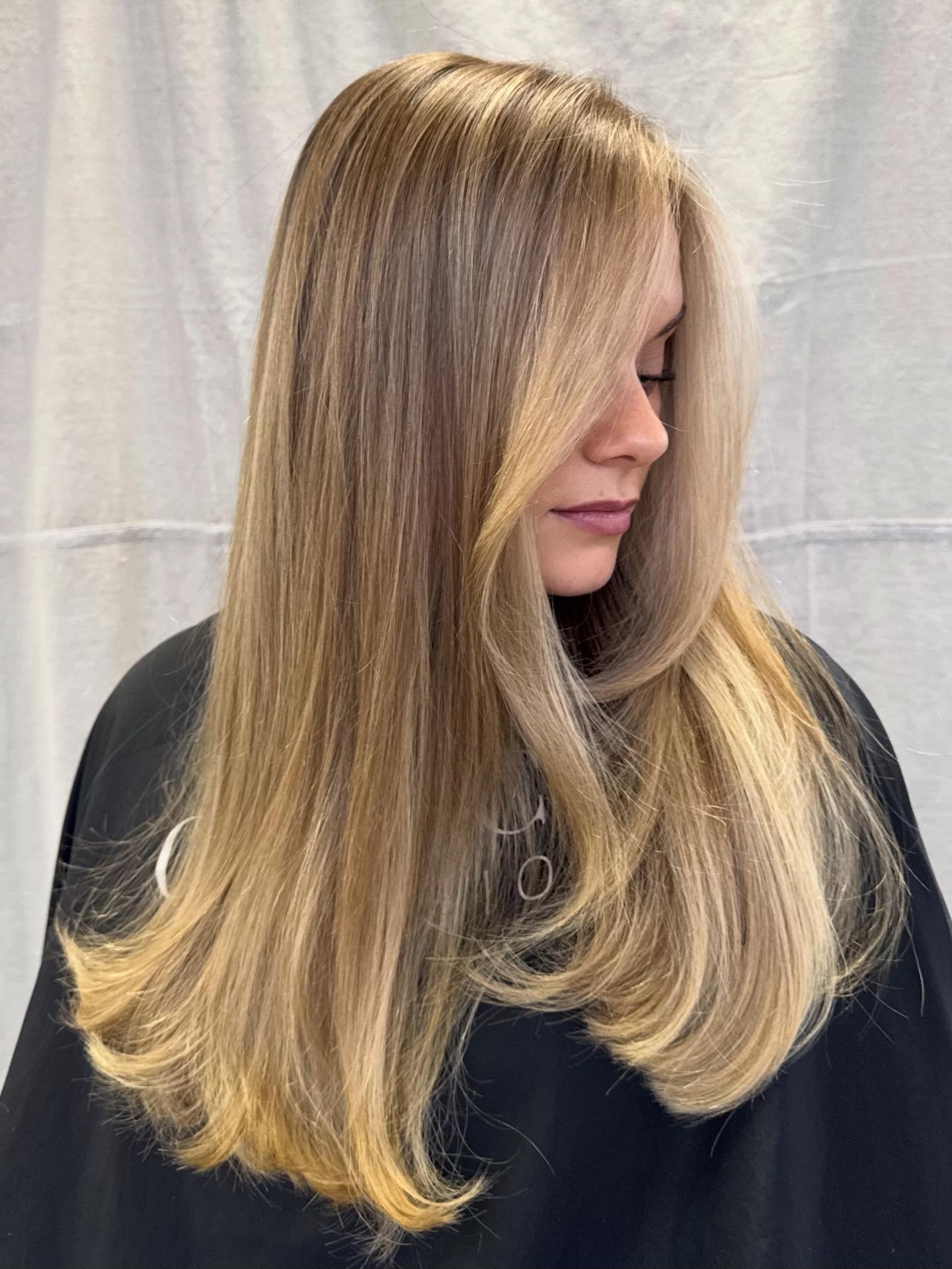
The blending here is so smooth it almost reads as a single color until you really look and realize there’s a full two-shade range happening from root to end. That kind of invisible gradient is the mark of someone who understands that balayage isn’t about contrast, it’s about transition. The layers are barely there but they’re creating just enough movement to break up what could otherwise look very flat on long straight hair. If you tend to wear your hair down and smooth most of the time, this is how to do warm blonde without it ever reading as “highlighted.”
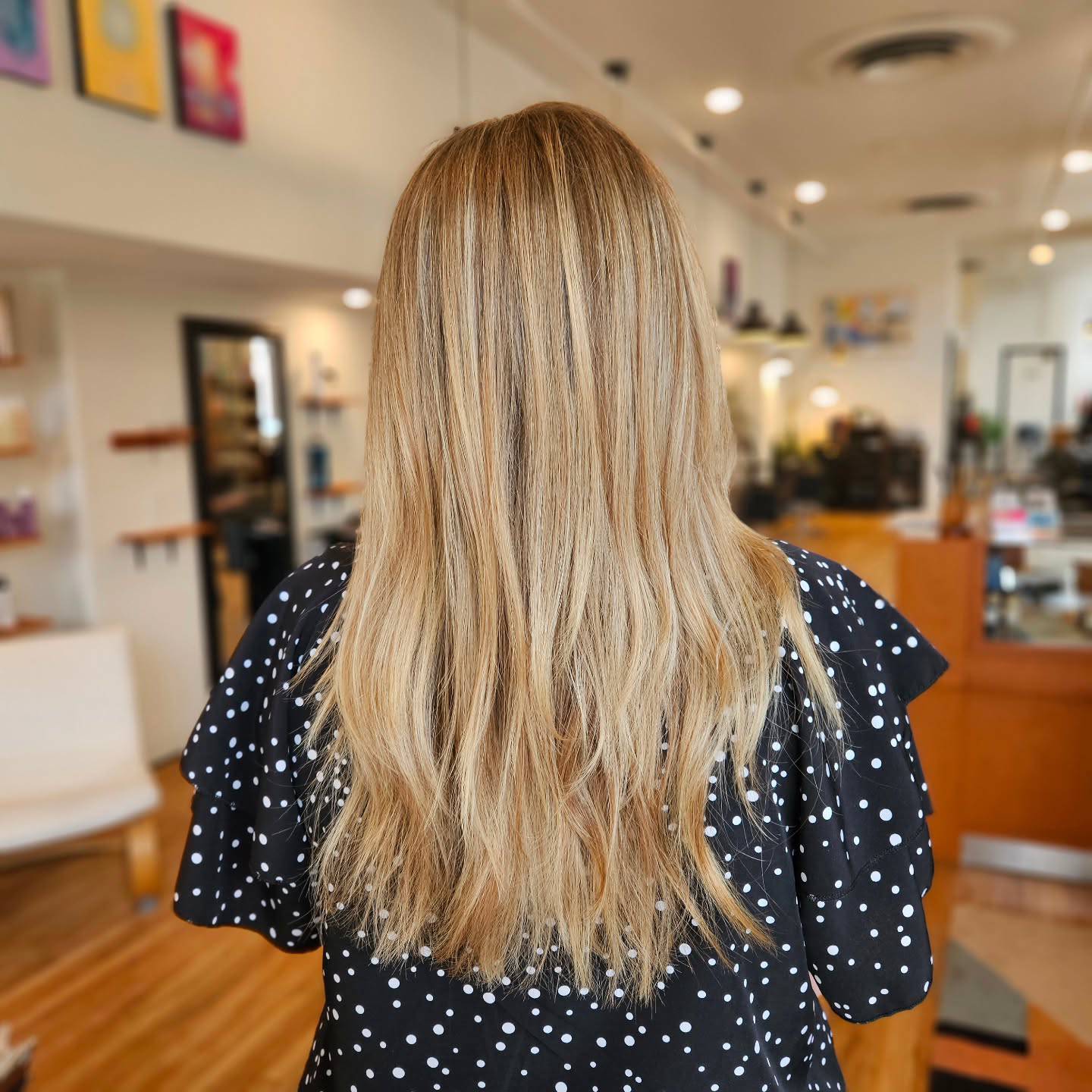
I like the root shadow on this one because it’s warm rather than ashy, which keeps everything feeling cohesive from scalp to ends. A lot of colorists default to a cool or neutral root shadow because it feels safer, but when the rest of the blonde is warm, that temperature mismatch creates a disconnect that I notice every single time and can never unsee. This colorist matched the undertone all the way through, and the result is that sun-drenched quality that looks natural even though we both know this took deliberate effort to achieve.
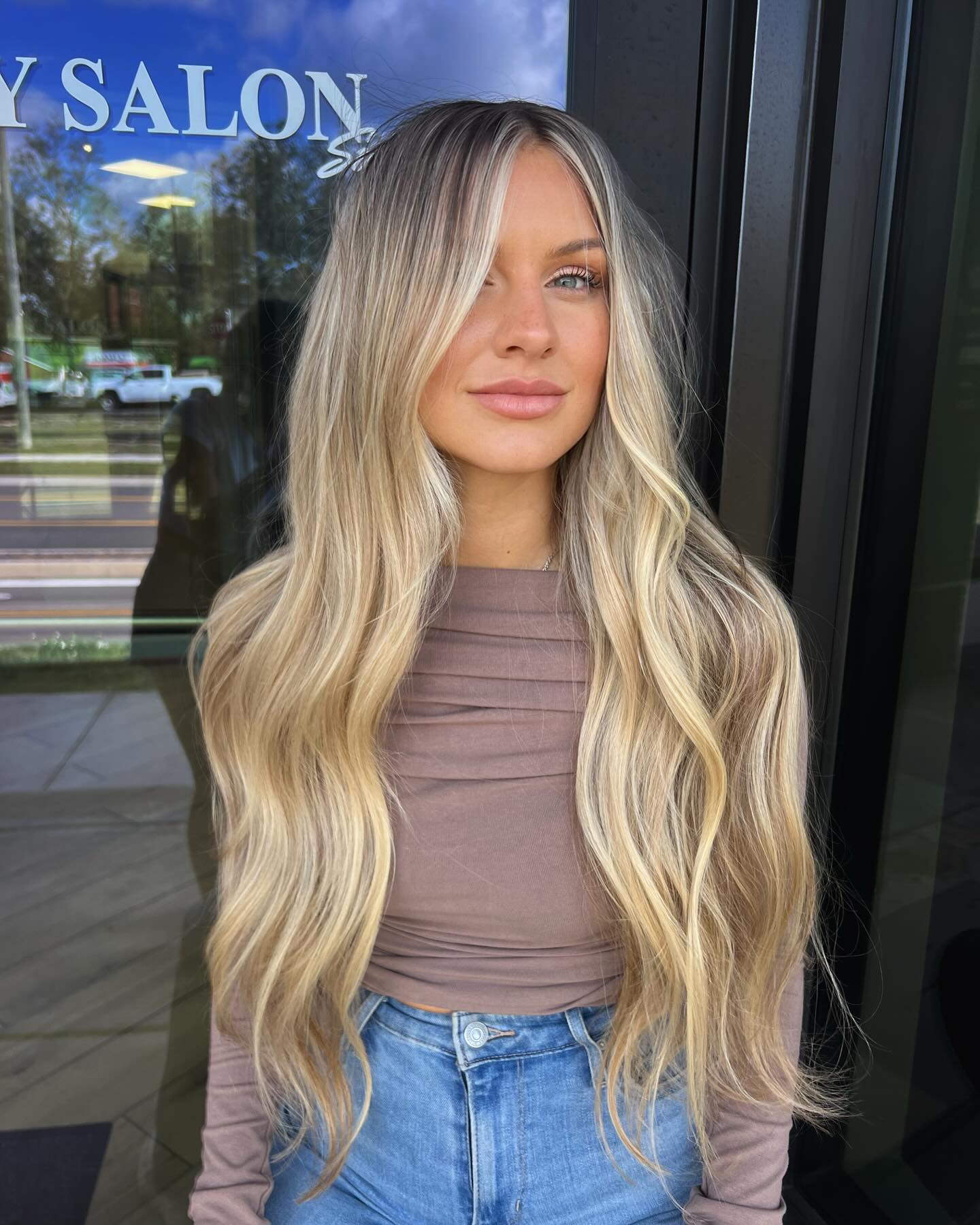
The face-framing pieces are doing something subtle but worth pointing out. They’re about a half shade lighter than the rest of the balayage, which puts brightness where your eye naturally goes without turning the entire head into one uniform blonde. It’s a small decision that separates a good colorist from a great one. The ends have a softness that suggests they were point-cut rather than blunt, which helps the color transition feel even more seamless as the hair swings and falls.
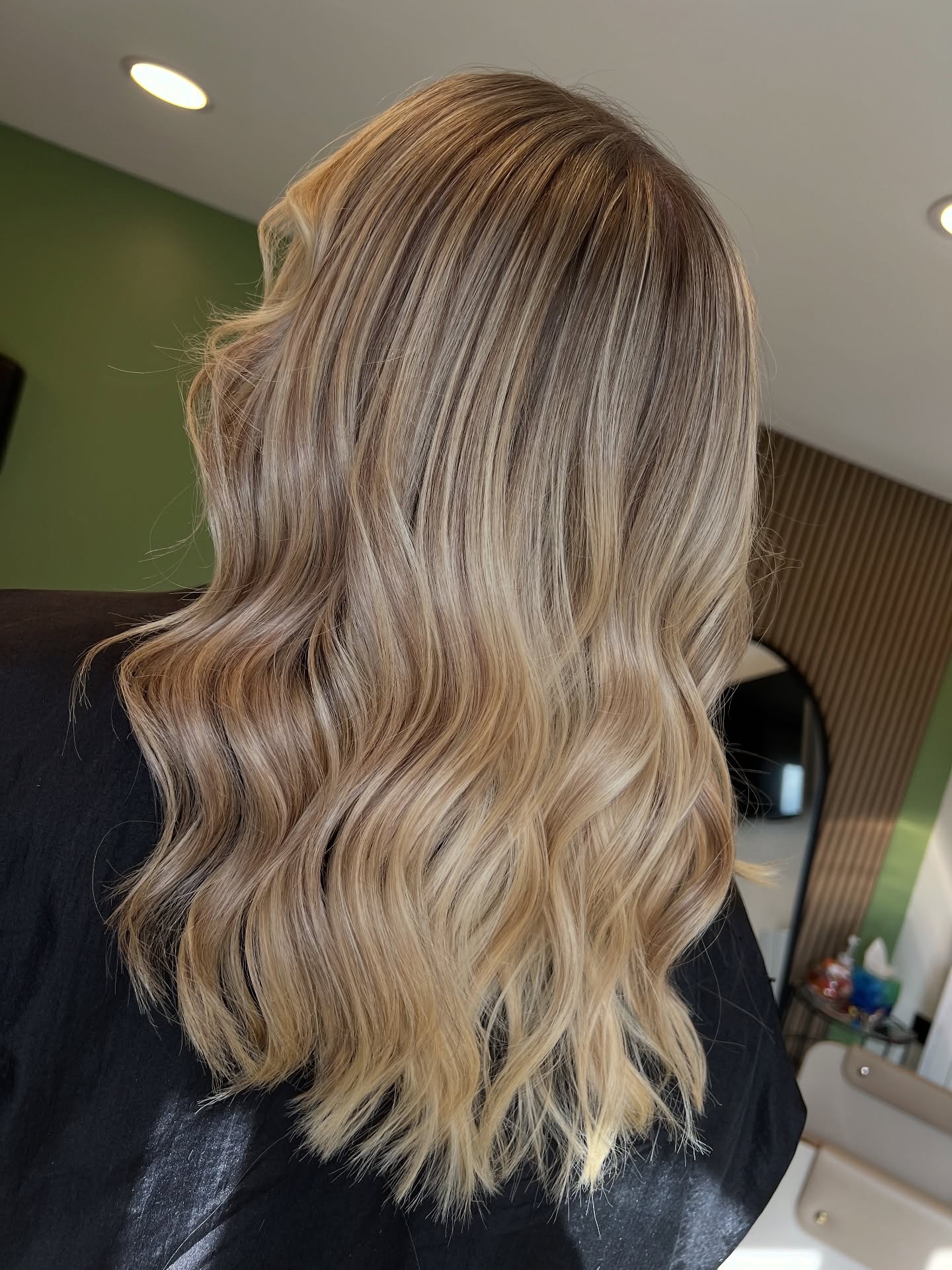
There’s a softness to this entire look that I keep coming back to, from the tone to the wave pattern to the way it sits around the face. The balayage has that quality where it looks like it could genuinely be your natural color if you happened to spend a lot of time outside, and honestly that’s the highest compliment I can give a warm blonde. Not everything needs to be dramatic, and this proves that holding back can be just as striking as going all in.
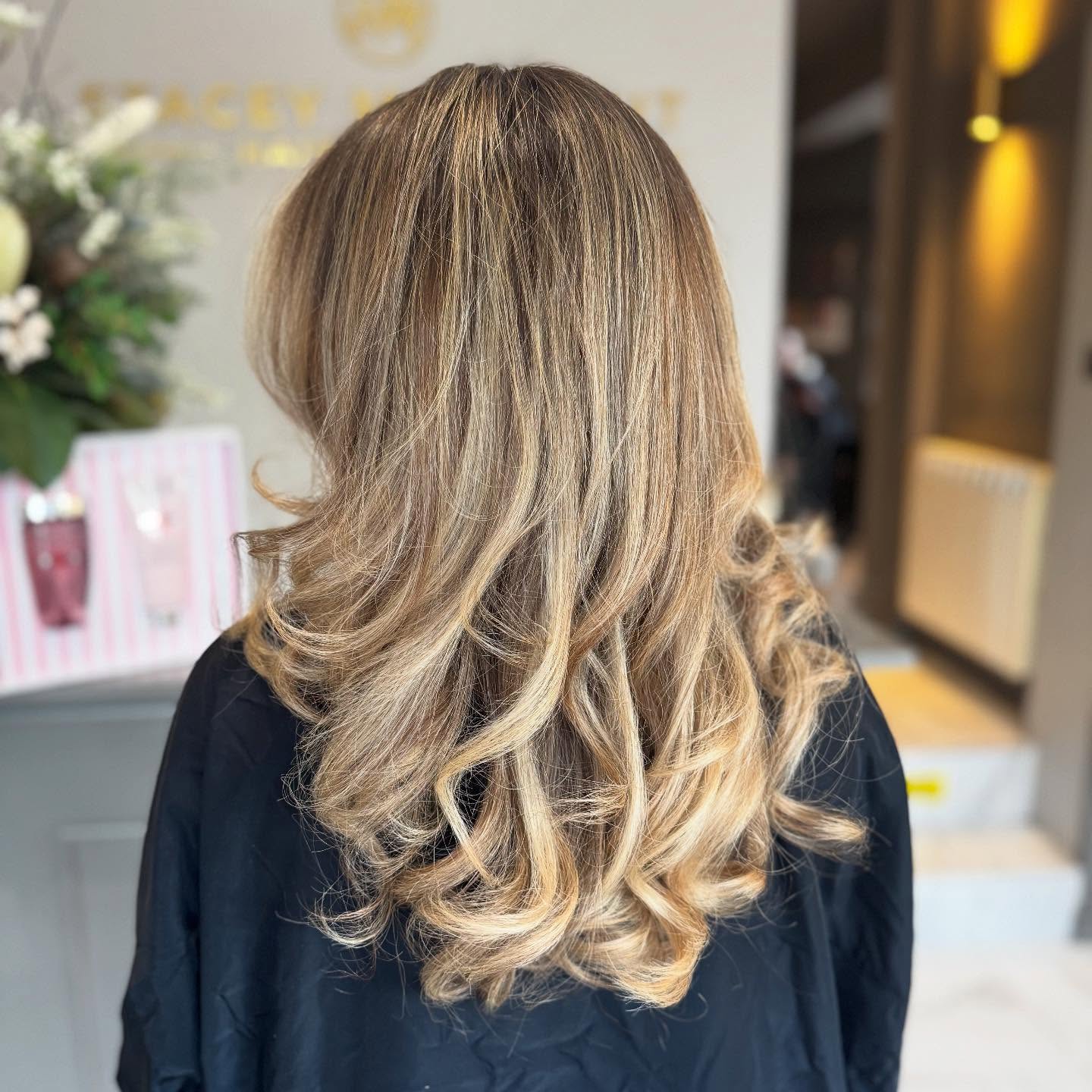
This is exactly what I mean when I tell clients that how you style your hair changes how your color reads. These curls are creating pockets of shadow and light that make what’s probably a two-tone balayage look like it has five different shades in it. The color itself leans more caramel than true blonde, sitting in that gorgeous middle ground between brunette and blonde that I honestly think is the most flattering warm tone on the widest range of people. The layers are cut to support this kind of curl, with enough weight taken out at the ends that everything springs up without going triangular. If you have thicker hair and you’ve been on the fence about going warm, let this be the thing that pushes you over.
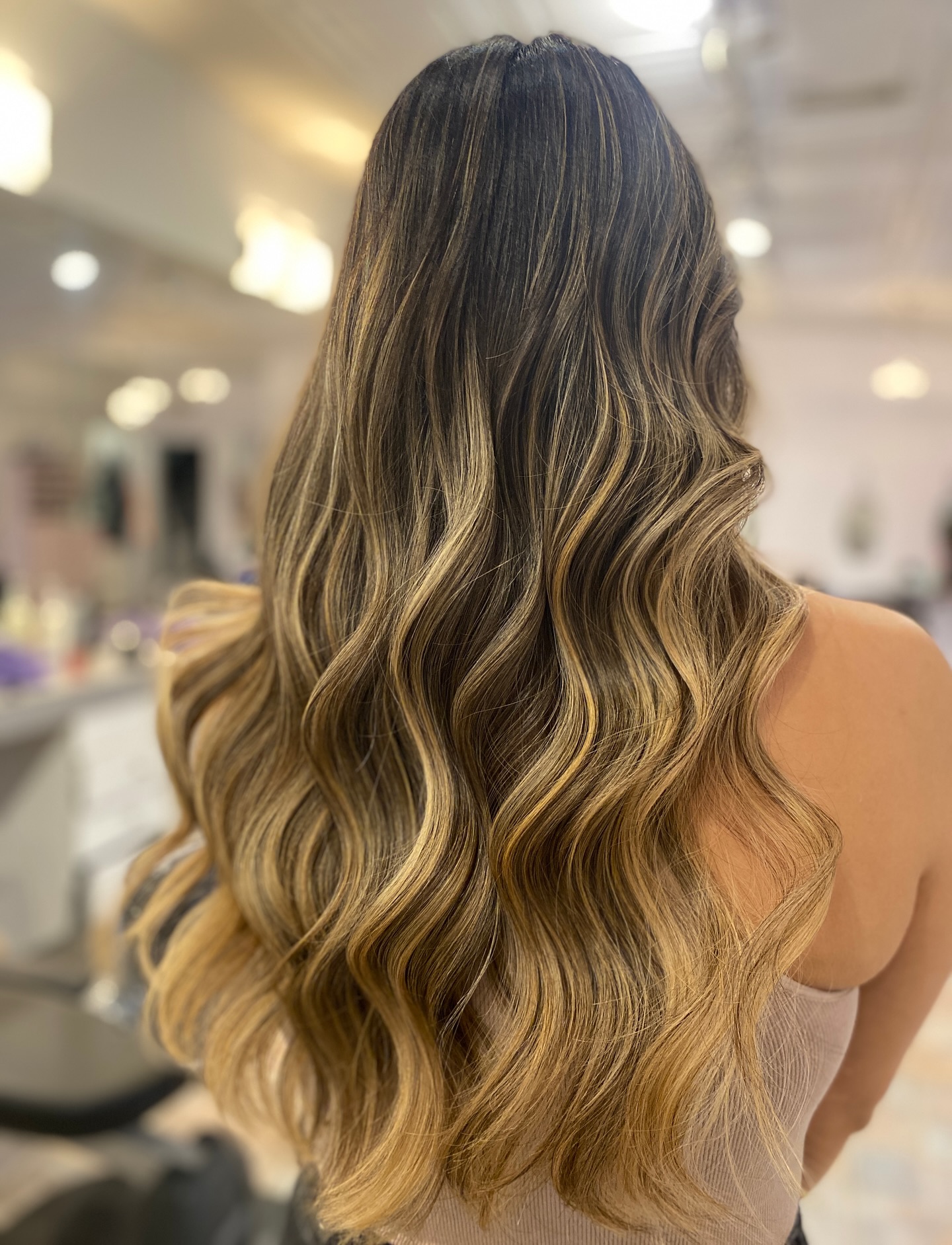
The S-wave pattern is doing exactly what it should, catching golden at the crest of each wave and dipping into something richer in the valleys. At mid-back length the colorist has a generous amount of hair to work with, but that also means the ends need to be in solid condition to hold color evenly, and they clearly are. I can tell this was toned with something in the gold family rather than beige, because of the way it catches light without any of that cool flicker that beige toners leave behind. It’s unapologetically warm and I genuinely love that about it.
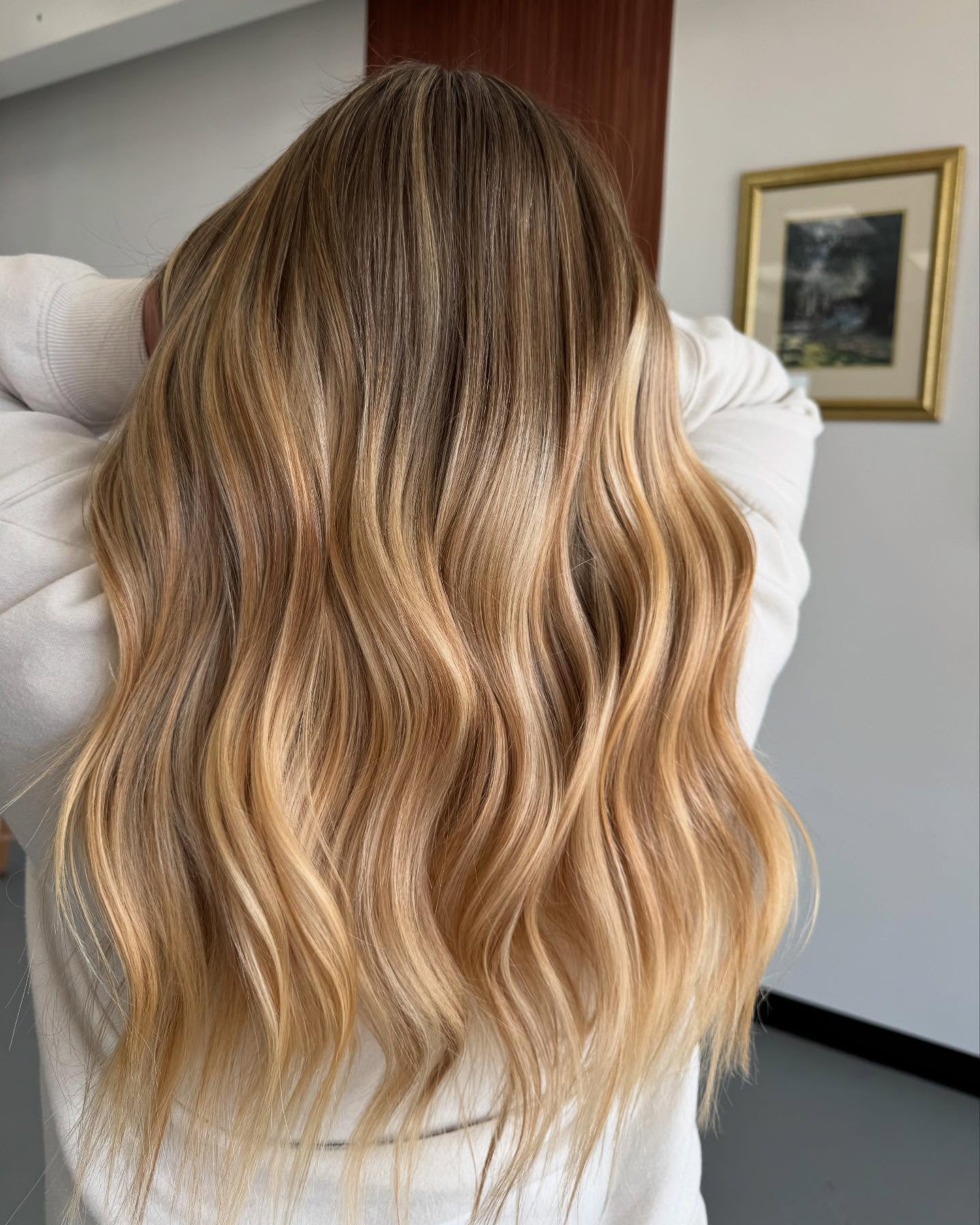
There’s a reason I keep coming back to this colorist’s work. The root-to-tip gradient is executed so naturally that it looks like the blonde just appeared on its own over time, which is the entire illusion good balayage should create. The luminosity in the ends tells me the hair is in excellent shape despite being lifted quite light, so either this client is serious about her aftercare or the colorist used a particularly gentle process, and I’d bet it’s both. This level of blonde on this much length is a real commitment, and it shows in the best way.
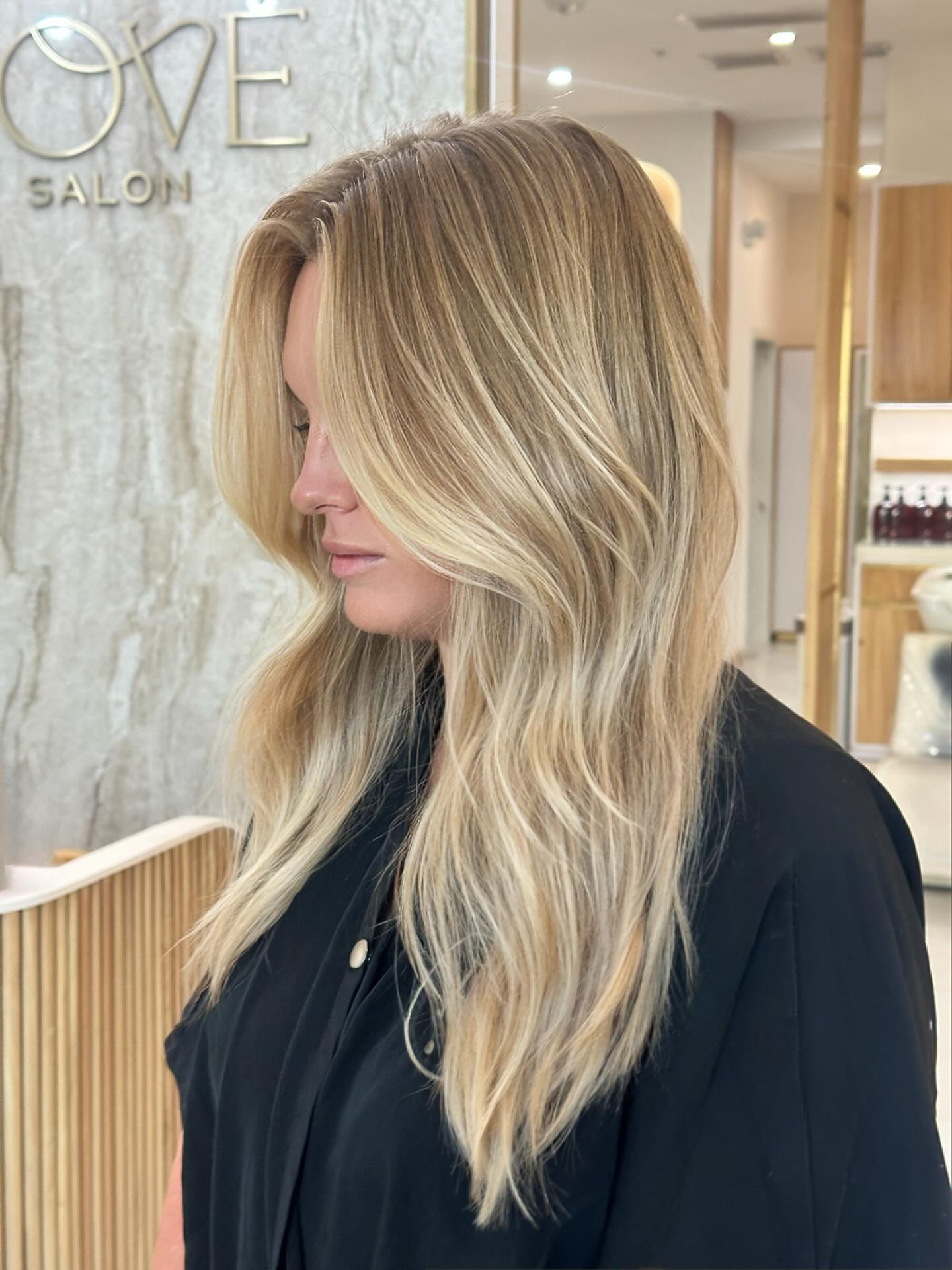
The natural wave in this hair is doing half the colorist’s job, creating movement and dimension that no curling iron can quite replicate because the bends are imperfect and unpredictable and that’s what makes them convincing. I always tell my wavy-haired clients they have a built-in advantage with balayage because the texture creates its own highlights and lowlights just from the way the hair falls and catches light. The tones here land somewhere between golden and honey, rich without being heavy, and they’d complement a wide range of skin tones without pulling too far in any direction. A color-depositing gloss every few weeks would keep this looking fresh between appointments without adding another salon visit to your calendar.
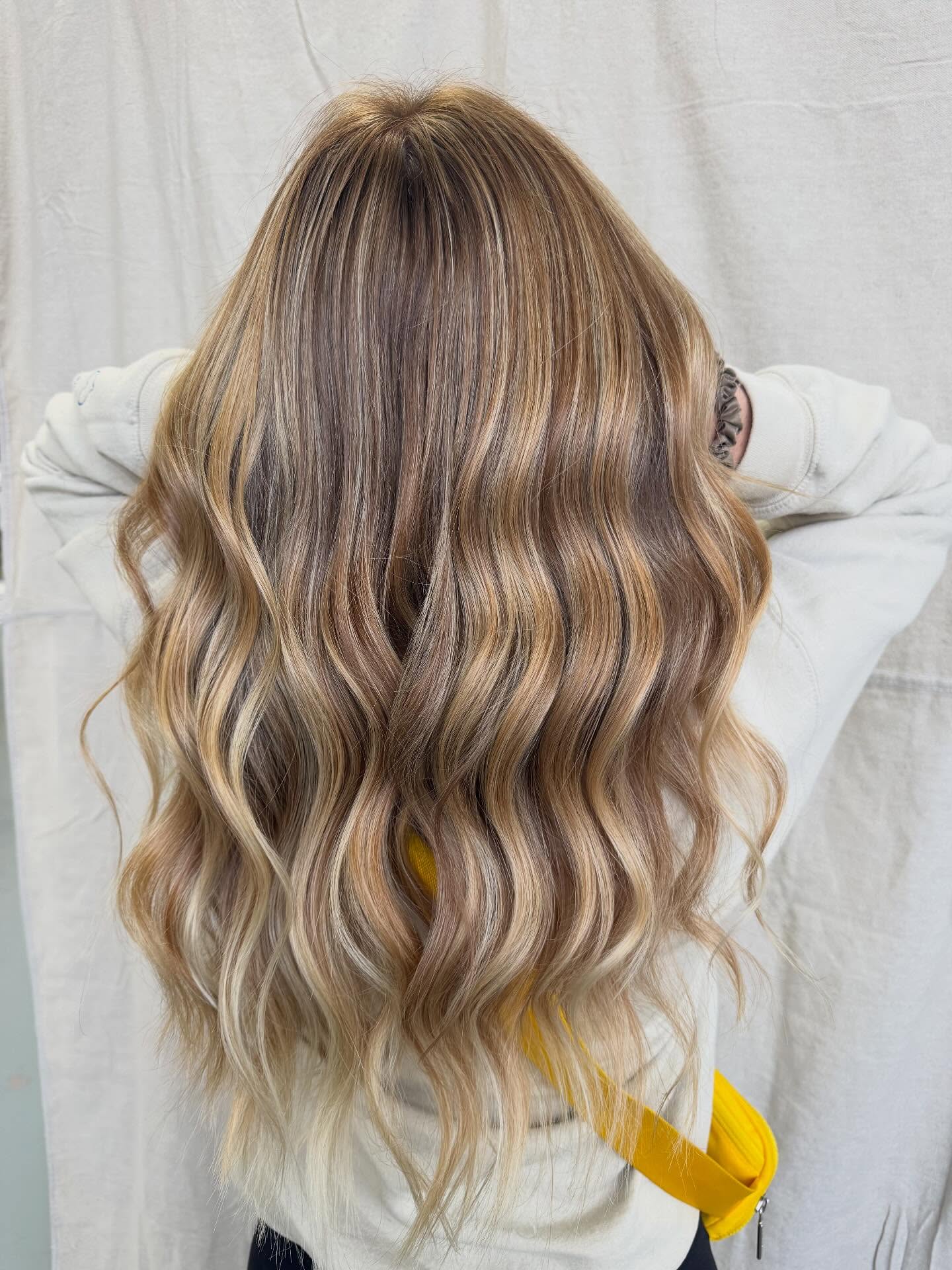
This is probably the most wearable look in the entire collection. It’s not trying to be editorial, it’s just really good warm blonde on a well-cut foundation, styled in a way you could actually do at home with a texturizing spray and ten minutes. There’s real value in balayage that doesn’t need a professional blowout to look like itself, and this delivers on that completely. The color has enough variation to keep things interesting without being so complex that it falls apart the first time you air-dry it on a rushed morning.
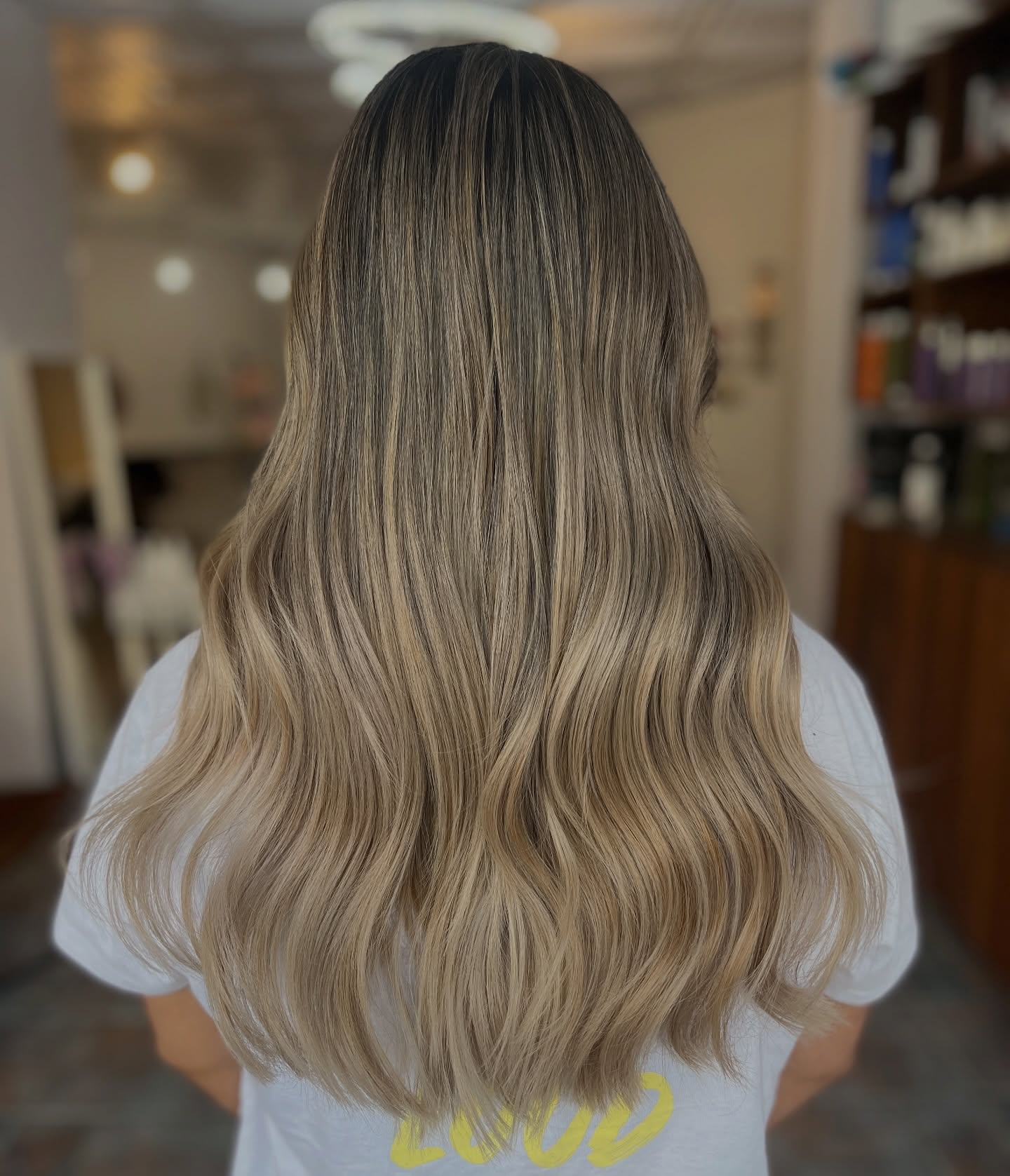
I’m ending with this one because it ties the whole collection together. The darker root melting into that warm, buttery blonde through the ends is textbook balayage technique, but what makes it special is the patience of the lift. You can tell this wasn’t rushed to maximum lightness in a single session. It has that quality of color that was built up over time, where the blonde is rich and saturated rather than pale and washed out. The waves add something romantic without looking overdone, and the overall effect is hair that looks like it belongs to someone who was simply born with it. Which, when you think about it, is the whole point of everything we do.
'); if(add_test == "no"){ window._mNHandle = window._mNHandle || {}; window._mNHandle.queue = window._mNHandle.queue || []; medianet_versionId = "121199"; (function() { var sct = document.createElement("script"), sctHl = document.getElementsByTagName("script")[0], isSSL = 'https:' == document.location.protocol; sct.type = "text/javascript"; sct.src = (isSSL ? 'https:' : 'http:') + '//contextual.media.net/dmedianet.js?cid=8CUTX14AQ' + (isSSL ? '&https=1' : '')+''; sct.async = "async"; sctHl.parentNode.insertBefore(sct, sctHl); })(); try { window._mNHandle.queue.push(function () { window._mNDetails.loadTag("646683264", "550x200", "646683264"); }); } catch (error) {} mediaad = 1; } //endnoadd if(add_test == "no"){ (function() { var sct = document.createElement("script"), sctHl = document.getElementsByTagName("script")[0], isSSL = 'https:' == document.location.protocol; sct.type = "text/javascript"; sct.src = (isSSL ? 'https:' : 'http:') + '//a.pub.network/latesthairstyles/pubfig.min.js'; sctHl.parentNode.insertBefore(sct, sctHl); })(); /* (function() { var sct = document.createElement("script"), sctHl = document.getElementsByTagName("script")[0], isSSL = 'https:' == document.location.protocol; sct.type = "text/javascript"; sct.src = (isSSL ? 'https:' : 'http:') + '//pagead2.googlesyndication.com/pagead/js/adsbygoogle.js?client=ca-pub-0498942454899924' + (isSSL ? '&https=1' : '')+''; sct.async = "async"; sct.crossOrigin = "anonymous"; sctHl.parentNode.insertBefore(sct, sctHl); })(); */ if (w < 900 ){ freestar.config.enabled_slots.push({ placementName: "LatestHairstyles_article_below_slideshow", slotId: "LatestHairstyles_article_below_slideshow" }); freestar.config.enabled_slots.push({ placementName: "LatestHairstyles_article_above_slideshow", slotId: "LatestHairstyles_article_above_slideshow" }); //freestar.config.enabled_slots.push({ placementName: "latesthairstyles_banner_mobile", slotId: "latesthairstyles_banner_mobile" }); //freestar.config.enabled_slots.push({ placementName: "LatestHairstyles_article_BTF_mobile", slotId: "LatestHairstyles_article_BTF_mobile" }); //freestar.config.enabled_slots.push({ placementName: "LatestHairstyles_article_below_video_mobile", slotId: "LatestHairstyles_article_below_video_mobile" }); //freestar.config.enabled_slots.push({ placementName: "FreeStarVideoAdContainer_Elements_Mobile", slotId: "FreeStarVideoAdContainer_Elements_Mobile" }); //freestar.queue.push(function() { //freestar.newVideo(video_placement_mobile); // }); //freestar.config.enabled_slots.push({ placementName: "LatestHairstyles_leaderboard", slotId: "LatestHairstyles_leaderboard" }); //var below_video_mobile_ad = document.getElementById("LatestHairstyles_article_below_video_mobile"); //below_video_mobile_ad.style.display = "block"; //setInterval(showAdEightSeconds, 8000); //setInterval(showAdSixteenSeconds, 13000); } else{ freestar.config.enabled_slots.push({ placementName: "LatestHairstyles_rightrail_articles", slotId: "LatestHairstyles_rightrail_articles" }); //freestar.config.enabled_slots.push({ placementName: "LatestHairstyles_BTF", slotId: "LatestHairstyles_BTF" }); freestar.config.enabled_slots.push({ placementName: "LatestHairstyles_article_below_slideshow", slotId: "LatestHairstyles_article_below_slideshow" }); freestar.config.enabled_slots.push({ placementName: "LatestHairstyles_article_above_slideshow", slotId: "LatestHairstyles_article_above_slideshow" }); //freestar.config.enabled_slots.push({ placementName: "FreeStarVideoAdContainer_Elements_Desktop", slotId: "FreeStarVideoAdContainer_Elements_Desktop" }); //freestar.config.enabled_slots.push({ placementName: "LatestHairstyles_leaderboard", slotId: "LatestHairstyles_leaderboard" }); } } }//end loaded ads } else{ if (w > 900) { if(mediaad == 0 ){ if(add_test == "no"){ window._mNHandle = window._mNHandle || {}; window._mNHandle.queue = window._mNHandle.queue || []; medianet_versionId = "121199"; (function() { var sct = document.createElement("script"), sctHl = document.getElementsByTagName("script")[0], isSSL = 'https:' == document.location.protocol; sct.type = "text/javascript"; sct.src = (isSSL ? 'https:' : 'http:') + '//contextual.media.net/dmedianet.js?cid=8CUTX14AQ' + (isSSL ? '&https=1' : '')+''; sct.async = "async"; sctHl.parentNode.insertBefore(sct, sctHl); })(); try { window._mNHandle.queue.push(function () { window._mNDetails.loadTag("646683264", "550x200", "646683264"); }); } catch (error) {} } //endnoadd mediaad = 1; }// end mediaad if (loadfreestar == 0 ){ if(add_test == "no"){ (function() { var sct = document.createElement("script"), sctHl = document.getElementsByTagName("script")[0], isSSL = 'https:' == document.location.protocol; sct.type = "text/javascript"; sct.src = (isSSL ? 'https:' : 'http:') + '//a.pub.network/latesthairstyles/pubfig.min.js'; sctHl.parentNode.insertBefore(sct, sctHl); })(); try { freestar.config.enabled_slots.push({ placementName: "LatestHairstyles_rightrail_articles", slotId: "LatestHairstyles_rightrail_articles" }); freestar.config.enabled_slots.push({ placementName: "LatestHairstyles_article_below_slideshow", slotId: "LatestHairstyles_article_below_slideshow" }); freestar.config.enabled_slots.push({ placementName: "LatestHairstyles_article_above_slideshow", slotId: "LatestHairstyles_article_above_slideshow" }); if (newsletter_email != '' && newsletter_email != 'none' ) { freestar.queue.push(function(){ freestar.identity.setIdentity({ email:newsletter_email, hashes: { sha256: 'SHA256_HASH' } }); }); } }catch(e){} }//noadtest loadfreestar = 1; var iframeurl = document.getElementById('iframeUrl'); if (iframeurl != null && iframeurl.value !="none") { var amazoniframe = document.getElementById('amazonIframe'); if (amazoniframe != null) amazoniframe.src = iframeurl; } } } else { //TOP //console.log("Boundaries " + contentadElement.getBoundingClientRect().top); if(contentadElement.getBoundingClientRect().top - offset_ca <= 0){ if(contentad == 0){ if(add_test == "no"){ contentad = 1; }//endnoadd } if(mediaad == 0 ){ if(add_test == "no"){ window._mNHandle = window._mNHandle || {}; window._mNHandle.queue = window._mNHandle.queue || []; medianet_versionId = "121199"; (function() { var sct = document.createElement("script"), sctHl = document.getElementsByTagName("script")[0], isSSL = 'https:' == document.location.protocol; sct.type = "text/javascript"; sct.src = (isSSL ? 'https:' : 'http:') + '//contextual.media.net/dmedianet.js?cid=8CUTX14AQ' + (isSSL ? '&https=1' : '')+''; sct.async = "async"; sctHl.parentNode.insertBefore(sct, sctHl); })(); try { window._mNHandle.queue.push(function () { window._mNDetails.loadTag("646683264", "550x200", "646683264"); }); } catch (error) {} } //endnoadd mediaad = 1; } } if (loadfreestar == 0 ){ if(add_test == "no"){ try { (function() { var sct = document.createElement("script"), sctHl = document.getElementsByTagName("script")[0], isSSL = 'https:' == document.location.protocol; sct.type = "text/javascript"; sct.src = (isSSL ? 'https:' : 'http:') + '//a.pub.network/latesthairstyles/pubfig.min.js'; sctHl.parentNode.insertBefore(sct, sctHl); })(); }catch(e){} if (w < 900 ){ try { freestar.config.enabled_slots.push({ placementName: "LatestHairstyles_article_below_slideshow", slotId: "LatestHairstyles_article_below_slideshow" }); freestar.config.enabled_slots.push({ placementName: "LatestHairstyles_article_above_slideshow", slotId: "LatestHairstyles_article_above_slideshow" }); // freestar.config.enabled_slots.push({ placementName: "latesthairstyles_banner_mobile", slotId: "latesthairstyles_banner_mobile" }); if (newsletter_email != '') { freestar.queue.push(function(){ freestar.identity.setIdentity({ email:newsletter_email }); }); } //freestar.config.enabled_slots.push({ placementName: "LatestHairstyles_article_BTF_mobile", slotId: "LatestHairstyles_article_BTF_mobile" }); // freestar.config.enabled_slots.push({ placementName: "LatestHairstyles_article_below_video_mobile", slotId: "LatestHairstyles_article_below_video_mobile" }); //freestar.config.enabled_slots.push({ placementName: "FreeStarVideoAdContainer_Elements_Mobile", slotId: "FreeStarVideoAdContainer_Elements_Mobile" }); } catch(e) { } //var below_video_mobile_ad = document.getElementById("LatestHairstyles_article_below_video_mobile"); //below_video_mobile_ad.style.display = "block"; } if (w < 900 ){ //setInterval(showAdEightSeconds, 8000); //setInterval(showAdSixteenSeconds, 13000); } }//noadtest loadfreestar = 1; var iframeurl = document.getElementById('iframeUrl'); if (iframeurl != null && iframeurl.value !="none") { var amazoniframe = document.getElementById('amazonIframe'); if (amazoniframe != null) amazoniframe.src = iframeurl; } } } }//end check pushly