
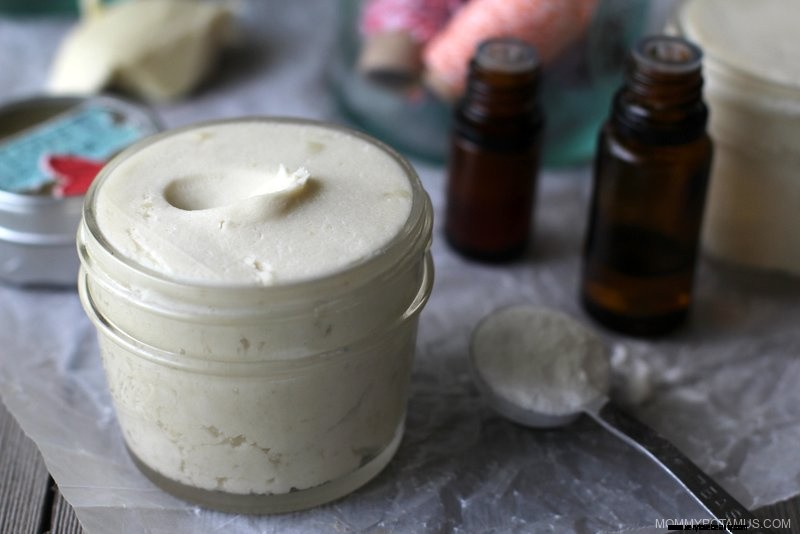
Way before I posted my “No I didn’t stuff my face with Cheetos“ tooth whitening recipe and started making my own shampoo bars, I was warning my college boyfriend (now husband) about the toxins he was putting on his body. To show me that my concerns were being taken seriously, he decided to take steps to ease his toxic burden.
By giving up deodorant. In the summer. IN TEXAS.
Not the “sacrifice” I would have chosen, but it was pretty clever on his part. Rather than give up something that would bother him, he ditched the product whose absence would bother me. A lot.
So I went to the health food store and picked up some options, but nothing worked. That’s when I discovered a cheap, non-toxic solution that’s incredibly easy to make. Don’t let the simplicity of this recipe fool you, though – it’s been field-tested in the 100+ degree heat of Texas summers and proven its worth.
Now, maybe you’re wondering why was I worrying about this in the first place. It’s not like he was eating his old deodorant and other personal care products. Although that’s true, hormone and nicotine patches work because our skin absorbs a lot of what we put on it. And the stuff in most conventional deodorants and antiperspirants . . well, they have some of it has serious safety issues.
When we sweat, the bacteria living on our skin (aka our skin microbiome) breaks down protein molecules within the sweat, causing body odor.
Antiperspirants reduce odor by using ingredients (usually aluminum-based salts) to stop up apocrine glands, or sweat glands. Less sweat means less protein molecules to break down, and in terms of results this approach works. However, sweating supports detoxification, and there are some safety concerns about using aluminum in skincare products. (More on that below.)
Deodorants don’t block sweating, but they do use ingredients that “deodorize” the resulting odor by either neutralize or masking it.
I wrote in more detail about my top five reasons to ditch conventional deodorant in this article, but here’s an overview:
Aluminum – Most antiperspirants and some deodorants – including some “natural crystal” deodorants – contain forms of aluminum, which clog sweat glands to stop perspiration. The Minnesota Pollution Control Agency lists aluminum as a potential endocrine disruptor, which is a chemical that produces “adverse developmental, reproductive, neurological, and immune effects in humans, abnormal growth patterns and neurodevelopmental delays in children.” (1)(2)
Phthalates – This category of chemicals helps other chemicals stick to our skin and/or penetrate more deeply into the epidermis. They’re linked to weight gain, increased risk of diabetes, fertility problems, developmental problems, lower testosterone levels in men, women and children, and more. (3)(4)(5)(6)(7)(8)
Parabens – Used as preservatives, parabens can be absorbed through the skin. They are considered hormone disruptors, which as mentioned above have been linked to a variety of adverse effects. Although the National Institutes of Health says a causal connection has not been established and more studies need to be done due to conflicting results, some researchers have hypothesized that the estrogenic properties of phthalates may play a role in breast cancer. They have expressed concern that it most often occurs in the upper outer quadrant – just under where women rub deodorant on. (9)(10)
Triclosan – This chemical, which is used in everything from toys to toothpaste, may disrupt normal thyroid function, alter hormones, and more. (11)(12)
Fragrance – Thanks to a loophole, companies can hide all sorts of chemicals under the label “fragrance” without disclosing them. Many of these ingredients are phthalates, but others are chemicals that can cause allergic responses or irritation. Ironically, even “‘unscented’ products may contain masking fragrances, which are chemicals used to cover up the odor of other chemicals. (13) Products labeled as “fragrance free” should be fine.
Each of us has a unique body chemistry, which is why scents such as this vanilla body spray smell different on different people. When it comes to DIY deodorant, our personal body chemistry plays a huge role in what works and what doesn’t.
Some people need the full-strength option – that would be this recipe – while others find full-strength irritating and need a deodorant recipe formulated for sensitive skin. You can also make a homemade deodorant stick with natural ingredients like cocoa butter, clay, and beeswax, but I prefer this recipe because it’s faster and easier.
Also, if you’d rather buy natural deodorant instead of make it, this is a great option that wasn’t available when my husband tried natural store-bought options.
In my recipe below, arrowroot powder helps by absorbing some of the sweat, baking soda helps to neutralize odor, and shea butter makes the first two ingredients easy to apply while nourishing and soothing underarm skin. For many people, those three ingredients are enough, but some people need something stronger. Increasing the amount of baking soda can cause irritation, so instead of doing that I recommend adding essential oils to counteract any residual odor that is present.
So, are you ready to kiss your store-bought stuff goodbye and make your own deodorant? Alright, here’s the recipe!
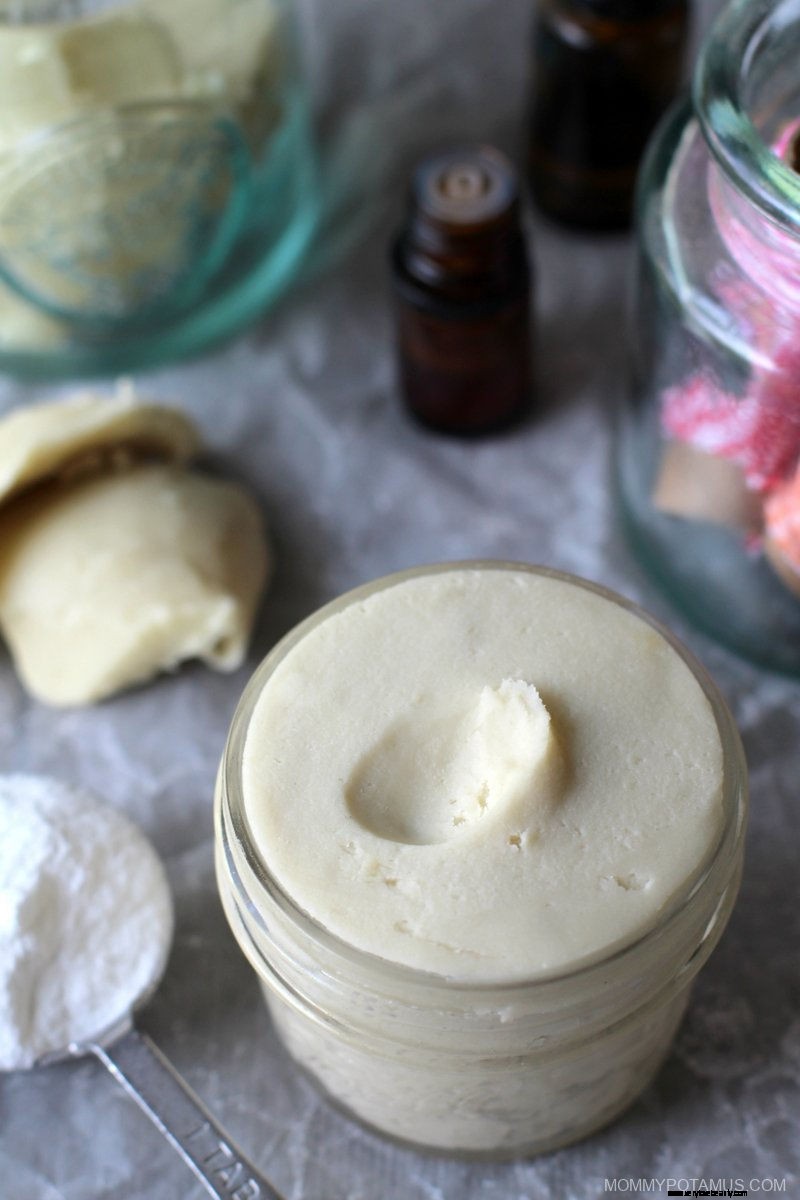
Summer-tested, husband approved. This homemade deodorant recipe is made with natural ingredients, takes less than 5 minutes to make, and WORKS!
My husband calls it “Man Stink Killing Deodorant” 🙂
Ingredients:
To Make
To Use
Using your fingertips, scoop out a pea-sized amount of deodorant – really, a little goes a long way – and rub it into your armpit until it’s invisible. The deodorant will absorb quickly and keep you smelling fresh, but It’s best to apply and then wait a few minutes for the deodorant to absorb before getting dressed. If you want extra dryness protection, apply a layer of arrowroot powder over the deodorant using a makeup brush that is solely used for this purpose.
Store at room temperature and apply as needed.
Notes: When I started making this recipe I used coconut oil as the base. However, I’ve found that skin-soothing shea butter is a better option because it’s not greasy and absorbs more quickly, which is super important if you’re getting dressed in a hurry.
Below are answers to the most common questions I’ve received about this recipe since I first shared it years ago.
I originally used coconut oil as the base for this recipe, but I changed it because shea butter absorbs better and makes the underarm area feel more dry. You can still use coconut oil if you’d like, though.
It might be the baking soda. Skin has a slightly acidic pH, and baking soda is alkaline. Depending on your unique chemistry you may need to lower the pH a bit to make it match your skin better. To do this, you can try one of two things:
With either of these approaches, you’ll want to wait until your armpits are no longer irritated before you try applying your new formula. In the comment section below, Kate also suggests this option:
Yes, you can use diatomaceous earth or bentonite clay. I don’t think they work quite as well as baking soda, but depending on your unique chemistry they may be all you need.
Formulas that use oils or natural butters can stain clothes if over-applied, but if you use the recommended pea-sized amount it is very unlikely to be an issue. It’s best to apply and then wait a few minutes for the deodorant to absorb before getting dressed.
If stored in a cool, dry place it should last at least a year.