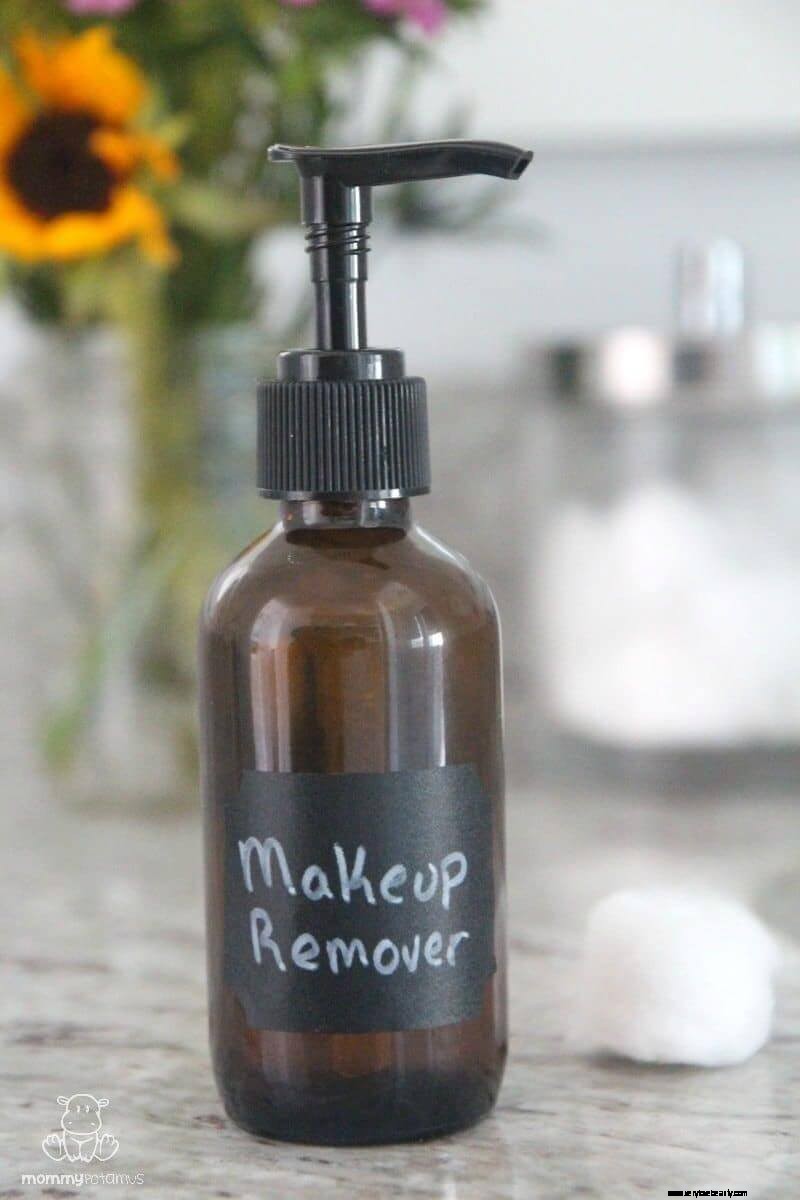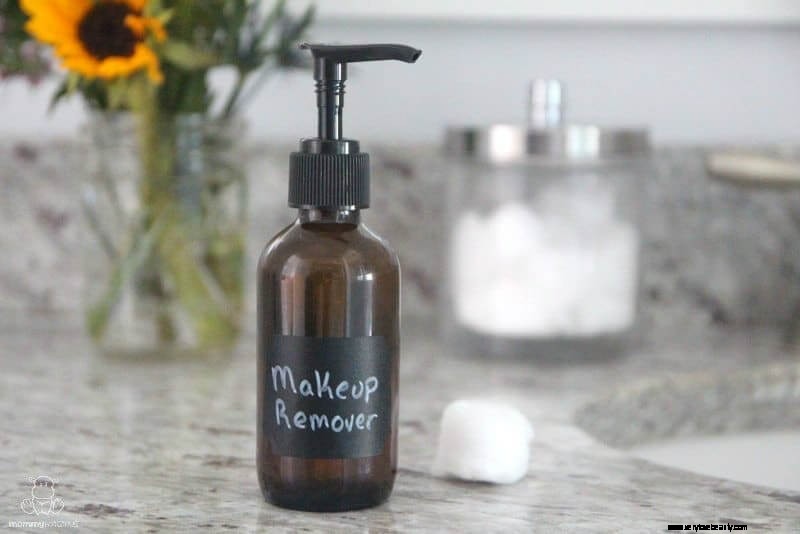
Y’all, I love my homemade honey face wash and its composition of gluconic acid and enzymes do amazing things – brighten skin, promote cell renewal, and balance pH to name a few – but it is not awesome at removing mascara.
Apparently many of you have noticed the same thing, because recently I’ve received several messages like this one . . .
Well, Stacia, I’m so glad you asked.
Many of the most popular eye makeup removers contain parabens (hormone disruptors), imidazolidinyl urea (a formaldehyde releaser), and other problematic ingredients. (1) (2)
Although there are some good products out there – this one, for example – they can be pricey. Fortunately, the gentle, quick and inexpensive recipe below works just as well. Let’s take a look at the two ingredients you’ll need.
Derived from witch hazel branches (Hamamelis virginiana), this extract is renowned for its ability to soothe, balance, cleanse and condition skin.
It also acts as an astringent, which helps to tighten pores. I always keep a bottle of witch hazel extract on hand for cuts, scrapes, and general skincare.
For this recipe, the oil you select doesn’t make a significant difference. Makeup remover doesn’t stay on very long and the skin around our eyes isn’t particularly acne prone, so in most cases any nourishing oil will probably work. I typically use olive or avocado oil because I have them on hand.
That said, if you’re purchasing an oil for this recipe, it makes sense to select one that you could use on your whole face as well. Here are some options to consider:
Light and gentle, sweet almond oil softens, soothes and moisturizes, then wipes away clean.
Best For: Dry, sensitive and acne-prone skin
Shelf Life: Approximately 12 months
Buy sweet almond oil here
Rich in essential fatty acids (EFAs), vitamin E, and antioxidants like oleic acid, avocado oil is rich and nourishing. It also absorbs well into skin.
Best For: Dry or acne-prone skin
Shelf Life: Approximately 12 months
Buy avocado oil here
This oil makes an excellent all-around body moisturizer, but may cause breakouts for people with acne-prone skin when used on the face.
Best For: Most skin types
Shelf Life: Approximately 2-3 years
Buy fractionated coconut oil here
Like tallow balm, jojoba oil has a structure that is similar to our natural sebum, which makes it uniquely compatible with our skin. It’s helpful for supporting skin repair without clogging pores. Also, it’s actually technically a wax, but most refer to it as an oil because it’s liquid in its natural form.
Best For: Most skin types, including combination and acne-prone skin
Shelf Life: Approximately 2-3 years
Buy jojoba oil here
Rich in antioxidants like phenols, fatty acids and vitamin E, olive oil is deeply nourishing and well-absorbed. It’s best for dry and normal skin types. If possible, opt for extra virgin olive oil because it’s higher in antioxidants.
For more information on different oils and how they interact with skin types, check out this post on the oil cleansing method.
Best For: Dry or acne-prone skin
Shelf Life: Approximately 1-2 years
Buy olive oil here