
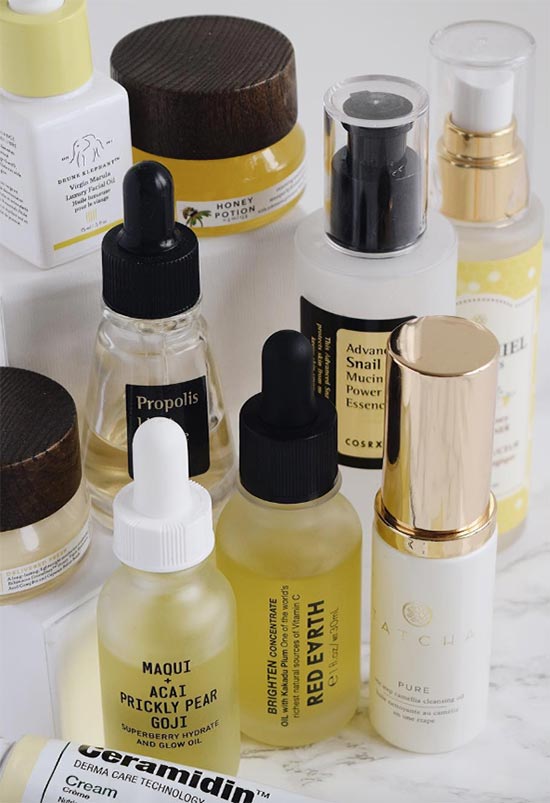
You don’t hear a lot about linoleic acid for skin, but this essential fatty acid certainly deserves a serious mention. This ingredient shows up in skin care on its own, but more frequently it is a hidden component found in a few precious botanical oils.
In this article, we’ll explain exactly what linoleic acid is, and what it does to the skin. We’ll help you find out which oils contain linoleic acid in remarkable quantities, and then will make sure you know how to use it once you add it to your routine.
Linoleic acid is an essential fatty acid that occurs naturally in all kinds of oils, including sunflower oil, safflower oil, and grape seed oil. It is a type of polyunsaturated omega 6 fatty acid. Since it is unsaturated, it tends to stay liquid even at lower temperatures.
The human body cannot synthesize linoleic acid on its own, but it is an important part of our diet. Linoleic acid is important for natural skin functions and wound healing, and deficiencies in it can lead to all kinds of skin and hair issues.
Once consumed and processed by our body, linoleic acid comes to make up part of our sebum (the oil that human skin produces), but it can also reach our skin topically. Oils rich in linoleic acid are especially popular in skin care because they have all kinds of fantastic properties that make all skin types function better.
Linoleic acid occurs naturally in human sebum, but not everyone’s skin produces it the same way. For example, it was found that the oil on the faces of those with acne-prone skin produces less linoleic acid and more oleic. These are the things that linoleic acid is shown to do to the skin:
There are many plant oils that contain large amounts of linoleic acid, but I wanted to list the ones that show up the most frequently in skin care. When it’s in an oil, linoleic acid is bound to glycerin, which means that the skin doesn’t process it the same way as it would when it’s just the isolated fatty acid on its own.
Despite that, people with sensitive and acne-prone skin find that their skin tends to respond beautifully to oils high in linoleic acid, so I suspect that it still has an effect. In addition to that, all of the natural oils rich in linoleic acid contain other fabulous components that can help the skin, like anti-aging vitamins and phytosterols.
Oils rich in linoleic acid normally have a much shorter shelf life than other oils, which is why you can’t use any old oil found in the grocery store – they are often processed in some way in order to increase their oleic acid content and reduce their linoleic acid content. That is why you want to use either skincare products with high-linoleic acid ingredients, or the straight oils sold for the purposes of skincare preparation.
Whether linoleic acid skin care is for you or not depends on the pros and cons of using such products, which come as follows:
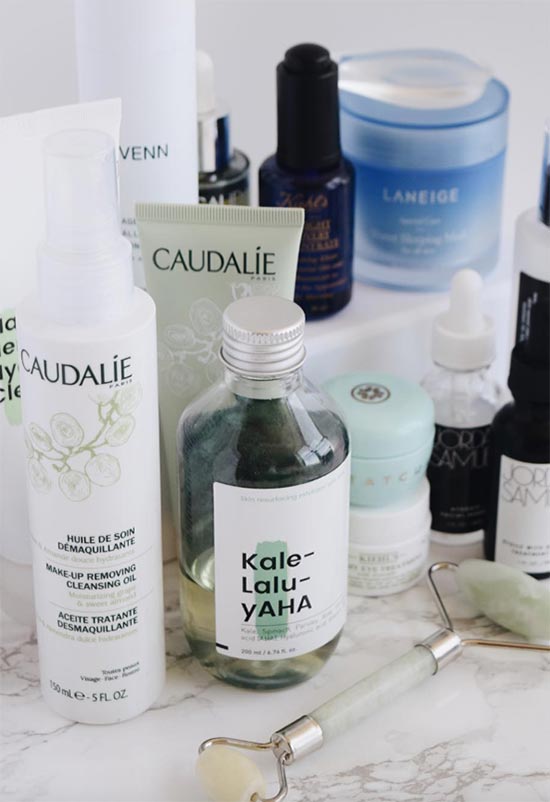
Linoleic acid skincare products come in all forms, from cleansers to serums to moisturizers to face oils. Depending on the product you choose, simply follow the use directions, and fit it into your skincare routine where such a product usually makes sense. With this in mind, oils rich in linoleic acid tend to commonly show up in high concentrations in facial oil blends, and there are a few ways to use facial oils.
If you’re adding an oil rich in linoleic acid to your skincare routine, it’s important to be aware that since its shelf life tends to be shorter than that of high oleic oils you might want to keep it in the skincare fridge, or fortify it with shelf life-extending vitamin E. Always look at the use-by date when buying just the oil.
Oils high in linoleic acid tend to penetrate into the skin fairly easily, and they’re not too occlusive: this means that they don’t totally lock water into the skin the way silicones or mineral oils would. Because of that they can be used before moisturizers, and you don’t have to worry about them preventing the moisturizer from sinking into your skin.
A very simple routine could include nothing but high linoleic acid oils, as you can use them to cleanse your skin with the oil cleansing method, and then just add a few drops to moisturize your skin.
Oils high in linoleic acid should always come in towards the end your skincare routine, after you’ve applied any active ingredients you might be using like anti-bacterial spot treatments, chemical exfoliants, vitamin C, or vitamin A.
You can also use oils high in linoleic acid as though they were serums, smoothing them on to your skin either before or after moisturizing your skin. Lastly, you can use them to boost the function of your moisturizer by adding a few drops to it in your palm right before applying to the skin.
Photos via @beawuty, Instagram