
I’ve ignored the benefits of enzymes for skin for far too long. I don’t have an excuse, I’ve just been blinded by the shiny alpha- and beta-hydroxy acids. Enzymes also constitute chemical exfoliants, but they are significantly milder and gentler than these aforementioned acids.
In this article, I explain exactly what the enzymes used in skin care are, and what the benefits of enzymes are for the skin. Enzyme peels are not without their side effects, however, so I do outline that in full. To finish things off, I’ve got some explanations on how the various enzyme skincare products should be used.
Enzymes are molecules that speed up different kinds of chemical reactions. There are many different kinds of them, but the enzymes used in skin care usually came from fruit extracts.
As Michelle of LabMuffin explains, these enzymes are a type of protein that breaks down other proteins. It just so happens that the main component in dead skin cells is protein – keratin, to be specific. In skin care, fruit enzymes are meant to help break down those proteins to facilitate the shedding of dead skin cells.
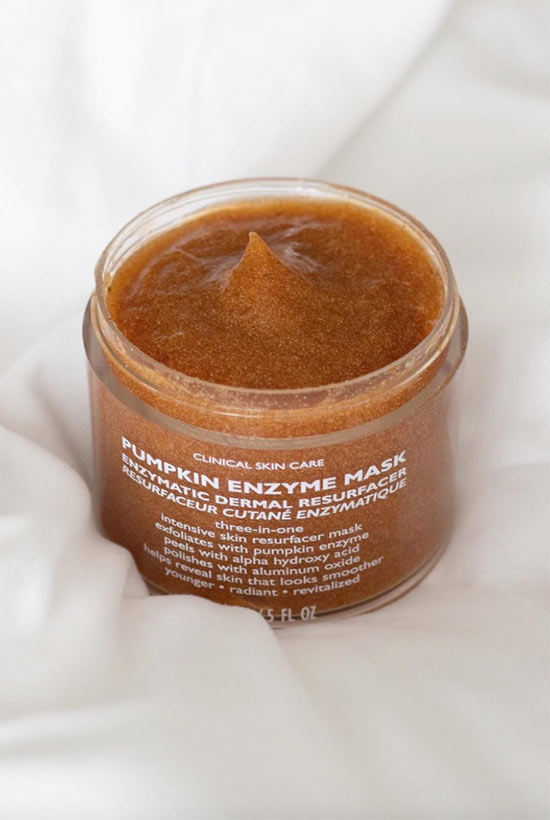
The most common enzymes used in skin care come from papaya, pineapple, and pumpkin, but occasionally we’ll see other sources as well. Papain is the active enzyme from papaya extract, while bromelain is what’s in pineapple and kiwi. With pumpkin, the situation is a little more unique since Michelle explains that the enzyme in pumpkin extract is actually a strain of bacteria called Bacillus.
What are the benefits your skin will get using enzymes?
Since enzymes can break down proteins, they help exfoliate the skin. They aid in the removal of dead skin cells, which allows for the skin to regenerate more quickly, and can also aid with a variety of skin issues and concerns including premature aging and acne.
The other benefit of dead skin cell removal is that it allows other skincare products to penetrate into the skin more quickly and thoroughly, which improves their overall function.
Enzymes are less exfoliating than acids like glycolic, lactic or salicylic acid by a magnitude, so they are more appropriate for those with highly sensitive skin or skin that is thin and prone to over-exfoliation. They are much less likely to cause irritation.
According to manufacturers like Making Cosmetics, most of the enzyme-rich extracts have other skin benefits, including an ability to soothe and soften the skin. These ingredients do this without causing breakouts, so they are great in moisturizing products for all skin types.
Beyond the typical papaya, pineapple, and pumpkin enzymes, occasionally we see other enzymes in cosmetics that have even more powerful soothing, skin softening, or antioxidant effects although they usually won’t have the ability to exfoliate.
Chemical exfoliants based on AHAs like glycolic or salicylic acid are very pH-dependent. This means that if the product is formulated at the wrong pH or if the skin is too alkaline for whatever reason, the exfoliation will not be as thorough. Enzymes, on the other hand, function at a wider pH range so formulation and product order don’t have to be as big of a concern.
As with all naturally-derived skincare ingredients, there is a chance for irritation or allergic reaction with enzymes. In fact, enzyme peels pose a slightly higher risk of irritation than other products with botanical extracts specifically because of their keratolytic effects. Exfoliants as a class are powerful ingredients with excellent results, but that comes hand in hand with an increased chance that they’ll irritate the skin.
If you already have an allergy to one of the fruits from which the enzymes were taken, then it is best to skip the product altogether. Many people will find that their mouth swells up or gets irritated when they eat pineapple or papaya specifically because of the papain or bromelain.
There are some warnings about enzymes (especially papain) causing serious damage to the skin barrier or causing contact dermatitis. It is important to note, however, that the concentration of papain used in these studies was significantly higher than what you will find in cosmetics, or otherwise we would see hundreds of reviews complaining about customers having reactions to those products.
Nevertheless, it is important to practice safe skincare habits like patch testing. To patch test enzyme peels for sensitivity, apply the peel to a small section of thin skin. The upper arm, forearm, or behind the ear are all good places to do a patch test. Depending on the strength of the product and how often you would like to use it, you can apply it for a few days in a row or apply it, wait a few days, and then apply it again.
If no adverse reactions occur, then you can try the product on your face next. Once you start using the product on your face, pay attention to signs of over-exfoliation like flaking, stinging or tightness. Over-exfoliation is much less likely with enzyme peels than it is with acid peels, but it’s still good to pay attention. If you notice those signs, discontinue use.
Photos via @neighha, Instagram