
The news of Zika virus spreading is pretty scary, particularly if you're pregnant or trying to conceive (TTC). If you're expecting, what steps do you need to take to protect yourself and your baby? Can you still take a babymoon, and where is it safe to travel? Where is Zika virus spreading locally in the U.S.? Don't panic; read on for facts that can help answer your questions, and keep you and your family safe, whether you're pregnant or not.
Zika virus is a disease spread to people primarily through the bite of an Aedus species mosquito (usually the Aedus aegypti mosquito, pictured here). The virus can also be transmitted through sex, but the U.S. Centers for Disease Control and Prevention (CDC) says insect bites are the primary source.
Zika virus is not serious or life-threatening for the general population, usually causing minor symptoms that last for a week or less, including fever, rash, joint pain, and conjunctivitis (red eyes). The virus tends to be so mild that most symptoms go unnoticed and rarely require hospitalization.
However, the CDC has confirmed that contracting Zika virus during pregnancy poses a serious risk of birth defects, including microcephaly (smaller than normal head size), eye defects, hearing impairment, and other severe fetal brain defects.
There is currently no specific treatment or vaccine for Zika virus. Researchers are working on developing a vaccine, but the World Health Organization has said trials for a vaccine are unlikely to begin until 2018. Meanwhile, the CDC continues to research the virus and educate the public about preventing its spread.

If you're expecting, unfortunately, you'll probably need to cancel that tropical babymoon. The risk of serious birth defects is too great to take a chance. The CDC advises pregnant women to avoid travel to areas where Zika virus is spreading, including areas of Miami. The CDC has issued travel advisories for several countries, including most of South and Central America and the Caribbean, and some of the Pacific Islands. If you must travel to these areas during your pregnancy or while you are TTC, talk with your doctor well in advance and strictly follow steps to prevent mosquito bites during your trip. Check the CDC's map of countries with active cases of Zika virus, which is updated regularly. The CDC offers some general tips on what to do if Zika virus is in your area.
For those who are pregnant or TTC, the CDC offers some more specific tips for preventing the spread of Zika virus. If you are pregnant, you can:
If you are thinking about getting pregnant*, you can:
* Women of childbearing age who are sexually active and not on birth control should also take these steps.
If you're pregnant or TTC and you or your partner have recently traveled to areas where Zika virus is spreading, talk with your doctor. You may need to be screened for the virus. See the CDC's guidelines on health care and lab tests for Zika virus.
Zika virus has started to spread locally in the U.S., with at least a dozen cases (14 cases as of August 17, says the CDC) reported in Florida, concentrated in the Miami area. These are the first "homegrown" cases of Zika virus in any of the 50 states in the U.S. Meanwhile, there have been a growing number of travel-associated cases "imported" into the U.S. by people who have visited affected areas. In addition, the number of locally acquired cases of Zika virus is growing in the U.S. territories (especially in Puerto Rico, but also in American Samoa and the U.S. Virgin Islands). See the CDC's map of U.S. states and territories with reported cases of Zika virus.
These initial cases of Zika virus in Florida are no surprise to health experts. Officials from the National Institute of Health said in the spring of 2016 that it is "very likely" that Zika virus will spread locally from mosquitoes to humans in some of the 50 states in the future. But they say that with proper precautions, local outbreaks in the U.S. states will be very limited, as with past constrained outbreaks of dengue fever and chikungunya.
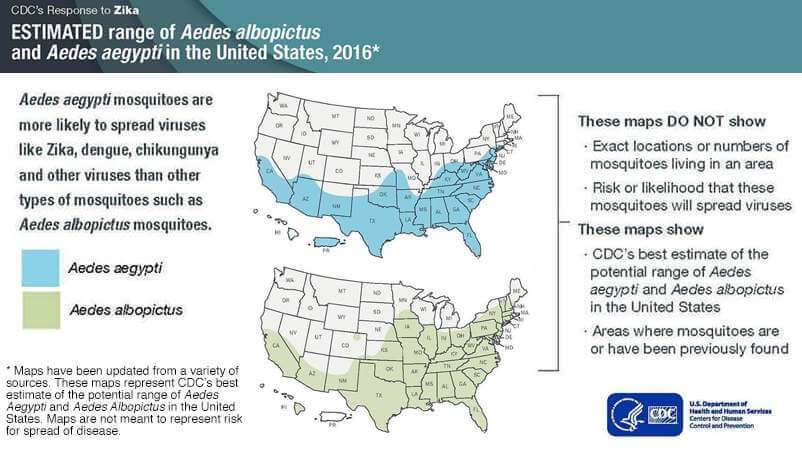
Take a closer look at the CDC's map of U.S. states where mosquitoes could spread Zika virus (pictured here). Keep in mind this is an estimated range of Aedus mosquitoes, and locally transmitted cases of the virus have been limited to Florida thus far.

For the general population, it is considered safe to travel to Zika virus-affected areas, but recommended that you talk with your doctor about your travel plans and necessary precautions and vaccines.
Also, the CDC advises that everyone (pregnant or not) take the following steps to prevent mosquito bites:
* Always check the label of insect repellents for instructions for use, especially use on children. To avoid them getting it in their eyes, nose, or mouth, do not apply insect repellent to children's hands. Do not use oil of lemon eucalyptus products on children under age 3. DEET, however, is approved for use on children of all ages. For more information, visit the EPA's website on the safe use of insect repellents.

Zika virus is certainly serious, especially for pregnant women. But try to keep calm, and turn to reliable sources on developments about the virus and how to prevent it: